
Snow and Ice on Outdoor Bonsai
Snow sitting on a bonsai usually looks worse than it is, while ice quietly does more damage than most people realize until a branch actually snaps.
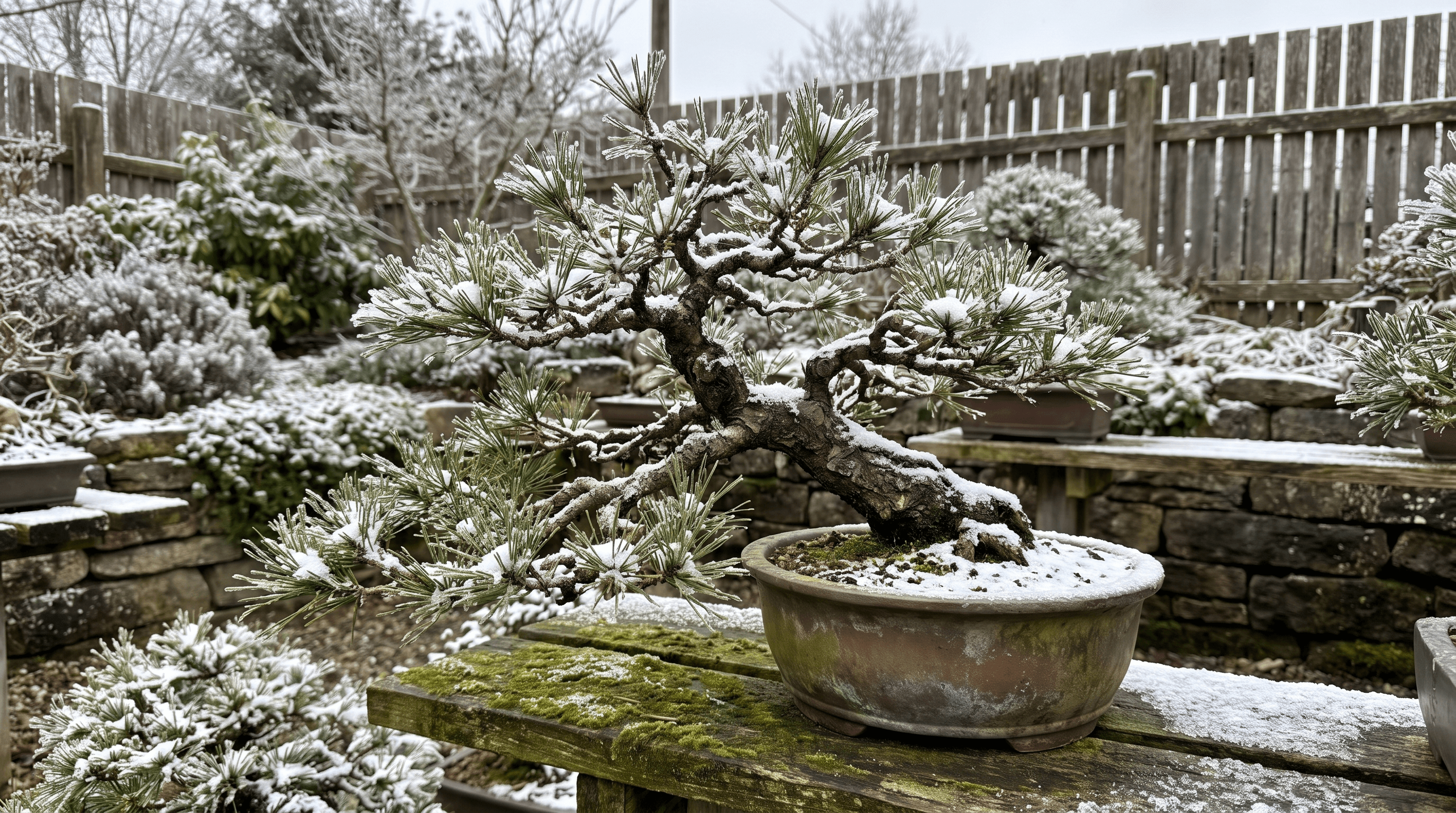
We don't get heavy snow often here in the south, so when it does show up people panic a little, myself included the first few times it happened on my own trees years ago. The photos of snow-capped bonsai that circulate every winter don't help, they make it look like a delicate, dangerous situation, when in a lot of cases a light dusting of snow is closer to a mild insulating blanket than a threat.
Ice is a different animal entirely, and I don't think it gets nearly enough separate attention from snow, even though the two behave completely differently on a tree. Snow is light and often falls off or melts on its own. Ice forms a hard shell that adds real weight and doesn't budge without force, and forcing it off is usually where the actual damage happens rather than the ice itself.
So the short version, which I'll unpack properly below, is that snow generally isn't the enemy people assume it is, ice needs a gentler hand than most people give it, and heavy wet snow accumulating on a branch is really the version of this whole topic worth watching closely.
Light, dry snow is rarely a problem
A thin, dry covering of snow can help buffer the substrate and root zone against the sharpest overnight temperature drops, similar to how snow cover insulates soil in the ground, trapping a layer of air rather than leaving the pot fully exposed to the cold air directly. I let light snow sit on my hardy outdoor trees without doing anything about it most winters, and I haven't seen it cause damage on species that are suited to the climate they're growing in. The trees that evolved in regions with real winter snowfall are, unsurprisingly, generally built to handle it sitting on their branches for a while.
Heavy, wet snow is the version that actually breaks things
The problem isn't snow in general, it's wet, heavy snow accumulating in real volume on branches that weren't shaped to carry that kind of load, especially on trees with a flatter, more horizontal branch structure where snow has somewhere to pile up rather than sliding off. I check my trees after any significant snowfall and gently brush heavier accumulations off the larger, more exposed pads, particularly on trees I know are more brittle or that have thinner branches carrying more foliage than they'd naturally hold in the wild. A branch snapping under snow weight is one of those losses that's often avoidable with five minutes of attention.
Ice is the one that deserves real caution
Ice forms a rigid coating that adds significant weight and doesn't have the give that snow does. That added weight is the main danger, it's what snaps branches that would have carried a much heavier snowfall without any issue, and ice encasing bark and buds tightly may add to the stress on top of that. I've seen ice storms cause real breakage purely because of how differently the two materials behave once they've accumulated, even on branches I'd have trusted with a far deeper snowfall. This is the scenario I actually worry about more than deep snow.
Never force ice off a tree
The instinct to chip or knock ice off a branch is understandable but it's usually the wrong move. Bark, buds, and small twigs are often frozen solidly to the ice itself, and forcing separation tends to tear tissue away along with it, causing more damage than the ice would have on its own if left to melt naturally. If ice absolutely needs to come off, for example because the weight is putting a branch at real risk of snapping, the safer approach is to let it melt gradually, moving the tree into an unheated garage, shed, or cold frame if that's an option, rather than a heated indoor space, since real warmth during dormancy causes its own problems. Physically breaking or scraping ice away should be a last resort.
What to actually do after a snow or ice event
Once conditions ease, I walk the collection and gently brush off heavy accumulations by hand, working with the branch rather than against it, and I check for any branches that are bent under a load and might benefit from support until the weight is gone. For ice, I mostly just wait, checking that nothing is under enough load to be at real risk of snapping and otherwise leaving it to melt on its own timeline. Afterward, once everything has cleared, I check the substrate too, since a heavy melt can either help with winter moisture needs or, in a pot with poor drainage, sit too wet for a stretch, so it's worth a quick look either way.
Common questions
Is snow bad for bonsai?
Light, dry snow is usually not a problem and can even help buffer the root zone against sharp overnight temperature drops. It's heavy, wet snow accumulating in real volume, especially on flatter branch structures, that risks breaking branches under the weight, so that's the scenario worth watching.
Should I brush snow off my outdoor bonsai?
For a light dusting, I generally leave it alone. For heavier, wet accumulations, especially on horizontal or brittle branches, gently brushing the excess off by hand reduces the risk of breakage without doing any harm to the tree itself.
Is ice more dangerous than snow for bonsai?
Yes, in my experience ice tends to be the more damaging of the two. It forms a rigid, heavy coating that doesn't have the give snow does, and the extra weight is what tends to snap branches, whereas snow generally sits more loosely on the branches and can shed or melt away on its own.
Can I chip ice off my bonsai branches?
I'd avoid it. Ice is often frozen solidly to bark, buds, and twigs, and forcing it off tends to tear that tissue away along with it. It's usually safer to let ice melt naturally, only intervening if a branch is genuinely at risk of snapping under the weight.
How do I know if my bonsai's branches are at risk from snow load?
Watch for visible bending or sagging under the accumulated weight, particularly on branches that are thinner than you'd expect for the amount of foliage they're carrying, or on species with a flat, horizontal branch style that lets snow pile up rather than shed off naturally.
Does snow melting on a bonsai affect winter watering?
It can, since a heavy melt adds moisture to the substrate, sometimes enough that you can skip a scheduled check. In pots with poor drainage though, that same melt can leave the rootball sitting too wet for a stretch, so it's worth checking the soil rather than assuming the melt solved your watering for the week.
Do all bonsai species handle snow the same way?
No. Hardy species from regions with real winter snowfall are generally well suited to carrying snow on their branches, while more tender or borderline hardy species growing outside their natural range can be more vulnerable, both to the cold itself and to the physical weight of an accumulation they weren't built to handle. It's also worth remembering that even a genuinely hardy species is less buffered in a shallow bonsai pot than the same species would be planted in open ground, so root protection still matters alongside anything to do with the branches themselves.
Should I move my bonsai under cover before a snowstorm?
For hardy species suited to your climate, it's usually not necessary, and outdoor exposure to snow is often part of a normal winter for them. For borderline hardy or more tender trees, moving them somewhere sheltered, like an unheated garage or cold frame, ahead of a heavy snow or ice event is a reasonable precaution worth taking.
You might also like
General guidance based on 20+ years of practice. Every tree, climate, and year is different — when in doubt, ask us.