
Spring Bonsai Watering Adjustments as Days Lengthen
Watering a bonsai in spring is a moving target, not a switch you flip from winter frequency to summer frequency in one go.
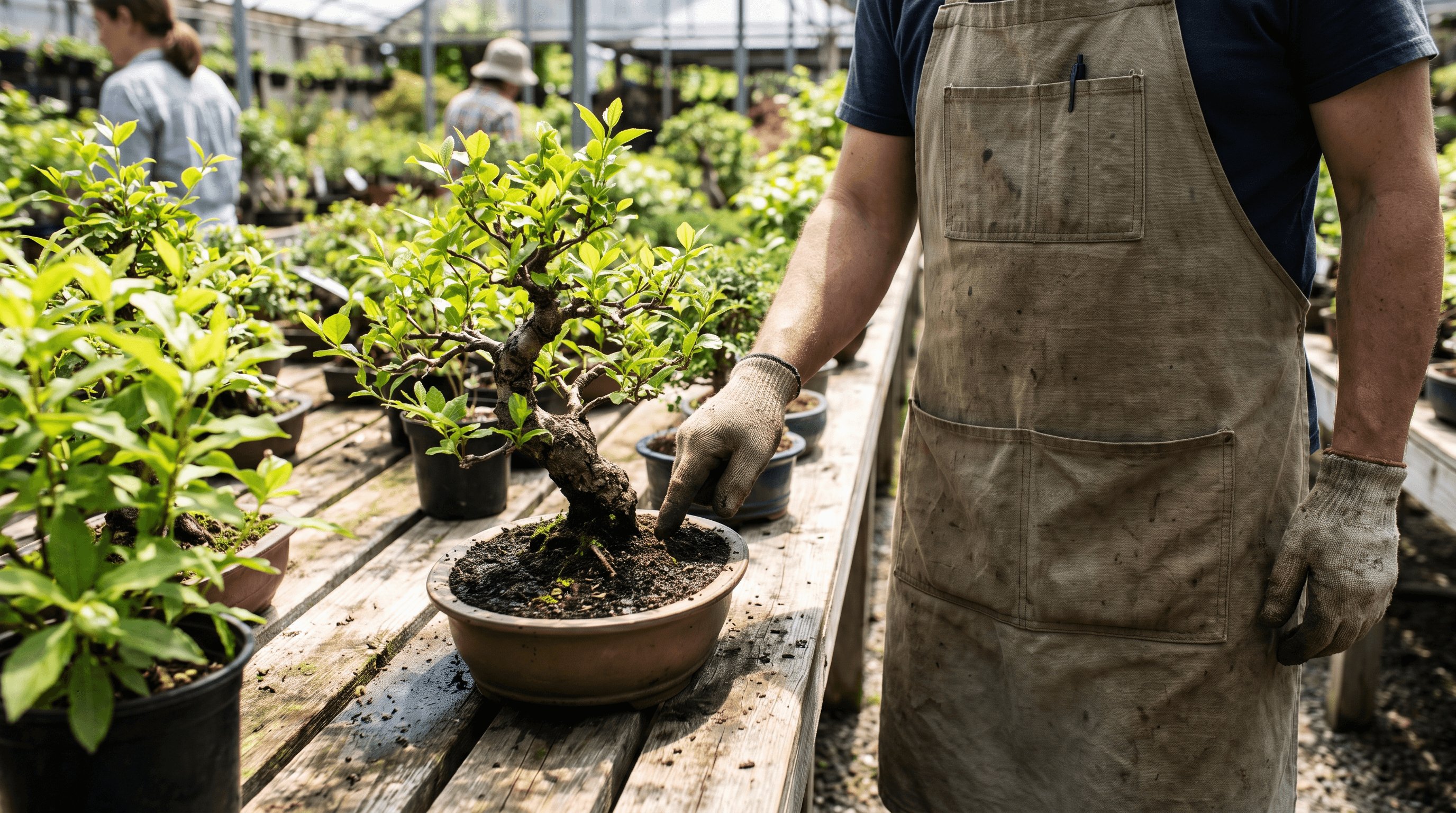
Of all the spring adjustments, watering is the one people tend to get wrong in the most understated way, not by doing something dramatically wrong, but by not adjusting often enough. Winter watering is infrequent for many outdoor temperate bonsai, though it varies with climate and how a tree is kept. Summer watering, depending on your climate, can mean checking pots daily or more. Spring sits in between, and it keeps shifting for weeks.
The mistake I see most is jumping straight from a winter mindset to a summer one the first genuinely warm week, watering heavily and often right away. The tree isn't using water at summer rates yet, even if the weather briefly feels like it. The other mistake, less common but I've made it myself, is staying too conservative for too long as days keep lengthening and the tree's real water use quietly climbs past what you're giving it.
The fix isn't a formula, it's a habit of checking more often through spring specifically, because the correct frequency this week isn't the correct frequency in three weeks.
Why spring water needs climb steadily, not suddenly
As days lengthen and temperatures rise through spring, two things increase together, the light available for photosynthesis and the rate at which the tree is drawing up and losing water through its foliage. Both climb gradually over the course of the season rather than jumping at any single point, which means watering frequency should track that same gradual curve rather than making one big jump from winter frequency to summer frequency. The exact pace of that climb varies by species, pot size, and local climate, but the general shape, gradual rather than sudden, holds true across most temperate outdoor bonsai.
Check the soil, don't just follow a schedule
I don't water on a fixed number of days through spring, I check the soil itself, since the actual rate of drying is what matters and that rate is changing week to week through the season. A finger test just below the surface, or lifting the pot to feel its weight if you know the tree well, tells you more than any calendar-based schedule can during a stretch where conditions are shifting this much.
Newly repotted trees dry differently
Fresh substrate after a spring repotting doesn't hold or release water the same way the old, more compacted soil did, so a repotted tree can catch you off guard either drying faster or slower than you expect based on its previous watering pattern. I pay closer attention to soil moisture on any tree that's been repotted this spring specifically, rather than assuming its old watering rhythm still applies.
Wind and sun exposure change through spring too
Air temperature isn't the only thing driving the increase in water use. Longer, stronger sun exposure and, depending on your position, more wind both increase how fast a pot dries out, and both change through spring independent of temperature alone. A tree that seemed fine on a watering routine set in early spring may need checking more often once it's getting several more hours of direct sun a day by late spring.
Signs you're behind the curve
Foliage that looks slightly dull or a touch limp before you'd normally expect to water again is usually the first sign that the tree's water use has outpaced your current schedule. Soil that's already dry at finger-test depth well before your next planned watering is another clear signal. Either one means it's time to check more frequently for a while rather than just watering more on the same schedule.
Common questions
How much should I increase watering frequency through spring?
There's no fixed number, since it depends on your climate, the tree's exposure, and how fast the particular spring is warming. I check soil moisture regularly rather than following a set schedule, and let the actual drying rate tell me when to water more often.
Should I switch straight to summer watering frequency once it feels warm?
No, that's the most common mistake. Water use climbs gradually through spring as days lengthen and temperatures rise, so watering frequency should climb gradually too, tracking the tree's real needs rather than jumping to summer frequency on the first warm week.
How do I know if my bonsai needs water without a fixed schedule?
A finger test just below the soil surface is the simplest check, feeling for dryness rather than going by day count. For trees you know well, lifting the pot to judge its weight is another reliable way to gauge moisture without disturbing the soil.
Does a newly repotted tree need different watering than the rest of my collection in spring?
Yes, fresh substrate holds and releases water differently than the older, more compacted soil it replaced, so a repotted tree's drying pattern can shift compared to what you were used to. I check repotted trees individually rather than assuming their old watering rhythm still applies.
Why does my bonsai seem to dry out faster later in spring than earlier?
Longer daylight, stronger sun, and often more wind all increase water loss as spring progresses, on top of rising temperature. A watering routine that worked in early spring can fall behind by late spring simply because the tree's real exposure and water use have both increased.
What happens if I water too much too early in spring?
Overwatering when the tree isn't yet using water at a high rate can leave soil waterlogged for longer than the roots want, particularly risky on a tree that isn't yet in strong active growth. Checking actual soil moisture rather than watering on impulse avoids this.
Is it normal for different trees on the same bench to need different watering frequencies in spring?
Yes, very normal, since pot size, species, exposure, and growth stage all affect drying rate individually. I treat each tree's watering as its own check rather than assuming the whole bench needs water on the same day.
You might also like
General guidance based on 20+ years of practice. Every tree, climate, and year is different — when in doubt, ask us.