
Increased Summer Watering Needs for Bonsai
By midsummer, watering stops being a task you remember to do and becomes a habit you build your day around, sometimes twice over.
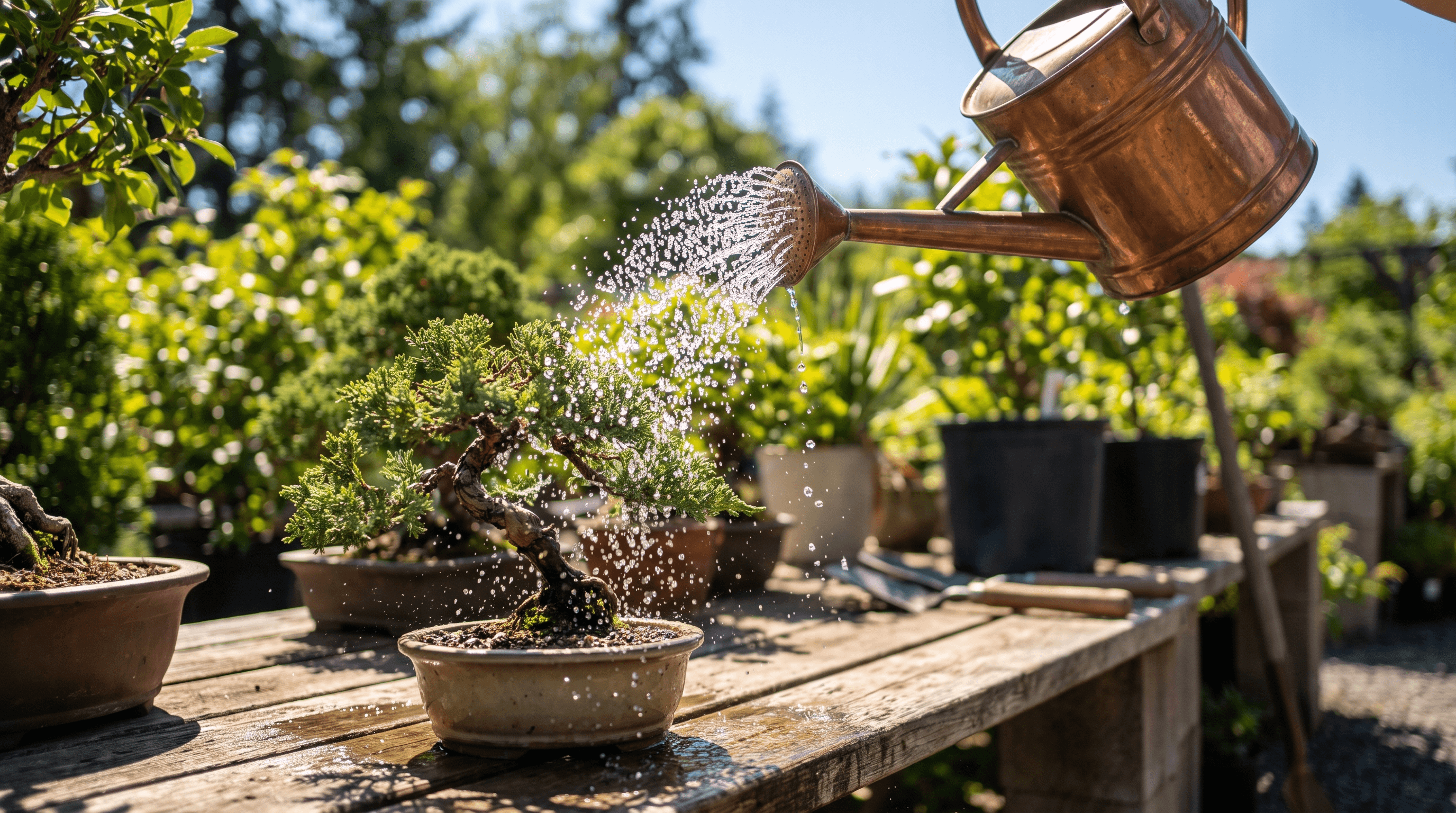
There's a jump in watering demand every year that catches even experienced growers off guard, once the weather commits to being properly hot for an extended stretch. Whatever cooler-weather rhythm worked through spring, however many days between waterings that happened to be, suddenly isn't close to enough, and a tree that looked perfectly healthy on Monday can be visibly wilted by Wednesday afternoon.
What makes summer watering different isn't just the heat itself, it's the combination of heat, sun exposure, and pot size all working against the tree at once. A small pot has very little soil volume to buffer against moisture loss, and in full summer sun that volume can go from moist to bone dry in under a day.
I don't work off a fixed schedule in summer, and I'd encourage you not to either. What follows is how I actually decide when and how much to water once the heat sets in for real.
Small pots in full sun can need water twice a day
This is the detail that surprises people most. During the peak of summer, a shallow training pot or a small mame-sized tree sitting in direct sun can dry out completely within a matter of hours on a hot, dry, or windy day. I check my smallest and most exposed pots both morning and late afternoon during the worst weeks, because waiting for the next morning after a hot afternoon is often too long a gap. Larger pots with more soil volume and more established root systems buffer heat better and can usually get by on one thorough watering a day even in peak summer.
Checking soil moisture becomes a daily habit, not an occasional check
In cooler months I might check a tree's soil every few days and water when needed. In summer that check happens every single day, sometimes twice, because conditions change too fast to rely on a schedule from a few days ago. I use a finger pressed a centimeter or two into the substrate rather than judging from the surface alone, since the top layer dries first and can look thirsty even when there's still moisture underneath, or the reverse for a crusted surface over dry soil below.
Water thoroughly rather than little and often
Increased frequency doesn't mean smaller, shallower waterings. Each time I water in summer, I still water until it runs clearly through the drainage holes, giving the whole root ball a proper soak rather than just wetting the top layer. A quick surface splash more often leaves the lower substrate dry even when the top looks wet, which is the opposite of what you want going into the hottest part of the year.
Time of day changes what watering actually accomplishes
I water early in the morning as a first pass whenever possible, giving the tree moisture reserves before the heat of the day starts pulling water out through the leaves. A second check in late afternoon or early evening catches anything that dried out faster than expected. I generally prefer not to water in the harshest midday sun on very hot days, mainly because a fair amount evaporates before it reaches the roots, though a wilting tree in genuine distress gets water immediately regardless of the hour.
Common questions
How do I know if I'm underwatering versus overwatering in summer?
Underwatered trees typically show wilting foliage that perks back up within an hour or two of a thorough watering. Overwatered trees, which is less common in summer heat but still happens with dense or slow-draining substrate, tend to show a more persistent droop that doesn't improve after watering and sometimes yellowing lower leaves.
Is it possible to overwater a bonsai in summer heat?
It's less common than underwatering during peak heat, but it can still happen, especially in substrate that doesn't drain well or in a spell of cooler, humid weather within an otherwise hot summer. Good drainage matters as much in summer as the watering frequency does.
Should I water differently right after repotting if that happened in summer?
A summer repot is unusual and best avoided for most species, but if a tree does need watering right after any root disturbance, I keep the substrate consistently moist without letting it go dry, checking more frequently than usual while new roots establish.
Can I use a moisture meter instead of checking by hand?
Some growers find them useful, though I still prefer a finger test since it also tells you about drainage and root health, not just moisture. If you do use a meter, check it against your own finger test occasionally so you trust what it's telling you.
Why does my bonsai dry out faster than my neighbor's even in the same weather?
Pot size, substrate mix, and position relative to sun and wind all affect drying speed. A small, shallow pot in full sun and open wind will dry out much faster than a larger pot tucked somewhere with a bit more shelter, even on the same afternoon.
Does the type of substrate affect how often I need to water in summer?
Significantly. A free-draining, granular mix dries out faster than a denser, more organic mix, which is generally the trade-off bonsai growers accept for better root health and aeration. Free-draining substrate in summer heat is part of why frequent checking matters so much.
What happens if I miss a watering during a hot spell?
For a small pot in full sun during peak heat, one missed watering can be enough to cause visible wilting and, if it goes uncorrected for long, real damage to fine roots. Larger, more established trees generally have more buffer, but I don't count on that buffer during the hottest weeks.
You might also like
General guidance based on 20+ years of practice. Every tree, climate, and year is different — when in doubt, ask us.