
Shade Cloth and Summer Sun Protection
The same tree that thrives in full sun every other month of the year can scorch badly in August if you don't rethink its position for summer.
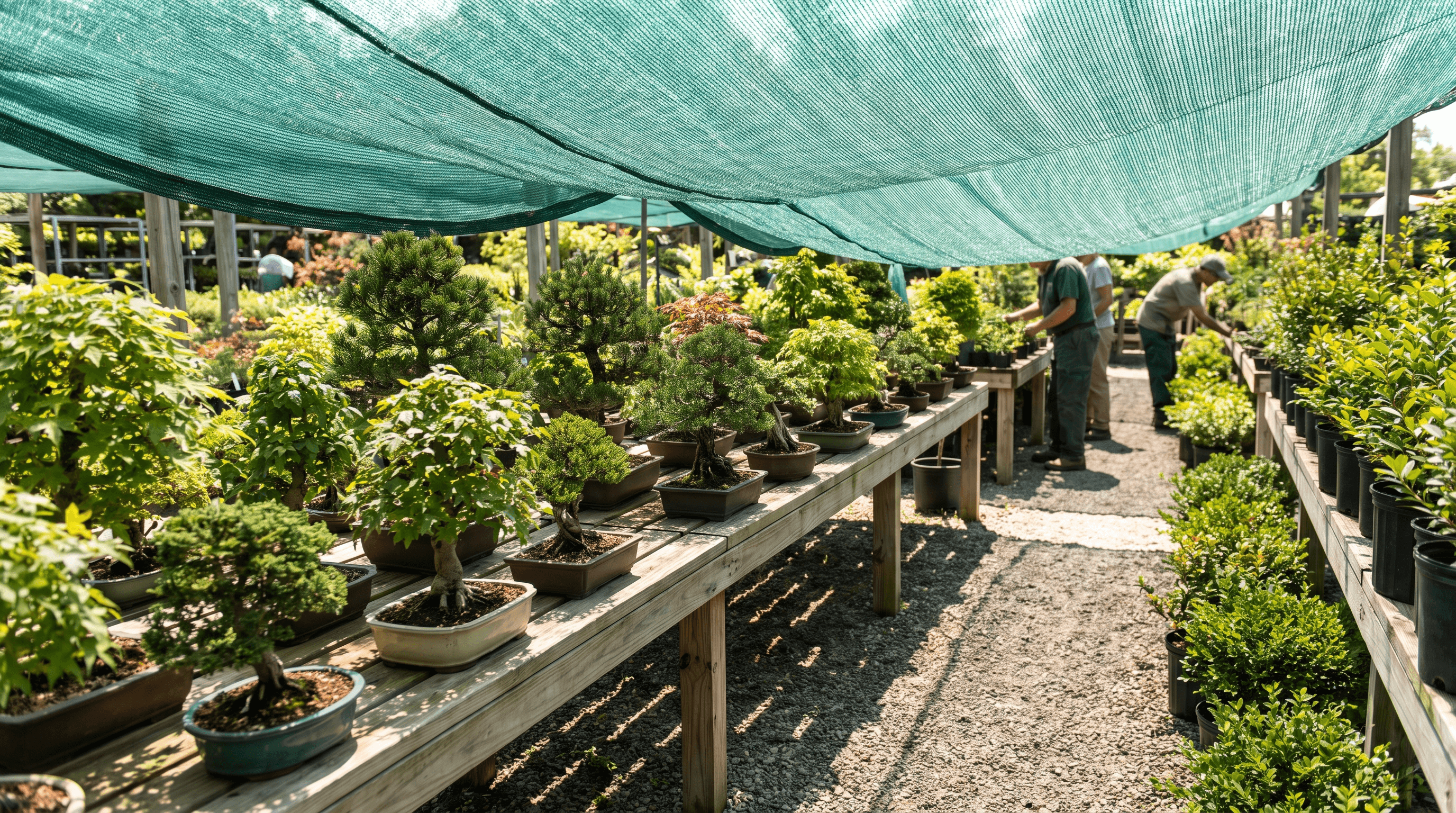
I get asked a lot whether shade cloth is really necessary, since most bonsai species are sold as full-sun trees and growers get nervous about depriving them of light. The honest answer is that full sun in spring or autumn and full sun in the peak of a southern Italian summer aren't the same exposure at all, and treating them as interchangeable is how scorch happens.
Shade cloth isn't about hiding trees away from the sun. It's about taking the edge off the worst hours of the day while still letting the tree get strong light the rest of the time. Used well, it prevents damage without stunting growth. Used badly, either not enough or far too much, it either does nothing or weakens the tree in a different way.
This is specifically about when and how I use shade cloth through summer, not a general sun exposure guide. If you already know your species tolerates full sun most of the year, this is about the adjustment for the hottest stretch.
Shade cloth percentages and what they actually mean
Shade cloth is rated by the percentage of sunlight it blocks, and the right choice depends on how sensitive the species is. For most of my sun-tolerant trees I reach for something in the 30 to 40 percent range during peak summer, enough to knock the harshest edge off midday and afternoon sun without plunging the tree into real shade. For genuinely delicate or thin-leaved species, I'll occasionally go up to 50 percent for a brief stretch during the worst weeks, though 30 to 40 percent is the range I'd call the safer default even for sensitive trees. I rarely go higher than 50 percent except very briefly during an extreme heatwave, since too much shade for too long weakens growth and can affect how a tree colors up or flowers later.
Species that still need afternoon shade despite tolerating full sun
This is the part that surprises people most. A species can genuinely be a full-sun tree by reputation and still need afternoon protection once temperatures spike well above what it experiences most of the year. Maples are the clearest example in my collection, tolerant of good light through spring and even early summer but prone to leaf scorch once real heat arrives, especially thinner-leaved varieties. I move those under shade cloth for the hottest afternoon hours starting in early summer, well before I'd consider shading tougher conifers, which generally hold up much longer without protection.
Thin leaves are the main risk factor, thin bark matters too
The species that need the most protection tend to share physical traits rather than a single family or type. Thin, delicate leaf tissue scorches faster because it has less capacity to dissipate heat and moisture loss under intense sun, and this is the trait I weigh most heavily. Thin bark on younger material or trees still developing their structure is a separate, secondary concern for trunk and branch scorch rather than foliage, and I watch for it, though I treat it as less central than leaf texture. Two trees of a species that's usually considered hardy can still differ based on both of these traits, so I look at the individual tree rather than relying only on a general rule about species tolerance.
Timing the shade to the actual heat of the day, not a fixed schedule
I don't put shade cloth up at a set hour every day. I watch when the heat is actually peaking, which shifts a little through the summer as day length and sun angle change, and shade for the stretch of hours around that peak, roughly the hottest part of the afternoon. Early morning and early evening sun, even in high summer, is rarely the problem. Some growers instead leave shade cloth up over whole sensitive groups for most of the summer rather than moving it daily; either approach works, it's mainly a question of how much daily attention you want to give it.
Common questions
What shade cloth percentage should I start with if I've never used it before?
I'd start around 30 percent for most sun-tolerant species and see how the trees respond over a week or two. If you're still seeing scorch on the most sensitive trees, step up to 40 or 50 percent just for those, rather than applying heavier shade across everything.
Will shade cloth stunt my bonsai's growth?
Used only during the hottest hours of the day, no, it's protecting the tree rather than starving it of light. Left up around the clock for weeks at heavier percentages, yes, that can weaken growth and reduce flowering or fall color on species that depend on strong light.
How can I tell if a tree is scorching versus just showing normal summer stress?
Scorch usually shows as crisp, browned patches at leaf edges or tips, often on the side of the tree that faces the harshest afternoon sun. General summer stress tends to look more like overall wilting or dullness that improves with proper watering, rather than a fixed, localized burn pattern.
Do conifers need shade cloth too?
Most established conifers handle full summer sun better than deciduous species with delicate foliage, and I rarely shade mine except during an extreme heatwave. Younger conifers still developing bark thickness are more vulnerable and worth watching more closely.
Should shade cloth stay up all day during summer?
I only use it during the peak heat hours myself, generally a stretch in the afternoon, and remove it the rest of the day so the tree still gets strong morning and evening light. That said, some growers keep their most sensitive trees under shade cloth for most of the season instead of moving it daily, and that works fine too, provided the shade percentage isn't so heavy that it starves the tree of light.
What color shade cloth works best?
Function matters more than color for the actual sun protection, though lighter colors reflect a bit more heat than very dark ones. I use whatever percentage rating suits the species and don't put much weight on color beyond that.
My tree already scorched, is it too late to help it?
Scorched leaf tissue won't recover, but you can prevent further damage by shading the tree properly going forward and keeping watering consistent. Many healthy trees push new growth to replace scorched foliage once conditions improve, though recovery varies with species, vigor, and how severe the scorch was, so I'd hold off on removing the damaged leaves too aggressively and let the tree manage its own recovery.
You might also like
General guidance based on 20+ years of practice. Every tree, climate, and year is different — when in doubt, ask us.