
Recognizing Summer Heat Stress vs Underwatering
Wilting leaves in August mean two very different things depending on what the substrate is doing underneath them, and treating one as the other makes it worse.
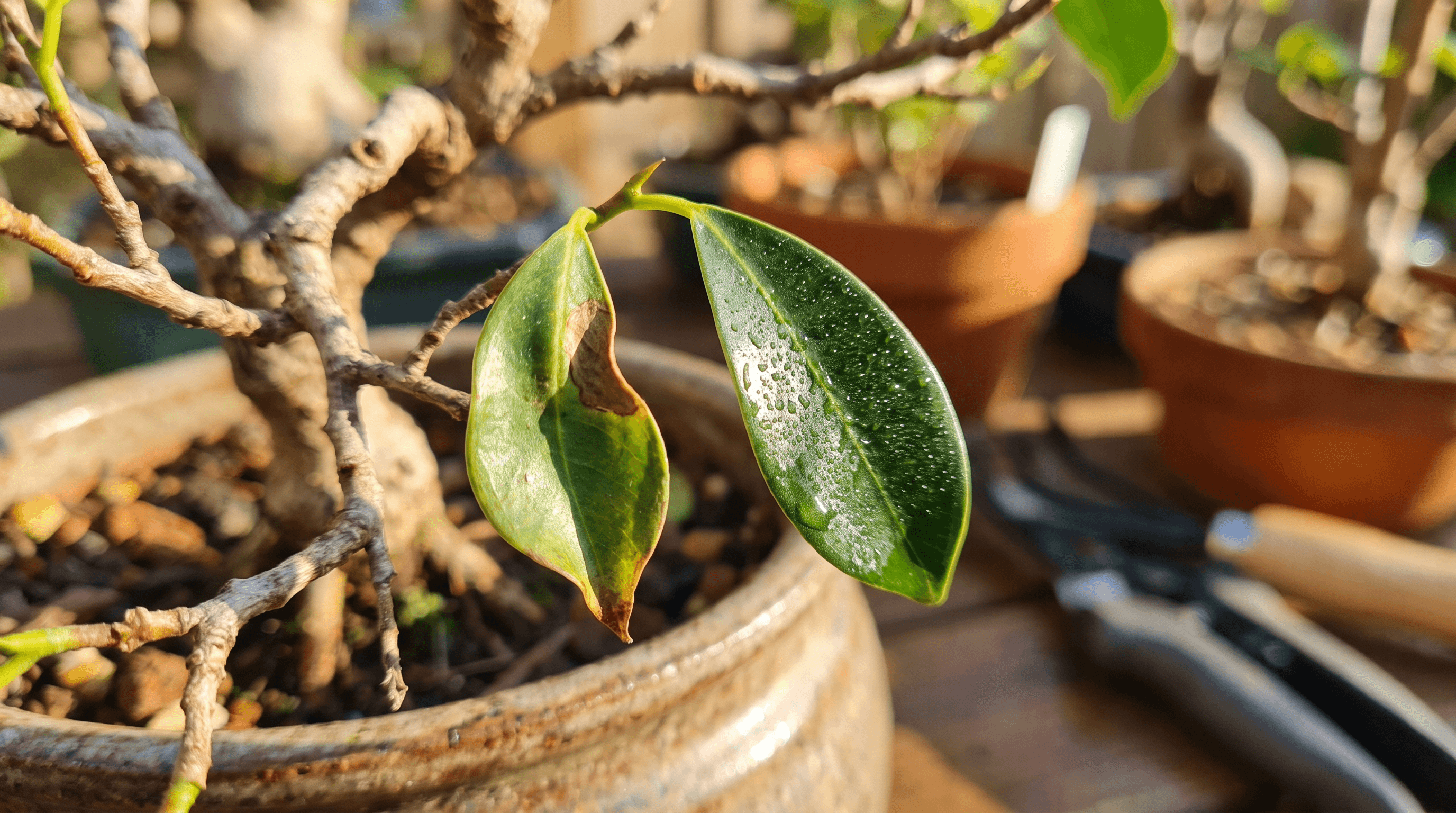
Every summer I get photos from growers convinced their tree is dying of thirst, drowning it in water twice a day, when the actual problem is heat and the tree needed shade an hour ago, not more water. And the reverse happens too, someone shading and misting a tree that's simply bone dry at the roots and needs a proper soak. Both mistakes come from the same place: wilting looks like wilting, and it's tempting to reach for the obvious fix without checking what's actually going on beneath the surface.
The two problems can even look almost identical from a few steps back, leaves curled or drooping, a general tired look to the foliage, sometimes some leaf drop if it's gone on a while. But they come from opposite causes and need opposite responses, and if you get it backward you can genuinely hurt a tree that would have been fine with the right fix applied promptly.
The good news is that telling them apart doesn't require guesswork. There's one check that's the fastest way to start narrowing it down, and it takes about ten seconds.
The substrate check that narrows it down first
Push a finger or a moisture stick a couple of centimeters into the substrate, past the surface layer that dries fastest and tells you the least. If it's dry down there, that's underwatering, and the tree needs a proper deep watering, not a light misting. If the substrate is moist or even properly damp at that depth and the tree is still showing wilted or curled leaves, heat stress is the most likely explanation, though a root system struggling from chronic overwatering or poor drainage can produce a similar picture, so it's worth ruling that out too if the wilting doesn't ease with shade. Either way, more water at that point does very little, and it can risk waterlogging a root system that's already struggling with something else entirely. I do this check before touching a stressed tree in any other way, it takes ten seconds and it tells you which of two very different afternoons you're about to have.
What heat stress actually looks like
Heat stress shows up as wilting or leaf curl that persists even with adequately moist soil, often worse on the side of the canopy facing direct afternoon sun, and it tends to hit hardest during the peak heat hours and ease somewhat by evening, only to return the next scorching afternoon. Leaves may curl inward or fold along the midrib as a way of reducing surface exposure, which is the tree's own defense mechanism working exactly as it should. The fix here is shade during the worst hours, better airflow around the pot, and in genuinely severe heat, moving the tree temporarily out of direct midday sun altogether rather than leaving it to fight through conditions it's not built for that day.
What underwatering actually looks like
Underwatering often produces a more uniform wilt across the whole tree rather than a pattern favoring the sun-exposed side, and in my experience it tends not to ease up in the evening the way heat stress often does, since the water deficit doesn't resolve on its own once the sun goes down, though these are tendencies to watch for rather than absolute rules. Leaves may feel noticeably limp rather than curled, and in more advanced cases you'll see crispy brown edges developing as tissue actually starts to die back from lack of water. The substrate check confirms it fast: bone dry a couple of centimeters down, sometimes pulling away from the pot's edge entirely in badly dried out substrate. The fix is a proper deep watering. If it's dried out enough that water is running straight through without absorbing, some growers briefly submerge the pot to rehydrate the substrate before returning to a more consistent watering rhythm; I use this as an occasional rescue step, not a routine method.
Why moist soil with wilting leaves confuses people
This is the scenario that trips up even fairly experienced growers, because the instinct when you see a wilted, unhappy looking tree is always to water it, regardless of what the soil is actually doing. But a tree can have plenty of water available at the roots and still wilt if it's losing water through the leaves faster than the roots can move it up, which is exactly what happens on a brutal August afternoon in direct sun. Adding more water to an already moist pot doesn't speed anything up, it just sits there, and in a tree that's already stressed, waterlogging on top of heat stress is a real setback rather than a help. If a tree still isn't recovering after a day or two of proper shade despite moist soil, it's worth checking for a longer-standing root problem, like chronic overwatering or compacted substrate, rather than assuming heat alone explains it. When in doubt, shade first and reassess in an hour before reaching for the watering can again.
Common questions
My bonsai's leaves are wilted but the soil feels wet, what should I do?
Move it into shade or filtered light for the rest of the day rather than adding more water. That combination, wilting with moist soil, is the classic sign of heat stress, and shade plus better airflow is the actual fix, not additional watering on top of soil that's already adequately moist.
How deep should I check when testing soil moisture?
A couple of centimeters below the surface, not just the top layer, which dries out fastest and tells you the least about what the roots are actually experiencing. A moisture meter or a simple wooden skewer pushed into the substrate works fine if you don't want to disturb the surface with your finger.
Can heat stress happen even in a shaded spot?
Less often, but yes, especially during a genuine heat wave when ambient temperatures stay high even out of direct sun. It's less common than sun-exposed heat stress, so if a shaded tree is wilting, I'd check the substrate carefully first, since underwatering becomes the more likely cause in a spot that isn't getting direct sun.
Does heat stress cause permanent damage to a bonsai?
Occasional heat stress that's addressed with shade fairly promptly usually doesn't cause lasting harm beyond some temporary leaf curl. Repeated or prolonged heat stress over many consecutive scorching days without any relief can lead to leaf scorch, leaf drop, and real strain on the tree, so it's worth acting on the first clear signs rather than waiting it out.
Is misting a good response to heat stress?
Light misting can offer some brief relief by adding humidity around the foliage, but it's a secondary measure, not a substitute for shade or proper watering. Shade during the worst heat hours does more good than misting alone, so I treat misting as an extra touch alongside shade rather than a replacement for it.
How often should I check for heat stress during a summer heat wave?
During a genuine multi-day heat wave I check exposed trees at least once around midday, when heat stress is most likely to show, and again in the evening to see whether the wilting eased off as temperatures dropped. That evening recovery pattern is itself a useful confirmation that you're dealing with heat stress rather than a water deficit.
Why does my tree wilt every afternoon but look fine by morning?
That daily cycle, wilting through the hottest hours and recovering by morning, is a good sign of heat stress rather than underwatering, since a genuine water deficit doesn't resolve on its own overnight. If this pattern repeats for several days running, it's worth adding shade or moving the tree rather than assuming it will keep bouncing back indefinitely.
You might also like
General guidance based on 20+ years of practice. Every tree, climate, and year is different — when in doubt, ask us.