
Bonsai Defoliation Timing in Summer
Bonsai defoliation works because the tree has time to grow back a second flush before the season ends, which means the window for doing it is narrower than most people assume.
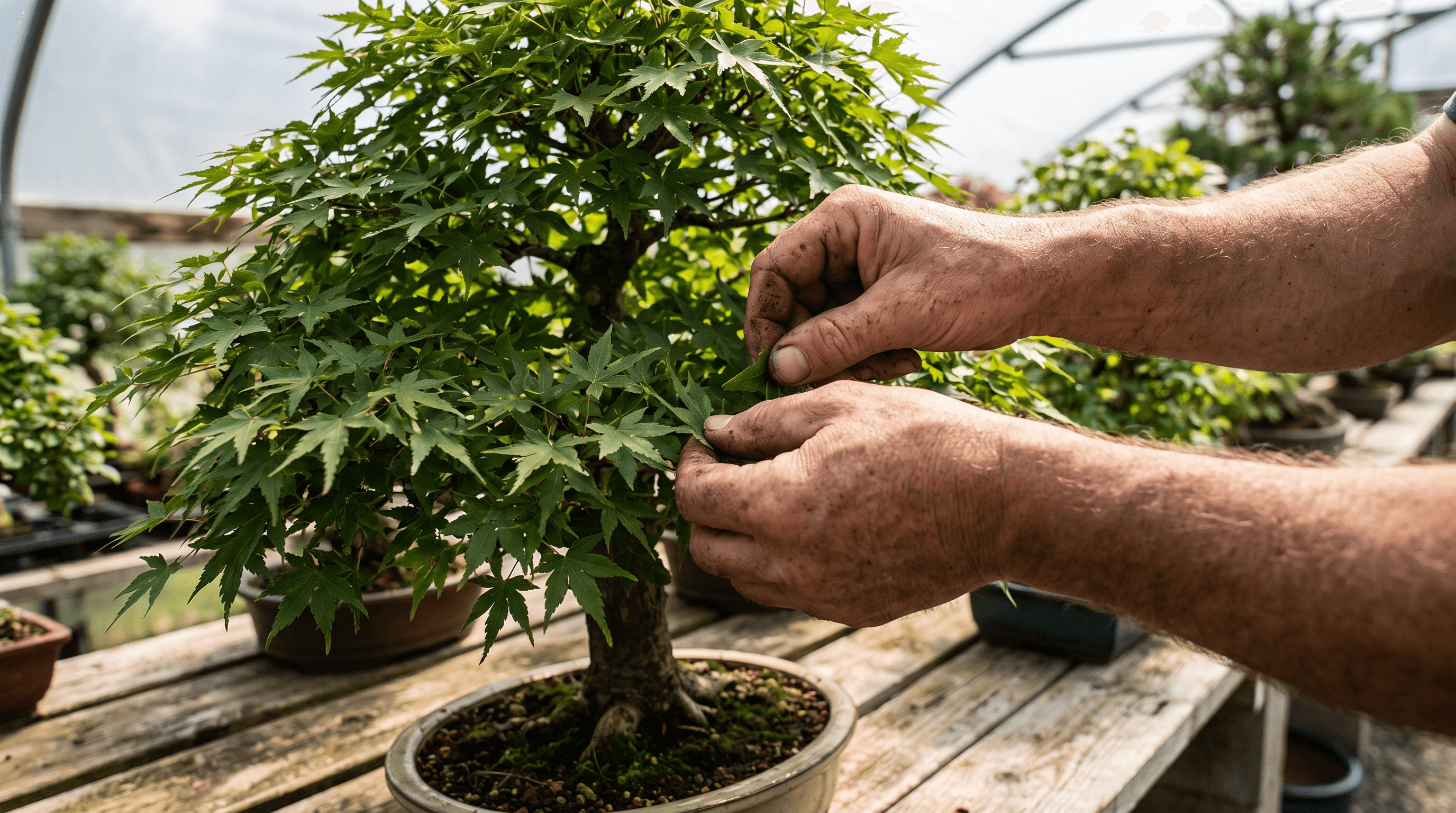
Defoliation is one of those techniques that sounds more dramatic than it is once you understand the timing behind it. Strip the leaves off a healthy, vigorous tree of a species that tolerates the technique well, several maple varieties are classic examples, in early summer, and it responds by pushing a fresh flush: smaller leaves, denser branching, better ramification, provided it has enough of the growing season left to do that work and recover properly before autumn.
That last part, enough season left, is the whole reason timing matters so much. I've seen more than a few trees weakened going into autumn by growers who defoliated too late, chasing one more round of refinement without leaving the tree time to rebuild its reserves before dormancy. The technique itself isn't risky when timed well. It's risky when timed late.
This is specifically about when to defoliate, not a full explanation of the technique itself or which species tolerate it, since that's a broader topic. If you already know defoliation is right for a particular tree, this is about picking the right point in the summer to actually do it.
Early to mid summer is the typical window
For vigorous deciduous species that respond well to defoliation, I aim for early to mid summer, once the first flush of spring growth has hardened off but well before the season starts winding down. This timing gives the tree the rest of the growing season, still a solid stretch of warm, active weeks, to push a new flush of leaves, develop them fully, and then build back the energy reserves it needs before autumn. Doing it any earlier risks interrupting a tree that hasn't finished its first flush yet, and any later starts eating into the recovery time the tree actually needs.
Late summer defoliation risks a weak tree heading into autumn
This is the mistake I try hardest to steer people away from. A tree defoliated too late in summer doesn't have enough remaining warm season to fully regrow foliage and rebuild the carbohydrate reserves it needs going into dormancy. The result is a tree entering autumn and winter already depleted, which shows up the following spring as weak, delayed growth rather than the improved ramification the defoliation was meant to produce. If I'm ever unsure whether there's enough season left, I don't do it. A missed year of defoliation costs far less than a genuinely weakened tree.
Only defoliate a tree that's actually strong enough for it
Timing within the season is only half of it, the tree's own condition matters just as much. I only consider defoliation on trees that went into the technique with strong, healthy growth already established, good color, vigorous extension, no signs of stress. A tree that's struggling, recently repotted, or recovering from any other setback doesn't have the reserves to handle losing its entire leaf surface at once, regardless of what the calendar says about timing.
Partial defoliation is a gentler option later in the window
If I'm working closer to the later end of the acceptable window, or with a tree that's strong but not exceptionally vigorous, I'll often do a partial defoliation rather than stripping the whole canopy, removing perhaps half the leaves rather than all of them. It's a smaller demand on the tree's reserves while still encouraging some of the ramification benefits, and it gives me a bit more flexibility on timing than a full defoliation does.
Common questions
How do I know if it's too late in the summer to defoliate?
There's no fixed formula, but as a personal rule of thumb I count backward from when growth typically starts slowing toward autumn in my climate and want a solid stretch, roughly six to eight weeks, of active growing season left after the defoliation. Many growers aim for early to midsummer, often around June depending on climate, specifically because it reliably leaves that kind of margin. If the math doesn't work out comfortably, I skip it for the year rather than push a tree into a tight recovery window.
Can I defoliate a tree in early spring instead of summer?
No, defoliation removes existing mature leaves to trigger a second flush, so it needs to happen after the tree already has a full set of hardened spring growth to remove. Doing it too early, before that first flush has developed, doesn't achieve the same result.
Which species tolerate defoliation well?
Vigorous deciduous species, several maple varieties among the most common examples, generally respond best. Weaker growers and most conifers aren't good candidates for full defoliation at all. I'd confirm a specific species is suitable before attempting it, since not every deciduous tree handles it the same way.
What happens if I defoliate a tree that isn't strong enough?
A tree without adequate reserves can struggle to push a full second flush, and in weaker cases the setback can affect its vigor well beyond that single season. This is why I only defoliate trees that were already showing strong, healthy growth beforehand.
Should I feed differently before or after defoliation?
I make sure the tree has had a normal, healthy feeding routine in the weeks before defoliation so it goes into the process with good reserves. Practices vary on feeding right afterward, some growers resume immediately, others wait until the new flush is visibly emerging. My own habit is the more cautious one, a brief pause before resuming, mainly out of caution rather than because I think immediate feeding causes harm.
Is partial defoliation as effective as full defoliation?
It produces a milder version of the same benefits, generally a bit less dramatic reduction in leaf size and less of a jump in ramification than a full defoliation, but with less demand on the tree's reserves. I use it as a middle option for trees or timing that don't quite justify going all the way.
Will defoliation affect fall color or flowering next spring?
This varies by species and timing more than people expect, so I'd treat it as tree-specific rather than assume it either way. Defoliation done early enough for a full recovery is generally less likely to meaningfully harm fall color or the following spring's growth. Done too late, with insufficient recovery time, it's much more likely to weaken next spring's growth, and on flowering species it can affect flower bud formation too, since some species shift toward leaf buds over flower buds when stressed late in the season.
You might also like
General guidance based on 20+ years of practice. Every tree, climate, and year is different — when in doubt, ask us.