
Common Spring Bonsai Mistakes
Spring is when I see the most damage done to bonsai all year, almost always from growers doing the right task at the wrong moment.
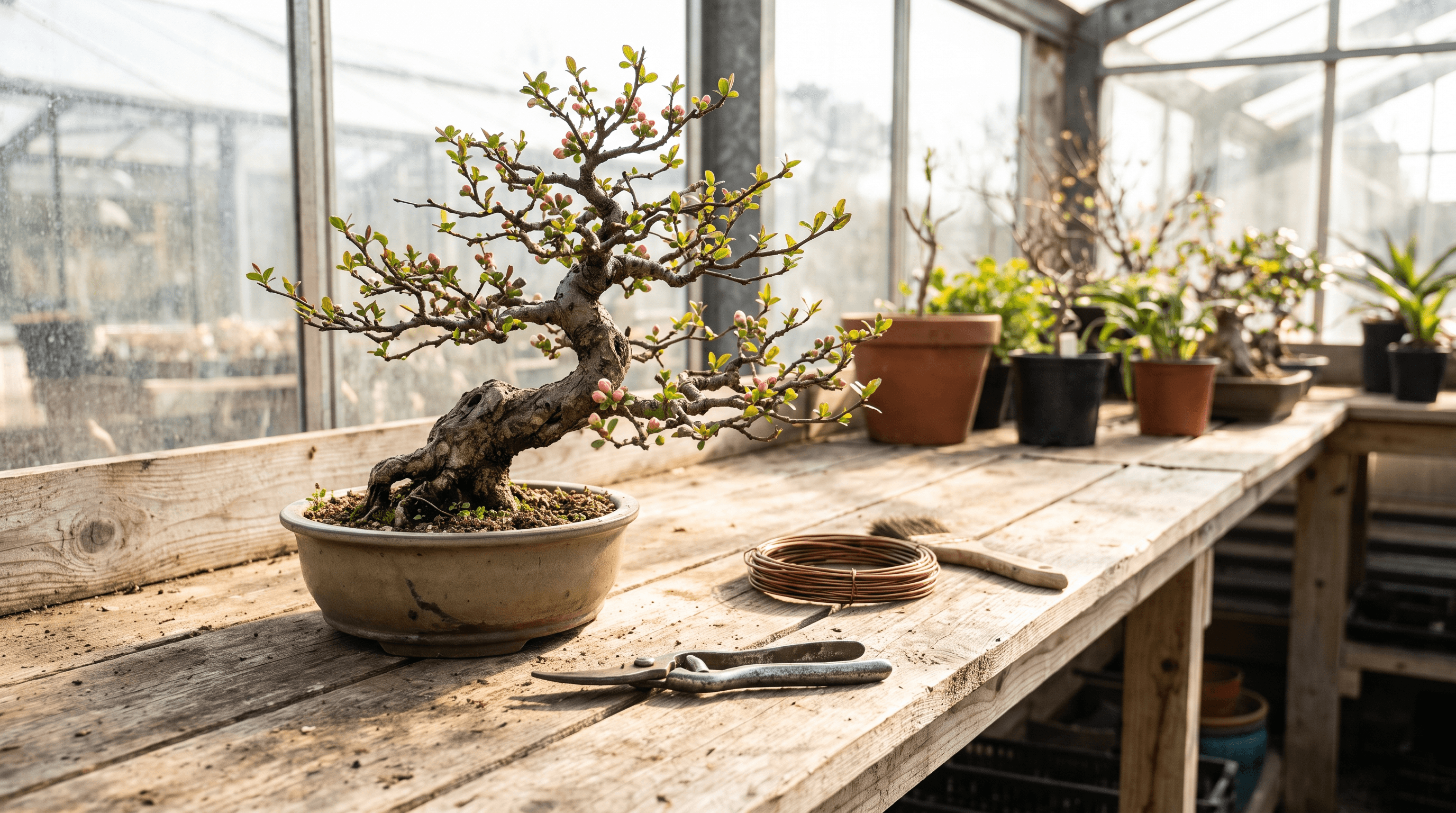
I get more panicked messages in spring than in any other season. Not because spring is dangerous exactly, it's actually the most forgiving stretch for a healthy tree, but because it's the season with the most tasks stacked close together, and impatience causes more harm here than anywhere else in the calendar.
Almost every mistake I see repeated year after year comes down to timing rather than technique. People know how to repot, how to prune, how to feed. What trips them up is doing it a few weeks too early or too late, usually because the weather turned nice and the urge to get moving outran what the tree was actually ready for.
These are the five mistakes I see most often, roughly in order of how much damage they tend to cause. None of them are exotic errors. They're the obvious ones, which is exactly why they keep happening.
Repotting on the calendar instead of on the tree
Repotting too early, before roots and buds show real activity, means working on a tree that can't recover quickly from root disturbance. I did this myself years ago with a field maple, repotted it during an unusually warm week in February because the date felt right, and then watched it sulk for most of the season when a cold snap followed. Repotting too late is just as common, especially once leaves are fully open and the tree has already spent a lot of energy on foliage. Root work at that point is much harder on the tree than it needed to be. The fix isn't a better date, it's watching the actual tree. Bud swell is one of the clearest cues for many deciduous species, though conifers and some other species follow their own signals and aren't always ready on the same timeline, so the general principle, read the tree rather than the forecast, matters more than any single cue.
Resuming full feeding before growth is truly underway
This one is almost universal among newer growers. The instinct after a long winter is to get nutrients back into the tree as soon as possible, so feeding starts the moment the first bud shows any color. For a tree that wasn't repotted this spring, that's not automatically harmful, some growers feed successfully from the first sign of bud movement. My own approach is more conservative: I wait until growth is visibly extending, not just starting, before beginning to feed, and I start light rather than jumping straight back to a summer schedule. For a tree that was repotted this spring, I'm more cautious still, since a root system that's just coming out of dormancy and recovering from root work isn't ready to use a full feeding schedule, and fertilizer can sit unused or add stress to roots that are still reestablishing.
Moving tender trees outside before the last frost
Every year there's a run of unusually warm days somewhere in late winter or early spring, and every year people move overwintered trees out into full exposure the moment it feels like spring. New spring growth is far more frost-sensitive than the hardened growth that survived winter dormancy, so a frost that would have done nothing in January can genuinely damage or kill fresh shoots in March or April. I check the actual last-frost date for my area, add a buffer, and move tender species out gradually rather than all at once, keeping an eye on the forecast the whole time rather than trusting a single warm afternoon.
Over-pruning fresh growth out of impatience
By the time spring growth really gets going, a lot of growers who've been staring at bare branches all winter get scissor-happy the moment there's something to cut. Pinching and light shaping have their place early in the growth flush, but heavy pruning of very fresh, still-soft growth removes the exact material the tree needs to build energy after dormancy. I've had to talk more than one client down from cutting back a maple's entire first flush because it looked messy. Let that first push of growth harden a bit before making real decisions about shape. The tree needs it more than you need the canopy to look tidy in April. This applies most directly to deciduous broadleaf trees pushing their first flush; conifers and some other species have their own pruning and pinching windows that don't always follow the same logic, so it's worth checking what's appropriate for the specific species rather than applying this across the whole bench.
Treating every tree in the collection the same
The last mistake isn't a single task, it's an assumption. Junipers, deciduous trees, and species that stayed semi-active over a mild winter don't all wake up on the same schedule, even sitting side by side on the same bench. I've seen people repot an entire collection in one weekend because one or two trees looked ready, dragging trees that weren't yet active into a stressful process they didn't need. Spring care works tree by tree, not shelf by shelf.
Common questions
How do I know if I repotted too early?
Signs include slow or absent new growth well into what should be the active season, and roots that look stalled rather than expanding into fresh substrate when you eventually check. A tree repotted too early often just sits without much visible change for weeks longer than expected.
Is it better to repot a bit early or a bit late if I'm not sure?
It depends on the species and how far along the buds are, rather than a fixed rule either way. A tree repotted while buds are still tight and roots aren't yet active can struggle to recover. A tree repotted after leaves are fully open has already spent energy on foliage, which is its own kind of stress. If I genuinely can't tell, I lean toward waiting for clearer bud activity rather than guessing early, but the safest window is a real window, not a single direction that's always safer to err toward.
What's a safe feeding schedule to start with in spring?
I start light, at a fraction of the label strength, once new growth is clearly extending rather than just beginning, and build up gradually over a few weeks. Freshly repotted trees get an even longer pause before feeding starts at all.
How much buffer should I add after my region's last-frost date?
As a cautious personal habit, I add at least a week or two beyond the average last-frost date before fully exposing tender or overwintered trees, and I still watch the short-term forecast closely during that window since average dates are just averages, not guarantees.
My tree's spring growth already looks messy, can I clean it up now?
I'd wait until that first flush has hardened somewhat before doing real shaping. Light pinching of the most vigorous shoots is fine early on, but heavy cutting into soft new growth removes energy the tree needs right when it's rebuilding reserves after winter.
Why do my junipers and my maples never seem ready at the same time?
Different species genuinely wake up on different schedules, and junipers in particular can stay semi-active through a mild winter, which changes how you read their spring signals compared to a fully dormant deciduous tree. Treat each species, and honestly each individual tree, on its own timeline.
What's the single biggest spring mistake you see repeated every year?
Acting on the weather instead of the tree. A warm week convinces people that spring has arrived on schedule, and they repot, feed, or move trees outside based on that instead of waiting for the tree itself to show it's ready. The weather is a hint, not a confirmation.
You might also like
General guidance based on 20+ years of practice. Every tree, climate, and year is different — when in doubt, ask us.