
Common Autumn Bonsai Mistakes
Most of the winter damage I get asked about in spring traces back to a handful of autumn mistakes, and nearly all of them are about timing rather than technique.
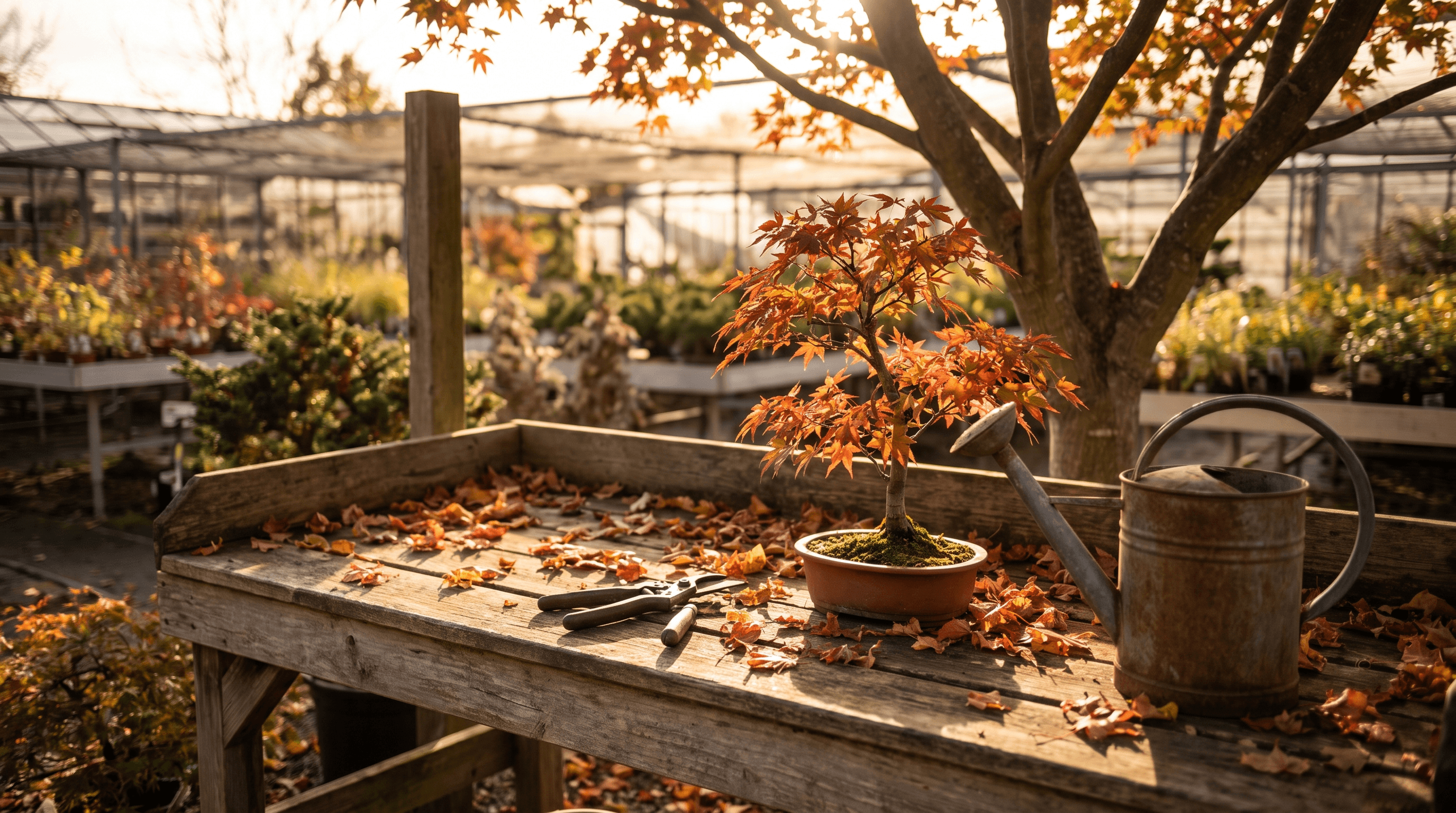
I get a lot of messages in March that start with some version of my tree looks terrible, what happened. Almost every time, the answer is something that happened, or didn't happen, back in autumn. Not a dramatic error, usually just a small misjudgment about timing that snowballed over the following months while the tree had no ability to correct for it itself.
Autumn is deceptive that way. It's a quieter season than spring, less urgent-feeling, and that quietness is exactly what leads people to either do too little, waiting on tasks that had a real window, or misread what a normal seasonal change looks like as a problem needing a response. Both directions cause trouble. Worth saying up front: how much of this applies, and how urgently, depends a lot on whether we're talking about a hardy outdoor species or a tropical one that needs real warmth. I'll flag that distinction where it matters.
These are the mistakes I see most often, roughly in the order they tend to bite people through the following winter and into spring.
Stopping feeding too abruptly
The bigger risk isn't necessarily the abruptness of stopping itself, it's feeding too long into autumn and pushing soft new growth that has no time to harden before frost. I reduce feeding progressively through autumn as growth actually slows, cutting frequency and strength down over several weeks and matching what the tree is doing rather than a date on a calendar, and I stop feeding dormant temperate trees for winter once they've clearly gone quiet. Tropical and subtropical species kept actively growing indoors are a different case and may still need some feeding through the colder months.
Waiting too long to prepare winter shelter
This is probably the most common one I see, though it's about preparation, not about moving hardy trees into protection early. People wait for a frost warning to think about cold frames, garage space, or sheltered spots, and end up scrambling to build or arrange something at the worst possible moment, in a rush, in bad weather, often making decisions they wouldn't make with more time. For most hardy outdoor bonsai, the trees themselves should generally stay outside experiencing the normal cooling until the first frost or until they're clearly dormant, but the shelter they'll eventually need should be ready and tested well before that point, not assembled in response to a forecast.
Misreading normal seasonal color change as a problem
Yellowing leaves, browning interior needles on conifers, general autumn color shift, all of this is the tree doing exactly what it should, and I understand why it worries people who are used to green meaning healthy. Treating normal seasonal change as disease leads to unnecessary spraying or, worse, unnecessary root disturbance on a tree that didn't need any intervention at all. The pattern to actually watch for is spotting or dieback that doesn't fit the season, not color change on its own.
Moving tender species indoors too late
Tropical and subtropical trees that summer outdoors need to come in before real cold sets in, generally before nighttime lows start dropping into the 50s Fahrenheit (roughly 10-15°C), depending on the species, and moving them at the last minute, after a surprise cold night has already stressed them, compounds the transition shock they're already dealing with from the light and humidity change. I start tracking overnight lows early in autumn specifically so I'm not caught reacting to a cold snap that's already arrived.
Skipping the pre-dormancy inspection
A last close look at each tree before winter, checking bark, branch crotches, the undersides of any remaining leaves, and the soil surface for pests, disease, and general condition, gets skipped more than any other task on this list, probably because trees look fine at a glance in October. Whatever's overwintering unnoticed, scale, mite eggs, an early fungal patch, can sit undisturbed for months on a tree that has little ability to fight back while dormant, and it's usually harder to deal with by the time it's obvious in spring. It's a low-effort task with an outsized payoff, which makes skipping it a genuinely costly mistake.
Common questions
What's the single most common autumn mistake you see?
Waiting until winter shelter is urgently needed to actually set it up. It leads to rushed decisions and trees sitting in inadequate spots during the exact cold snap the shelter was supposed to prevent.
Is it bad to keep feeding my bonsai into late autumn?
Feeding too late, or too strongly, right before frost can push soft new growth that's especially vulnerable to cold damage. I taper feeding down gradually as autumn progresses rather than continuing at full strength until a sudden stop.
How do I tell normal autumn leaf color from an actual problem?
Even, gradual color change spread across the whole tree in step with the season is normal. Spotting, blotching, or dieback concentrated in specific areas, especially on growth that looked healthy through summer, is what actually signals a problem worth investigating.
Can moving a tropical bonsai indoors too late actually cause lasting damage?
It can, especially if it coincides with an unexpected cold night. The combination of cold stress and then a rushed, abrupt indoor transition is harder on the tree than either issue would be alone.
Is it too late to do an autumn pest inspection if leaves have already dropped?
No, bare branches actually make scale and cankers easier to spot than they were with leaves in the way. I'd rather do this inspection late than skip it entirely.
What's the fix if I already made one of these mistakes this year?
Assess where the tree actually stands now rather than dwelling on the misstep. A tree that got fed too late can still be scaled back this week. A tree moved indoors late can still get the gradual light and humidity adjustment from this point forward. Most of these are recoverable if you catch and correct course reasonably soon.
Are these mistakes more serious for certain species than others?
Generally yes, tender or borderline-hardy species have less margin for error on timing mistakes than genuinely hardy ones, which tend to tolerate a delayed shelter setup or a late feeding taper somewhat better. That said, I'd rather not test any tree's margin unnecessarily.
You might also like
General guidance based on 20+ years of practice. Every tree, climate, and year is different — when in doubt, ask us.