
Autumn Bonsai Repotting: Which Species Tolerate It?
Autumn repotting works for species with specific tolerances, junipers, yews, and flowering quince among the more commonly cited examples, and it's not a workaround for missing the spring window on everything else.
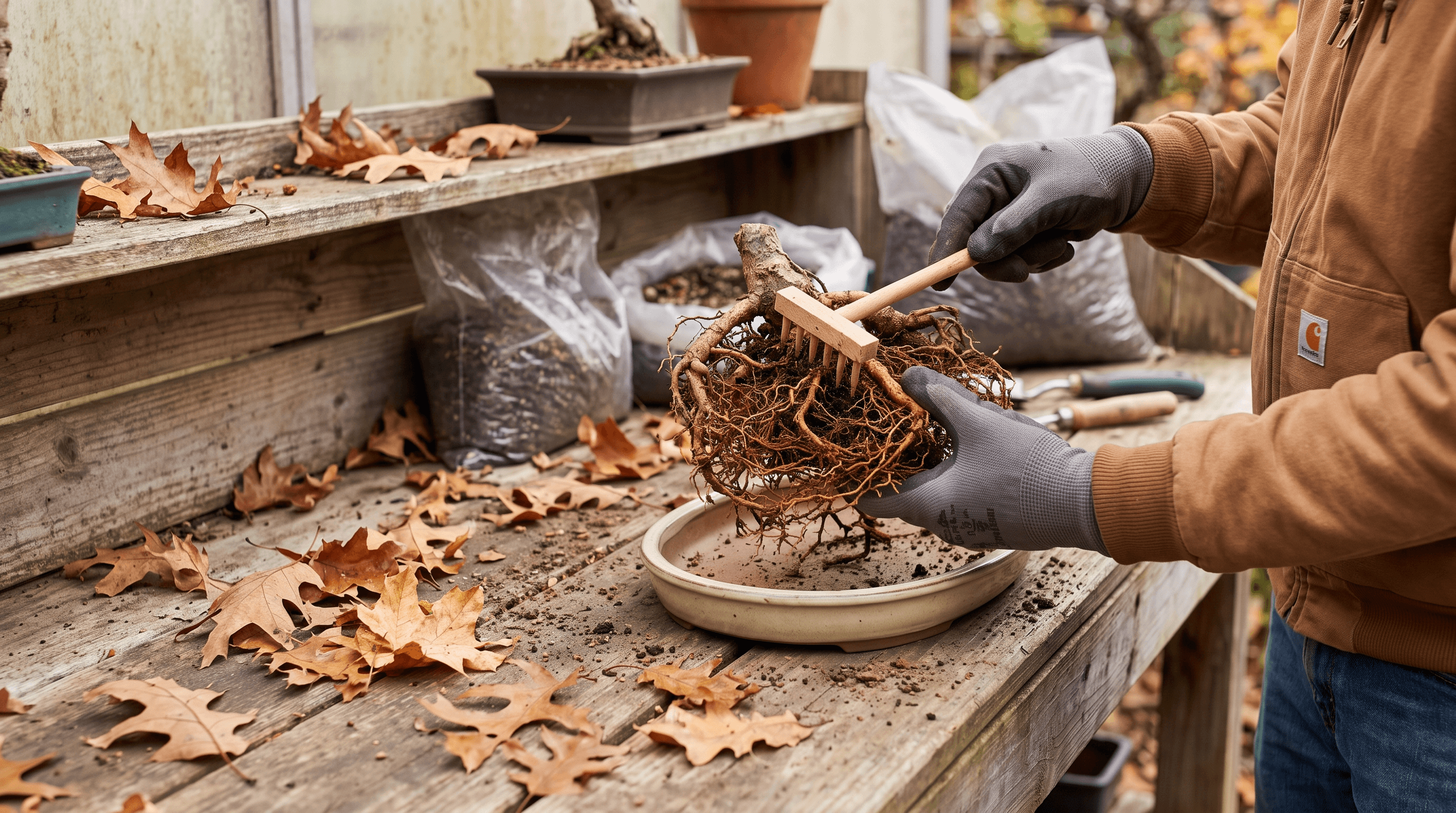
I want to be upfront about this one, because it's an area where I see people talk themselves into something risky based on a general idea rather than species-specific confirmation. Spring remains the standard, safest repotting window for most bonsai, tied to the tree's own root activity ramping up right as it moves into active growth. Autumn repotting exists as a real option, but it's the exception, practiced deliberately on species that tolerate or genuinely prefer it, not a general fallback for whenever spring didn't work out.
I've had this conversation more times than I'd like: someone missed their spring repotting window, the tree's clearly gotten pot-bound over summer, and they're looking for permission to just do it in autumn instead since it's the next opportunity that presents itself. Sometimes that's fine. More often, for most species, the better answer is to wait for the following spring rather than force a repot in a window the tree isn't built for.
So I'd treat everything here as species-specific guidance to confirm, not a general green light.
Why spring is the default for a reason
Most species time their most active root growth to start right around when spring repotting happens, which means a tree repotted then has the entire growing season ahead of it to recover and reestablish before the stress of winter dormancy arrives. That alignment, root disturbance followed immediately by the season of strongest recovery capacity, is exactly what makes spring the safer default across most species people grow as bonsai, though the exact window still shifts with your climate and with that particular species' own schedule.
Which kinds of species tolerate an autumn window
The species that handle autumn repotting reasonably well tend to be ones with a secondary period of active root growth in later summer or early autumn, or species that are naturally more tolerant of root disturbance in general. Juniper and yew are two of the more commonly cited examples, often repotted in late summer to early autumn rather than spring, and flowering quince is another that's frequently handled in autumn. Even so, this is genuinely species-specific rather than something you can generalize from plant family or growth habit alone, and I'd always confirm against dedicated species guidance rather than assuming a plant qualifies just because it seems vigorous or resilient in other ways, or because it's related to one of these examples. Treat any autumn repotting candidate as a case to verify individually, not a category to assume membership in.
What makes autumn repotting riskier even on a tolerant species
Even on a species that can handle it, an autumn-repotted tree has far less time to reestablish before winter dormancy than a spring-repotted one does, since the growing season is largely behind it rather than ahead. That means less margin for error if anything about the repot goes less than perfectly, and it means the tree needs more careful monitoring through its first winter afterward than a spring repot would need. I'm also more conservative about root reduction on an autumn repot, taking less off than I might in spring, specifically because there's less recovery runway left in the season.
When I'd actually consider it
In my own practice, I reach for an autumn repotting window only when I have specific confirmation that the species tolerates it, the individual tree is healthy and vigorous rather than already stressed, and there's a real reason it can't reasonably wait for spring, a genuinely pot-bound root system causing active problems, for instance, rather than just impatience or a missed spring opportunity. Absent all three of those conditions together, I default to waiting, since the downside of an unnecessary autumn repot going wrong is a lot worse than the inconvenience of waiting a few more months.
Common questions
Can I repot any bonsai species in autumn if I missed spring?
No, this isn't a safe general workaround. Autumn repotting is tolerated well by species with specific characteristics, junipers, yews, and flowering quince are commonly cited examples, and for most other trees, waiting for the next proper spring window is the better and safer choice rather than forcing a repot in a season the tree isn't suited for.
How do I know if my specific species can be repotted in autumn?
Check species-specific guidance rather than generalizing from the tree's overall vigor or growth habit. I'd want a source that specifically addresses that species' repotting tolerance before attempting an autumn repot, since this varies by species in ways that aren't always predictable from general characteristics.
Is autumn repotting more stressful for the tree than spring repotting?
Generally yes, even on a species that tolerates it. The tree has considerably less time to reestablish roots before winter dormancy arrives compared to a spring repot, which has the whole growing season ahead of it, so I treat autumn repotting as inherently higher risk even when it's an option worth using.
Should I reduce roots as much in an autumn repot as I would in spring?
I take a more conservative approach, removing less of the root mass than I typically would in a spring repot, specifically because there's less growing season left for the tree to recover and regenerate roots before winter arrives.
What happens if I repot the wrong species in autumn by mistake?
The risk is that the tree goes into winter dormancy with a disturbed, under-established root system and insufficient recovery time, which can lead to serious stress or even tree loss over winter. This is exactly why confirming species suitability beforehand matters so much more here than it does with a standard spring repot.
My tree is clearly pot-bound right now, should I repot it in autumn rather than wait?
It depends on the species and how severe the situation is. If it's causing genuine active problems and the species is a confirmed autumn-tolerant one, it may be worth doing. If it's simply crowded but not in crisis, I'd usually still recommend waiting for spring rather than taking on the added risk of an out-of-season repot.
Does autumn repotting require different aftercare than spring repotting?
Yes, closer monitoring through the following winter matters more, since the tree has had less time to reestablish before dormancy. I'd also be more cautious about placement, favoring a more sheltered spot for that first winter than I might for a tree that had a full growing season to recover after a spring repot.
You might also like
General guidance based on 20+ years of practice. Every tree, climate, and year is different — when in doubt, ask us.