
When to Stop Fertilizing Bonsai for Winter
Stop when the tree tells you it's slowing down, not when the calendar tells you autumn has started, because that date moves every year and by region.
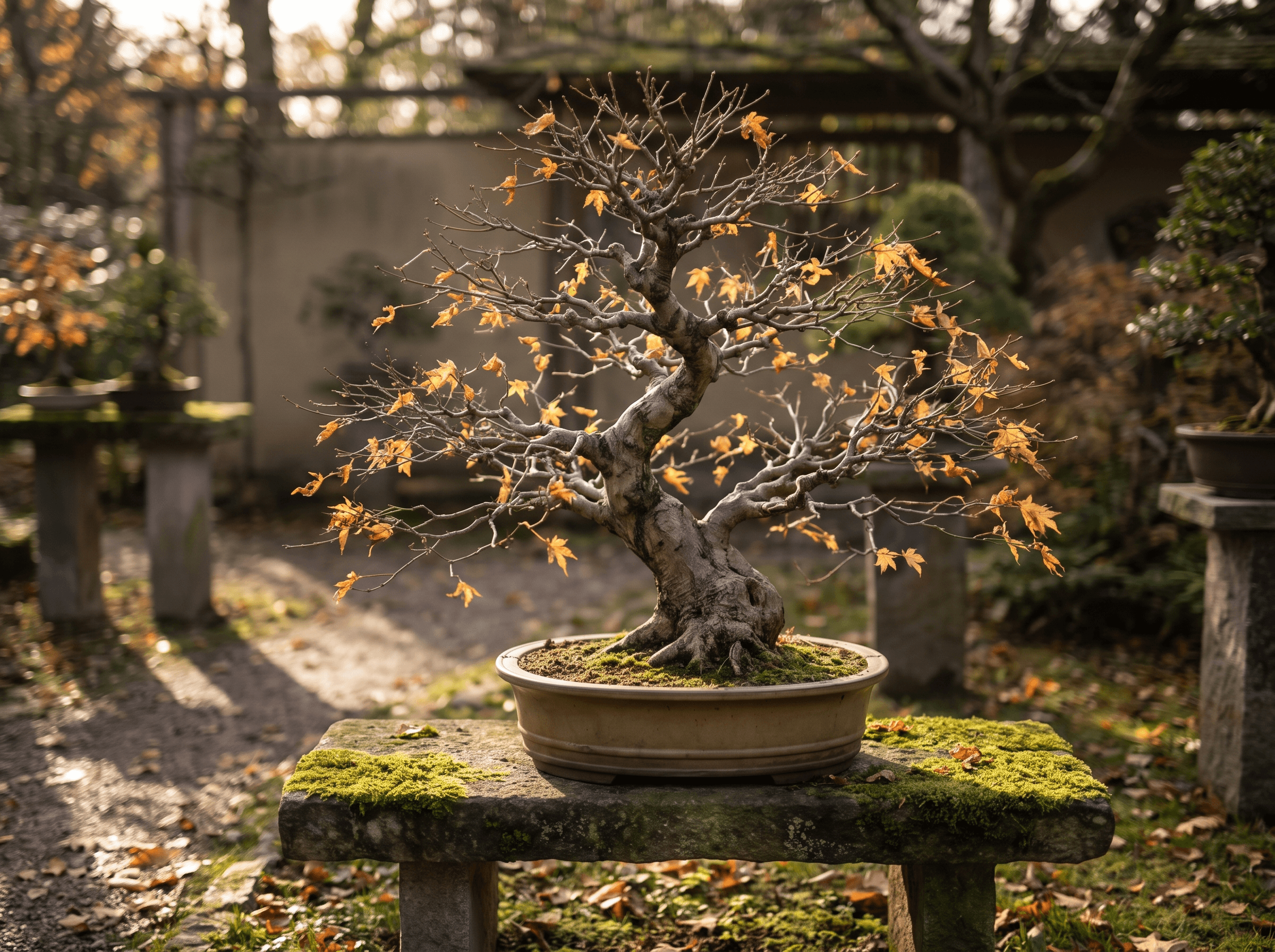
This question comes up every year right around now, and every year my answer disappoints people slightly because they want a date. October the fifteenth, the first of November, something concrete they can put in a reminder app. I understand the appeal, but a fixed calendar date ignores everything that actually matters: your climate, your species, and what the current season has actually been like.
A grower in the mountains further north deals with a completely different autumn than I do here near the coast, where the season stays mild well into what would be deep autumn further inland. A calendar date that works for one of us will be wrong for the other, sometimes by a month or more.
What I watch instead is the tree itself. Growth rate, shoot extension, how the current flush of leaves is hardening off. Those signals tell you far more reliably when to stop than any date ever could.
Watch growth slow down, don't watch the calendar
As autumn approaches, active shoot extension slows and eventually stops, new leaves stop appearing, and the wood on this year's growth begins to firm and darken rather than staying soft and green. That's the signal to start tapering feeding, not a specific week on the calendar, and tapering rather than stopping outright is usually the better approach at first: many growers switch to a lower-nitrogen feed through the tail end of autumn instead of cutting fertilizer off all at once, then stop entirely once growth has genuinely ceased and dormancy sets in. Some years that happens earlier, after a particularly hot dry summer that stressed growth early, other years it happens later if the autumn stays mild. I check my trees rather than a schedule for this every single year, even after two decades of doing it.
Why feeding too late into autumn is risky
Fertilizing a tree that's already shutting down for winter risks pushing a late flush of soft new growth right when the plant should be hardening off instead. That late growth tends to be tender and less lignified than growth produced earlier in the season, which is generally the kind of tissue most vulnerable to frost damage. I've seen trees lose a late flush of shoots after a fertilizing schedule ran a few weeks too long into a cooling autumn, though how much of that comes down to the feeding itself versus the timing of an early cold snap isn't something I can say with total certainty, it's a pattern I watch for and try to avoid regardless.
Indoor tropicals are the exception
Species kept indoors year round under good light, many ficus and other tropical bonsai, don't experience true dormancy the way outdoor temperate trees do, and can continue growing, if more slowly, right through winter. For these, light feeding can continue through the colder months rather than stopping entirely, though I'd still reduce the frequency compared to their peak summer schedule, since even indoor growth generally slows somewhat as day length shortens.
When to start feeding again in spring
Resume once you can actually see new growth underway, buds breaking, the first leaves unfurling, not before, and not just because the calendar says spring has technically arrived. Feeding into soil that's still cold and a tree that hasn't woken up yet does little good and risks the same kind of imbalance as feeding too late in autumn. I wait for visible confirmation from the tree every spring, even on species I've grown for years and think I know well, because a late cold snap can push the timeline back further than expected.
Common questions
What's a good general rule for when to stop fertilizing bonsai?
Taper off as you see growth visibly slowing in autumn, shoot extension stopping and new wood firming up, often by switching to a lower-nitrogen feed before stopping entirely, rather than picking a fixed calendar date. The exact timing varies by climate and species from year to year.
Is it bad to fertilize bonsai in winter?
For outdoor temperate species in true dormancy, winter feeding is generally unnecessary and usually avoided, it offers little benefit since the root system isn't actively taking up nutrients, and continuing too close to the onset of dormancy risks pushing soft growth right before cold weather arrives.
Should indoor bonsai be fertilized through winter?
Tropical species kept indoors under good light and growing slowly through winter can continue light feeding, reduced in frequency from their summer schedule. Species that go semi-dormant even indoors should be fed more sparingly or not at all until growth resumes.
How do I know if I fed my bonsai too late into autumn?
Look for a late flush of soft, pale green growth appearing well after the rest of the tree has slowed down. That growth is the most vulnerable to frost damage, so it's a sign to taper feeding earlier next year.
When exactly should I resume fertilizing in spring?
Once you see actual new growth, swelling buds or unfurling leaves, not on a fixed date. Feeding before growth resumes offers little benefit since the tree isn't yet in a position to use the nutrients.
Does the timing for stopping fertilizer differ between species?
Yes, considerably. In my experience, deciduous species tend to signal dormancy fairly clearly through leaf colour change and drop, while evergreens give subtler cues like slowed shoot extension, so pay attention to your specific tree's own signals rather than applying one timeline to every species in your collection.
Can I fertilize a bonsai that's about to be moved into winter protection?
It's sensible to stop feeding before moving a tree into winter storage, since the reduced light and cooler temperatures of most protection setups mean the tree is unlikely to be actively using nutrients while it's in there, so continuing to feed mostly just risks salt buildup in the substrate for no real benefit.
You might also like
General guidance based on 20+ years of practice. Every tree and every climate is different — when in doubt, ask us.