
Removing Wire Without Damaging Bark
Cut the wire off in short segments with a proper wire cutter rather than unwinding it, and you'll avoid most of the bark damage that happens during removal.
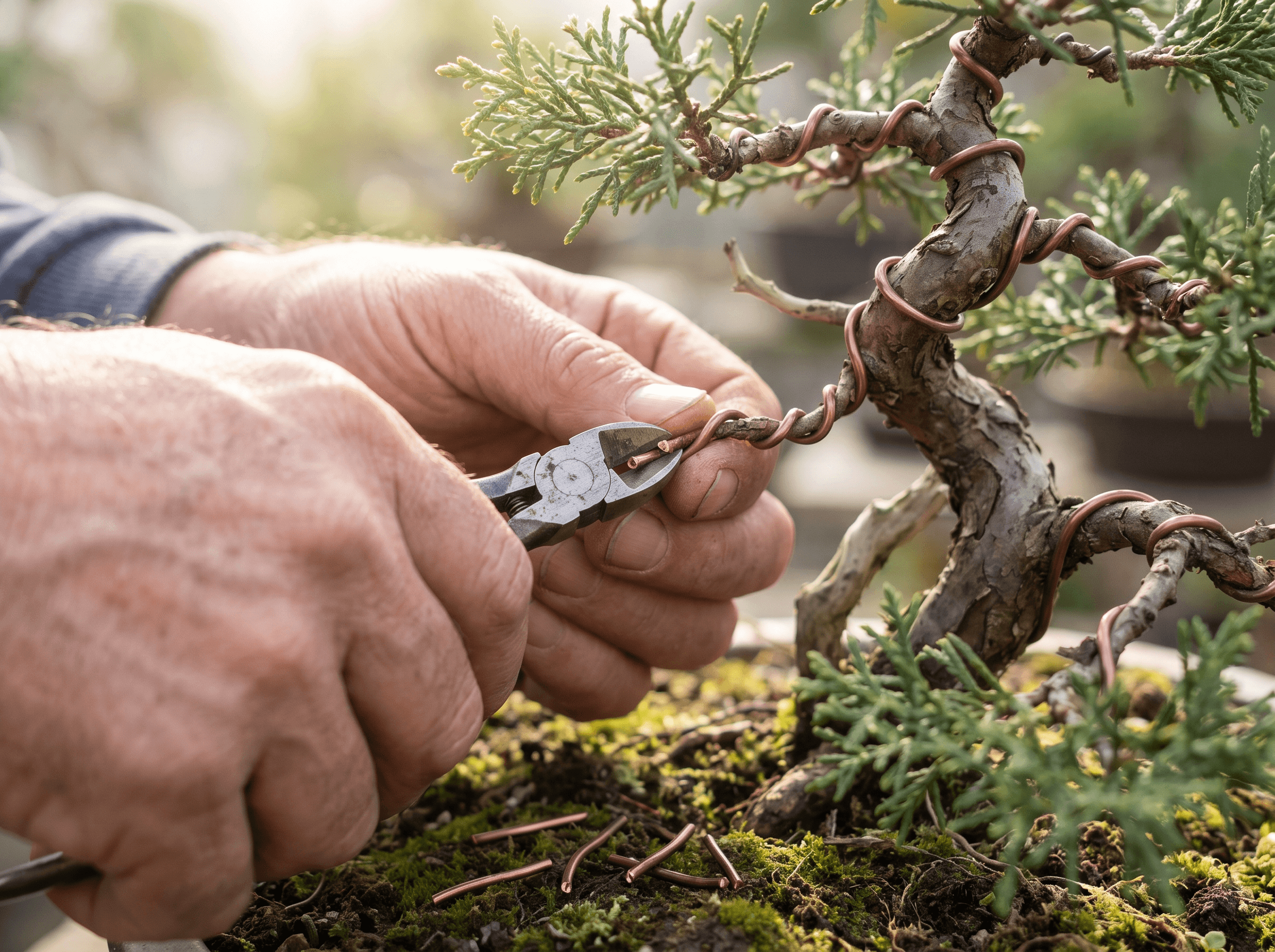
I've seen more damage done pulling wire off than putting it on, which surprises people until they've tried unwinding a coil that's already started to bite into a branch. The instinct is to save the wire and just spin it back off the way it went on, especially with heavier-gauge aluminum, which is sometimes worth reusing, though thinner gauges used on small branches usually aren't worth the trouble of saving. That instinct is fine for wire that's loose and hasn't marked the bark at all. It's a bad idea for anything that's set for a while.
The safer default, and what I do on almost every branch now regardless of how it looks, is to cut the wire away in short pieces with a dedicated wire cutter rather than unwind it. It costs you the wire, which is a small price, and it greatly reduces the risk of tearing or twisting the bark that unwinding carries, especially once the coils have any grip on the branch at all.
This matters more on some trees than others. A thick-barked pine can shrug off a slightly clumsy removal that would strip a strip of bark clean off a thin-skinned maple. Knowing which situation you're in changes how carefully you need to work, but the basic method, cut rather than unwind, holds regardless of species.
Why unwinding is riskier than it looks
Unwinding seems gentler because you're not putting a blade anywhere near the tree, but the motion itself is the problem. To spin a coil back off, you have to twist the wire against the branch in the opposite direction it was wrapped, and that twisting motion drags against the bark the entire length of the coil. On smooth, loose wire that hasn't set at all, this can work fine. But the moment a coil has any grip, even the earliest hint of the wire pressing into the bark, unwinding transmits that twisting force directly into the bark and can tear it, sometimes stripping a visible strip away rather than leaving a simple pressure mark.
Cutting in short segments
Use a dedicated bonsai wire cutter, designed for close, controlled cuts near the branch, rather than ordinary pliers, and cut the wire at each coil rather than trying to snip once and pull the whole length free. Work in short segments, cutting one loop, easing that piece away, then moving to the next loop along the branch. It's slower than one grand unwind, and yes it means the wire is scrap afterward, but each individual cut releases tension in a controlled way rather than dragging force along the whole branch at once. On a heavily coiled branch this might mean a dozen or more small cuts rather than one continuous motion, and that's fine. There's no reward for doing it fast.
Extra care on thin-barked species
Some species have bark that's thin and easily marked even by careful handling, maples being the classic example, along with many other smooth-barked deciduous trees. On these, even a technically careful unwind can strip bark that a thicker-barked conifer would never show a mark from at all. If you're working on anything with delicate bark, cut every single loop rather than trying to save a piece of wire by unwinding even a short stretch, and support the branch gently with your other hand as you work so it doesn't flex or twist while you're cutting close to it.
Working slowly, section by section
The whole job goes better treated as a series of small, deliberate steps rather than one continuous task to get through quickly. Cut a loop, check the bark underneath before moving on, adjust your grip on the cutter if the angle is awkward, then repeat. This also gives you a chance to actually look at the bark as you expose it, which is useful information for judging how that particular branch responded to the wiring and whether it needs a rest before you consider wiring it again.
A little marking is normal, and it fades
Even with careful removal, you'll sometimes see faint spiral marks where the wire sat, and that's expected rather than a sign you did something wrong. In most cases, light marking like this smooths out or gets absorbed into the bark's texture as the branch continues to thicken over the following seasons. It's the deep grooves from wire left on too long, not the light traces from a well timed and carefully removed wiring, that tend to leave lasting scars.
Common questions
Is it ever okay to unwind wire instead of cutting it?
Only when the wire is still loose and hasn't left any impression on the bark at all. Once a coil has started to grip the branch, even slightly, cutting is the safer option regardless of how tempting it is to save the wire by unwinding.
What tool should I use to remove bonsai wire?
A dedicated bonsai wire cutter, designed for close, controlled cuts near the branch. Standard pliers or general wire snips work in a pinch but are more likely to slip or press awkwardly against the branch.
Can I reuse wire after cutting it off in pieces?
Not really, cutting the wire into short segments to protect the bark means the pieces are too short to be useful for rewiring anything of substance. If reuse matters to you, that's only realistic on wire you carefully unwind while it's still loose.
Why did bark come off when I removed the wire?
This often happens when unwinding wire that has started to bite into the bark, when the twisting motion drags against tissue the wire is already gripping. It's especially common on thin-barked species, and it can also happen if the wire was left on too long before removal. Switching to cutting the wire in short segments largely prevents it.
Will wire marks on the bark ever go away?
Light marks from wire that was removed at the right time generally fade or smooth out as the branch thickens over the following seasons. Deeper grooves from wire left on too long take much longer to grow out and can leave a lasting trace even after years of growth.
How do I remove wire from a branch I can barely reach?
Take even more time than usual and work loop by loop rather than trying to reach the whole coil at once. If the angle is genuinely awkward, it's worth repositioning the tree or turning the pot rather than forcing an unnatural cutting angle close to delicate bark.
Should I remove all the wire at once or spread it over several sessions?
For a normally wired tree, most growers get through it in one careful session cutting loop by loop, though there's no rule that says you must. If a particular branch's bark looks stressed or marked as you go, it's reasonable to pause and finish that branch another day rather than pushing through.
You might also like
General guidance based on 20+ years of practice. Every tree and every climate is different — when in doubt, ask us.