
How to Wire a Bonsai Tree
Good wiring comes down to a solid anchor, a consistent angle, and reading how each branch feels as you bend it, rather than forcing a shape and hoping the wire holds.
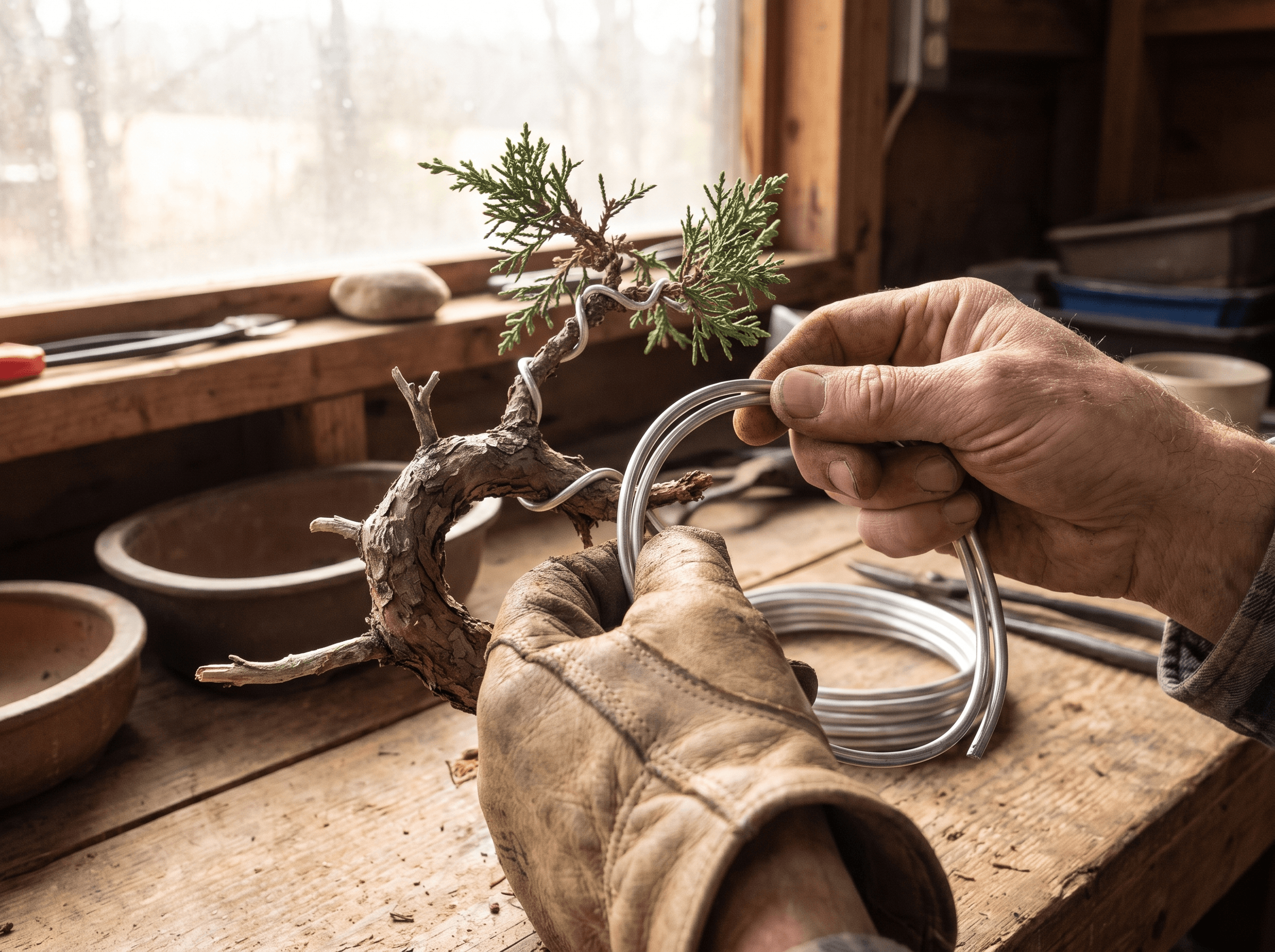
Wiring is the technique that intimidates new growers more than almost anything else, and I think it's because the failure mode is so visible: a snapped branch is right there, obvious, unlike an overwatered root system that quietly fails out of sight. That fear is actually useful if it makes you slow down, because slow, deliberate wiring is exactly what avoids snapped branches in the first place.
The mechanics aren't complicated once you've done it a handful of times. You're anchoring wire so it has something to push against, wrapping it at a steady angle along the branch or trunk, and then bending gradually while supporting the wood near the bend so the stress doesn't concentrate in one spot. Most of what goes wrong comes from skipping the anchor, wrapping too loosely, or bending too fast rather than any deep technical error.
Here's the process I actually use and teach, including a couple of habits, like wiring two branches from one shared anchor, that save wire and produce a cleaner result once you're comfortable with the basics.
Anchor the wire before you wrap anything
Wire needs something to push against or it just slides and does nothing useful when you try to bend the branch later. Anchor one end by wrapping it a turn or two around the trunk or a thicker branch before you continue out toward the branch you actually want to shape, that's the most reliable method. Pushing the free end into the soil near the trunk base can work in a pinch, but it's a less secure anchor and worth avoiding when a trunk or branch anchor is available. Skipping a proper anchor altogether is one of the most common beginner mistakes, and it's usually only obvious once you go to bend the branch and the whole wire just shifts instead of holding the new position.
Wrap at a consistent angle, without overlapping coils
Aim for roughly a 45-degree angle as you wrap the wire along the branch, evenly spaced so the coils sit next to each other without overlapping or leaving big gaps. Overlapping coils create weak points and pinch points, gaps leave sections of the branch unsupported, and both make the eventual bend less predictable. Consistent spacing at a steady angle distributes the holding force evenly along the whole length of wire, which is what actually lets you bend the branch smoothly instead of it kinking at one spot.
Wire two branches together from a shared anchor when you can
When two branches of similar thickness are close together, you can often wire them both from a single length, wrapping one, crossing at the trunk or a fork, then continuing onto the second branch. This uses less wire overall and, done well, the two branches end up bracing against each other through the shared anchor point, which can provide good, stable anchoring when the crossover point is planned well. It takes a bit more planning to figure out where the crossover point should sit, but it's worth learning once you're past your first few trees.
Bend gradually and support the branch near the bend
Once the wire is on, bend slowly, using your thumbs to support the wood close to the point where you're actually bending rather than pulling from a distance. Bending gradually in stages, checking the branch as you go rather than forcing it into final position in one motion, is what prevents the wood from snapping, especially near the base of the bend where stress concentrates first. If you feel real resistance building rather than a smooth give, stop. That resistance is usually the wood telling you it's close to its limit for that session, and pushing further is how branches break.
Wire in the right season for the species
Timing affects how easy a branch is to work with, though it's more about growth stage than wood brittleness alone. Most species can be wired across a fairly wide window, but deciduous trees are often easiest to wire in late winter, once they've dropped their leaves and you can see the branch structure clearly, and wire itself is more likely to bite in fast during a strong flush of active growth, so checking more often matters most through the growing season. It's worth learning the wiring habits of whatever species you're working with rather than assuming one season suits everything, since wiring wood that's actively stressed is a fast way to lose a branch you were trying to shape.
Common questions
How do I know what gauge of wire to use?
As a general guide, thicker branches and trunks need heavier gauge wire to hold the bend, while fine twigs need thin wire that won't overpower them. As a rule of thumb the wire should be roughly a third of the branch's diameter, though this varies somewhat with how much bend you're asking for and the wood's flexibility.
How long should wire stay on a bonsai branch?
It depends on the species and how fast the branch is growing, but check regularly rather than leaving it on a fixed schedule. Wire left too long will bite into the bark as the branch thickens, leaving marks that can take seasons to grow out.
What do I do if the wire starts cutting into the bark?
Remove it as soon as you notice, ideally by cutting the wire off in small sections rather than unwinding it, which avoids stressing or snapping the branch you just spent time shaping. If the bend has held, the branch usually keeps its shape once the wire is off.
Can I reuse bonsai wire?
Copper wire is generally not reused since it work-hardens and loses flexibility once bent. Aluminium wire can sometimes be reused if it's still reasonably straight and hasn't kinked too much, though a fresh length is usually easier to work with cleanly.
Why did my branch snap while I was wiring it?
Usually either the bend was attempted too fast without gradual, supported movement, or the wood was wired at a point in the growth cycle when it was more brittle than usual for that species. Supporting the branch near the bend point and going slowly are the main defenses against this.
Is it better to wire when the tree is dormant or actively growing?
It genuinely depends on species. Deciduous trees are often easiest to wire in late winter, once the leaves are down and the branch structure is visible, while many other species can be wired across a wider window. The main thing to watch for at any time of year is wire biting in fast during a strong flush of growth. There's no single answer that covers every tree.
How do I wire two branches without using extra wire for each one?
Anchor a single length of wire around the trunk or a fork, wrap one branch, cross back at the anchor point, then continue the same wire onto the second branch. This uses less material and the two branches end up bracing against each other for extra stability.
You might also like
General guidance based on 20+ years of practice. Every tree and every climate is different — when in doubt, ask us.