
Bonsai Tools for Beginners: What You Actually Need to Start
You need far fewer tools to start bonsai than the catalogs suggest, and buying the full kit before your first tree is one of the easiest ways to waste money.
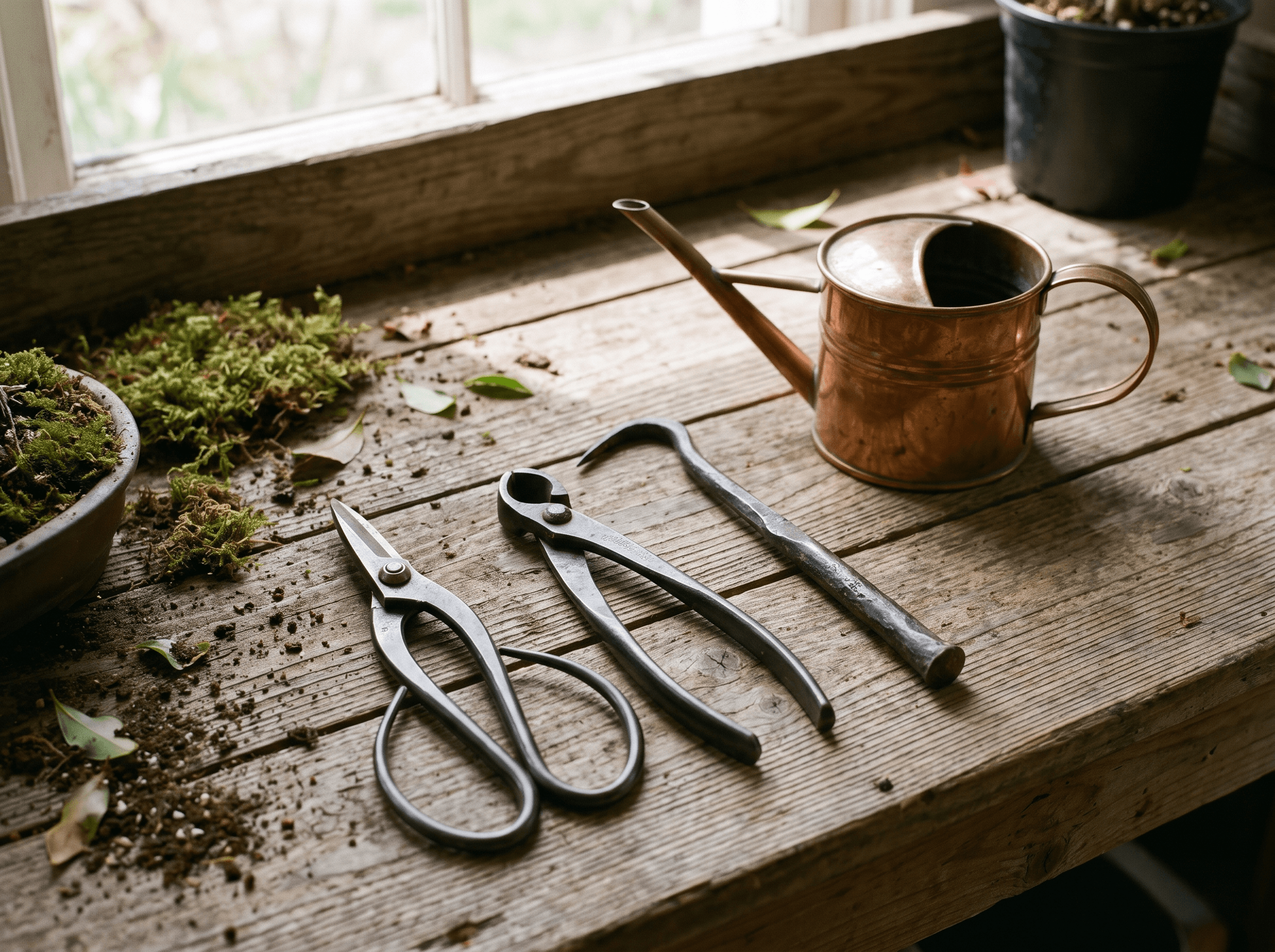
Walk into any bonsai supply shop or browse one online and you'll find rolls of specialized cutters, a dozen kinds of shears, turntables, root hooks, wire in six gauges, and concave cutters shaped like nothing else in your toolbox. It's easy to assume you need all of it before you're allowed to start. You don't. I've kept trees alive and reasonably well shaped for years with a fraction of what's marketed as essential.
The honest minimum kit is small, and most of it does double duty. What actually matters more than how many tools you own is keeping the few you have clean and sharp, since a dull or dirty blade does more damage to a small tree than almost any technique mistake. A crushed cut tends to heal less cleanly than a sharp one, regardless of how expensive the tool that made it was.
Here's what I'd actually put in a beginner's kit, and what I'd tell you to skip until you've got a season or two of experience and know what you're missing.
The real minimum: shears, something for repotting, and a watering can
A decent pair of bonsai shears or scissors, sharp enough to make a clean cut through small twigs and foliage without crushing the stem, covers the vast majority of routine maintenance: trimming new growth, cleaning up leaves, light pruning. For repotting, a simple root hook or even a sturdy wooden chopstick works fine for teasing old soil out of the root ball, you don't need a specialized root rake for your first repot. And a watering can fitted with a fine rose head, meaning the perforated sprinkler attachment on the spout, lets you water gently and evenly without blasting soil out of the pot or exposing roots. That's the kit I'd recommend to most beginners, though some sources treat the root hook as a slightly later purchase rather than day-one gear, so don't feel behind if you start with just shears and a watering can.
Add wire cutters only once you're actually wiring
If you plan to wire branches for shaping, a pair of wire cutters designed for the job makes a real difference, since ordinary pliers or side cutters can make removal clumsier and increase the risk of nicking the bark. Bonsai wire cutters have a rounded jaw specifically so you can snip the wire close to the branch without pressing into the bark underneath it. But if you're not wiring yet, there's no reason to buy these before you need them.
Nice to have, not need to have, for your first tree
Concave cutters, which leave a shallow depression that heals flatter than a flush cut, are genuinely useful once you're removing larger branches, but overkill for a beginner mostly doing light trimming. Jin pliers, used for stripping and shaping deadwood on more advanced specimens, are rarely necessary for a first tree unless you're specifically working deadwood, which a young beginner tree usually doesn't have yet. A turntable makes styling sessions more comfortable since you can rotate the tree instead of walking around it, which is convenient but not remotely essential when you're starting out with basic maintenance.
Cheap steel tools are genuinely fine to start with
There's a real market for high-end Japanese carbon steel tools, and eventually, if you stay with this hobby, you may want them for how well they hold an edge and how precisely they cut. But for a first tree and a first year or two, a reasonably well-made and affordable pair of steel shears does the job. The difference in outcome between a budget tool and a premium one matters far less than whether the tool is sharp and whether you're using it correctly. Spend your early money on the tree and the substrate, not on tools you're not yet skilled enough to fully benefit from.
Keep what you have clean and sharp
This matters more than tool count. Wipe sap and soil off blades after use, since dried residue makes cuts rougher over time and it's good general hygiene to keep tools clean between plants. A quick sharpen or a swap for a new inexpensive pair when shears start crushing rather than cutting cleanly will do more for your trees than adding another specialized tool to the drawer. A crushed cut tends to heal less cleanly and more slowly than a sharp one, and on a small bonsai branch that's a bigger deal than it sounds.
Common questions
What is the single most important bonsai tool to buy first?
A decent pair of bonsai shears or scissors. Almost all routine maintenance, trimming new growth, cleaning up foliage, light shaping, runs through this one tool, and a sharp, clean pair makes a bigger difference to your tree's health than any other single purchase.
Can I use regular household scissors on my bonsai?
You can in a pinch for very soft new growth, but ordinary scissors tend to crush rather than cleanly slice woodier stems, which heals poorly. A proper bonsai shear is shaped and sharpened specifically for clean cuts on plant stems, and it's inexpensive enough that it's worth the small investment early on.
Do I need a concave cutter as a beginner?
Not for a first tree doing routine light trimming. Concave cutters earn their keep once you're removing thicker branches and want the wound to heal flat rather than as a raised bump. That's a step past most beginner maintenance, so it's fine to add later.
Are expensive Japanese bonsai tools worth it for a beginner?
Not right away. They hold an edge longer and cut more precisely, which matters once your skills and tree collection have developed. For your first tools, an affordable, reasonably well-made steel pair does the job perfectly well while you're still learning technique.
What kind of watering can should I use for bonsai?
One fitted with a fine rose head, the perforated attachment on the spout that breaks the stream into a gentle shower. It waters evenly across the soil surface without eroding the substrate or exposing roots, which a bare spout or a hose on full pressure tends to do.
Do I need a turntable to style a bonsai?
No, it's a convenience rather than a necessity. Rotating the tree by hand, or simply walking around it, works fine. A turntable is worth adding once you're doing more involved styling sessions and want to view the tree from every angle quickly.
How do I know when it's time to replace or sharpen my shears?
If cuts start looking crushed or torn rather than clean, or you notice yourself squeezing harder than usual to get through a stem, it's time. Either sharpen them if they're a quality pair worth maintaining, or replace an inexpensive pair, since a dull blade damages small branches more than people expect.
You might also like
General guidance based on 20+ years of practice. Every tree and every climate is different — when in doubt, ask us.