
Bonsai Pruning Tools and How to Use Them
You don't need a full tool roll to start, but knowing what each bonsai tool actually does differently from a regular garden pruner will save you from crushed cuts and slow-healing wounds.
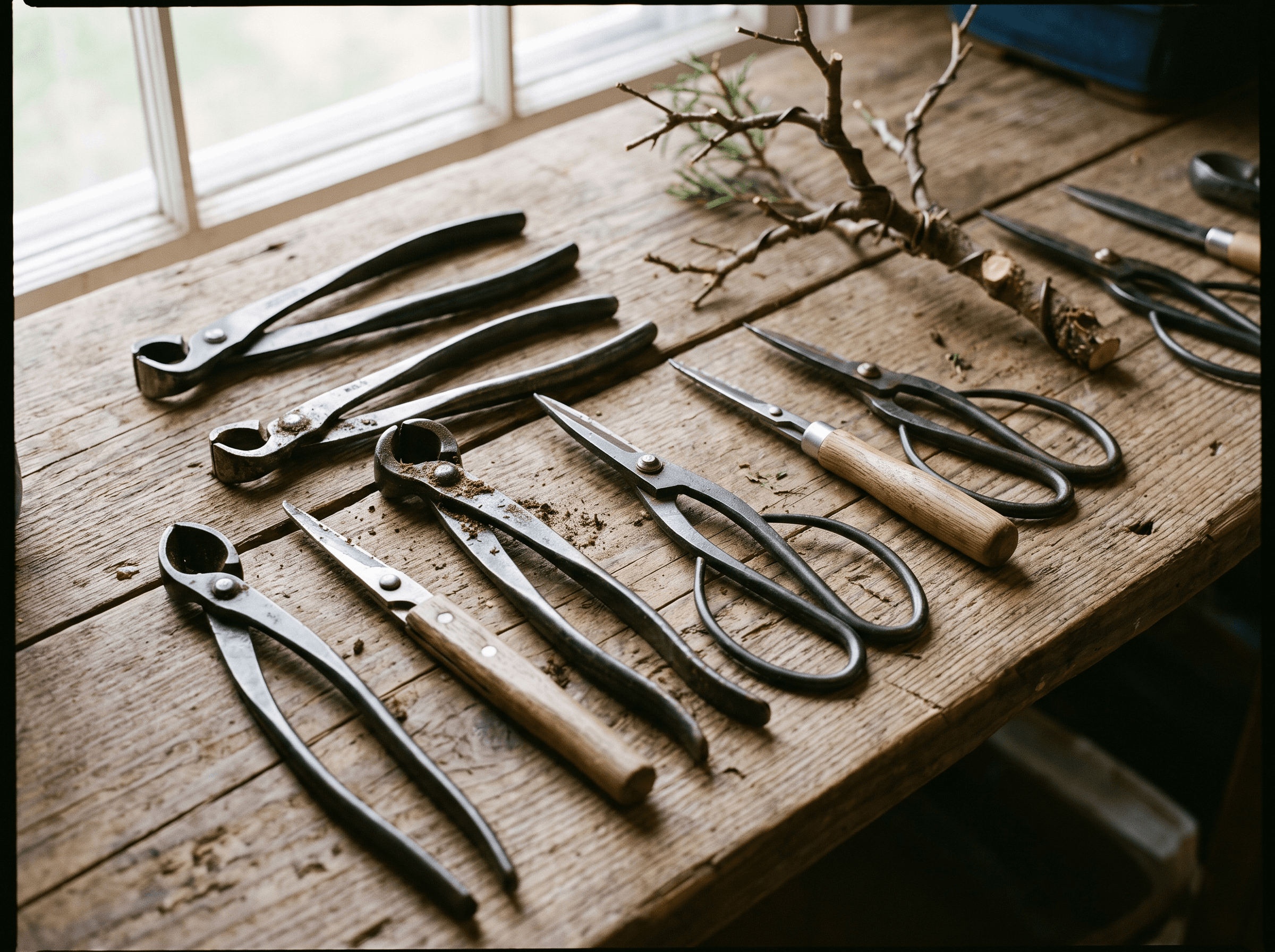
Someone visiting the nursery for the first time will often look at the wall of specialised tools, the shears, the concave cutters, the knob cutters, and ask whether they really need all of it. The honest answer is no, not on day one. But each tool exists because it solves a specific problem a regular garden pruner handles badly, and understanding what that problem is makes it obvious why bonsai people don't just reach for whatever's in the shed.
The short version: bonsai tools are built to make wounds that heal well on a small, slow-growing tree, not just to remove material quickly. A cut that would be totally fine on a rose bush can leave a visible, slow-healing scar on a bonsai trunk, because there's so little bark and cambium to work with and the tree is meant to be looked at closely for years.
Here's what each core tool actually does, when to reach for it, and where a regular garden pruner will get you by in a pinch versus where it genuinely lets you down.
Bonsai shears, for fine twig and leaf work
Bonsai shears are the tool you'll use most, by a wide margin. They're built for fine, precise cuts on thin twigs, leaf stems, and soft new growth, the bulk of routine maintenance pruning. Good shears have thin, sharp blades that meet cleanly at the tip, letting you get into tight spots in the canopy without crushing surrounding growth. Keep them sharp. A dull pair of shears on fine growth doesn't cut so much as pinch and tear, which bruises the tissue and slows healing, sometimes leaving an entry point for disease on an otherwise minor trim. Worth knowing too: some conifers can brown at the cut tip when trimmed with shears rather than pinched back by hand, so it's worth checking species-specific guidance before doing broad shear work on those.
Concave cutters, for removing branches cleanly
This is the tool that separates bonsai work from general pruning. A concave cutter is shaped to remove a branch at its base and leave a shallow, dish-shaped wound rather than a flat or protruding one. That shape matters because a concave wound is designed to heal flatter and with less visible swelling than an ordinary flush cut, which more often leaves a raised scar. If you're removing an established branch, not just trimming new growth, a concave cutter is genuinely worth having before a regular garden pruner.
Knob cutters, for stubs and larger wounds
Knob cutters are built for cleaning up what's left after a bigger cut, removing stubs or thicker sections a concave cutter can't get through cleanly. Their rounded jaws let you take a wound down in stages, shaving material away gradually rather than trying to force one large cut, which is gentler on the surrounding bark and wood than one aggressive bite. I use them mainly on structural work, thick material that a smaller tool would struggle with rather than every-day maintenance.
Keeping your edge sharp and clean between trees
This gets skipped more than it should. A sharp edge matters enormously in whether a cut heals well, and a dull blade will crush and bruise material regardless of how good the tool was originally. Just as important, clean your blades between trees: wipe off sap and debris, then disinfect with alcohol or a diluted bleach solution, especially after working on anything that showed signs of pest activity or fungal trouble. It takes about a minute and it's one of the more effective ways to avoid spreading disease from one tree in your collection to the next.
Where regular garden pruners fall short
A regular garden pruner will get a beginner through their first season, and there's no need to buy a full set of specialised tools before you've even decided bonsai is for you. But garden pruners are built with a bypass or anvil action designed for thicker, woodier material, and on the fine twig work bonsai actually needs, they're more prone to crushing than cleanly shearing the growth, especially once the blade isn't razor sharp. You'll notice it most on new, soft shoots, which can come away bruised and ragged instead of cut clean. It works in a pinch. It's just not built for the job.
Common questions
What's the first bonsai tool I should buy?
A good pair of bonsai shears. They handle the bulk of routine maintenance pruning, which is most of what a beginner does, and they're the tool where the difference from a regular garden pruner shows up fastest.
Do I really need concave cutters as a beginner?
Not right away. Concave cutters matter most once you're removing established branches rather than trimming new growth. If you're mostly doing maintenance pruning in your first season, shears will cover you until you take on structural work.
Can I use regular garden pruners on my bonsai?
In a pinch, yes, especially as a beginner still deciding whether to invest in bonsai-specific tools. Just expect them to be more likely to crush than cleanly shear fine growth, which can bruise the tissue and slow healing compared to a proper bonsai shear.
How do I know when my bonsai tools need sharpening?
If a cut looks crushed or torn rather than clean, or if you feel yourself needing to squeeze harder than usual to get through a twig, it's time to sharpen. A sharp edge should go through fine growth with very little resistance.
Why do concave cutters leave a different wound than regular pruners?
Their curved jaw removes a shallow, dish-shaped section of the branch base rather than cutting flush across it. That dish shape heals flatter into the surrounding bark over time, while a flush cut from a regular pruner tends to leave a raised, more visible scar.
Should I clean my tools between every tree?
It's good practice, especially if you're working on multiple trees in one session or if any tree showed signs of pests or disease. Wiping debris off the blades and disinfecting them takes barely a minute and is one of the more effective ways to avoid spreading problems across your collection.
What are knob cutters actually for?
Removing stubs, old knobs, and thicker material left over after a larger cut, usually as part of structural work rather than routine maintenance. Their rounded jaws let you take a wound down gradually instead of forcing one large, risky cut.
You might also like
General guidance based on 20+ years of practice. Every tree and every climate is different — when in doubt, ask us.