
Bonsai looking wilted or unhappy after shipping
A tree that arrives with drooping leaves, some leaf drop, or a generally dull look after a courier delivery is very often just recovering from the trip, not showing signs of a deeper problem.
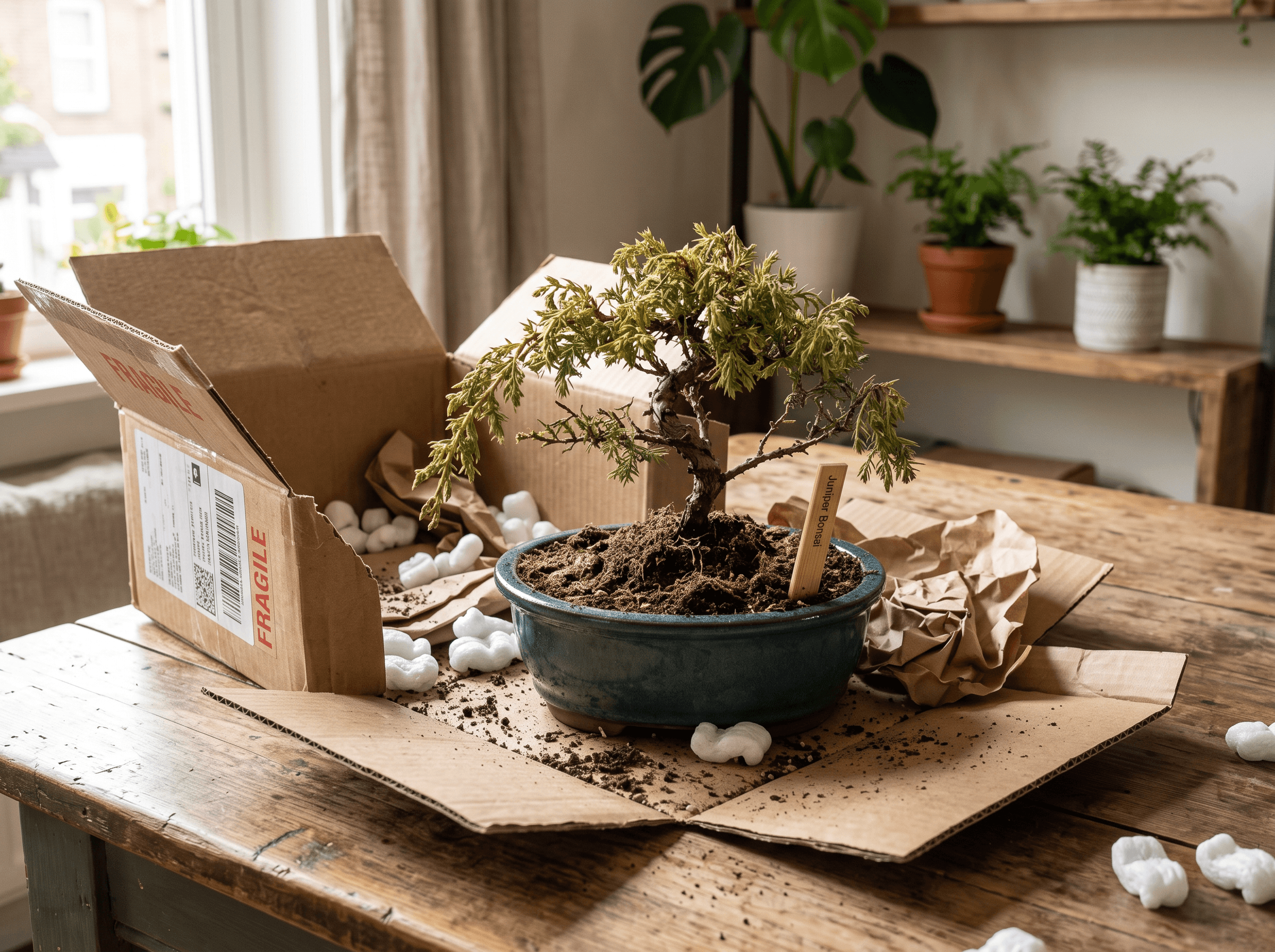
If you've just unboxed a bonsai stressed after shipping and it doesn't look as perky as you hoped, take a breath before you assume the worst. A tree that's spent anywhere from one to several days inside a sealed box, often in the dark, sometimes sitting in a delivery van or depot at temperatures nothing like its normal spot, is going to show it. Even a completely healthy tree can drop a few leaves, wilt slightly, or lose some of its colour after that kind of journey, and in my experience this is one of the most common reasons customers write in worried, when very commonly the tree settles within a week or two given a bit of time and the right growing conditions.
I say this as someone who ships trees myself: the stress is real but it's usually shallow. Roots that were watered before packing but haven't had light or fresh air for days, foliage that's been jostled around in transit, and a sudden swing from a controlled environment to your living room or garden all add up to a tree that looks tired on arrival. It's the plant equivalent of a long flight; it needs a bit of time to reset rather than an intervention.
The exception worth watching for is genuine damage, cold-blackened soft growth, heat-crisped foliage, or signs of rot or pest activity that don't match ordinary wilting. Those are covered below too, since the weather a package travels through can turn ordinary transit stress into something a bit more serious. But the first move with any newly arrived tree is the same either way: unpack it properly, check it rather than assume, and give it a calm, undisturbed week before judging how well it's going to recover.
Likely causes
Normal transit stress
How to tell: Some leaf drop, mild wilting, curling, or a dull, washed-out colour shows up in the days right after unboxing a tree that travelled by courier, without any blackened or mushy tissue, no smell of rot, and no visible pests. This is the ordinary, expected response to days spent boxed up with reduced light and handling, and it's usually mildest on trees that were well hydrated before shipping and worst on ones that sat in transit longer than planned.
The fix: Unpack the tree as soon as it arrives rather than leaving it boxed, and check the soil moisture directly with a finger rather than watering on autopilot: water thoroughly if it's dry or only slightly damp, and hold off if it's already moist, since both drought and overwatering can set back recovery. Give it a few days to a week in bright, indirect light, away from harsh direct sun, strong wind, or drafts, before moving it back to its permanent spot; an outdoor, temperate species like a juniper, pine, maple or elm should recover outdoors in a sheltered, appropriately bright or shaded spot for that species, not on an indoor windowsill, while a genuinely indoor or tropical bonsai is the exception that does recover inside. Leave repotting and any heavy pruning alone until the tree is clearly settled and pushing new growth and the repotting season for that species has come round, rather than after a fixed number of weeks; the one exception is a genuine emergency, root rot, no drainage, or a badly damaged root ball, which needs addressing regardless of season.
Temperature extremes in transit
How to tell: Damage looks more specific than general wilting: blackened, soft, water-soaked new growth points to cold exposure, while crispy, dry, bleached-looking foliage points to heat exposure, and either pattern usually lines up with the weather conditions the package likely passed through given the season and route. This is a step beyond ordinary transit stress and the tree may need a bit longer to show what it's kept and what it's lost.
The fix: Follow the same gentle recovery approach as ordinary transit stress, but be more deliberate about protecting the tree from any further temperature swings while it recovers, keeping it away from cold windowsills, heating vents, or exposed outdoor spots until it's clearly stable. Accept that some damaged growth, blackened shoots or crisped leaf tips, may not recover and can be trimmed away once you're confident the rest of the tree is healthy, but don't rush to prune early since it's often hard to tell right away how much of the tree is actually affected.
Root disturbance or drying during a long transit
How to tell: The tree looks wilted despite the soil not being obviously dry, or the wilting is more severe than you'd expect from foliage stress alone, suggesting the roots themselves dried out slightly or were jostled during an unusually long or rough journey.
The fix: Water thoroughly once on arrival if the soil is dry at all, then let the tree recover undisturbed in a sheltered, bright spot rather than watering repeatedly out of worry, since overcorrecting with water on top of root stress can cause more harm than the original dryness. During active growth in the growing season, root recovery from this kind of stress generally shows up as new growth within two to four weeks; a dormant, cold-stressed, or already weak tree can take considerably longer, so weigh the timeline against the season and species before assuming something's gone wrong.
How to prevent it
There's not much you as the buyer can do to prevent shipping stress itself since it happens before the tree reaches you, but you can prevent it from turning into a bigger problem. Have a spot ready in advance, bright and indirect, sheltered from wind and extreme temperature, so the tree isn't left in its box any longer than necessary and isn't dropped straight into a harsh position on arrival. Resist the urge to repot, heavily prune, or aggressively fertilise a tree in its first few weeks with you, no matter how tempting it is to get started, since piling more change onto a tree that's already adjusting slows recovery rather than speeding it up. Keep watering light-handed and based on actually checking the soil rather than a fixed schedule until you've learned how this particular tree behaves in your space.
Common questions
How long does recovery from shipping stress usually take?
During the active growing season, most trees visibly perk up within one to two weeks, with new growth confirming full recovery within three to four weeks. Outside the growing season, on dormant deciduous species, conifers, or a tree that was already weak, that timeline can stretch out considerably, so don't judge every species or every time of year against the same clock.
When should I worry it's more than just transit stress?
If you see soft, mushy, or foul-smelling roots or trunk tissue, a spreading pattern of blackened growth well beyond what temperature exposure would explain, or no improvement at all after three to four weeks of gentle care, it's worth investigating further rather than continuing to wait it out.
Should I repot a newly arrived bonsai right away?
No. Let the tree settle and wait until it's clearly vigorous and the right repotting season for that species has arrived, rather than working to a fixed number of weeks. Repotting adds another layer of stress on top of the trip it just took, so a tree recovers far better from one stress at a time, the only exception being a genuine emergency like root rot or a badly damaged root ball that needs addressing straight away.
What if the tree arrived during a heatwave or a cold snap?
Give it extra protection from further extremes while it recovers, shade and cooler placement during a heatwave, a sheltered spot away from cold drafts during a cold snap, and expect that any growth actually damaged in transit may not bounce back even with good care. New growth once conditions stabilise is the real sign of recovery.
Should I water immediately when the tree arrives?
Check the soil first rather than watering automatically. If it's dry, water thoroughly; if it's already moist, leave it alone. Watering a tree that doesn't need it is one of the more common mistakes made out of good intentions right after unboxing.
Is leaf drop after shipping a bad sign?
Some leaf drop on its own is a normal stress response and not a reason for alarm, especially on deciduous or fine-leaved species. It becomes more concerning only if it's severe, total, or paired with soft or blackened stems, rather than a scattering of yellowed or dropped leaves.
You might also like
General guidance based on 20+ years of practice. Every tree is different — when in doubt, ask us.