
Moss on your bonsai soil dying or going patchy
A moss carpet that was lush a few weeks ago turning crispy, brown, or bald in patches is almost always down to moisture at the surface, not a problem with the tree itself.
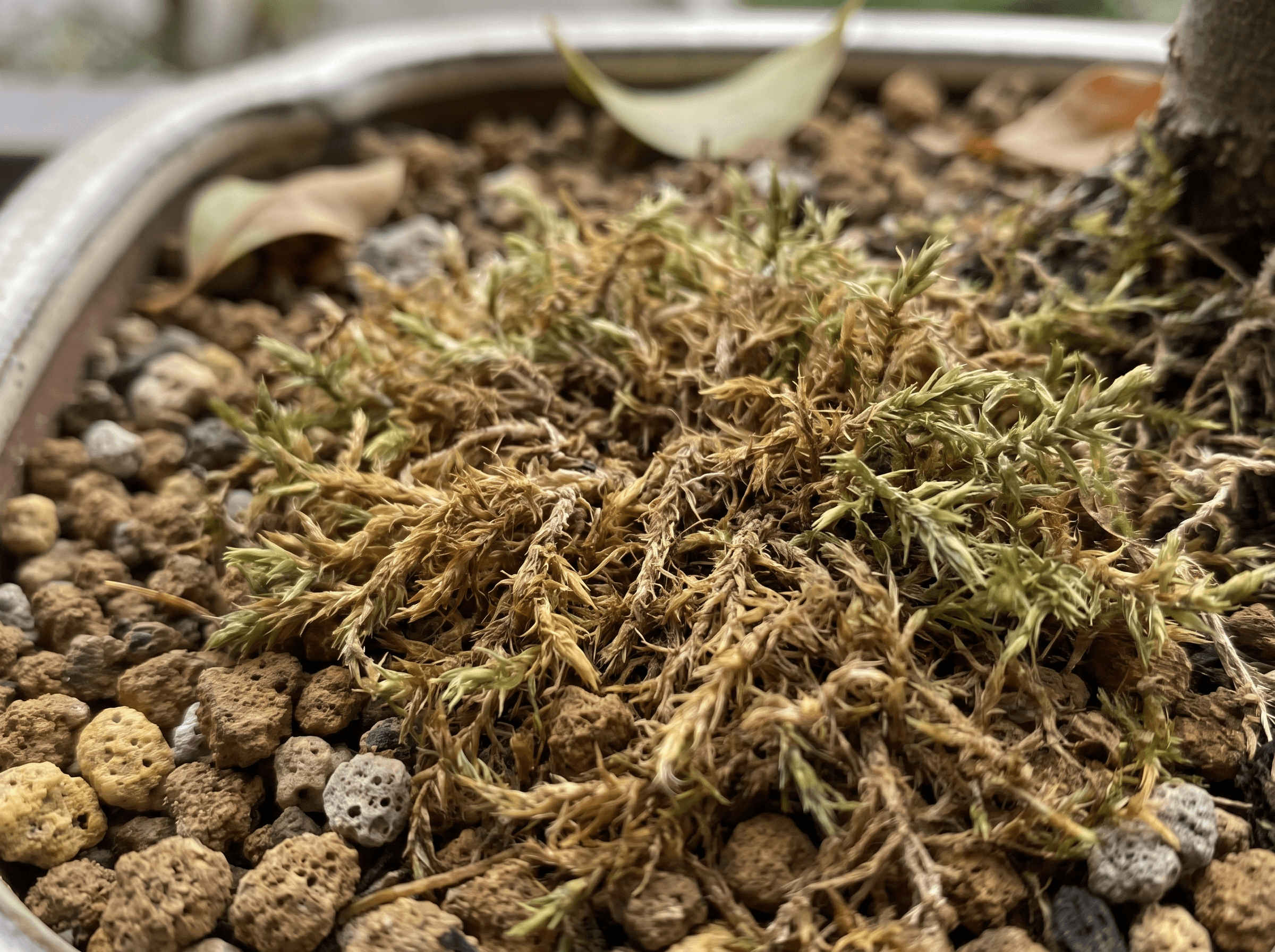
Surface moss is one of those finishing touches that makes a bonsai look settled and mature, and it's frustrating to watch it go from a tight green cushion to a patchy brown mat for no reason you can see. The good news is that moss dying is almost never a sign that something is wrong with the tree underneath. Moss has its own, separate relationship with water and light, and it reacts to conditions on the soil surface long before those same conditions would bother the roots below.
I want to separate this from two things people often confuse it with. A slimy green film on the soil that looks more like pond scum than a carpet is algae, which is a different problem with a different fix. A white, crusty, mineral-looking buildup on the soil is salt or lime deposit from water and fertiliser, not organic material at all. What we're talking about here is an actual moss carpet, made of the small leafy plant itself, turning brown, crumbly, or disappearing in patches rather than staying green and springy.
In my experience the two things that kill established moss are drying out and being smothered. Moss has no real root system and no way to pull water up from deeper in the pot the way the tree can, so it depends entirely on surface humidity. At the same time, moss sitting in water that never drains, or buried under fertiliser residue, suffocates and rots just as easily. Once you know which of the two you're dealing with, the fix is usually straightforward and the moss recovers faster than most people expect.
Likely causes
Moss drying out
How to tell: The moss looks crisp, pale green to grey-brown, and crumbles or flakes when you touch it, rather than feeling springy and cool. This shows up fastest in a spot that gets a lot of direct sun or sits in a draft or wind tunnel, and it's especially common in summer when the surface can dry out within hours of watering the tree.
The fix: Mist the moss directly with a spray bottle, separately from your normal watering of the tree's roots, since a quick surface watering the pot doesn't always wet the moss layer evenly. In hot or windy weather this can mean misting once or even twice a day just for the moss, on top of your regular watering schedule. If the spot is particularly harsh, move the pot to a location with a bit more shade during the hottest part of the day, or add some dappled cover, since moss generally prefers gentler light than the tree above it needs.
Moss smothered or waterlogged
How to tell: Patches of moss turn dark green to black, feel slimy rather than springy, or simply vanish leaving bare soil, usually concentrated where water collects after watering or where granular fertiliser was scattered directly onto the moss surface. You'll often notice this pattern follows the shape of a low spot in the soil or the exact area where you last fed the tree.
The fix: Check that water isn't pooling on the surface after you water; if it is, the moss bed may be too thick or the soil underneath compacted, and improving drainage there will help both the moss and the roots. Rinse off any fertiliser granules or residue that landed on the moss as soon as you notice it rather than letting it sit and burn the tissue. If the moss has grown into a thick, spongy mat, thin it out with your fingers or a small tool so water can pass through rather than sitting trapped at the base.
Moss species mismatched to the spot
How to tell: One type of moss thrives while a different patch, or moss bought from a different source, consistently struggles in the same pot and same care routine, suggesting the species itself isn't suited to your light and airflow conditions rather than anything you're doing wrong.
The fix: Not every moss handles the same amount of sun or dryness, so if a particular patch keeps failing despite consistent misting and good drainage, it's worth removing it and trying a different moss type better matched to that tree's position, whether that's a shadier, moisture-loving variety for a sheltered spot or a tougher, more sun-tolerant type for an exposed one.
How to prevent it
Moss is low-maintenance once it's established, but it does need its own attention separate from the tree, especially in the first few weeks after you lay it down. Get into the habit of a quick surface mist during hot or dry stretches, even on days you're not watering the tree itself, and keep an eye on drainage so water never sits stagnant on top of the soil. Keep fertiliser off the moss where you can, feeding around the edge of the pot or working granules just under the surface rather than scattering them across the carpet. If your bonsai lives somewhere with harsh midday sun or constant wind, accept that moss may need a touch more shade than the tree does, and position it, or shade it, accordingly rather than expecting one location to suit both perfectly.
Common questions
How do I establish new moss on a bonsai pot?
Press small patches or a thin layer of moss firmly onto damp, level soil so there's good contact, then mist it daily and keep it out of harsh direct sun until you see new green growth at the edges, usually within two to four weeks. Avoid disturbing it during this settling-in period.
Does moss compete with the tree for water and nutrients?
Not meaningfully. Moss has no real root system reaching into the soil, so it isn't drawing water or nutrients away from the tree's roots the way another rooted plant would. If anything, a moss layer helps retain surface moisture.
What's the best type of moss for bonsai?
Cushion mosses that form a dense, low mat are generally preferred because they stay compact and don't need trimming, but the right choice depends on your climate and light. A moss collected locally from conditions similar to where your bonsai sits will usually adapt faster than one bought from elsewhere.
Does moss need its own watering routine separate from the tree?
Often yes, particularly in dry or sunny spots. A watering session aimed at soaking the root ball doesn't always wet the moss surface enough, so a separate light misting keeps the moss from crisping up even when the tree itself is getting adequate water.
Can I just remove dead moss and start over?
Yes, and sometimes that's easier than nursing a badly dried or rotted patch back. Scrape off the dead material, tidy the soil surface, and press on fresh moss following the same establishment routine as a first planting.
Is brown moss always dead, or can it recover?
It depends on how far gone it is. Crisp, dried moss that hasn't fully powdered away can often green back up within a week or two of consistent misting. Slimy, blackened moss that's rotted from waterlogging usually needs to be removed rather than revived.
You might also like
General guidance based on 20+ years of practice. Every tree is different — when in doubt, ask us.