
Which Bonsai Need Winter Protection
The mistake I see most in winter isn't too little protection or too much, it's the same blanket approach applied to every tree regardless of what that species needs.
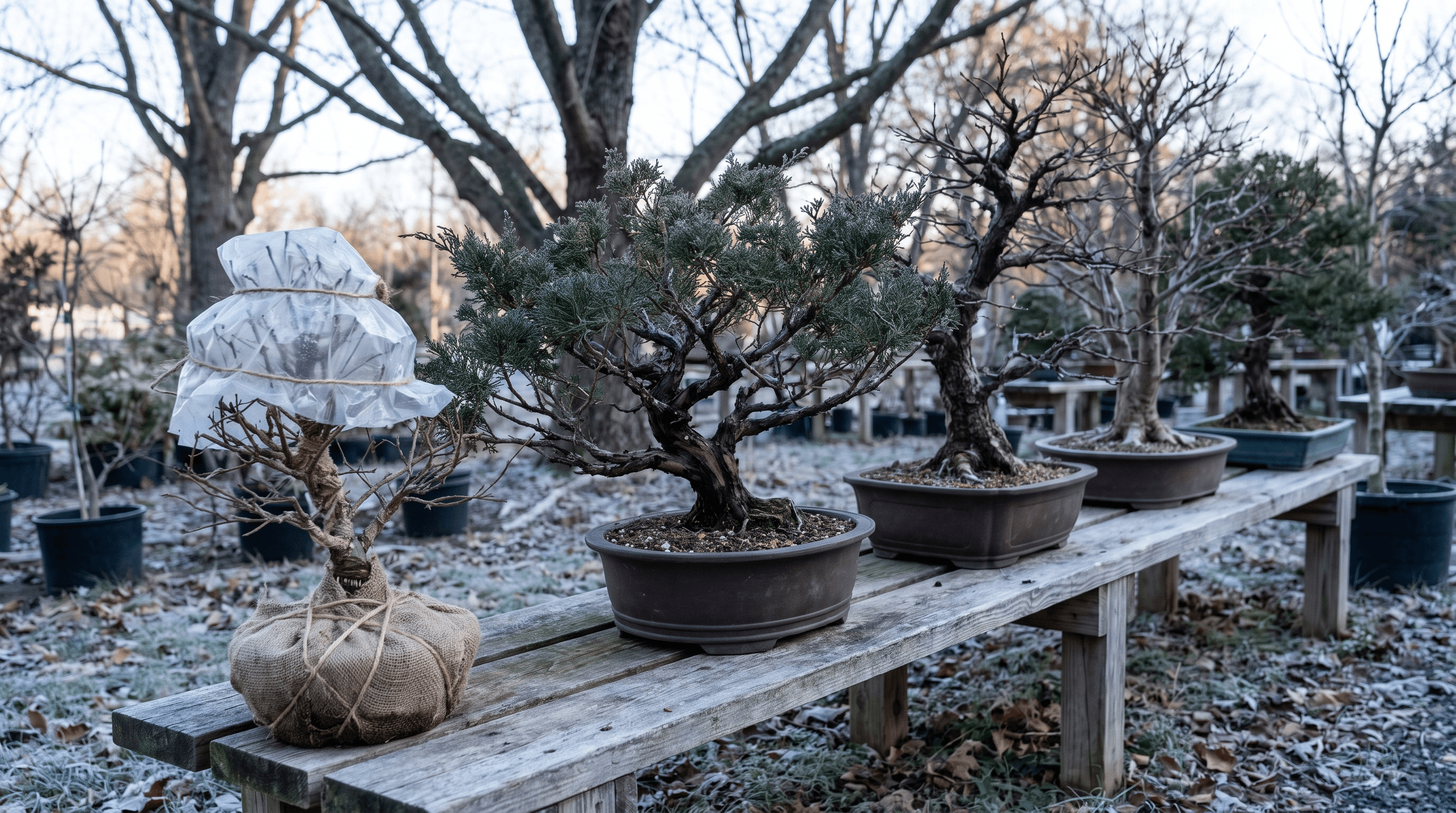
I keep genuinely hardy trees outdoors all winter with barely any intervention beyond grouping pots and watching for the worst freezes. A few benches over, my subtropical material is already indoors or in heated shelter, because those species have essentially no cold tolerance at all. Treating both groups the same way, either sheltering everything out of caution or leaving everything exposed out of confidence, is where I see people run into trouble.
The right question isn't how cold is it going to get, it's how cold this specific species can tolerate, and does my winter typically exceed that. Those two answers, matched against each other, tell you what level of protection an individual tree needs. It sounds obvious written out like that, but in practice a lot of winter losses come from skipping this matching step and defaulting to a single rule for the whole collection.
Here's roughly how I sort my own trees every autumn, and the reasoning behind each group.
Genuinely hardy species need cold, not shelter from it
Species that are truly hardy for your climate zone, and this varies by region so I always check against my own local conditions rather than a generic list, generally do better left outdoors through a normal winter than sheltered away from it. These trees need the cold exposure as part of a proper dormancy cycle. My intervention here is minimal: grouping pots for some root insulation, watching for genuinely extreme or extended freezes beyond the normal range, and otherwise leaving them alone.
Borderline-hardy species need active management, not a fixed answer
This is the trickiest group, species that are hardy in milder winters but can suffer real damage in a harsher one, or that sit right at the edge of what my local climate typically provides. I don't put these on autopilot either direction. I watch the forecast more closely for this group specifically, and I have a cold frame or sheltered spot ready to move them into during anything unusual, while still letting them experience normal seasonal cold the rest of the time.
Subtropical and tropical species need real shelter, full stop
These have little to no genuine cold tolerance, and outdoor winter exposure in most temperate climates simply isn't survivable for them. This group needs to come indoors or into heated shelter before real cold arrives, with a gradual transition to manage the light and humidity change rather than a last-minute scramble. There's no borderline judgment call here the way there is with the middle group, the answer is consistently yes, they need protection.
How to check where your species falls
I look up the specific hardiness rating for the species and compare it honestly against my typical winter lows, not my best-case winter or my worst-case winter, but what happens most years. A species rated hardy to a temperature a couple of degrees below my typical winter low is a reasonable candidate for minimal protection. One rated hardy to right around my typical low, or above it, goes into the borderline-management group instead, even if I'd rather it didn't.
Reassessing as the tree ages and as pot size changes
A tree's protection needs aren't fixed forever. A young tree in early training, often in a smaller pot with a less developed root system, generally needs more caution than a mature specimen of the same species in a larger container. I revisit my groupings each autumn rather than assuming last year's plan still applies, since a tree that's been repotted into something smaller, or that's had a rough growing season, may need a more cautious approach than it did the year before.
Common questions
How do I find out if my specific species is hardy enough for my climate?
Look up the species' hardiness zone rating and compare it honestly against your typical winter lows, not your mildest winter on record. If your usual winter regularly approaches or exceeds what the species is rated to handle, treat it as borderline rather than assuming it's fine.
Is it ever harmful to over-protect a genuinely hardy tree?
Yes, this is a real and common mistake. Hardy species need actual cold exposure as part of a normal dormancy cycle, and sheltering them unnecessarily, especially in warm conditions, can disrupt that cycle rather than help the tree.
What counts as a borderline-hardy species?
Generally a species whose hardiness rating sits close to your typical local winter low, meaning a normal winter is usually fine but a harsher than average one could cause real damage. These need closer monitoring rather than a fixed yes-or-no protection decision.
Do all tropical bonsai need to come fully indoors for winter?
In most temperate climates, yes. Tropical and subtropical species generally have little to no cold tolerance and need real indoor or heated shelter before temperatures drop, not just a sheltered outdoor spot.
Does pot size affect how much winter protection a tree needs?
Yes, a smaller pot holds less soil mass and buffers root temperature far less than a larger one, so trees in smaller pots generally warrant more caution during hard freezes regardless of how hardy the species is rated above ground.
Should I reassess protection needs every year or just set a plan once?
I reassess every autumn. A tree's age, root development, recent repotting, and current pot size all affect how much protection it needs, and those things change from year to year even for the same species.
What's the risk of getting this wrong in either direction?
Under-protecting a genuinely tender tree risks real cold damage or death. Over-protecting a genuinely hardy tree risks disrupting its normal dormancy cycle and can leave it less prepared for cold it needs to experience. Matching protection to the specific species is what avoids both.
También te puede gustar
General guidance based on 20+ years of practice. Every tree, climate, and year is different — when in doubt, ask us.