
How to Protect Bonsai Roots from Freezing in Winter
The same tree that would survive a hard freeze easily in open ground can lose its whole root system to that same cold in a shallow pot, because the pot offers almost no insulation at all.
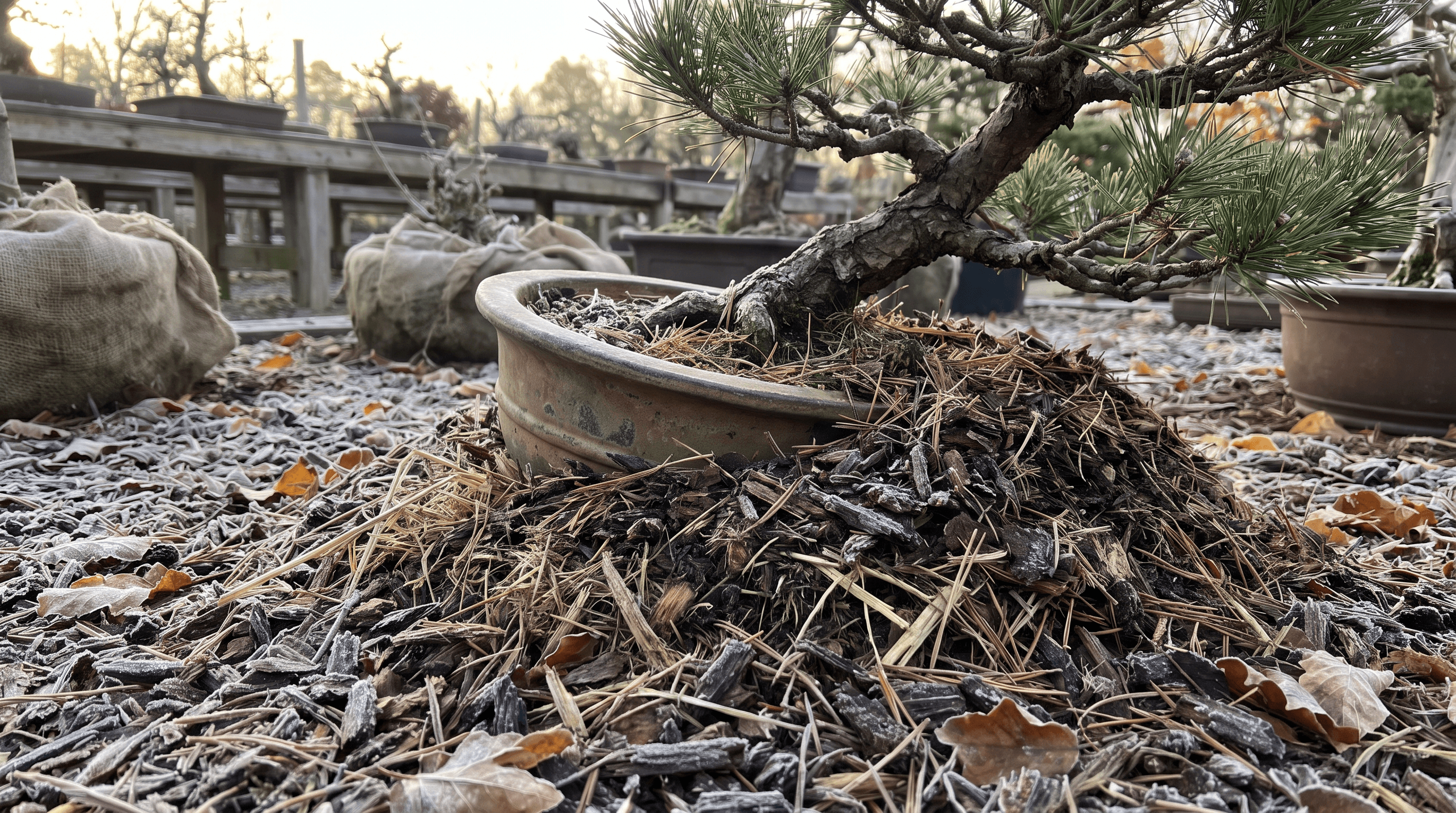
This is the one piece of winter care people underestimate most, and I understand why. We think about a species' cold hardiness in terms of what it can handle in the ground, since that's usually where the hardiness ratings come from. But a bonsai's roots aren't in the ground, they're in a few centimeters of soil inside a thin ceramic or plastic pot, fully exposed on every side to whatever the air temperature is doing.
In open ground, soil temperature stays far more stable than air temperature, insulated by the sheer mass of earth around and below the root zone. A shallow bonsai pot has none of that buffering. Soil temperature in a shallow pot tracks air temperature much more closely than soil in open ground does, and roots, unlike the above-ground parts of a hardy tree, are generally less cold tolerant than the trunk and branches of the same species.
So even a tree that's genuinely hardy for your climate can suffer real root damage in a hard freeze if the pot itself isn't protected, while the same tree in open ground would come through without issue. This is the gap most winter root protection is trying to close.
Why roots are more vulnerable than the rest of the tree
Root tissue generally tolerates less cold than trunk and branch tissue on the same tree, since roots typically harden off less completely than above-ground wood does, and they're not built to face direct exposure to freezing air the way bark is. When people talk about a species being hardy to a certain temperature, that rating is usually based on the above-ground parts. The root system in a small, exposed pot is the weak link, and it's the part actually at risk during a hard freeze.
Grouping pots together to buffer temperature
One of the simplest things I do is push pots close together rather than spacing them out on the bench, especially before a forecasted hard freeze. Grouped pots share some thermal mass and block wind from reaching each other's sides, which helps reduce how cold the outer soil gets compared to a pot standing alone and fully exposed on all sides. Keeping pots low, on the ground rather than up on an exposed bench, and out of the path of strong wind, helps in the same way, since wind pulls heat away from small pots fast. It costs nothing and takes a few minutes.
Mulching or burying pots for extra insulation
Packing mulch, straw, or even soil up around the sides of the pots adds a real insulating layer where the pot itself has none. Some growers go further and heel pots into a bed of soil or sand up to the rim, effectively giving the root ball some of the thermal mass that open ground provides naturally. I do this for my more borderline-hardy stock during the coldest stretch of winter, since it's a meaningful step up in protection for relatively little effort.
Moving to an unheated shelter during hard freezes
For a genuinely severe freeze, temporary moves to an unheated garage or a cold frame give roots real protection without pushing the tree into the kind of warmth that would disrupt dormancy. This doesn't need to be permanent winter storage, just a response to the worst nights. I keep this option ready rather than assembled in a panic, so I can move trees quickly when a hard freeze is actually forecast.
Matching protection to actual species and pot size
A larger pot with more soil mass buffers root temperature better than a very shallow, small pot with minimal soil volume, so I'm more cautious with my smaller and shohin-sized trees during hard freezes. Species also vary in root hardiness independent of their above-ground hardiness rating, so I don't assume that because a tree tolerates cold air well, its roots are equally protected in a small pot. Watering matters through this too. I still check dormant trees for dryness through winter and water lightly when the substrate is actually dry, rather than assuming they need nothing until spring, since a badly dried root ball has less mass to buffer cold than moist soil does.
Common questions
Are bonsai roots really less cold hardy than the rest of the tree?
Yes, generally. Root tissue doesn't harden off the same way trunk and branch wood does, and species hardiness ratings are usually based on above-ground tolerance rather than root tolerance in a small, exposed pot.
Does grouping pots together actually help that much?
It helps more than people expect for the effort involved. Pots pushed close together share thermal mass and block wind exposure on their sides, which helps reduce how cold the outer soil gets compared to an isolated pot standing alone.
Should I bury my bonsai pots in the ground for winter?
Heeling pots into soil, mulch, or sand up to the rim is a reasonable and common approach for adding real insulation, especially for borderline-hardy species during the coldest part of winter. It's not necessary for every tree, but it's worth doing for the ones with less margin.
How cold does it need to get before I should move trees to shelter?
This depends on the specific species' root hardiness and your normal climate, so there's no single number that applies to every tree. As a rough, species-dependent guideline, many hardy bonsai in pots start needing real protection somewhere around minus nine to minus six degrees Celsius, roughly fifteen to twenty degrees Fahrenheit, though this varies by species and setup. I reserve shelter moves for genuinely hard or extended freezes beyond what's typical for my area, rather than every cold night.
Do smaller pots need more protection than larger ones?
Generally yes. A smaller pot holds less soil mass to buffer temperature swings, so root temperature in a small or shohin-sized pot tracks air temperature more closely than in a larger pot with more soil volume.
Can I use the same root protection approach for every species?
Not exactly. Species vary in actual root hardiness independent of how hardy they are above ground, so I match the level of protection, grouping, mulching, or full shelter, to what that specific species and pot size actually need rather than applying one blanket approach.
Is moving a tree into an unheated garage during a freeze enough, or does it need heat?
Unheated is usually the right call for hardy and borderline-hardy species. The goal is buffering the extreme cold, not warming the tree up, since real warmth during winter can disrupt the dormancy the tree needs to go through.
También te puede gustar
General guidance based on 20+ years of practice. Every tree, climate, and year is different — when in doubt, ask us.