
Cold Frame and Greenhouse Winter Storage
A cold frame is meant to buffer temperature swings, not create summer conditions in January, and most of the winter storage failures I see come from getting that distinction backwards.
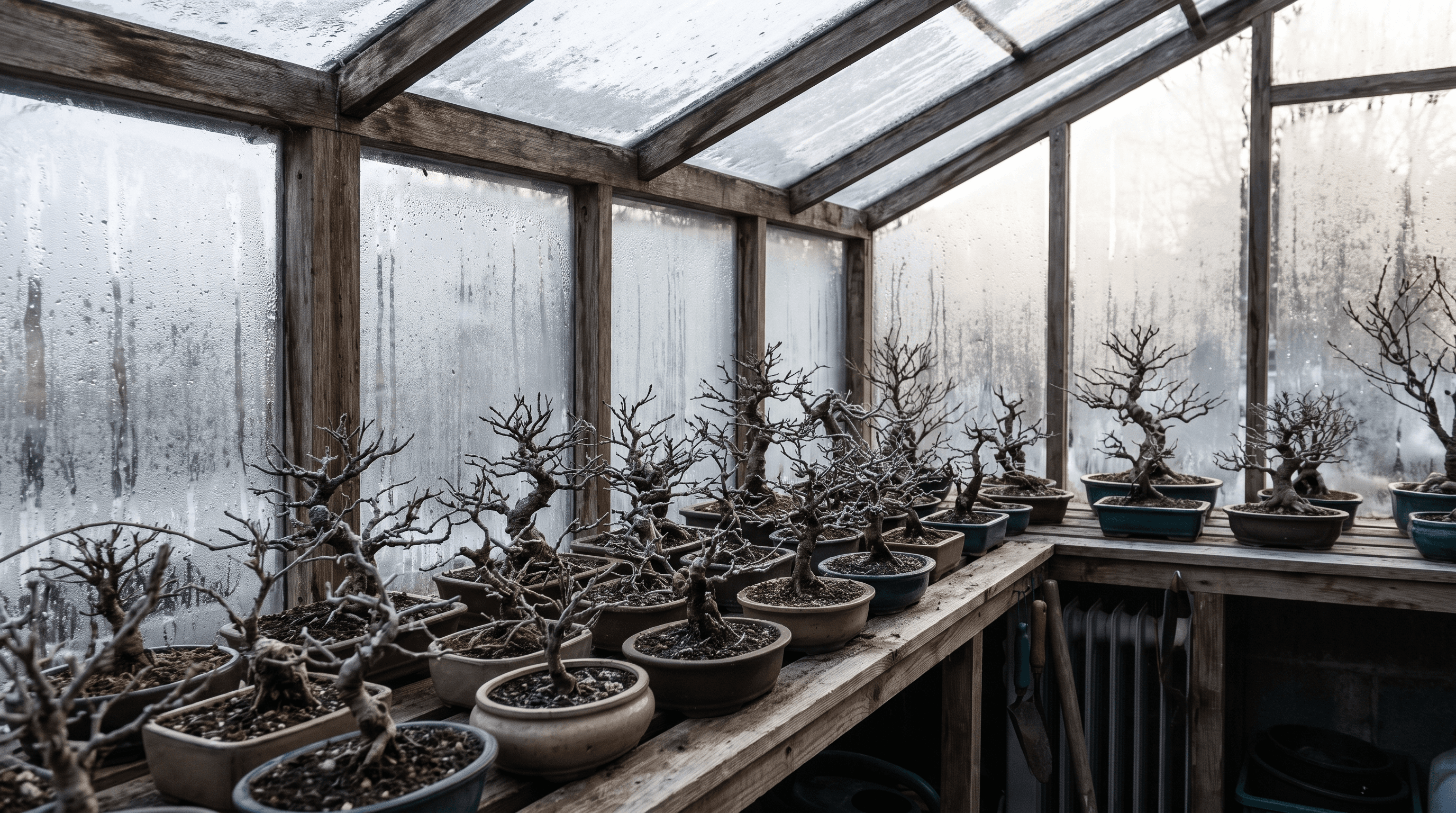
Once trees are actually in their winter storage, the job shifts from setup to management, and this is where a fair number of people undo the good work they did in autumn. A cold frame or minimally heated greenhouse is supposed to soften the extremes, take the edge off the coldest nights and the harshest wind, without pushing the tree into anything resembling active growth. Get that balance wrong and you end up with a different set of problems than the cold was ever going to cause.
The two failure modes I see most often are opposites of each other. One is too much heat or too much sealed-up humidity, which pushes premature growth or breeds mold and rot. The other is too little attention paid to ventilation specifically, which lets humidity build up even when temperature is well controlled. Both come from treating the structure as something to set and forget rather than something to actively manage through the season.
None of this requires anything elaborate. It's mostly about checking regularly and understanding what the structure is actually doing to the air inside it, rather than assuming insulation alone is the whole job.
The goal is buffering, not forcing growth
A cold frame or unheated greenhouse should keep trees somewhat warmer than the harshest outdoor extremes, but still cold enough that dormancy continues normally. If the structure runs consistently too warm, whether from too much heating, too much sun exposure through glass or plastic, or simply being too well sealed, trees inside can be fooled into pushing early growth mid-winter. That growth is soft, poorly timed, and often gets damaged by the next genuine cold spell anyway, which defeats the entire purpose of the shelter. As a rough guide, cold frames are commonly used once winter lows regularly drop below about 15°F (-10°C), while in milder climates with lows closer to 25°F (-4°C) many hardy species get by with less protection. This article is about temperate, hardy, and borderline-hardy bonsai; tropical and subtropical species kept indoors for winter need real warmth, not just buffering, and aren't what this guidance is aimed at.
Ventilation is the most common point of failure
I've said this in other winter articles because it keeps being true: humidity trapped in a sealed structure is one of the most common causes of trouble I see in enclosed winter storage. Condensation builds on the inside of glass or plastic, drips back down onto trees and soil, and combined with still air and cool temperatures creates ideal conditions for mold on the soil surface and rot at the trunk base. A vent that opens even partially on milder days, or a small fan for airflow in a larger greenhouse, makes a real difference.
Managing temperature swings on sunny winter days
A cold frame or greenhouse can heat up surprisingly fast on a clear, sunny winter day even when outdoor air temperature is low, since the structure traps solar radiation the same way any greenhouse does in any season. I check mine on sunny days specifically, not just cold overcast ones, and vent or shade as needed to avoid a swing from near-freezing overnight to unexpectedly warm by early afternoon. That kind of daily swing is more stressful for a dormant tree than steady cold would be.
Watering inside enclosed storage
Trees in a cold frame or greenhouse still need occasional water, but the enclosed environment dries out much more slowly than open air, so I check soil moisture before watering rather than assuming the same schedule I'd use outdoors. Overwatering in an already humid, poorly ventilated structure is a fast route to the mold and rot problems I mentioned earlier, so I lean toward checking more often and watering less, adjusting based on what I actually find rather than a fixed routine.
What a good routine check looks like
At least once a week through the coldest part of winter, and more often during a run of sunny days or a sharp freeze-thaw swing, I open the structure up, look for condensation buildup, check for any soil surface mold or soft bark at the trunk base, and feel the soil moisture on a few representative trees rather than every single one. The exact interval matters less than staying responsive to the weather rather than a fixed date on the calendar. If I see excess condensation or any hint of mold starting, I increase ventilation immediately rather than waiting for the next scheduled check. Catching it early is a five-minute fix. Catching it late can mean losing a tree.
Common questions
Should a cold frame or greenhouse be heated in winter?
For most hardy and borderline-hardy temperate species, no, or only minimally, often just enough to keep the coldest nights somewhere in the 33-40°F (1-4°C) range for species that dislike hard freezing. The goal is buffering cold, not creating warm growing conditions, since real heat can push premature growth that then gets damaged by the next cold spell. This is different for tropical or subtropical species, which need genuine warmth rather than cold buffering and aren't suited to a cold frame at all.
How do I stop condensation from building up inside my cold frame?
Ventilation is the main fix, cracking a vent or lid on milder days and checking regularly rather than leaving the structure fully sealed. Condensation combined with still, humid air is what leads to mold and rot problems more often than the cold itself does.
Can a cold frame actually get too warm even in winter?
Yes, direct sun through glass or plastic on a clear winter day can heat the interior well above outdoor air temperature, sometimes significantly. Checking on sunny days, not just cold ones, and venting or shading as needed prevents this swing.
How often should I water trees kept in enclosed winter storage?
Check soil moisture before watering rather than following a fixed schedule, since enclosed storage dries out much more slowly than open outdoor air. Overwatering in a humid, poorly ventilated space is a common cause of problems.
How often should I check on trees in a cold frame or greenhouse?
At least weekly through the coldest stretch of winter is a reasonable baseline, but check more often during sunny spells or sudden freeze-thaw swings, since those are exactly when conditions inside can shift fastest. Look at condensation, mold, soil moisture, and general condition each time. If you notice excess condensation or early mold, act immediately rather than waiting for the next scheduled visit.
What's the biggest sign that ventilation is inadequate?
Visible condensation buildup on the inside of the glass or plastic, especially if it's dripping down onto trees and soil, or any green mold film starting on the soil surface. Both point to humidity that isn't escaping and call for more airflow.
Is a simple cold frame as effective as a proper unheated greenhouse?
Both can work well, but they're not automatically equivalent. For many temperate and borderline-hardy bonsai in milder winter climates, a well-built cold frame does the job. In consistently colder areas, or with a larger or more climate-sensitive collection, a small unheated or lightly heated greenhouse can offer steadier temperature control and easier access. Which one is right depends more on your climate, species mix, and collection size than on one being universally better.
También te puede gustar
General guidance based on 20+ years of practice. Every tree, climate, and year is different — when in doubt, ask us.