
Summer Bonsai Growth Flush Management
A second push of growth in midsummer isn't a bonus you always want to keep, sometimes the right move is to cut it off before it goes anywhere.
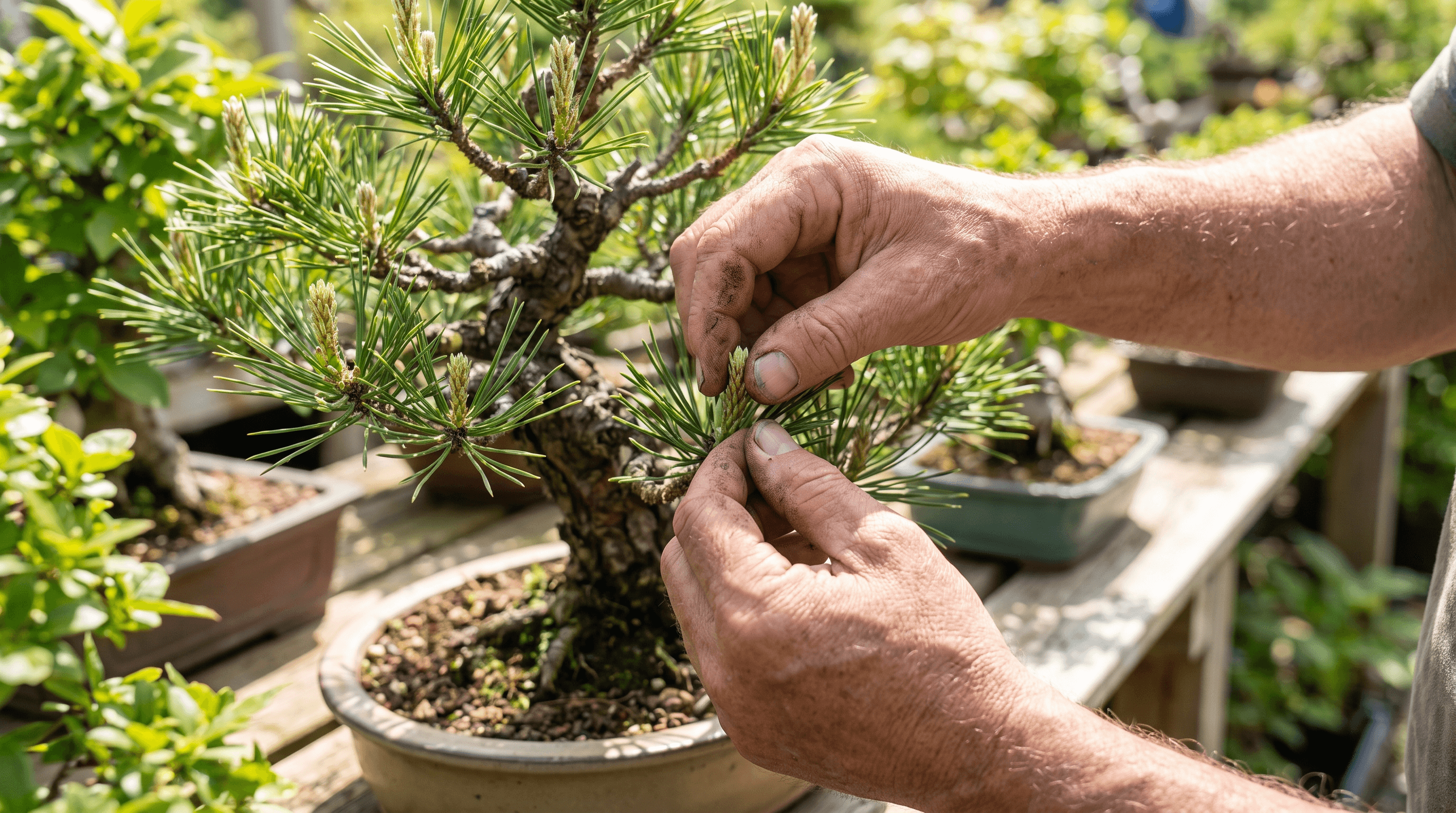
Spring growth gets all the attention, but plenty of vigorous species, certain maples, some elms, pomegranate, and two-flush pines like Japanese black and red pine, will push a real second flush sometime in midsummer, July or August where I am, once the initial spring growth has hardened off and the tree has energy to spare again, though the exact timing shifts with climate and species. I see it every year on my more vigorous stock, new shoots extending fast, which on an unpinched, vigorous shoot often means longer internodes than the spring growth had, though a deliberately managed second flush can actually be used to produce finer growth instead.
Whether that flush is good news or a problem depends entirely on where the tree is in its development, and this is one of those places where a blanket rule does more harm than good. On a tree still building basic branch structure, a strong summer flush can be genuinely useful material. On a refined tree with tight ramification you've spent years developing, the same flush is a threat to everything that fine branching represents, since it grows fast and coarse and undoes density you worked hard to build.
So the real skill here isn't spotting the flush, that part's easy, it's deciding what to do with it once it shows up.
Why summer flushes happen at all
After spring growth hardens and the tree settles into steady photosynthesis through the longer summer days, a vigorous tree with good root health and adequate feeding often has surplus energy, and it spends that surplus on new extension growth rather than just maintaining what it already has. Heat and day length both play into the timing, which is why it tends to cluster in July here rather than being spread evenly across the season. Not every tree does this, and not every species does it reliably, some years a given tree pushes a clear flush and other years it barely does, depending on how much stress or how much surplus vigor it's carrying that particular season.
Letting it run, on a tree that needs it
If you're still developing primary structure on a younger or less refined tree, a strong summer flush is often worth letting extend further than you normally would, since longer shoots thicken branches faster and can become useful material for the next stage of design. I let this happen deliberately on trees where I'm still building trunk or branch caliper, sometimes leaving a sacrifice shoot to run almost unchecked through summer specifically because the thickening it produces is the point. This only makes sense while the tree is still in a building phase, not once it's moved into refinement.
Pinching it back, on a tree that doesn't
On a tree with established ramification, letting a summer flush run unchecked coarsens exactly the fine branching you've spent seasons developing, since an unpinched summer shoot tends to extend with longer internodes than growth that's been kept in check all season. That's specifically why I don't leave it alone, managed correctly, the same summer vigor can be turned into finer growth rather than coarser growth. I pinch these back hard, often to just one or two nodes, as soon as I see them extending, rather than waiting to see how far they'll go. In my experience, waiting doesn't buy you anything useful here, an unpinched summer shoot on a refined tree just adds length and coarseness without much benefit, when the same vigor put into a pinched shoot tends to go toward backbudding closer to the trunk instead.
Using flush growth for ramification specifically
There's a middle case worth knowing, using a summer flush deliberately to build density rather than either letting it run wild or cutting it flat. Pinching a vigorous summer shoot back to two nodes rather than one, at the right moment when it's still soft rather than fully hardened, often triggers a secondary split at that point, which is exactly how fine ramification gets built over successive seasons. I do this on trees that are past the basic structure stage but not yet as refined as I want, using the summer flush as working material rather than either extreme of ignoring it or removing it outright.
Common questions
How do I know if my tree is going to push a summer flush?
Watch for new shoot tips extending again after the spring growth has fully hardened off, usually with a noticeably faster or more vigorous look than the tree's normal summer maintenance growth. Not every species does this reliably, and not every individual tree does it every year, so it's more something to watch for than something to expect on a fixed schedule.
Should I fertilize differently to encourage a summer flush?
I don't fertilize specifically to push one, a tree with good spring feeding and healthy roots will push a flush on its own if it has the vigor for it. Overfeeding to try to force one tends to produce coarse growth and oversized leaves and internodes rather than the kind of flush you actually want, on top of not being a reliable way to trigger it in the first place.
Can a summer flush weaken the tree if I let it run?
On a young or developing tree, letting it run is usually beneficial rather than weakening, since that's exactly the vigor you want for building trunk and branch caliper. On an older, more delicate, or recently stressed tree, an unchecked summer flush can pull energy the tree needed elsewhere, so I'm more cautious about letting it go unmanaged on weaker specimens.
What's the difference between spring growth and summer flush growth?
Spring growth tends to be denser with shorter internodes, especially on a tree that's been maintained with regular pinching. Left unpinched, summer flush growth often comes in faster with longer internodes and can look coarser overall, but pinched back at the right moment it can actually be turned into finer growth, which is exactly why it needs different handling depending on whether you want that vigor or want to control it.
Is it too late in the season to pinch a summer flush by August?
It depends on your climate and how much growing season is left after August where you are. Pinching remains useful as long as the shoot is still actively extending and hasn't hardened off, and as long as there's enough season left for the resulting new growth to harden before frost. In a longer, milder growing season that's usually fine into August, but in a shorter or colder-climate season, pinching too late can trigger new growth that doesn't have time to harden off before the first frost, which risks dieback. When in doubt, I'd rather stop a bit earlier than push it too close to the season's end.
Which species are most likely to push a strong summer flush here?
In my experience some maples, pomegranate, and two-flush pines like Japanese black and red pine are the most reliable pushers of a real second flush in our climate, along with a number of vigorous elms. Single-flush pine species don't behave the same way, so I wouldn't apply this to every pine in a collection without checking which type it is first. Junipers tend to grow more continuously through summer rather than in a distinct flush, so the concept applies less cleanly to them.
Should I remove all summer flush growth on a refined tree, or just shorten it?
Shortening rather than removing entirely is usually the better move, pinching back to a node or two rather than cutting the whole shoot away. That way the tree still gets some benefit from the vigor in the form of a controlled backbudding response, instead of just losing the growth and the energy that went into it with nothing gained.
You might also like
General guidance based on 20+ years of practice. Every tree, climate, and year is different — when in doubt, ask us.