
Summer Bonsai Care Checklist
Summer bonsai care comes down to two things done relentlessly, water and shade, with everything else fitted in around them.
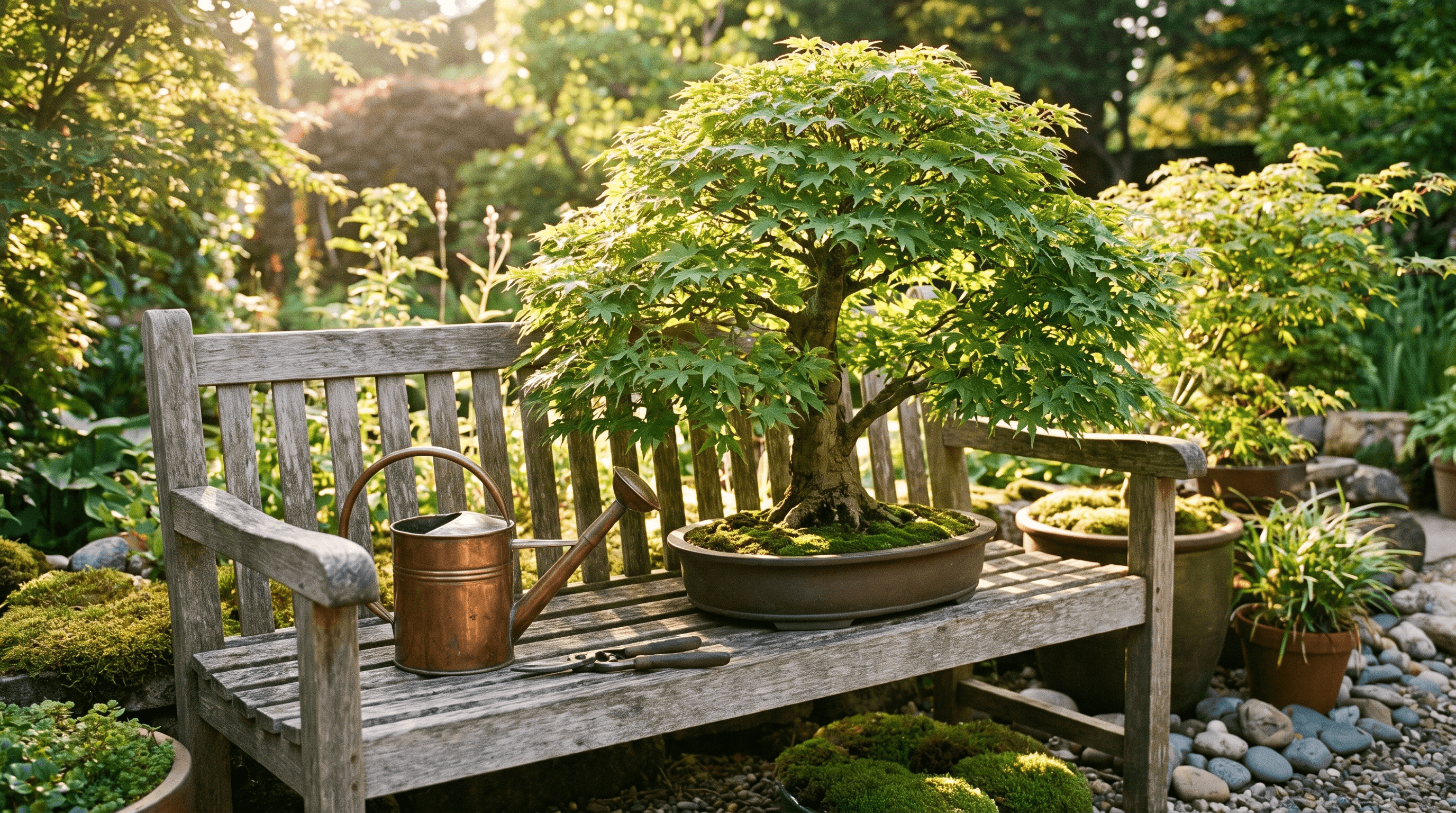
Spring is the season of decisions, repot or not, prune here or there. Summer is different. By the time real heat sets in, most of the structural choices are already made and what's left is maintenance, done consistently, day after day, for two or three months straight. It's less interesting than spring, but skipping a day of it costs more than skipping a day of spring care ever would.
Where I work in southern Italy, summer isn't gentle. We get long stretches well into the thirties, sometimes higher, with pots sitting on a bench that reflects heat back up from below. A tree that would tolerate that heat in the ground struggles more in a shallow container, and the checklist below reflects that reality rather than a milder climate's version of summer.
None of these tasks are complicated on their own. What makes summer demanding is doing all of them at once, consistently, without a day off, because a bonsai in a small pot doesn't really get a day off from summer either.
Water becomes a daily, sometimes twice-daily, task
This is the one that catches people who are used to a spring or autumn watering rhythm. In peak summer, small pots in full sun can dry out within hours, and checking once a day isn't always enough for the smallest or most exposed trees. I check soil moisture by hand, not by a fixed schedule, going tree by tree rather than watering the whole bench uniformly. Trees in larger pots or with denser canopies hold moisture longer than a shallow tray planting or a young tree still in a small training pot.
Shade the hottest hours, not the whole day
Full sun in June is not full sun in August, and in a hot climate like mine, many species, sun-loving ones included, benefit from shade during the two or three hottest hours of the afternoon, especially small pots that heat up fast. I move what I can under light shade cloth or dappled cover rather than deep shade, since prolonged deep shade can weaken growth over a season much as heat stress does. Species, pot size, and local climate all change how much protection a given tree actually needs, and I go into more detail on which ones need protection even when they normally tolerate full sun in a separate piece on shade cloth.
Keep up light maintenance trims through the growth flush
Growth doesn't slow down much in early to mid summer, especially on vigorous deciduous species, and letting it run unchecked for weeks produces long internodes and a canopy that loses its shape fast. On those vigorous growers I do regular light trims rather than saving everything for one big session, cutting back new shoots to a couple of leaves as they extend, conifers and slower species need their own species-specific approach that I won't try to generalize here. Heavy structural work is a different story and generally waits, since a tree already dealing with heat stress doesn't recover from major cuts as well as one working in milder conditions.
Plan for absences before you need to
Summer is the riskiest season of the year to leave your trees for a week or two, more than any other, because the gap between a missed watering and real damage is much shorter. If I know I'll be away, I set up a plan well ahead of time rather than scrambling the day before, whether that's a neighbor with clear instructions, a simple drip system, or grouping the most vulnerable pots together in a shaded, easy-to-reach spot for whoever is covering.
Watch for pests that thrive in hot, dry conditions
Spider mites in particular love exactly the conditions summer provides, hot and dry, and they can build up a damaging population faster in July than they would in a cooler month. I check the undersides of leaves regularly through summer rather than waiting until damage is visible from a distance, since by the time you notice bronzed or stippled foliage from across the bench, the infestation is already well established.
Ease feeding back if extreme heat sets in
Most of my trees keep getting a normal, balanced summer feeding through the growing season, that doesn't stop just because it's hot. During the most brutal heat spells specifically I ease off, especially anything higher in nitrogen, rather than sticking to the full schedule rigidly, since a tree under real heat stress isn't using nutrients efficiently and a heavy dose can add to that stress. I resume the normal schedule once temperatures moderate and the tree is clearly still pushing healthy growth rather than just holding on.
Common questions
How often should I really be watering my bonsai in summer?
There's no single number that works for every tree. In peak heat, small pots in full sun often need checking twice a day, while larger pots or shadier positions might only need once. I check by feel and by watching how fast the soil surface dries rather than following a fixed interval.
Should I move all my bonsai into shade for summer?
No, and doing that across the board usually causes its own problems. Most species still need good light through summer, just protection during the most intense afternoon hours. Full-day deep shade weakens growth over the season even though it feels like the safer choice.
Is it okay to do a big structural prune in the middle of summer?
I generally avoid it. Heavy structural cuts are harder for a tree to recover from when it's already managing heat stress, so I save that kind of work for cooler parts of the year and stick to light maintenance trims through the hottest months.
What's the biggest risk if I go on vacation in summer without a plan?
A missed watering in peak summer heat can cause real damage within a day or two for small pots in full sun, faster than in any other season. A concrete plan, whether a neighbor, a drip timer, or a shaded grouping, matters more here than at any other time of year.
How do I know if my bonsai has spider mites?
Check the undersides of leaves for tiny moving specks or fine webbing, and look for a dull, stippled, or bronzed look to the foliage from a distance. By the time damage is obvious across the whole tree, the population has usually been building for a while.
Should I stop feeding entirely during a heatwave?
I usually ease back rather than stop completely, dropping to a lighter feed, particularly anything high in nitrogen, during the worst heat spells and returning to the normal schedule once conditions moderate. A tree under serious heat stress doesn't make good use of a full dose anyway.
Do all my bonsai need the same summer care?
Not at all. Pot size, species, and position on the bench all change how much attention a tree needs in summer, sometimes dramatically. A small azalea in a shallow tray sitting on concrete needs a very different level of attention than a large pine in a deep pot under partial shade.
You might also like
General guidance based on 20+ years of practice. Every tree, climate, and year is different — when in doubt, ask us.