
Spring Bonsai Wiring Window Explained
Early spring is when you can still see the whole branch structure of a deciduous bonsai, which is exactly why it's such a good time to wire one.
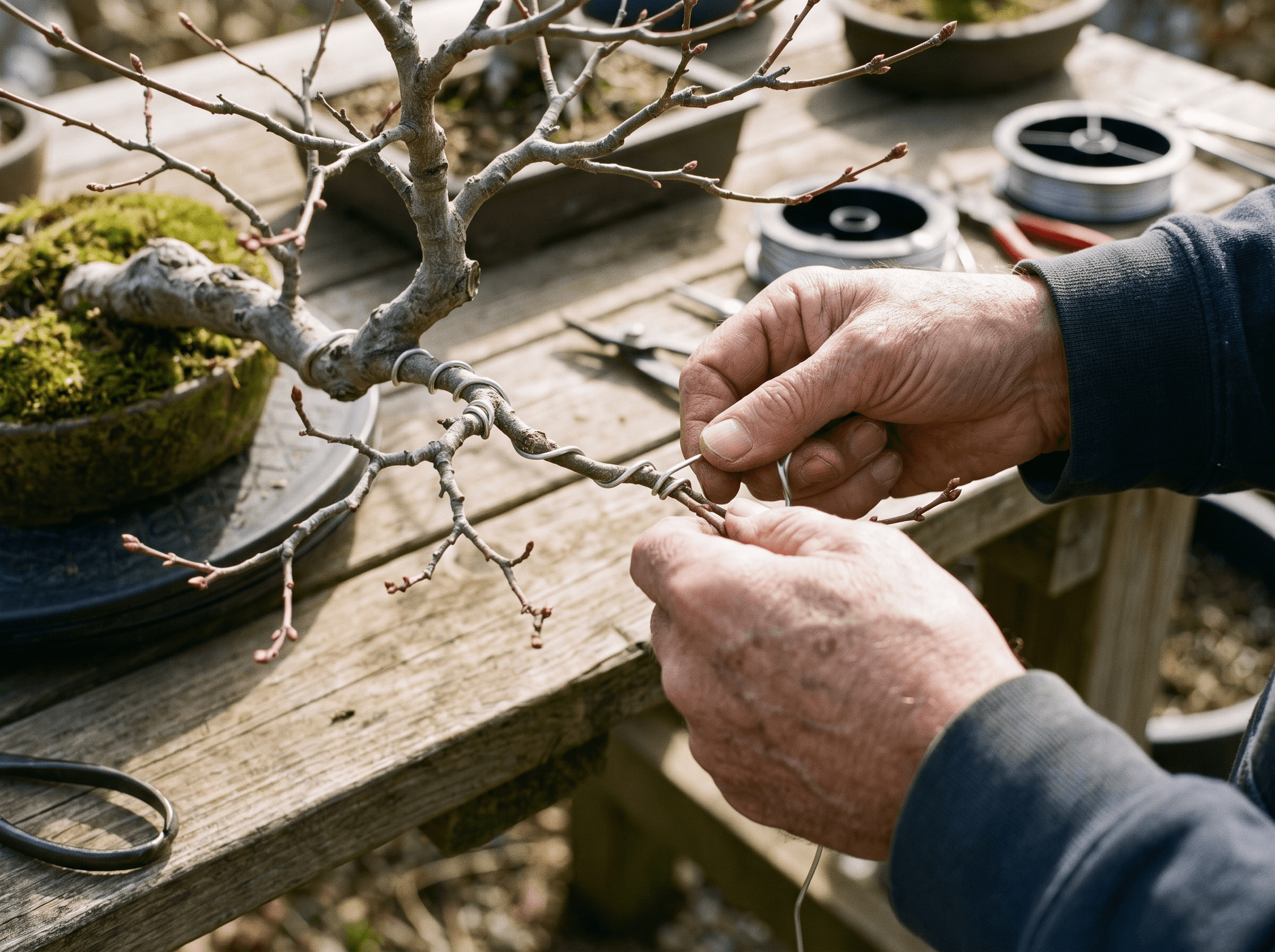
Wiring gets talked about as something you can do more or less whenever the wood is flexible enough, and technically that's true. But there's a window in early spring on deciduous trees that I still consider the classic wiring opportunity, and it's worth understanding why, even if you end up wiring at other times too.
Before the canopy fills in, you can see the actual branches, their angles, their taper, where they cross, none of it hidden behind leaves. That visibility matters enormously when you're deciding how to place wire and shape a branch, because you're working with the real structure rather than guessing at it under foliage.
The window doesn't stay open in the same way once growth accelerates, though, and that changes how I approach wiring as spring goes on.
Why early spring, before leaves unfurl, works so well
On most deciduous species, late winter into early spring, before the canopy fills back in, gives you two things at once: visible branch structure and wood that's still reasonably flexible at that point in the season. I do the bulk of my structural wiring in this window for exactly that combination, though the exact flexibility shifts a bit by species and by how warm the season has been. Once the canopy fills in, you're wiring by feel and memory of where branches go rather than by sight, which is a real disadvantage for anything beyond minor adjustments.
What changes once growth speeds up later in spring
As spring moves on and growth accelerates, wire that looked comfortably loose a few weeks earlier can start biting into the branch surprisingly fast, since branches thicken quickly during a strong growth flush. This is the trade-off of wiring in spring generally, not just in the early window: you get flexible wood and, later, visible new growth to shape, but you also need to check wire more often than you would on a tree wired during slower-growing parts of the year.
How often to check wire once growth is underway
I check spring-applied wire at least weekly once the tree is in active growth, and more often than that on especially vigorous branches or fast-growing species, since I'd rather check too often than miss the point where it starts biting. The sign to watch for is the wire starting to press a visible line into the bark. Catch it early and removing or loosening the wire is simple. Miss it for a few weeks during a strong growth spurt and you can end up with scarring that takes a long time to grow out, if it ever fully does.
Later spring wiring, on new growth itself
Once the early structural window has passed and leaves are out, wiring shifts focus somewhat, toward shaping the new season's shoots as they extend rather than the older branch structure. This is a genuinely different job, working with soft, actively growing shoots rather than the more mature wood of the early window, and it needs a lighter touch and closer monitoring given how fast that new growth can thicken.
Species where the early window matters less
Not every species leans as heavily on the early spring window. Conifers, junipers especially, hold their branch structure visible year round since they don't lose their foliage, so the urgency to wire before leaf-out simply doesn't apply the same way. I still find spring a reasonable time to wire junipers, mainly because the wood is often more workable than in the depths of winter, but the visibility argument that drives deciduous timing isn't really a factor there.
Common questions
Why is early spring considered the best time to wire deciduous bonsai?
Because the branch structure is still fully visible before leaves unfurl, and the wood tends to be flexible at this point in the growth cycle. Both together make it easier to plan and apply wire accurately compared to working under a full canopy later in the season.
How often should I check wire applied in spring?
Roughly weekly once the tree is in active growth, more often on vigorous branches or fast-growing species, since branches can thicken quickly during a strong spring flush and wire that was loose can start biting in faster than you'd expect.
Is it too late to wire once my tree has leafed out?
Not too late exactly, but the job changes character. You're working more by feel than by sight on the older structure, and attention often shifts toward shaping the new season's shoots as they extend rather than the mature branch framework.
Does the spring wiring window apply to conifers too?
Less so for the visibility reason, since conifers keep their foliage year round and their structure is visible regardless of season. Spring can still be a reasonable time to wire junipers and pines because the wood is often workable, but it's not driven by the same leaf-out timing as deciduous species.
What happens if I leave wire on too long during a spring growth spurt?
The wire can bite into the bark and leave scarring that takes a long time to grow out, sometimes permanently visible depending on how deep it cuts. This is the main reason I check wire so frequently during active spring growth rather than assuming it can wait.
Should I wire before or after repotting in spring?
There's no strict rule here, it's more personal caution than an established guideline, but I generally handle major wiring and repotting as separate sessions rather than combining both stresses at once, especially on an older or weaker tree. The order between them matters less than giving the tree some recovery time between the two.
Can wiring in spring damage new, tender growth?
Yes, soft spring shoots bruise and break more easily than mature wood, so wiring new growth needs a lighter touch and more careful handling than wiring the older branch structure earlier in the season.
You might also like
General guidance based on 20+ years of practice. Every tree, climate, and year is different — when in doubt, ask us.