
Cold Hardening Bonsai Before Frost
A bonsai that cools down gradually through a normal autumn builds real tolerance to frost, while the same species moved abruptly from warmth to cold can suffer damage at temperatures it would otherwise shrug off.
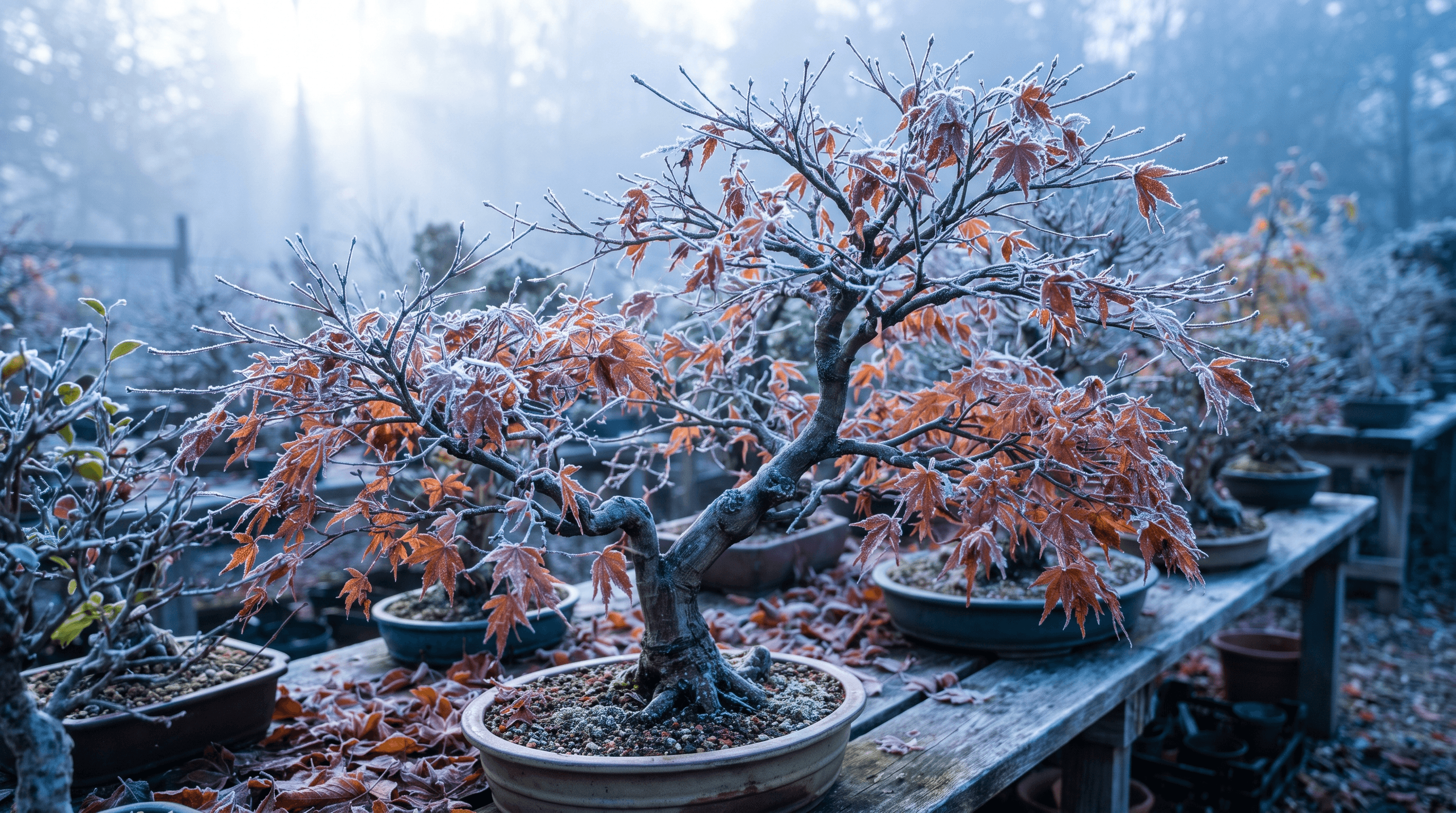
People ask me sometimes how a hardy pine or a field maple survives a hard freeze outdoors when a subtropical species would be badly damaged by a fraction of that cold. Part of it is genetics, sure, some species are simply built for it. But a big part of it is a process, cold hardening, that happens over weeks in a tree's tissue as autumn temperatures decline, and it's a process that can be helped or disrupted by how you manage the tree.
A hardy tree that experiences a slow, natural decline in temperature through September and October develops far more cold tolerance by December than the same tree would if it went from a mild autumn straight into an early hard freeze, or if it were moved suddenly from a sheltered warm spot into full winter exposure. The tissue needs the gradual cue to adjust, essentially reducing water content in cells and changing internal chemistry in ways that resist ice damage.
The encouraging part is that for most hardy and temperate bonsai, this happens on its own if you don't get in the way. My job in autumn is mostly to avoid disrupting a natural process that's already working, rather than actively engineering it.
What's actually happening inside the tree
As days shorten and temperatures drop, hardy trees respond by slowing growth, moving sugars into storage, and altering the water balance within their cells so that ice forms less destructively if it forms at all. This doesn't happen overnight. It's a gradual physiological shift triggered by declining temperatures and shortening daylight together, which is why the same low temperature arriving in early October, before this process has had time to run, causes far more damage than the identical temperature in December, after weeks of gradual hardening.
Why abrupt cold does more damage than gradual cold
This is the part that catches people out. A tree kept in a warm, sheltered spot too long and then suddenly exposed to a real cold snap hasn't had the chance to harden off, so it takes damage at a temperature that a properly hardened tree of the same species would handle without issue. I see this most with trees that got moved into a garage or covered spot too early out of an abundance of caution, then brought back out on a mild day, then caught by an unexpected cold night. The stop-start exposure works against the tree rather than for it.
Let outdoor hardy species experience the natural cooling
For genuinely hardy species I don't rush them into shelter just because autumn has arrived. I let them sit through the normal seasonal decline in temperature outdoors, since that's exactly the exposure that builds their winter tolerance. Where I do intervene is around the extremes, an unusually early hard frost before the season has properly progressed, or wind exposure that dries out foliage faster than the tree can compensate for. That said, hardening off applies mainly to the canopy and trunk. Roots are a different story: they sit in a small volume of soil with far less insulation than roots in open ground, so even a well-hardened hardy species can still need protection at the root zone once temperatures turn genuinely severe.
Where this goes wrong with borderline-hardy species
Species that sit near the edge of what your climate can support are a different case. They benefit from the same gradual cooling, but I also start thinking about supplemental protection earlier for these, since their margin for error is thinner. The mistake I see most is leaving a borderline species fully exposed on the assumption that gradual hardening will get it through anything, when really it only extends the tree's tolerance somewhat, not indefinitely. For these species, and really for any potted tree facing a hard freeze, I also think about protecting the root zone specifically, mulching around the pot, sinking it into a bed of material, or moving it into a cold frame, since roots in a shallow container are far more exposed to freezing than roots in open ground.
Don't undo the process with a late warm shelter
Once a tree has hardened off through a normal autumn decline, moving it into a warm environment too early in winter, a heated room instead of a cold but sheltered space, can actually push it back into active growth mode and undo some of that hardening. If a tree needs winter shelter at all, I aim for something cold but stable rather than warm, so the tree stays dormant and keeps the tolerance it built up through autumn.
Common questions
Do all bonsai species cold harden the same way?
No, the capacity varies a lot by species and by how hardy that species genuinely is in your climate. Truly hardy trees like many pines, junipers, and field maples harden significantly. Subtropical species generally have very limited cold hardening ability, and most still need frost protection regardless of how gradually temperatures drop.
Should I bring hardy trees inside during the first cold nights of autumn?
Generally no. Hardy species need that gradual outdoor cooling to trigger hardening, and bringing them in too early can actually leave them less prepared for the real cold later in winter, since they miss the cue.
How long does cold hardening actually take?
It's gradual and tied to the pace of autumn itself, generally building over several weeks as temperatures decline, though the exact timing depends on your climate and the species involved rather than a fixed calendar window. This is part of why a sudden early freeze is riskier than the same temperature reached later in a normal season.
Can I speed up cold hardening artificially?
Not really in a way I'd recommend. The safest approach is just letting the natural seasonal decline happen outdoors without interference, rather than trying to force or accelerate the process.
What happens if a hardened tree gets moved into a warm space mid-winter?
It can lose some of the cold tolerance it built up, since warmth signals the tree to shift back toward active mode. If you need to bring a hardy tree in for a specific reason mid-winter, I'd keep the stay short and the environment as cool as practical rather than warm.
Is an early autumn frost more dangerous than a deep midwinter freeze?
Often yes, for the same species and even a milder actual temperature, because the tree hasn't had time to harden yet. This is why I pay closer attention to unusually early cold snaps than to expected cold later in the season.
How do I know if my tree is hardy enough to skip winter protection entirely?
That depends on the specific species and your local climate zone rather than a general rule, so I'd check the individual species' hardiness against your typical winter lows. A tree only borderline-suited to your climate still benefits from the gradual hardening process, but shouldn't be left assuming that process alone is enough protection.
You might also like
General guidance based on 20+ years of practice. Every tree, climate, and year is different — when in doubt, ask us.