
Preventing Root Cooking in Small Pots During Summer
A bonsai pot in direct summer sun can heat the soil inside it well past what the roots can tolerate, long before the foliage shows any sign of trouble.
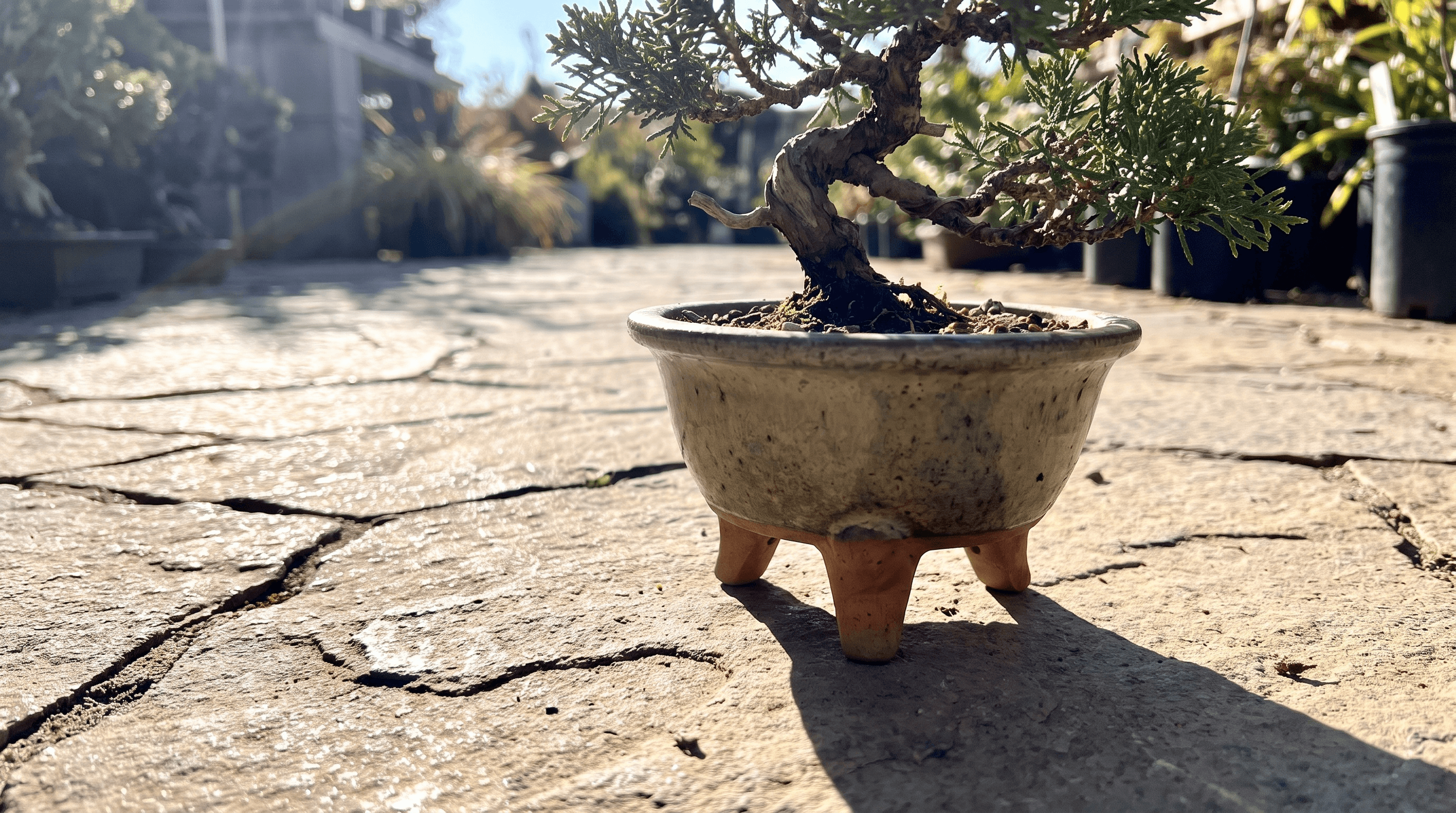
Root cooking is one of those problems that's easy to underestimate because you can't see it happening. The leaves might look fine for days while the root zone quietly overheats a few centimeters below the surface, and by the time you notice damage above ground, whether it's wilting, dieback, or a general decline, the roots have already taken the hit.
The physics of it is straightforward once you think about it. A bonsai pot has a small volume of soil with a large surface area exposed to sun and heat relative to that volume, especially compared to a tree growing in open ground. Dark-colored pots absorb even more heat than light ones, and shallow pots have less soil mass to buffer the temperature swing. Put a dark, shallow pot in direct summer sun on a hot surface and the soil inside can genuinely reach temperatures that damage fine roots, even while the ambient air temperature seems tolerable.
I lost a young shohin-sized juniper to exactly this a few summers back, healthy-looking one week and clearly declining the next, and when I finally checked the root ball it told the story. Since then this has become one of my standard summer precautions rather than something I only think about during a heatwave.
Add moss to the soil surface to buffer the temperature swing
A thin layer of moss or sphagnum on top of the substrate helps protect the soil surface from direct sun and slows moisture loss at the same time. I use it on my most exposed pots through summer, particularly smaller and shallower ones where the soil volume alone doesn't provide much buffer. It's a small effort that helps keep the top layer of soil from drying and heating as fast during peak sun hours.
Move pots off hot surfaces, not just up on feet
The surface a pot sits on matters as much as anything else. A pot sitting flush on a solid surface, especially something like concrete or dark tile that's already radiating absorbed heat, has nowhere for that heat to go except up into the root zone. The most reliable fix is getting the pot off that surface entirely, onto bare ground, a wooden bench, or into the shade cast by a larger tree nearby. I also use simple pot feet or a raised stand on some pots to break direct contact with a hot surface, though I can't say exactly how much that saves compared to just relocating the pot, so I treat it as a small extra step rather than the main fix.
Group pots together rather than spacing them out
This one surprised me when I first started doing it deliberately. Pots grouped closely together shade each other's sides and create a slightly cooler, more humid microclimate than the same pots spaced apart with full sun hitting every surface. I cluster my more vulnerable, smaller pots together on the bench during summer rather than spreading the collection out evenly, which is more how I'd arrange things in spring or autumn when heat isn't the concern.
Pot color changes how much heat builds up
Dark-colored pots, especially dark ceramic or plastic training pots, absorb more heat than lighter-colored ones. I'm not suggesting you repot everything into light-colored containers, since pot choice depends on plenty of factors beyond summer heat, but I am more careful about where I place dark pots during the hottest months, keeping them out of the most intense direct exposure or adding shade specifically for those trees when I can't move them.
Common questions
How can I tell if my bonsai's roots are cooking without digging them up?
Wilting that doesn't improve with watering, a general decline in vigor during otherwise hot but not extreme weather, or dieback on one side of the tree that happens to face the sun most directly are all signs worth taking seriously. By the time foliage clearly shows distress, root damage has often already begun.
Does pot size matter as much as pot color?
Both matter, and they compound each other. A small, shallow, dark pot in full sun is the worst combination I deal with, since there's little soil mass to buffer the heat and the color is actively absorbing more of it. A larger, lighter pot in the same spot handles the same conditions much better.
Is moss necessary if I'm already using shade cloth?
Shade cloth reduces direct sun hitting the pot and soil surface, which helps a lot, but a moss layer adds a separate bit of insulation and moisture retention that works well alongside it rather than replacing it. I use both together on my most vulnerable trees during the worst weeks.
How high off the ground should pot feet raise a pot?
I don't use anything elaborate, just simple ceramic or plastic feet, and I don't have a precise measurement to give since I haven't tested it directly. The main goal is breaking direct contact with a heat-radiating surface, or better yet moving the pot off that surface entirely, rather than achieving a specific height.
Can grouping pots together cause other problems, like pests or poor airflow around foliage?
It's a trade-off worth watching. Grouping helps with root zone heat but can reduce airflow around the foliage itself, which matters for things like fungal issues in humid conditions. I group pots close but not touching, leaving enough space for air to move through the canopy even while the pots themselves shade each other.
Does this apply to trees kept in a shaded spot all summer, or just full-sun trees?
Root cooking risk drops a lot for trees already in consistent shade, since the pot itself isn't absorbing direct sun. It's mainly the sun-exposed pots, and especially dark, shallow ones on hot surfaces, that need this kind of attention.
Should I bring vulnerable pots indoors during the worst heat to avoid this?
I'd generally prefer outdoor shade, moss, and airflow solutions first, and would only bring vulnerable pots indoors very briefly for the most extreme days, since indoor conditions bring their own problems with light and airflow. Shade, moss, pot placement, and grouping generally handle the risk well enough outdoors without resorting to bringing trees inside.
You might also like
General guidance based on 20+ years of practice. Every tree, climate, and year is different — when in doubt, ask us.