
Preparing Bonsai for Winter in Autumn
By the time the first hard frost actually arrives, the groundwork for winter should already be done, even if moving trees into deeper shelter often happens right around that frost.
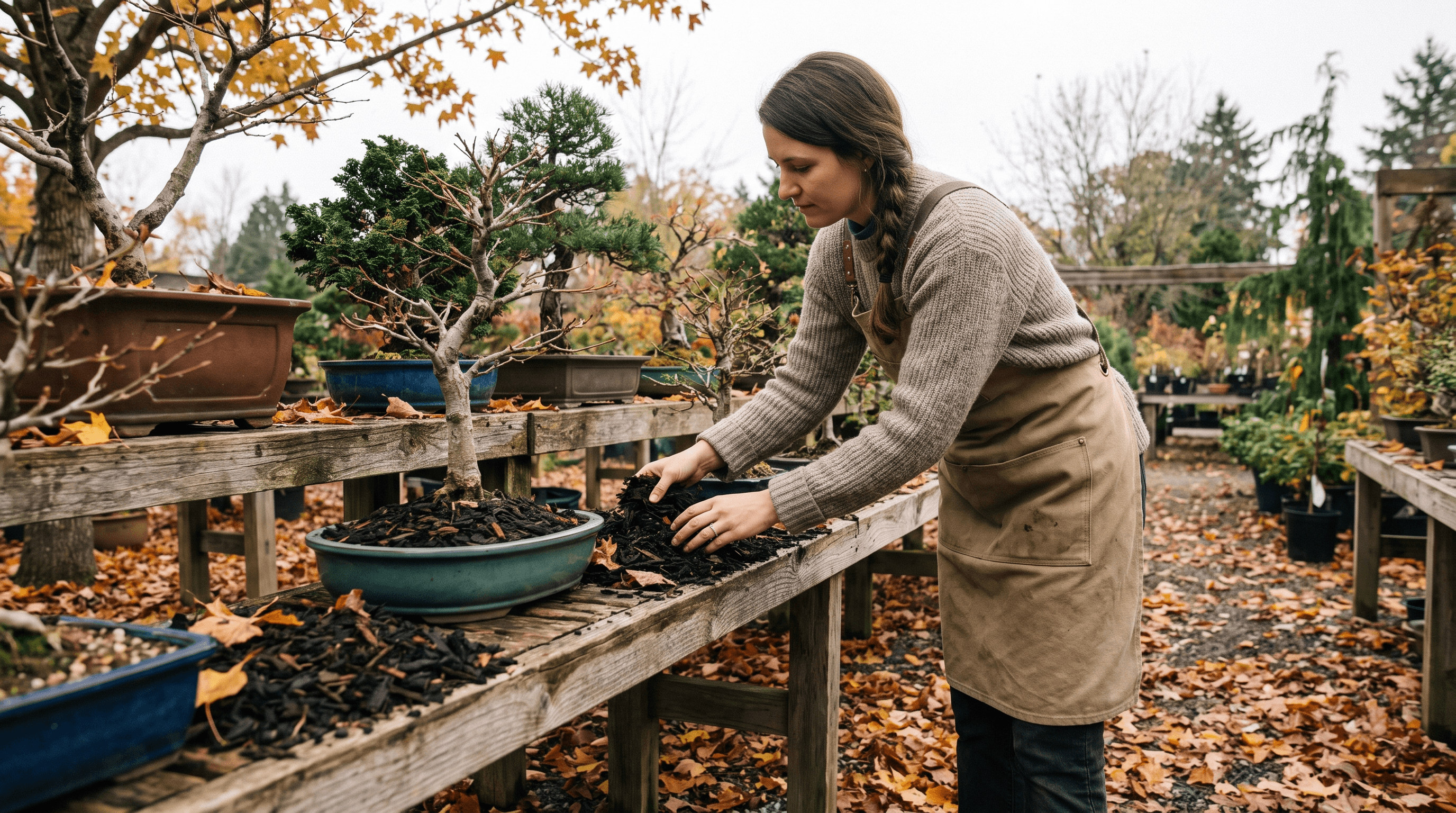
I say this every year and people still wait too long: don't treat the first cold snap as your cue to start getting trees ready for winter. Real winter preparation is a gradual process spread across autumn, easing watering and feeding down in stages, working out which trees genuinely need shelter, and checking the physical condition of pots and wire while there's still time to fix anything you find. Actually moving trees into deeper winter protection often happens around or just after the first real frost, once hardy species have had that fall cold to properly settle into dormancy, but the groundwork should already be finished by then.
I learned this one the hard way, more than once actually, scrambling in early December to sort out cold frame space for a couple of marginally hardy trees because I'd put it off through a mild November that felt like it would just keep going. It didn't. A cold snap arrived faster than the forecast suggested it would, and I spent an evening moving pots in the dark instead of doing it calmly over a free weekend in October.
None of what follows is complicated. It's mostly about starting early enough that each step happens at an unhurried pace instead of all at once under pressure.
Ease watering and feeding down gradually, not abruptly
Both should decline in step with the tree's actual slowing activity through autumn rather than being cut off sharply because a date on the calendar changed. Early in autumn, while a tree is still showing some active growth, I keep feeding, often shifting to a lower-nitrogen mix, rather than stopping outright. I reduce feeding strength further and then stop as visible growth genuinely tapers off, watching for that point rather than guessing, and I let watering frequency follow the substrate's actual drying rate as days shorten and temperatures cool. Cutting either off too fast, especially watering, while a tree is still somewhat active in a mild early autumn risks stressing it right before it needs to be at its strongest heading into dormancy.
Work out which trees actually need shelter, and do it early
Not every tree in a collection needs winter protection, plenty of hardy species handle our regional winters outdoors without any special measures. The ones that do need it are usually species marginal for the local climate, anything in a particularly small or shallow pot that offers less root insulation, and trees that were repotted late in the season and haven't fully re-established, which often benefit from extra protection until their root systems catch up. I go through the whole collection in October specifically to make this assessment, tree by tree, rather than waiting until a frost warning forces a rushed, incomplete pass through the benches.
Check pots for damage before the cold sets in
In my experience, a hairline crack in a pot that's been fine all summer can fail once water inside it freezes and expands, so autumn is when I inspect every pot for cracks, chips, or weak spots, particularly on unglazed or older ceramic pots that have been through a few winters already. Anything questionable either gets moved to a more protected spot for winter or, if it's serious enough, the tree gets shifted into a sturdier temporary pot before the cold arrives rather than risking a cracked pot mid-January when repotting isn't an option.
Check wire before it bites into bark
Wire applied back in spring or summer has often been sitting through a full season of growth by autumn, and branches thicken enough over that time that wire can start biting into bark if it isn't checked and loosened. I go through wired trees in autumn specifically for this, checking each one and removing or adjusting wire before it scars the bark, rather than waiting until spring pruning season to notice.
Common questions
When should I start preparing my bonsai for winter?
In autumn, well before the first hard frost, not in response to it. I start the gradual process of reducing watering and feeding as growth slows in September and October, and I do the shelter assessment and physical checks on pots and wire during the same stretch, so that everything is settled before real cold arrives.
How do I know if a tree needs winter shelter or can stay outside?
It depends on species hardiness for your specific climate, pot size, and the tree's current condition. Species marginal for your zone, trees in small or shallow pots, and anything recently repotted are the ones I flag for shelter, while genuinely hardy, well-established trees in reasonable pots usually handle an outdoor winter without issue here.
What kind of winter shelter is enough for a marginal tree?
It varies by how marginal the species is and how cold your winters actually get, but often something as simple as an unheated cold frame, a spot against a sheltered wall, or grouping pots together in a protected corner is enough. The goal is usually just buffering the worst of the cold and wind, not creating a heated indoor environment.
Should I stop watering completely once winter arrives?
No, dormant trees still need some water, just far less than during active growth, and the mistake of stopping entirely is a common one. I keep checking the substrate through winter and water when it's genuinely dry, adjusted for the much slower rate a dormant tree uses water at that time of year.
Why does my pot need checking for cracks before winter specifically?
Because water trapped in a hairline crack expands when it freezes, and a crack that was cosmetic in October can split a pot open in January. Checking in autumn, while there's still time to move a tree into a sturdier pot or a more protected spot, avoids finding this out the hard way mid-winter.
Is it too late to check wire in late autumn if I forgot?
It's better late than not at all, but check as soon as you realize rather than waiting until spring. Wire that's already biting into bark by late autumn will only get worse if left through the whole dormant season, so a late check in November still beats no check until spring pruning season.
Do all species need the same level of winter preparation?
Not at all, hardiness varies a lot by species, and what a hardy juniper or pine shrugs off outright can genuinely damage a more tender or marginally hardy specimen. I assess each tree individually in autumn rather than applying one blanket winter routine across a mixed collection.
You might also like
General guidance based on 20+ years of practice. Every tree, climate, and year is different — when in doubt, ask us.