
Autumn Bonsai Pest and Disease Cleanup
The pest or fungal problem you ignore in October doesn't go away over winter, it settles in and comes back stronger on a tree that's already stressed from dormancy.
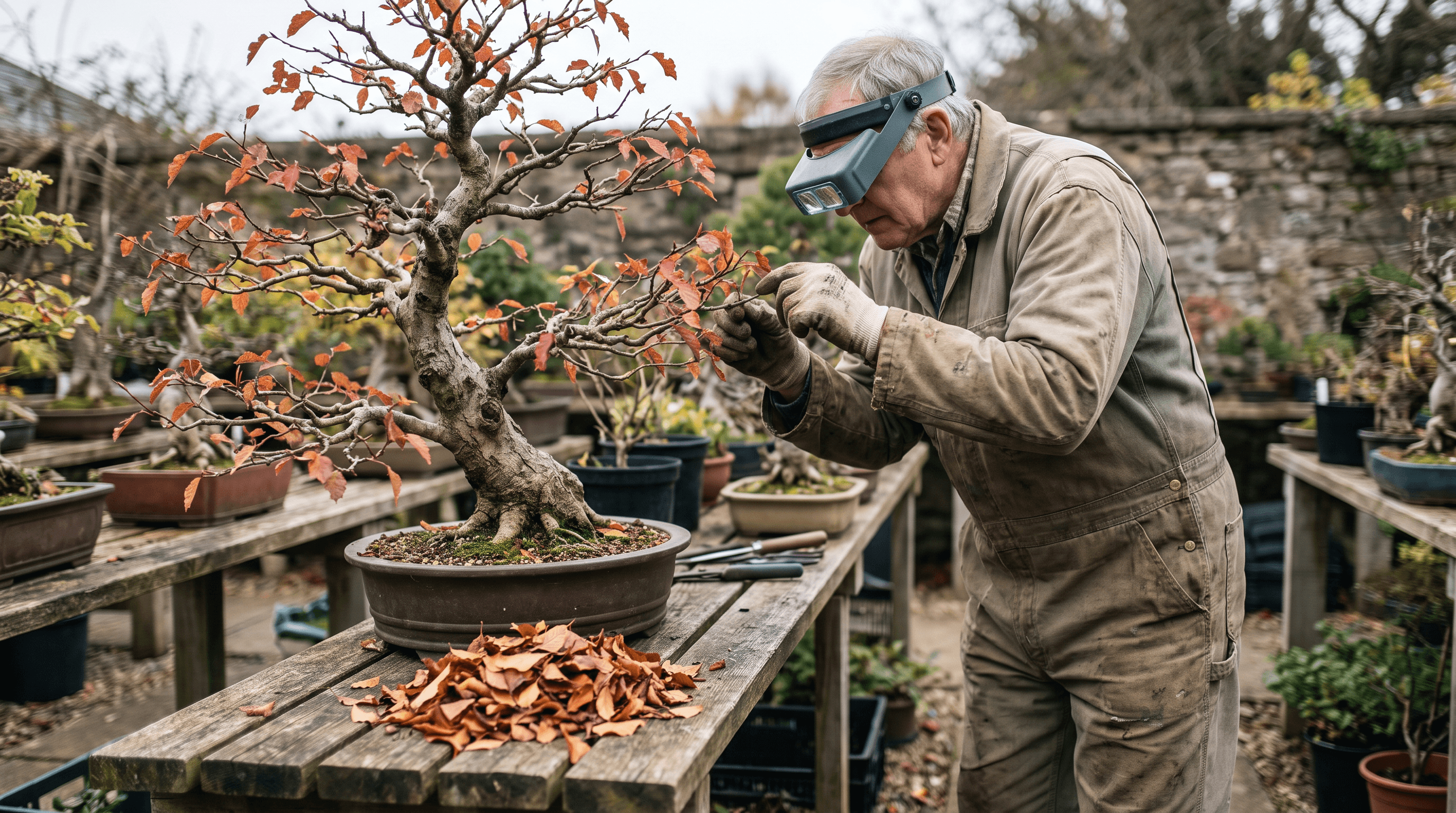
I do one last close inspection of every tree on the property before I consider the growing season closed, usually sometime in November depending on how the autumn is running. It's slower than my normal walk-throughs during summer, because I'm not just glancing for obvious trouble, I'm turning leaves over, checking under the rim of the pot, and looking at branch junctions where scale likes to hide.
The reason I bother with this pass specifically in autumn is that whatever survives the winter dormant on a tree gets a huge head start come spring. A scale colony that overwinters on a branch is established and feeding before you've even started your first spring inspection, and a tree coming out of dormancy with a compromised root system or thin reserves handles a pest or disease problem far worse than the same tree would in the middle of a vigorous summer.
Treating now, while the tree still has some active metabolism and before the coldest weather sets in, is also just easier. Fewer products work well once temperatures drop hard, and a stressed, dormant tree in February is a much worse candidate for any kind of intervention than the same tree in a mild November.
Why this inspection matters more in autumn than any other season
During the growing season a tree has resources to spare and can often outgrow or tolerate a minor pest issue that would otherwise concern me. Going into dormancy, that margin disappears. Some pests, scale in particular, overwinter directly on the tree in an established stage and are already feeding and ahead of you by the time spring inspections start, while other problems simply add one more stress to a tree that has almost no capacity to fight back once it's dormant. Catching and treating what I can now means the tree goes into dormancy in better shape, rather than carrying an unresolved problem through five or six months of limited defenses.
What I actually look for
Scale shows up as small raised bumps along stems and branch junctions, often easiest to spot once the leaves that were hiding them have dropped. Spider mites leave fine stippling and webbing, usually worse on the undersides of leaves that are about to fall anyway, so I check those before I toss them rather than after. For disease I'm looking at leaf spotting patterns, any soft or blackened bark, and cankers, sunken patches on a branch that indicate dieback starting. I also check the soil surface and the base of the trunk for anything soft or discolored, which is a warning sign worth a closer look rather than proof on its own of root or collar rot, and it's often something I keep watching over the following weeks rather than diagnosing outright from a quick surface check.
Treating now instead of waiting for spring
Most contact treatments, whether that's a horticultural oil for scale or a fungicide for a leaf disease, need conditions within a specific temperature window and foliage or bark that isn't frozen, so I always check the product label rather than assuming one rule covers every treatment. I try to get any needed treatment done before the first real cold snap rather than after, since that window tends to line up with what most labels call for. Oil timed for overwintering pest stages can be a genuinely cheaper fight than dealing with an active infestation in April, but the right timing and whether a given species tolerates oil at all varies, so this is a case for checking species-specific guidance rather than a blanket late-autumn spray across the whole collection. Cleanup matters here too, I rake up and discard fallen leaves that show spotting or other disease signs rather than leaving them under the tree, and I wipe down pruners between trees when I've been working on anything that looked diseased, since both habits cut down on what's left to overwinter and spread.
Don't mistake normal autumn changes for a problem
This is where I see people overreact. Leaves yellowing and dropping on a deciduous tree in October is not disease, it's the tree doing exactly what it should. Needle browning on the interior of a pine or a cedar, the older growth closer to the trunk, is also completely normal seasonal shedding, not a fungal issue. I look for patterns that don't match the season, spotting on green summer leaves that were otherwise healthy, or dieback on branches that should still be active, rather than assuming every bit of autumn color change is a red flag.
A quieter winter check-in
Once trees are dormant I'm not doing weekly inspections anymore, but I do walk the benches every few weeks over winter, mostly checking for anything that looks off against the baseline I noted in this autumn pass. Having gone through each tree carefully in November means I actually know what normal looks like for that tree going into winter, which makes it much easier to notice if something changes.
Common questions
When exactly should I do this autumn inspection?
I aim for a window after most leaves have dropped but before the first hard frost, which for me usually lands in November. That timing gives you a clear view of the branch structure for spotting scale and cankers, while the tree still has enough active metabolism to respond to treatment.
Is it worth treating a tree that looks completely healthy?
I still check it closely, since some pests like scale are easy to miss until a colony is established. A clean bill of health after a thorough look is a good outcome on its own, it means you can skip treatment and just monitor over winter.
What's the difference between normal autumn leaf drop and disease?
Even, gradual yellowing and drop across a deciduous tree, or browning limited to the oldest interior needles on a conifer, is normal. Disease usually shows up as spotting, blotching, or premature drop concentrated on otherwise healthy-looking green foliage, or dieback on branches that should still be active.
Can I still use oils or fungicides once it's gotten cold?
It depends on the specific product, oils and fungicides don't share one temperature rule, and the label is the actual authority here rather than a general guideline. Most are labeled for use above a minimum temperature and away from any imminent freeze, and using them outside that window risks damaging the bark or simply not working. This is exactly why I try to treat in autumn before the cold really sets in, checking the label each time, rather than waiting or guessing at a temperature.
How do I check for scale if I can't see it easily?
Run a finger along stems and branch junctions rather than relying on sight alone, especially on species with textured bark. Scale feels like small hard bumps that don't scrape off easily with a fingernail, unlike normal bark texture.
Should I treat every tree the same way, even ones with no visible problem?
No, I only treat what shows a genuine issue. Blanket-spraying every tree with oil or fungicide regardless of need adds unnecessary stress right before dormancy and isn't a substitute for actually inspecting each one.
What if I find a problem but it's already very cold outside?
If conditions genuinely allow it, moving a tree somewhere sheltered can buy a small window to treat according to the label rather than skipping it entirely, but I wouldn't improvise beyond what the species and the product tolerate. Otherwise note the problem and plan to treat again as early as possible in spring, since some issues can be managed but not fully resolved once true winter cold has set in.
You might also like
General guidance based on 20+ years of practice. Every tree, climate, and year is different — when in doubt, ask us.