
Watering Bonsai on Vacation: What to Do by Trip Length
How you handle watering bonsai on vacation depends heavily on how many days you'll be gone, but also on species, pot size, and the weather while you're away: a long weekend often needs little more than a good soak and some shade, while two weeks calls for a real system, a real person checking in, or both.
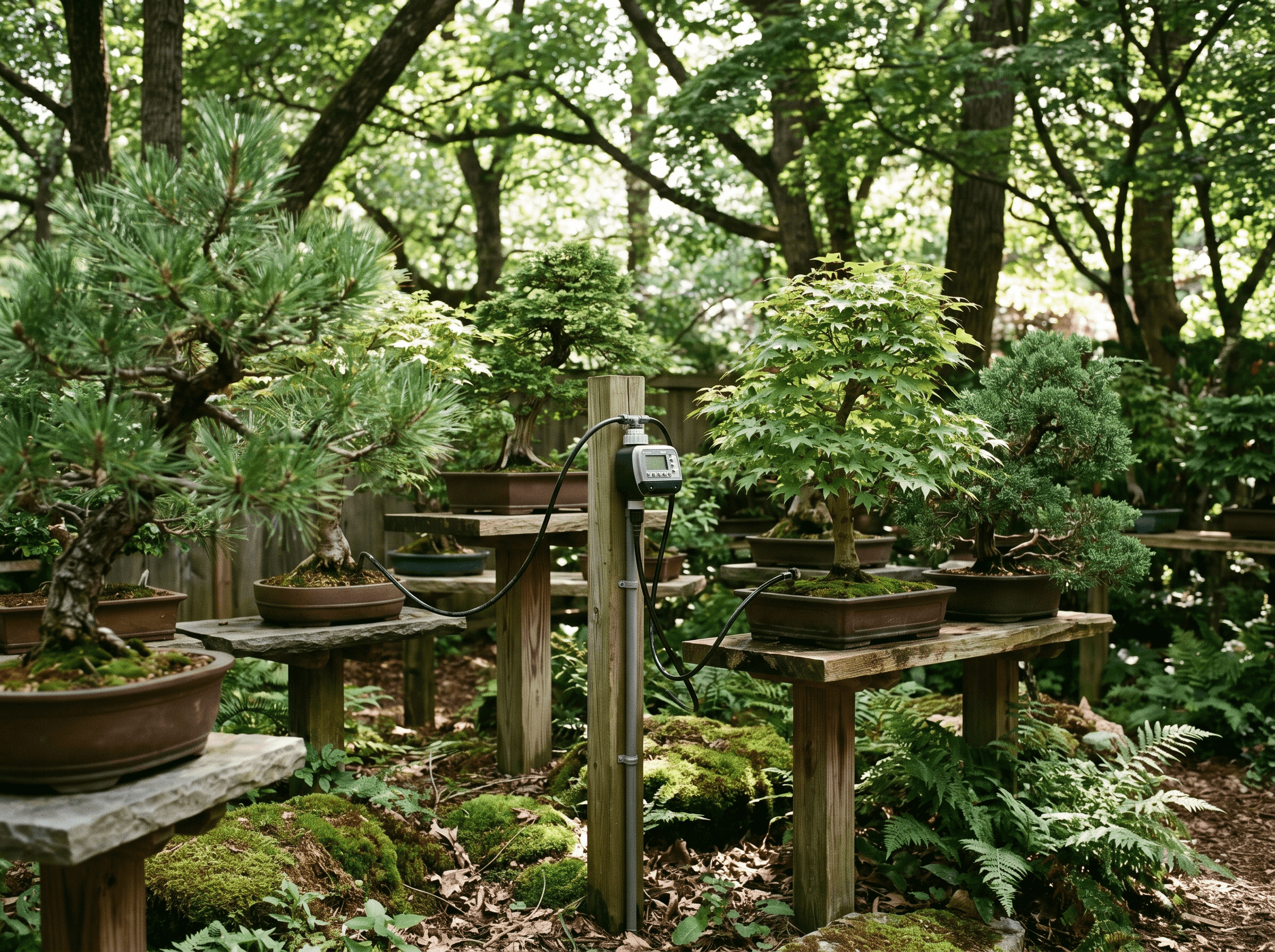
Every August I get the same message from clients heading off on holiday: what do I do about the trees. It's a fair question, because August here in the south is brutal, thirty-five degrees and dry wind off the sea, exactly the conditions that empty a bonsai pot in a day. I've lost count of how many times someone has come back from a week away to a crisp, dead juniper because they assumed a single big watering before leaving would carry it through.
The mistake almost everyone makes is treating this as one problem with one solution. A three day trip and a three week trip are completely different logistics problems. What works for one will either be overkill for the other or, more dangerously, wildly insufficient.
So I want to break this down by roughly how long you'll actually be gone, because that's the variable that should drive your decision, not which gadget looked interesting online, though trip length is only ever a starting point. Species, pot size, substrate, sun exposure, and how hot the weather actually turns out to be all shift these numbers considerably, so treat what follows as a general framework to adjust from, not a fixed rule for every tree.
Short trips: a good soak and some shade will carry you
For a lot of bonsai, one to two days can be manageable with a deep watering plus shade, but don't assume that's safe across the board, small pots, hot weather, and thirstier species can all empty a pot faster than that. Water thoroughly the morning you leave, a proper deep soak until water runs clean from the drainage holes, not a quick splash. Then move every pot into a shaded spot, ideally grouped close together rather than spread out, since clustered pots shade each other's soil and slow evaporation as a group. A north-facing wall or under a pergola works well. Don't put trees in full sun expecting the shade to compensate for skipping the watering step; you need both, and in genuine summer heat even that combination can run out sooner than you'd like.
A tray under the pot can bridge several days
A shallow tray with a layer of gravel or capillary matting under each pot, with water sitting below the base of the pot rather than the roots sitting directly in it, is worth treating as an emergency humidity buffer rather than a dependable substitute for watering over several days. It works by keeping humidity high around the pot and giving some species a little passive moisture to draw on, and it may help water-tolerant trees like bald cypress or a maple that likes consistent moisture somewhat more than a Mediterranean species that wants to dry out between waterings. But I wouldn't stake a mid-length trip on it alone; test it against your own setup first, and lean toward one of the more active options below if you're not confident it's actually keeping the soil itself moist, not just the air around it.
Automated drip irrigation for real absences
Past a week, I stop recommending trays and gravel and start recommending an actual timer-driven drip system, a small pump or gravity reservoir feeding individual drippers or spikes into each pot on a schedule. Set it up and test it for several days before you leave, because the failure mode of a drip system is usually a clogged emitter or a reservoir that runs dry sooner than expected, and you want to catch that while you're still around to fix it, not from an airport lounge. This is genuinely the most reliable automated option for two weeks or more.
A neighbour beats any gadget for long absences
Honestly, for longer absences, my real advice is simpler than any of the equipment above: ask someone to check the trees regularly, every couple of days is a reasonable target, though how often really depends on the weather and how fast your particular pots dry out. A neighbour, a friend, someone from the local bonsai club if you have one nearby. A person can notice a tree that's drying faster than expected because of a heatwave, or a drip line that's come loose, in a way no timer can. I've set up plenty of automated systems over the years and I still tell people that a reliable human beats a reliable machine for any trip long enough that a small equipment failure could actually cost you the tree.
Don't rely on one big soak to last through hot weather
This is worth repeating on its own because it's the mistake I see most often: a single thorough watering, however well done, does not last more than a few days in genuine summer heat, no matter how deeply you soaked the pot. Bonsai substrate drains fast by design. If your plan for a two week trip is just watering really, really well on the way out the door, that plan will fail well before you're back, exactly when depends on your climate, pot size, and species, but summer heat shortens the window considerably.
Common questions
What's the safest option if I'm only away for a weekend?
A thorough deep watering the morning you leave and moving pots into a shaded, grouped spot out of wind is often enough for two to three days for many species, though small pots and hot weather can shorten that. No equipment needed for a typical short trip.
Can I just move my bonsai indoors while I'm on vacation?
For most outdoor species, no, not for more than a day or two. Outdoor bonsai need the light levels and air movement of an outdoor spot, and a week indoors in low light does more harm than the watering problem it's meant to solve.
How do drip irrigation timers work for bonsai specifically?
A small reservoir or tap connection feeds a timer-controlled pump, which pushes water through thin tubing to an individual dripper or spike positioned at each pot. You set the frequency and duration, and it repeats automatically. Test the whole setup for several days before departure to confirm each dripper is actually delivering water.
Are self-watering trays enough for a two week trip?
Generally not on their own. Gravel and matting trays raise humidity and buffer short dry spells to some degree, but bonsai substrate drains too fast for them to reliably sustain a tree for two full weeks without additional watering.
Should I ask a neighbour to water even if I have an automatic system set up?
For longer trips, yes, if you can arrange it. Automated systems can fail quietly, a clogged line, an empty reservoir, and a person checking in every few days catches that before real damage happens.
Does grouping pots together actually help that much?
Yes, more than people expect. Pots clustered close together shade each other's soil surface and create a slightly more humid microclimate than pots spaced apart in full sun, which helps slow how fast the soil dries, though how much varies with layout and weather.
What should I tell someone watering my bonsai for me?
Show them how to check soil moisture by touch before watering, tell them not to water on a fixed schedule regardless of the soil, and point out any species that need different treatment, like one that prefers to dry out more than the others.
You might also like
General guidance based on 20+ years of practice. Every tree and every climate is different — when in doubt, ask us.