
How Long Does It Take to Grow a Bonsai
A tree becomes a bonsai the moment you start training it, not after some fixed number of years, but real refinement is a project measured in decades, not seasons.
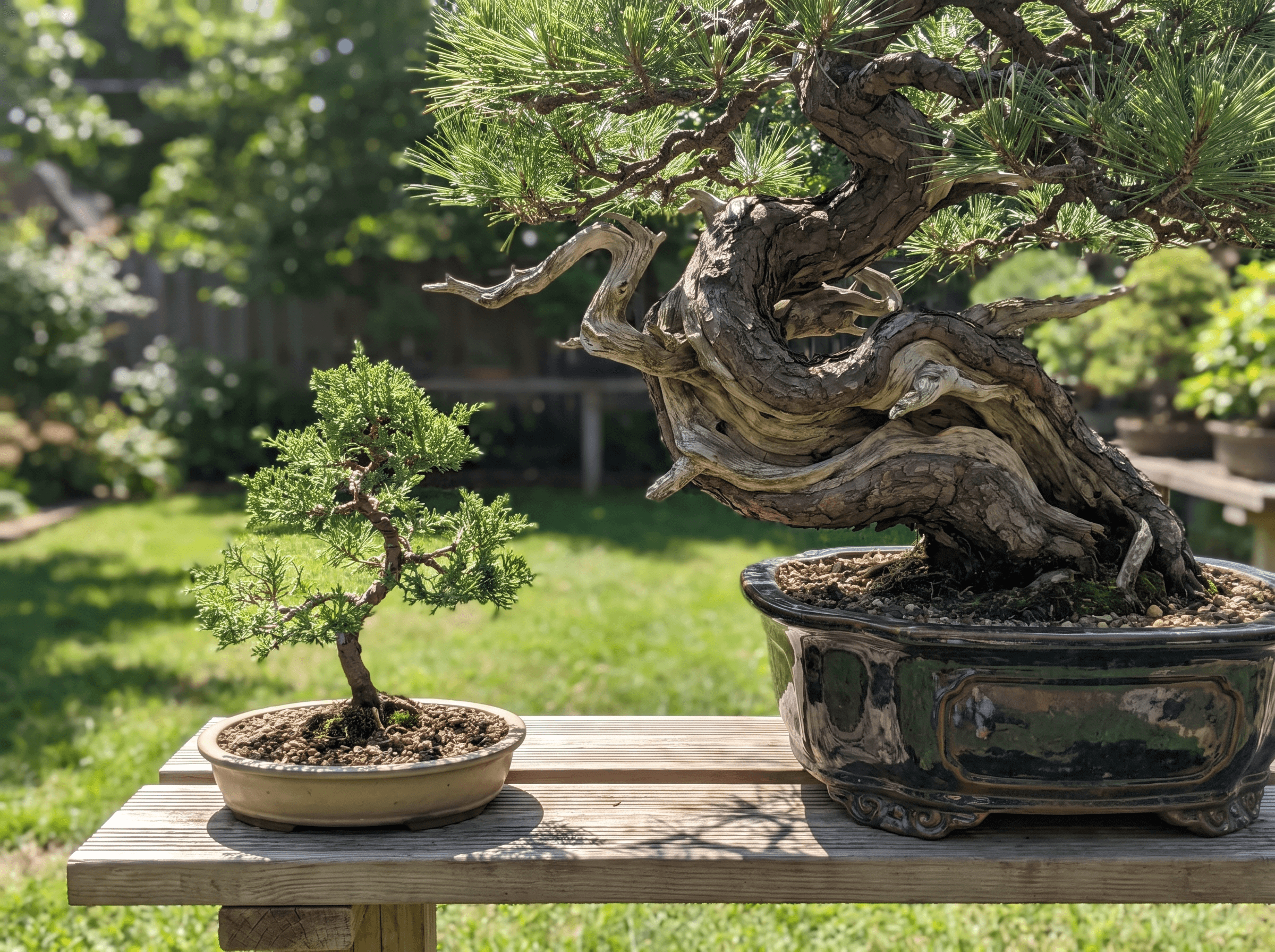
People ask me this expecting a number, usually hoping it's small. I understand why. But the honest answer is that it depends entirely on what you mean by finished, and in a real sense a bonsai is never finished at all. It's a living thing under continuous training, and even specimens that have won awards at major exhibitions are still being pruned, wired, and refined every year by someone.
As a rough guide: starting from young nursery stock, expect roughly two to five years for a believable beginner shape. Starting from seed, expect a decade or more before the trunk has real presence. True refinement into a highly developed specimen takes decades regardless of where you start. Those numbers vary by species and by how much work you put in, but they're a fair starting expectation.
That said, there are real, useful timeframes worth knowing, because they change what starting material makes sense for you and what kind of patience the hobby is going to demand. A believable basic shape from young nursery stock is genuinely achievable in a few years. The fine branching and mature presence that separates a good bonsai from a great one takes a great deal longer, often measured in decades rather than years.
Where you start matters enormously here, probably more than any other single factor.
A tree is a bonsai from the first training decision, not after a waiting period
There's a common misconception that a plant has to reach some age or size before it counts as a bonsai. It doesn't. The moment you start deliberately shaping a tree through pruning, wiring, and pot restriction with the intention of miniaturizing and styling it, it's in training as a bonsai, whether that started yesterday or fifty years ago. This matters because it means you don't need to wait years before your tree qualifies. You just need to start.
A believable basic shape: a few years
Starting from young nursery stock with a reasonable trunk already established, you can often develop a convincing basic silhouette, primary branch structure, and an appropriate pot within roughly two to five years, depending on species growth rate and how much work you put in. Fast growing deciduous material like elm or maple tends to move through this stage quicker than many conifers, which build structure more slowly. This is genuinely satisfying progress and a realistic goal for a beginner to aim toward. It won't have the fine, dense branching of an old specimen yet, but it will clearly read as a bonsai rather than a plant in a pot.
Real refinement and ramification: many years to decades
Ramification, the fine, repeatedly divided branch structure that makes a bonsai's silhouette look convincingly like a full-size tree seen from a distance, only builds up through repeated cycles of growth and pruning over many years. Each cycle typically adds another layer of finer branching. This is why truly refined bonsai take so long to develop and why they're valued so highly when you find one. There's no shortcut through this stage, only time and consistent seasonal work.
Famous old bonsai are often 50 to 100-plus years in training
Some of the most celebrated specimens in collections and exhibitions have been continuously trained for fifty, eighty, even over a hundred years, sometimes passed between multiple growers or generations of the same family along the way. That's the far end of the spectrum, not a requirement, but it does put the timeline in perspective. A bonsai's development genuinely has no fixed endpoint. It's an ongoing relationship between grower and tree, not a project with a completion date.
Starting from seed versus starting from nursery stock
Growing from seed is the slowest path by a wide margin, often a decade or more before the tree develops the trunk thickness and character needed for a convincing mature bonsai image, even though some early structural and root work can begin well before that point. It's a rewarding project if the process itself is what interests you, but it's a poor choice if your goal is a tree that looks like a bonsai within a reasonable timeframe. Starting from nursery stock or pre-bonsai material, where the trunk already has some age and thickness, skips that long early stage entirely and gets you to meaningful styling within a few years instead of a decade or more. Growing in open ground or a large training container rather than a shallow bonsai pot also speeds up trunk thickening considerably, which is one reason many growers develop trunk thickness that way before ever moving a tree into a proper bonsai pot.
Common questions
How old does a tree need to be before it's a bonsai?
There's no age requirement. A tree becomes a bonsai the moment it's under deliberate training, whether it's two years old or two hundred. Age affects trunk thickness and character, which matter for how developed the tree looks, but it isn't what defines whether something counts as a bonsai.
How fast can I get a bonsai that looks decent for a beginner?
Starting from reasonable nursery stock, a believable basic shape with primary branching and an appropriate pot is realistic within two to five years of consistent seasonal work, faster for vigorous deciduous species and slower for many conifers. It won't have fine, mature ramification yet, but it will look like an actual bonsai rather than an untrained plant.
Why do some bonsai take decades to develop?
Because fine branching, called ramification, only builds up gradually through repeated growth and pruning cycles over many years. Each cycle adds another layer of finer twigs and structure. There's no way to compress this process, which is exactly why well-ramified older specimens are valued so highly.
Is it worth growing a bonsai from seed?
Only if the growing process itself is what draws you in, since it typically takes a decade or more before there's enough trunk thickness and character to begin real styling toward a mature look. If your priority is a tree that looks like a bonsai sooner, starting from nursery stock or pre-bonsai material is far more practical.
Does a bonsai ever stop needing training?
No, not really. Even mature, refined specimens continue to be pruned, wired occasionally, and repotted on an ongoing cycle to maintain their shape and health. Bonsai is closer to an ongoing practice than a project with a finish line, which is part of what makes it a lifelong hobby for a lot of people.
Can I speed up how fast my bonsai develops?
To a degree. Starting from more developed material, consistent seasonal pruning and wiring, healthy growing conditions, and appropriate feeding all help a tree develop faster than neglect would. But ramification and real maturity still take years no matter how well the tree is cared for. There's no way to fully compress the timeline.
What's a realistic first-year goal for a new bonsai owner?
Keeping the tree healthy and stable is genuinely the whole goal in year one. Learning its watering needs, light requirements, and general seasonal rhythm matters far more early on than aggressive styling. Real shaping progress comes more easily once you understand how your specific tree behaves.
You might also like
General guidance based on 20+ years of practice. Every tree and every climate is different — when in doubt, ask us.