
Slugs and snails on your bonsai
Ragged holes chewed through the leaves and a trail of silvery slime nearby, most obvious first thing in the morning, are the signature of slugs or snails feeding on your bonsai overnight.
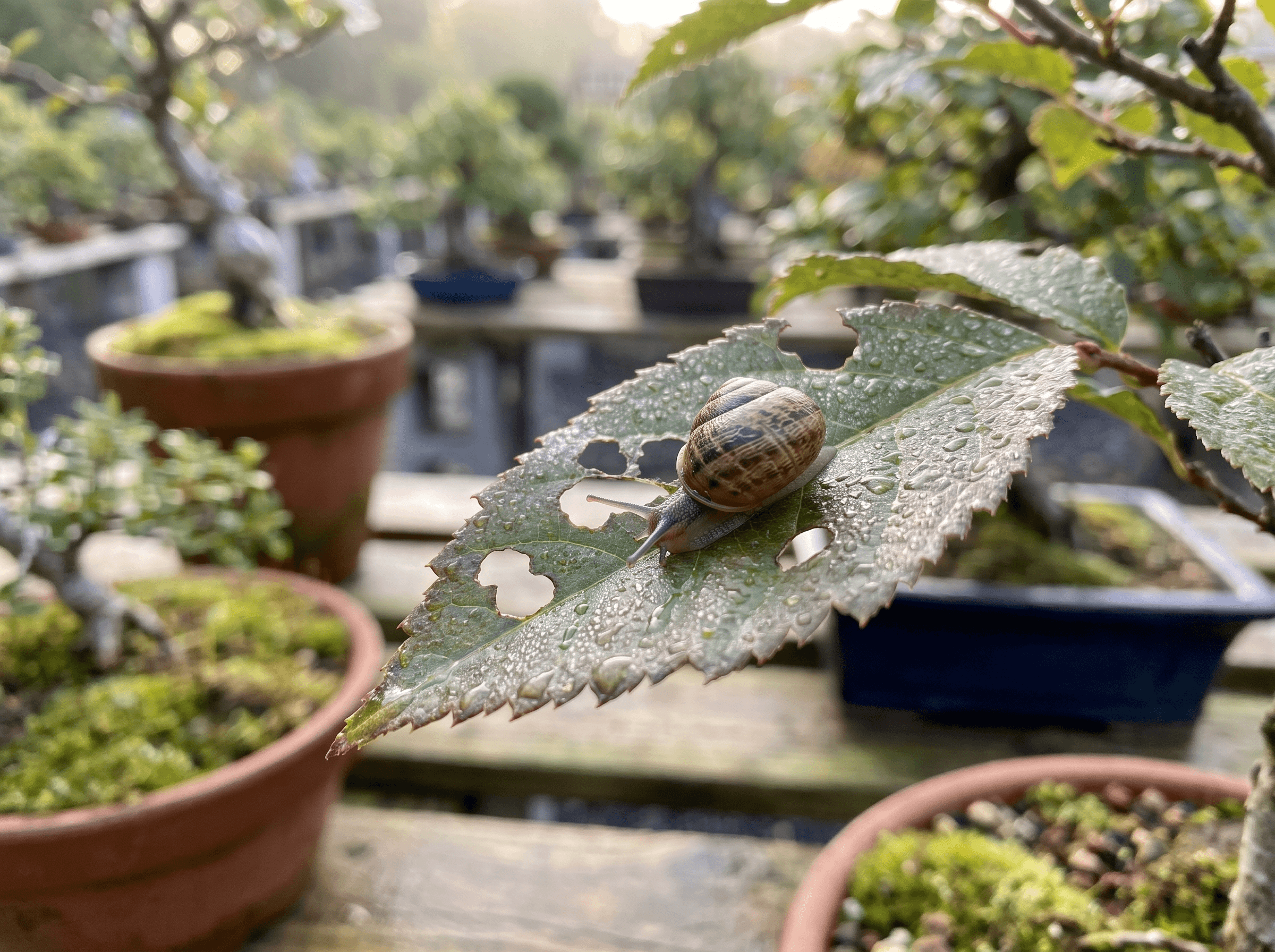
Slugs and snails do their damage after dark, working their way up the trunk or bench overnight and retreating somewhere damp and hidden before the sun comes up. What you're left with the next morning is the evidence rather than the culprit: ragged, irregular holes in the leaves, sometimes whole leaf margins chewed away, and a telltale slime trail glistening across the pot, bench or nearby leaves.
This is mostly an outdoor bonsai problem, and mostly a problem for trees sitting close to ground level or on a damp bench where slugs and snails can reach them easily. It gets noticeably worse after rain or in a stretch of damp, humid weather, since both slugs and snails need moisture to move around and dry out quickly if they're exposed too long. A bonsai bench crowded with pots sitting close together, with plenty of shaded, damp gaps between them, is close to ideal habitat for them.
Tender new shoots and soft spring growth take the worst of it, since that's the easiest tissue for a slug or snail to work through in a single night's feeding, and a bad night can strip a flush of new growth that took weeks to push out. Checking the tree at night with a torch is the most direct way to confirm what's happening, since during the day the culprits are usually tucked away out of sight and all you're left with is the damage and a guess.
Likely causes
Slugs or snails feeding at night
How to tell: Ragged, irregular holes in the leaves, sometimes stripping tender shoots down to the stem, with a silvery slime trail visible on the pot, bench or nearby foliage, most noticeable in the early morning before it dries off. Damage is usually worse after rain or in damp weather, and tender new shoots take the brunt of it.
The fix: Go out after dark with a torch, an hour or two after sunset is usually productive, and hand pick anything you find directly off the tree. Raise pots up off the ground or bench using pot feet or a stand, since even a few centimetres of clear air makes the tree meaningfully harder to reach. Wrap copper tape around the legs of a bench or stand as a barrier, slugs and snails avoid crossing it, and if the problem persists despite that, iron phosphate slug pellets scattered sparingly around the base are effective and considered safe around most garden plants when used as directed.
Damp, sheltered spot with hiding places nearby
How to tell: Pots crowded closely together, or sitting near ground-level debris, leaf litter or dense low planting, give slugs and snails exactly the damp, sheltered daytime hiding spots they need close to your trees.
The fix: Space pots out where you reasonably can, and clear away leaf litter, dead foliage and any damp debris sitting near the bench or display area. A tidier, drier area around the trees removes the daytime shelter that lets a population build up close to your collection in the first place.
Snails or eggs already living in the pot itself
How to tell: The damage keeps coming back even after you've cleared visible slugs and snails from the area, which often means a small snail, or a cluster of eggs, is already established in the soil, moss or leaf litter within the pot itself rather than travelling in from outside each night.
The fix: Check the surface of the soil and under any moss carefully during the day; small snails tuck into moss and soil crevices and are easy to miss. If you suspect eggs, a gentle soil check at repotting time is worthwhile, and rinsing moss off a newly acquired tree before it joins your collection avoids bringing a hidden population in from the start.
How to prevent it
Keep pots elevated off the ground or bench surface with feet or a stand, since that single change removes most of the easy access slugs and snails rely on. Clear damp hiding spots, leaf litter, dense low growth, stacked debris, from anywhere near your display area, and do an occasional after-dark check with a torch during wet spells when slug and snail activity peaks. New trees and fresh moss are worth a close look before they join the rest of your collection, since that's a common way a hidden population gets introduced in the first place.
Common questions
Are slug pellets safe to use near bonsai?
Iron phosphate based pellets are generally considered safe around ornamental plants including bonsai when used as directed, and they're the type I'd recommend over older metaldehyde based products, which are more toxic to pets and wildlife. Scatter them sparingly around the base rather than piling them against the trunk or foliage.
Do snails cause lasting damage to a bonsai?
A single night's feeding rarely does lasting harm to an otherwise healthy tree; the leaves that get chewed simply get replaced by the next flush of growth. Repeated, sustained feeding over a whole season, especially on a young or already stressed tree, can set back growth more noticeably, which is why it's worth dealing with once you notice a pattern rather than shrugging off occasional holes.
How can I tell slug damage from caterpillar damage?
Slug and snail damage tends to be more ragged and irregular with a slime trail nearby as the giveaway, while caterpillar damage is often cleaner edged and comes without any slime, sometimes with small dark droppings, frass, on the leaves or bench below instead. If you don't see slime anywhere near the damage, it's worth checking for caterpillars rather than assuming slugs.
Why does the damage always seem worse in spring?
Spring brings both the softest, most tender new growth and typically damper weather, a combination slugs and snails take full advantage of. Established, hardened summer foliage is noticeably less appealing to them than the tender shoots coming out in spring.
Do I need to treat the whole garden or just the bonsai area?
Focusing on the display area and its immediate surroundings is usually enough, since slugs and snails don't tend to travel far in a single night. That said, if your bonsai bench sits right next to a damp garden bed or ground cover that's clearly hosting a larger population, dealing with that nearby habitat helps as well.
Can slugs or snails hide inside the pot without me noticing?
Yes, particularly in moss, dense groundcover planting, or compacted soil at the pot's edge, which is exactly why persistent damage sometimes continues even after you've cleared the visible ones from around the bench. A careful check of the soil surface and moss during the day, and again at repotting, is the way to catch a hidden population.
You might also like
General guidance based on 20+ years of practice. Every tree is different — when in doubt, ask us.