

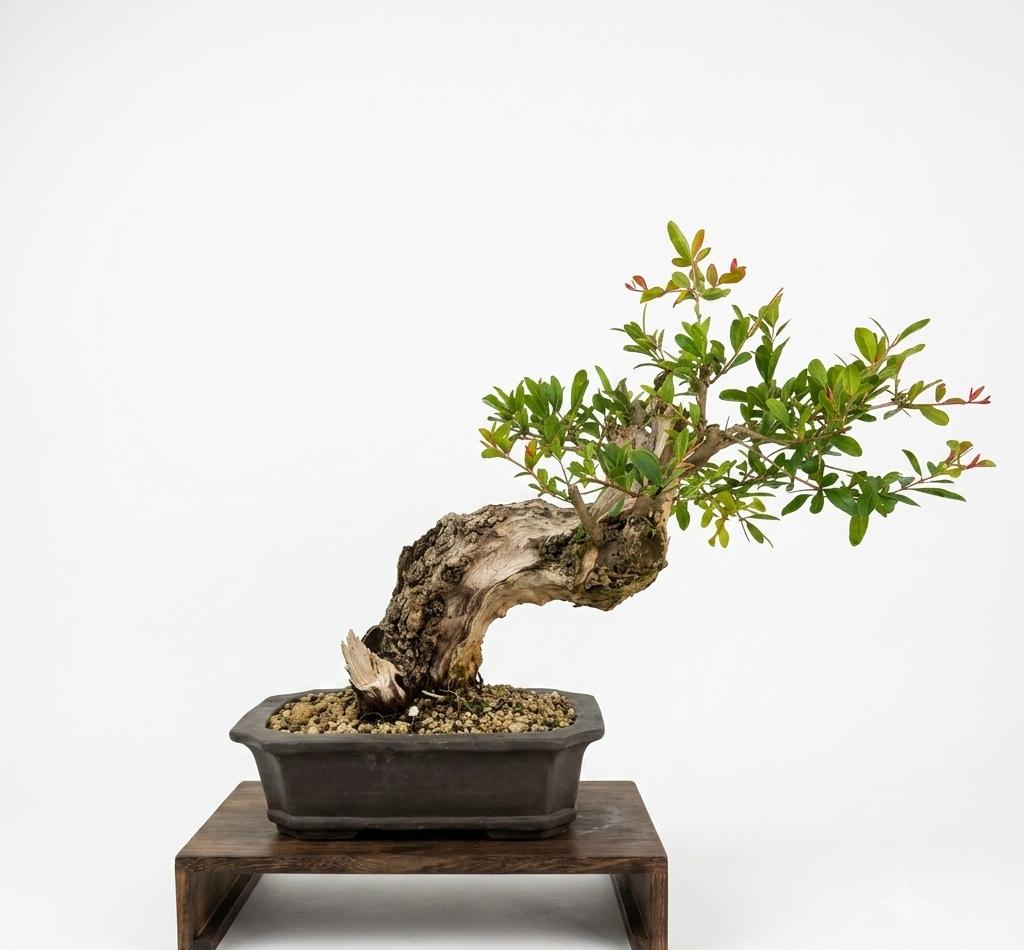
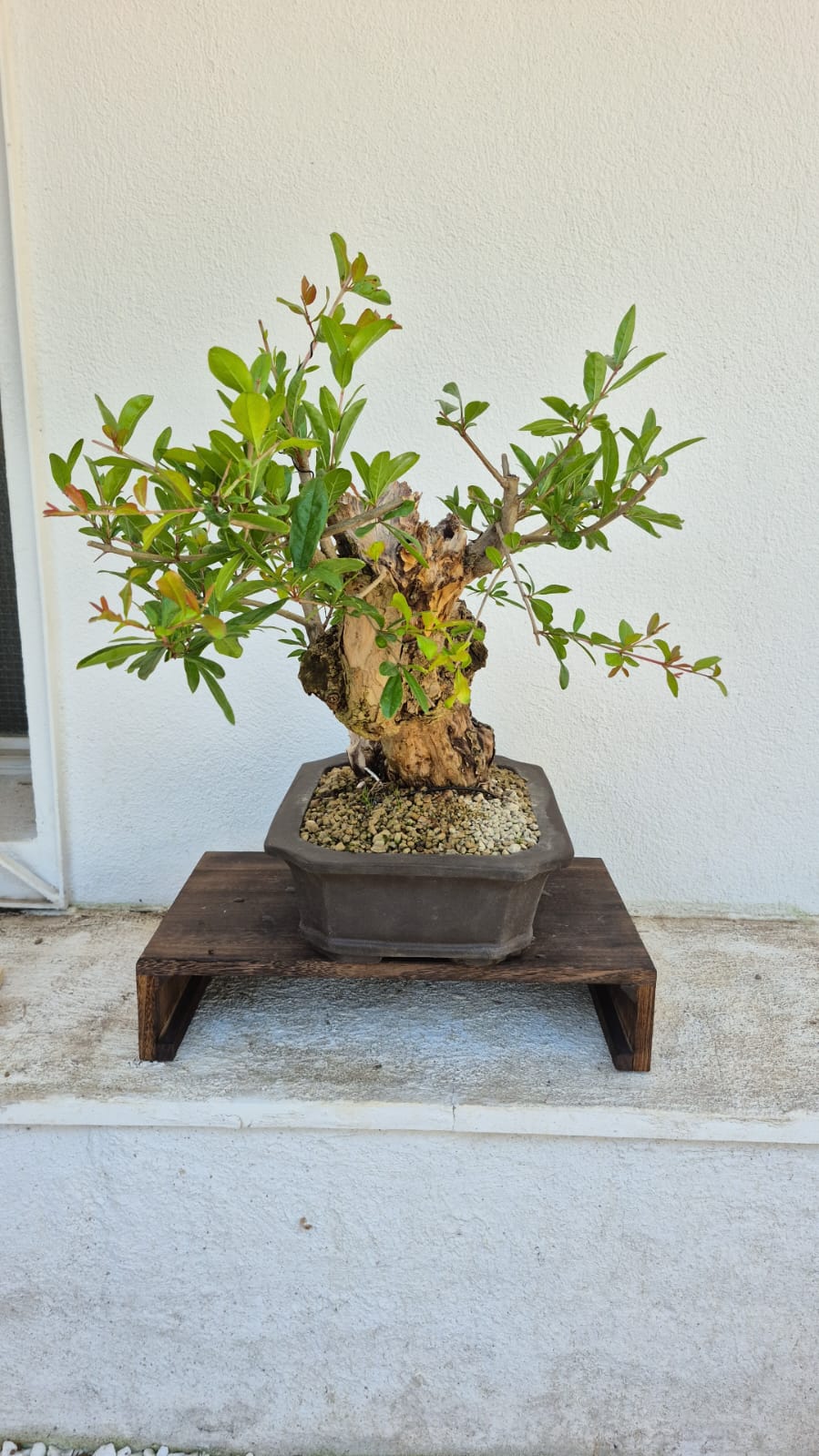
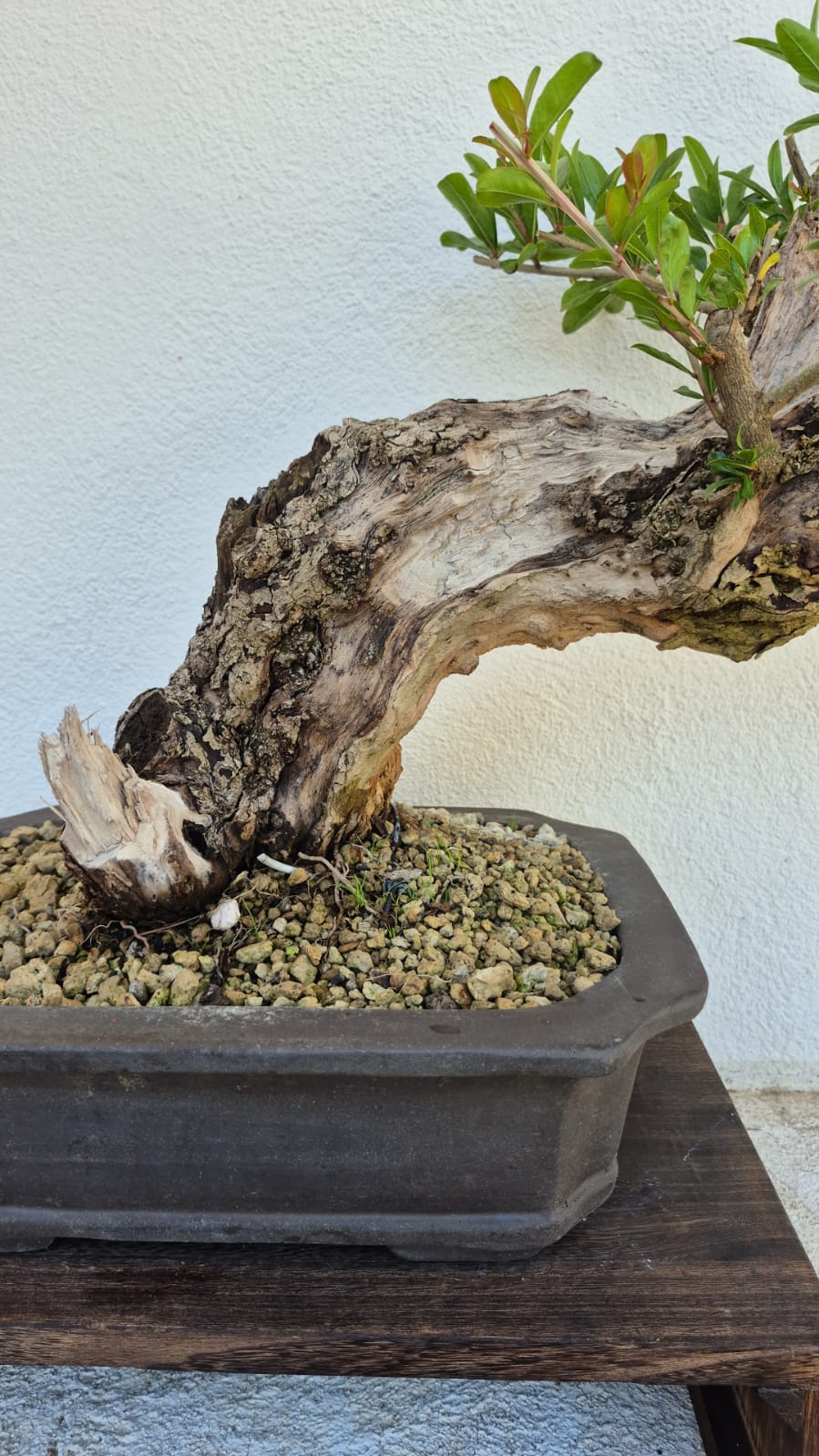
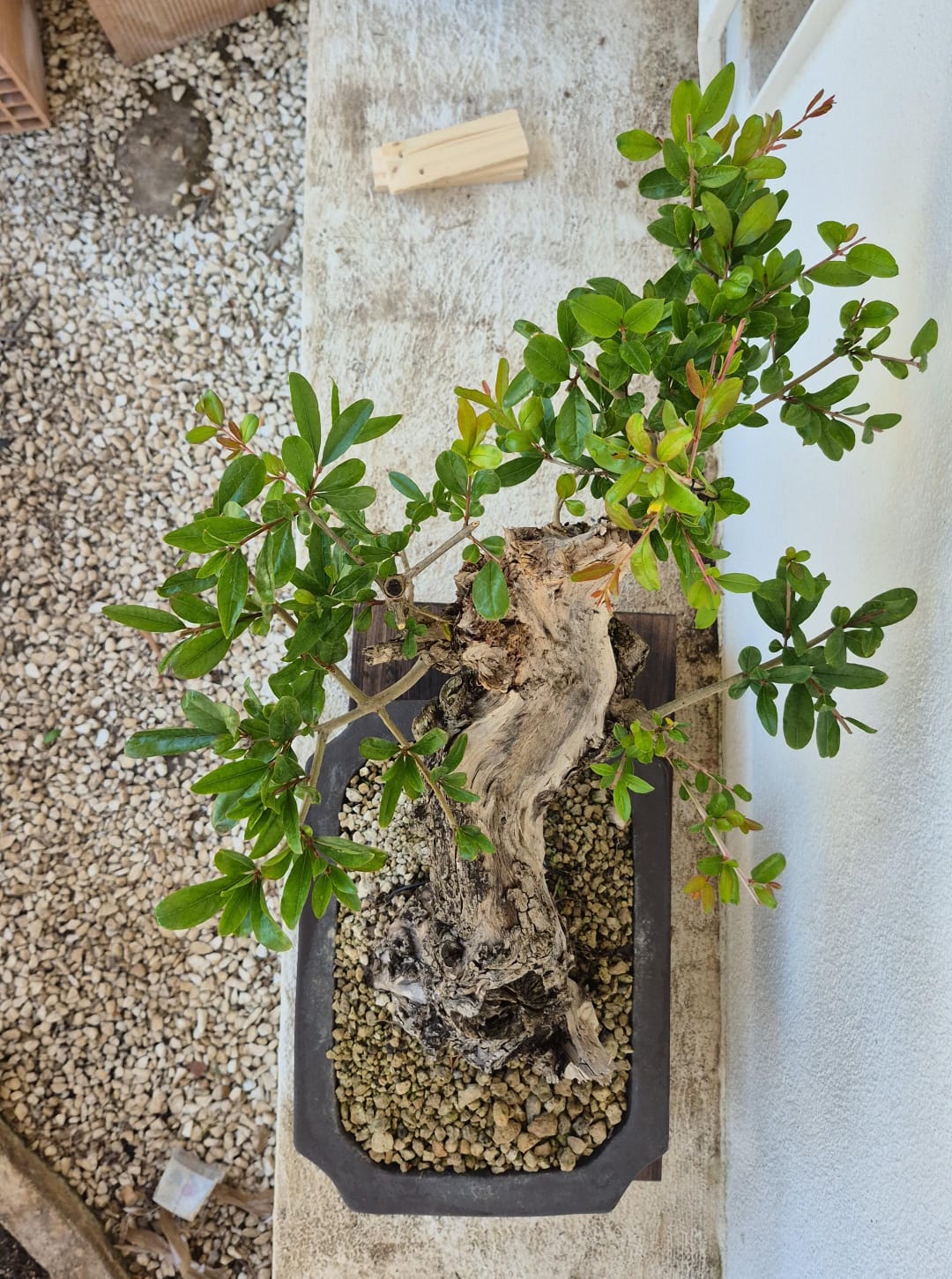
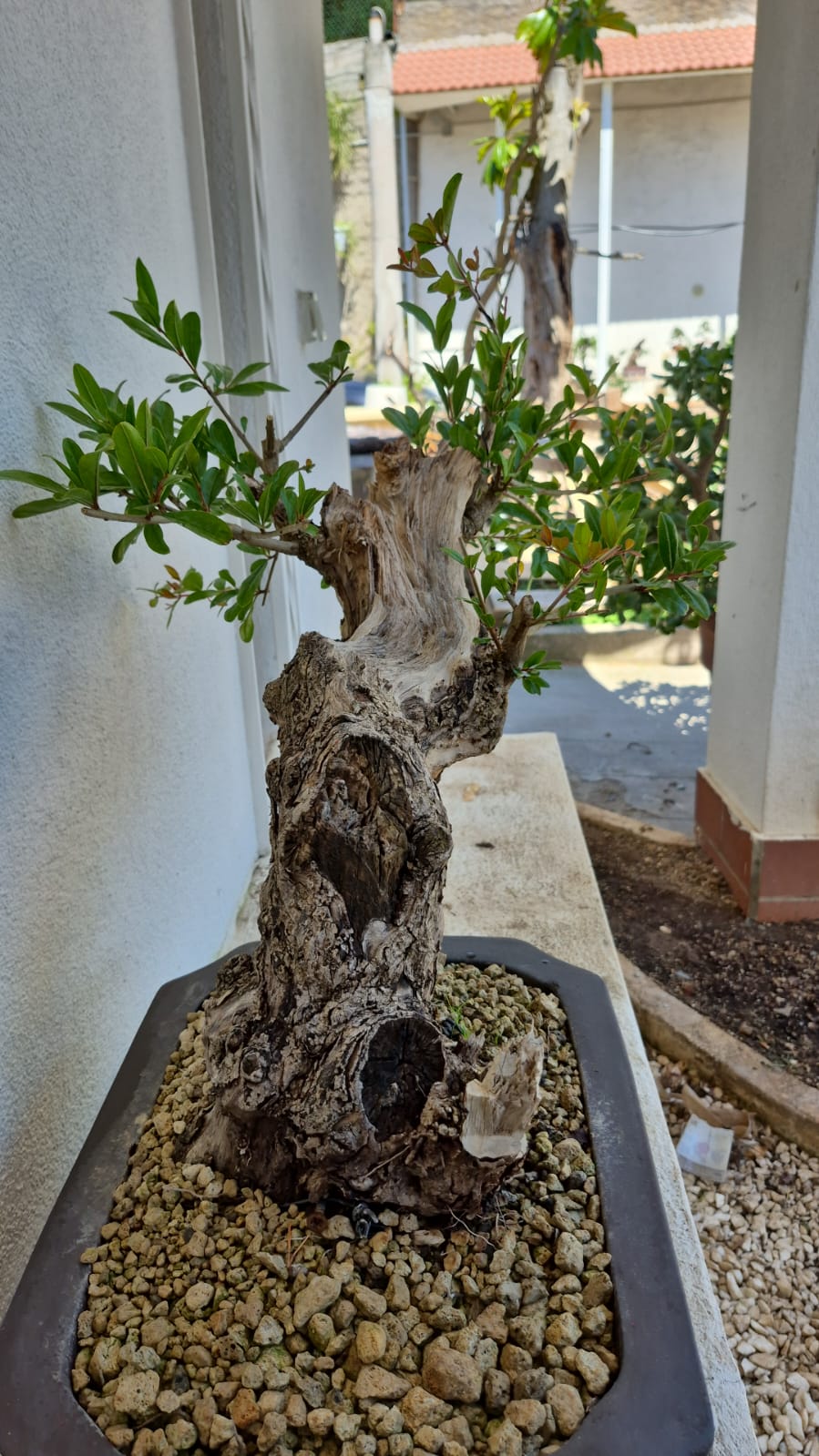
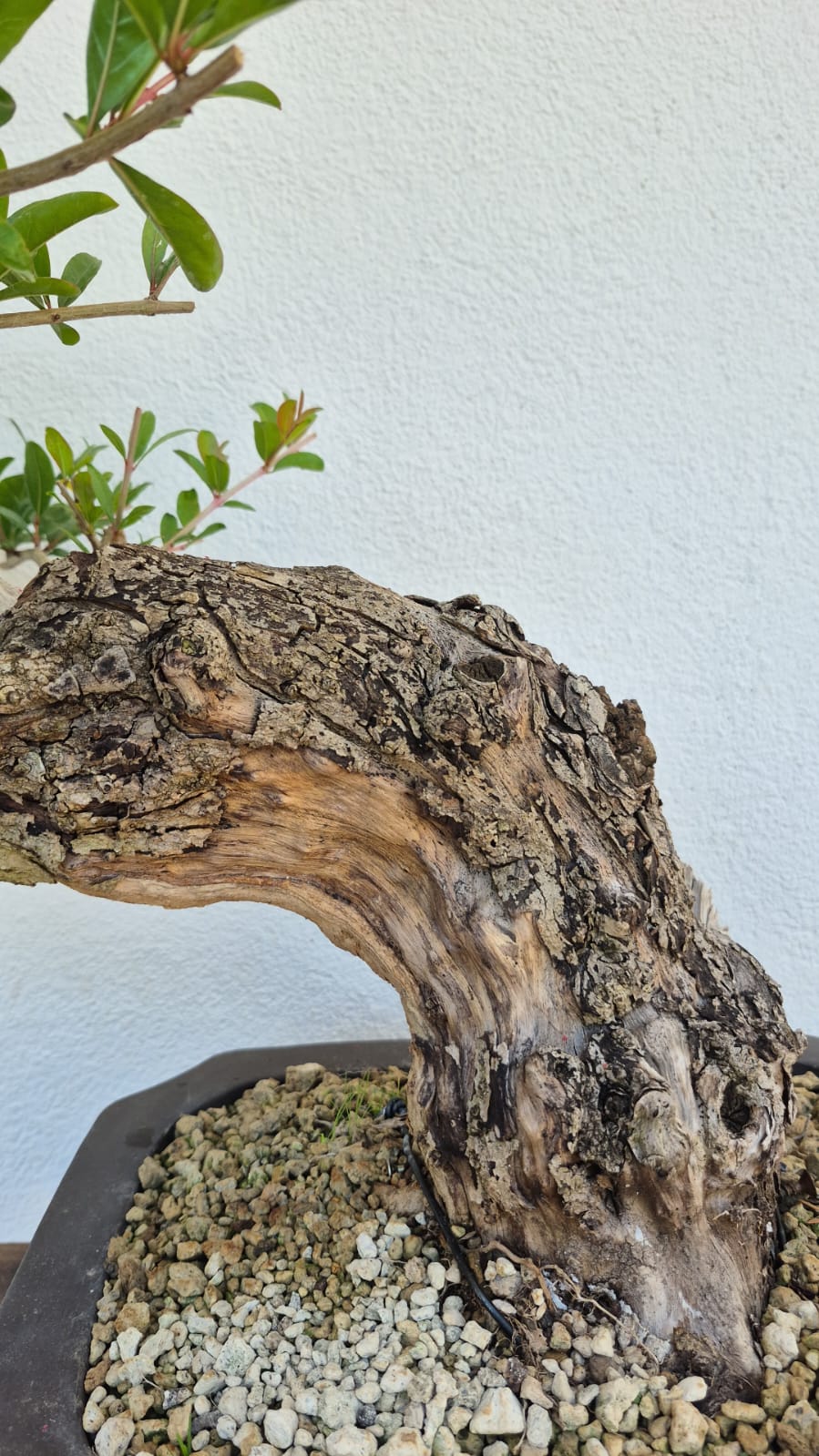
Bonsai of Pomegranate
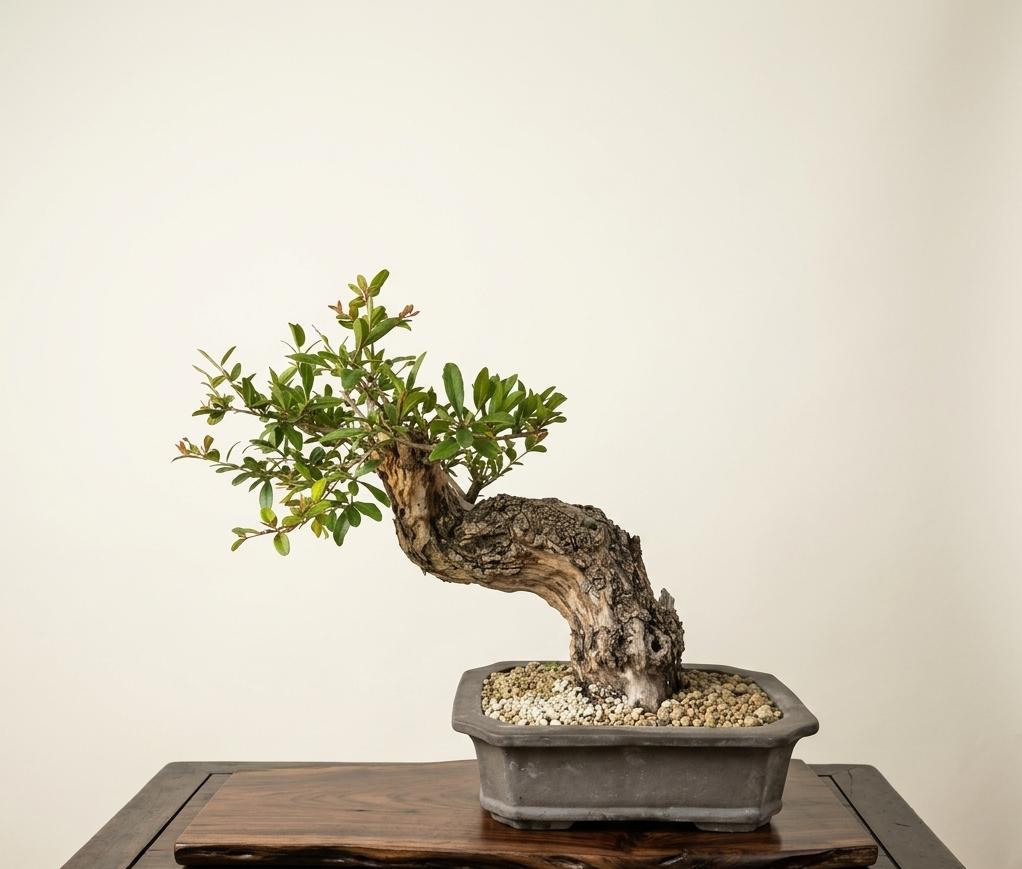
- Height: 50cm
- Width: 65cm
- Trunk: 49cm
- Pot: 11.5×29.5×39.5cm
About this pomegranate bonsai
The pomegranate (Punica granatum) has been cultivated around the Mediterranean basin for thousands of years — as a fruiting plant in ancient Persia, as a symbol of abundance in Greek and Roman myth, and more recently as one of the most loved species in European bonsai practice. For bonsai it offers everything a grower might ask of a species — a thickening trunk that develops flaky, weathered bark, summer flowers, miniature fruits in autumn, and clean dormancy in winter.
Why choose this specimen
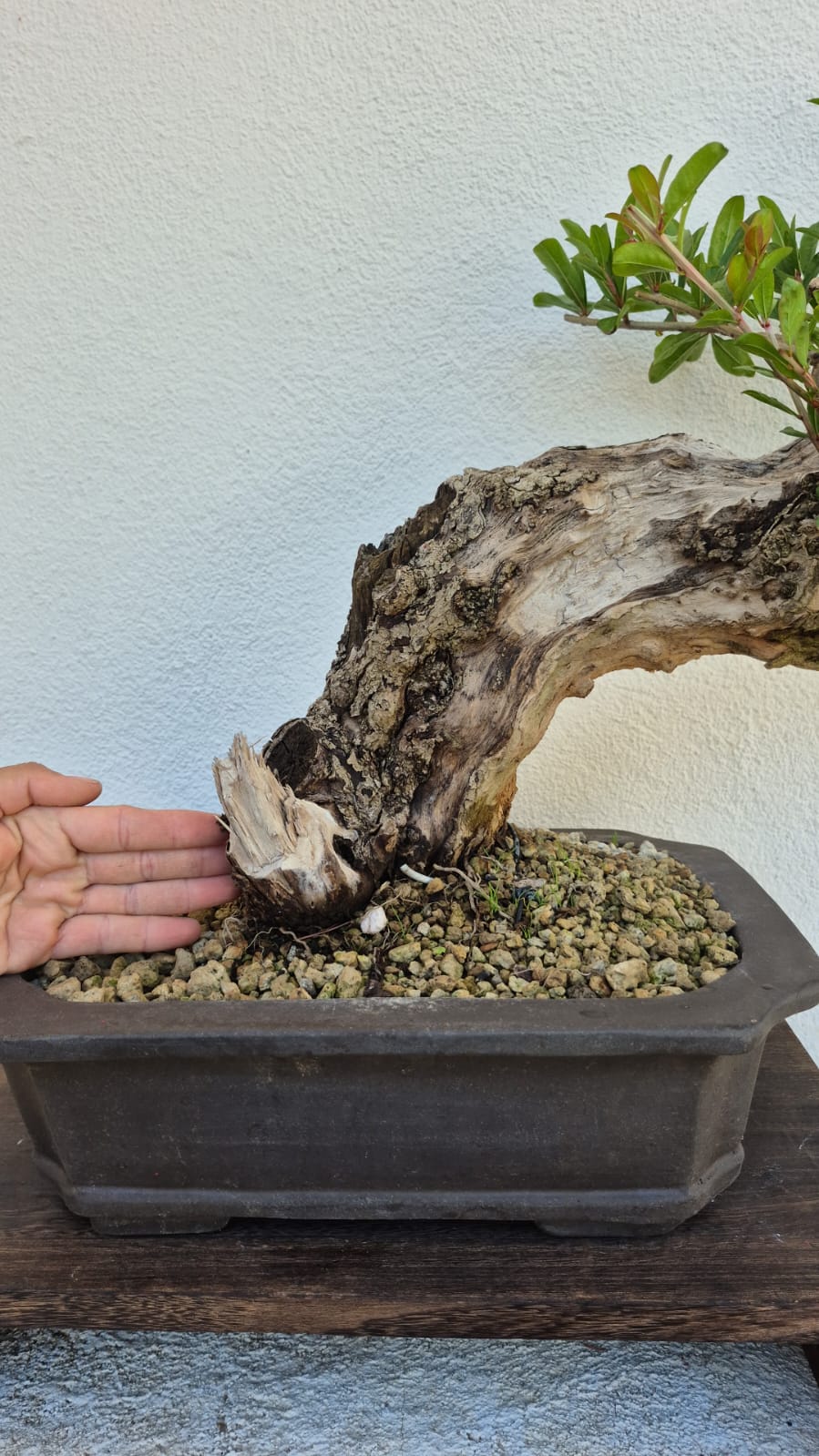
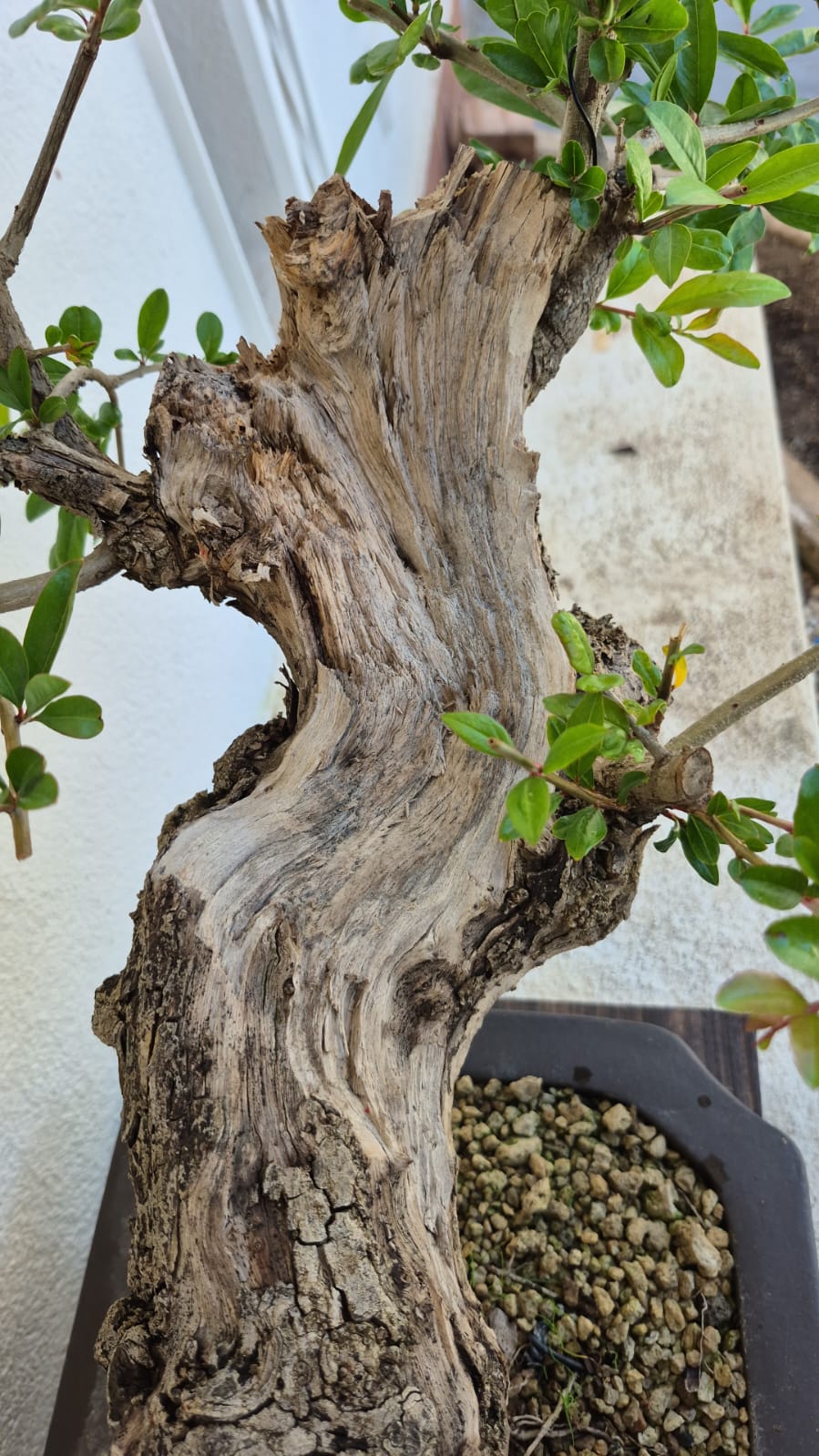
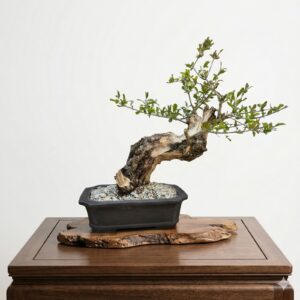
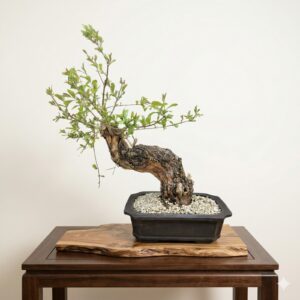
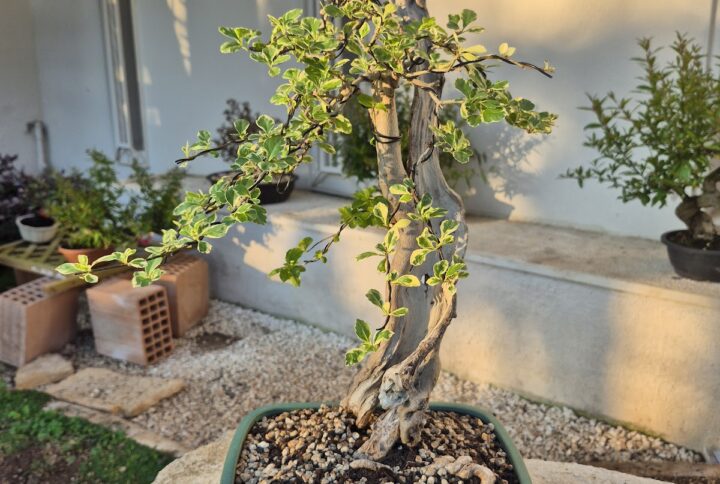
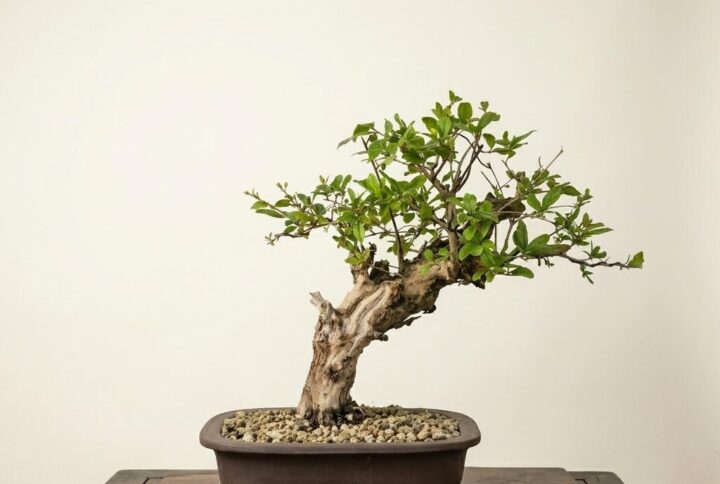
This particular pomegranate bonsai carries a particularly thick trunk of 49cm, a caliber that only comes with many years of slow, patient growth, a canopy spread of 65cm against a height of 50cm, and sits in a 11.5×29.5×39.5cm pot. The bark already shows the flaky, irregular surface that you cannot rush or fake — only time produces that texture. The trunk movement and branch placement have been refined by years of wiring on young shoots, selective pruning, and seasonal feeding. The product photographs refer to this exact tree.
Who this bonsai is suitable for
The maturity and value of this trunk make this tree better suited to an intermediate or advanced enthusiast — somebody who can read what the foliage and roots are signalling and respond. It suits buyers in warm-temperate and Mediterranean climates well, and adapts in cooler areas where it can be sheltered through winter frosts. Collectors of fruiting species and outdoor-bonsai keepers will both find a serious subject here.
Light and placement
Pomegranate is an outdoor tree that wants full sun for most of the year. It tolerates direct sun in the morning and benefits from filtered light in the hottest afternoon hours to avoid leaf scorch in mid-summer. It stays outside year-round, except during prolonged sub-zero periods when it should be moved to a sheltered position — against a wall, under a porch, or in a cold greenhouse.
Watering and feeding
Water when the top centimetre of substrate has begun to dry. In high summer that often means once a day, sometimes more in windy conditions; in winter it drops to once every few days. Avoid keeping the substrate constantly wet — pomegranate dislikes waterlogged roots. Feed with a balanced organic fertiliser from early spring through early autumn, easing off during flowering if fruit set is the goal.
Seasonal appearance
In spring the new growth flushes bright green, slightly bronze at the tips. From late spring into early summer the bright orange-red, trumpet-shaped flowers appear — singly or grouped — and are followed in late summer by small, true pomegranate fruits that ripen as the season cools. In autumn the foliage turns yellow before falling, and through winter the bare trunk and branch line become the focal point. A tree that visibly changes through the year.
Care difficulty
Intermediate. The two failure modes are over-watering, which causes root rot, and prolonged hard frost. With a sheltered winter spot, daily summer watering, and a regular organic feed, the tree thrives. Care routines may vary slightly between northern and southern parts of any country, depending on summer heat and winter chill — heavier watering in southern summers, more attention to frost in northern winters. Both contexts work for pomegranate.
Styling and pruning
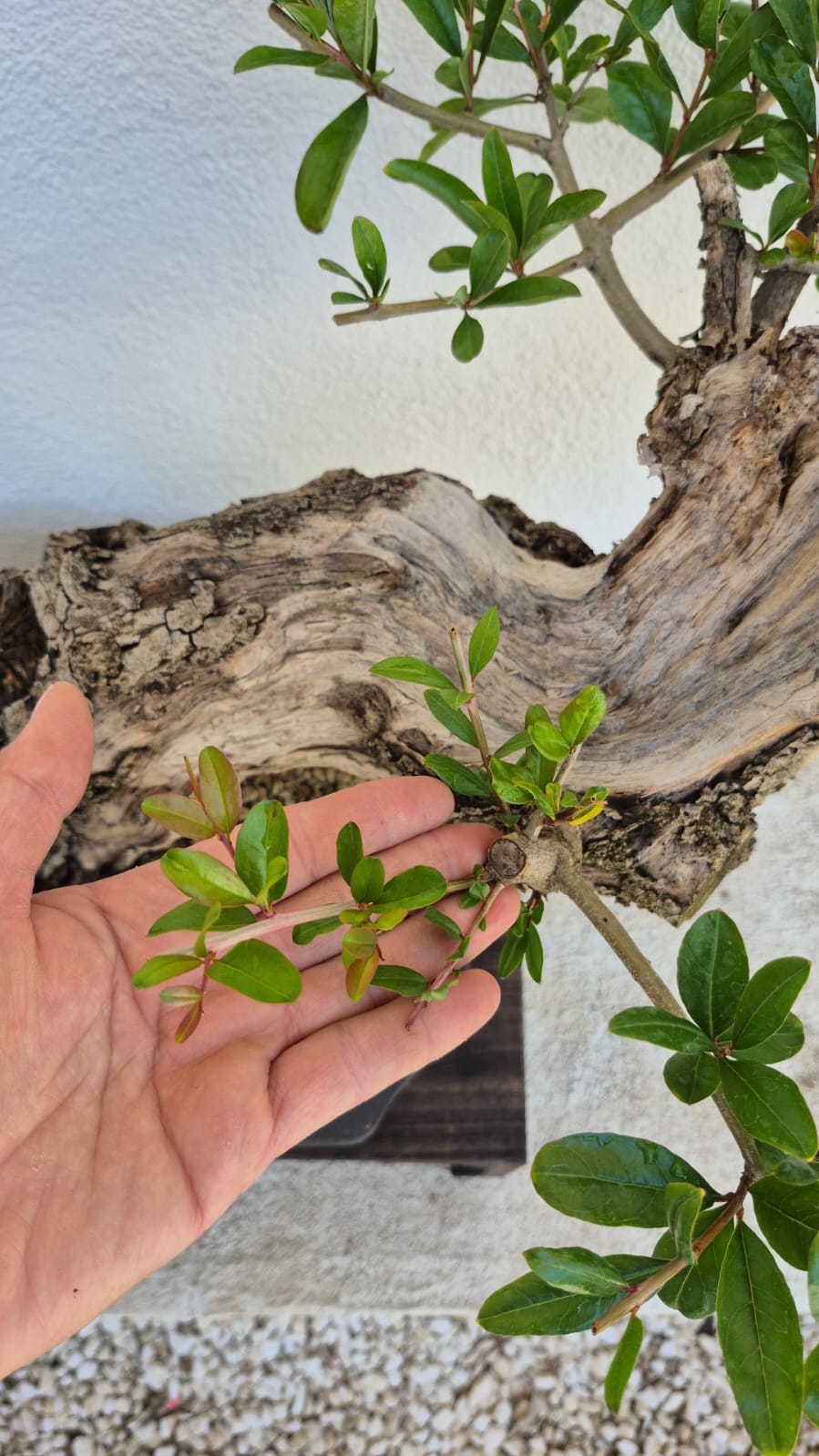
Pomegranate back-buds well after pruning and accepts wire on younger, semi-hardened shoots. Older wood becomes brittle, so heavy bends should be made early. The trunk line and branch placement on this specimen are already established; ongoing work is mainly refinement. Repot in early spring just before bud break, with a free-draining mix of akadama, pumice, and lava in roughly equal parts.
About the species
Pomegranate (Punica granatum) is a long-domesticated tree that has been with human cultivation for several thousand years — first in present-day Iran and the eastern Mediterranean, then across the Mediterranean basin, where its image appears in mosaics, in coats of arms, and in countless paintings of still life. As bonsai material it is one of the most rewarding deciduous species: it produces real flowers and real (if miniature) fruits, develops bark character within a few seasons of patient work, and holds visual interest through every part of the year. A mature pomegranate bonsai is not finished — it continues to deepen as years pass.
Pot, substrate, and the next few years
The current 11.5×29.5×39.5cm pot is a working pairing — it supports the tree visually and gives the root system the volume it needs through the growing season. When repotting becomes due, typically every two to three years for a pomegranate of this stage, an early-spring window just before bud break is the right moment. A free-draining mix of akadama, pumice, and lava in roughly equal parts handles the species well; pomegranate is sensitive to any mix that retains too much water. Over the next few years the trunk will continue to thicken slowly, the bark texture will deepen, and the canopy can be refined further through summer pruning and selective wiring. This is a tree to grow with, not a finished object: each season adds something.
Shipping and what you receive
You receive the exact tree shown in the photographs — no substitution. The bonsai is packed individually: the pot is stabilised inside the shipping box, the substrate is secured to prevent movement during transit, and the foliage is wrapped so that branches and shoots are protected. The product is the tree itself, in its pot, as photographed.



Reviews
There are no reviews yet.