

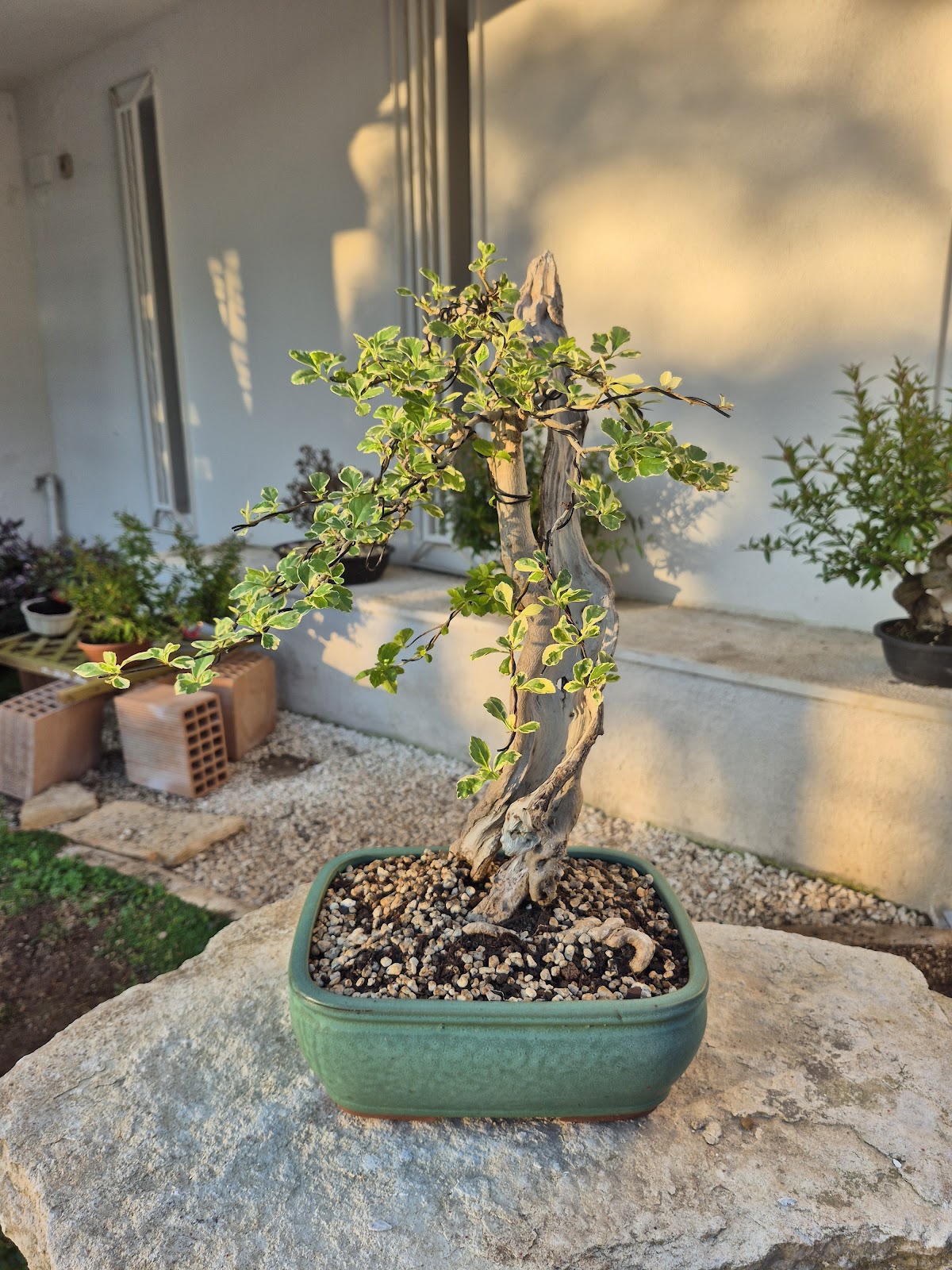
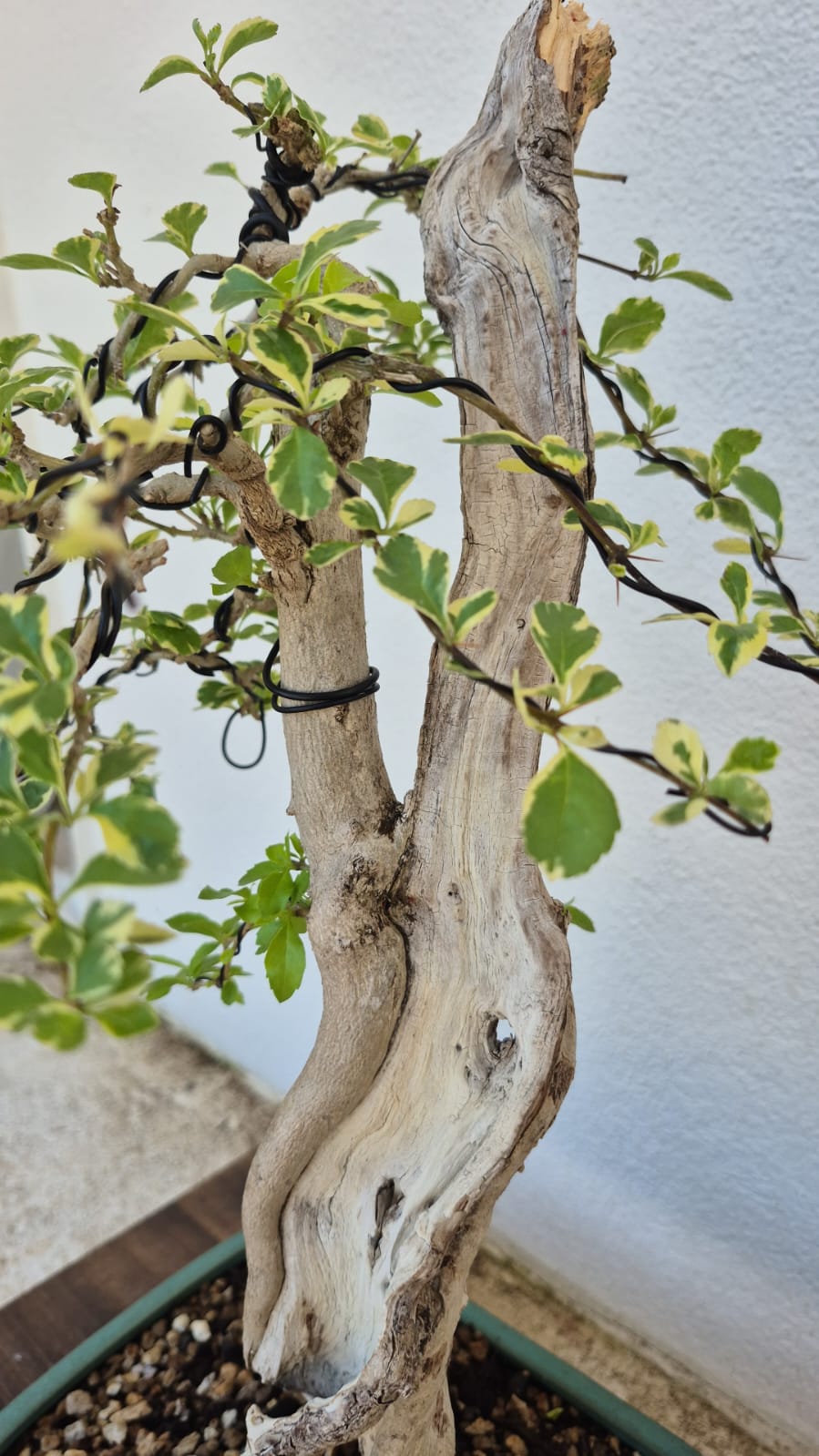
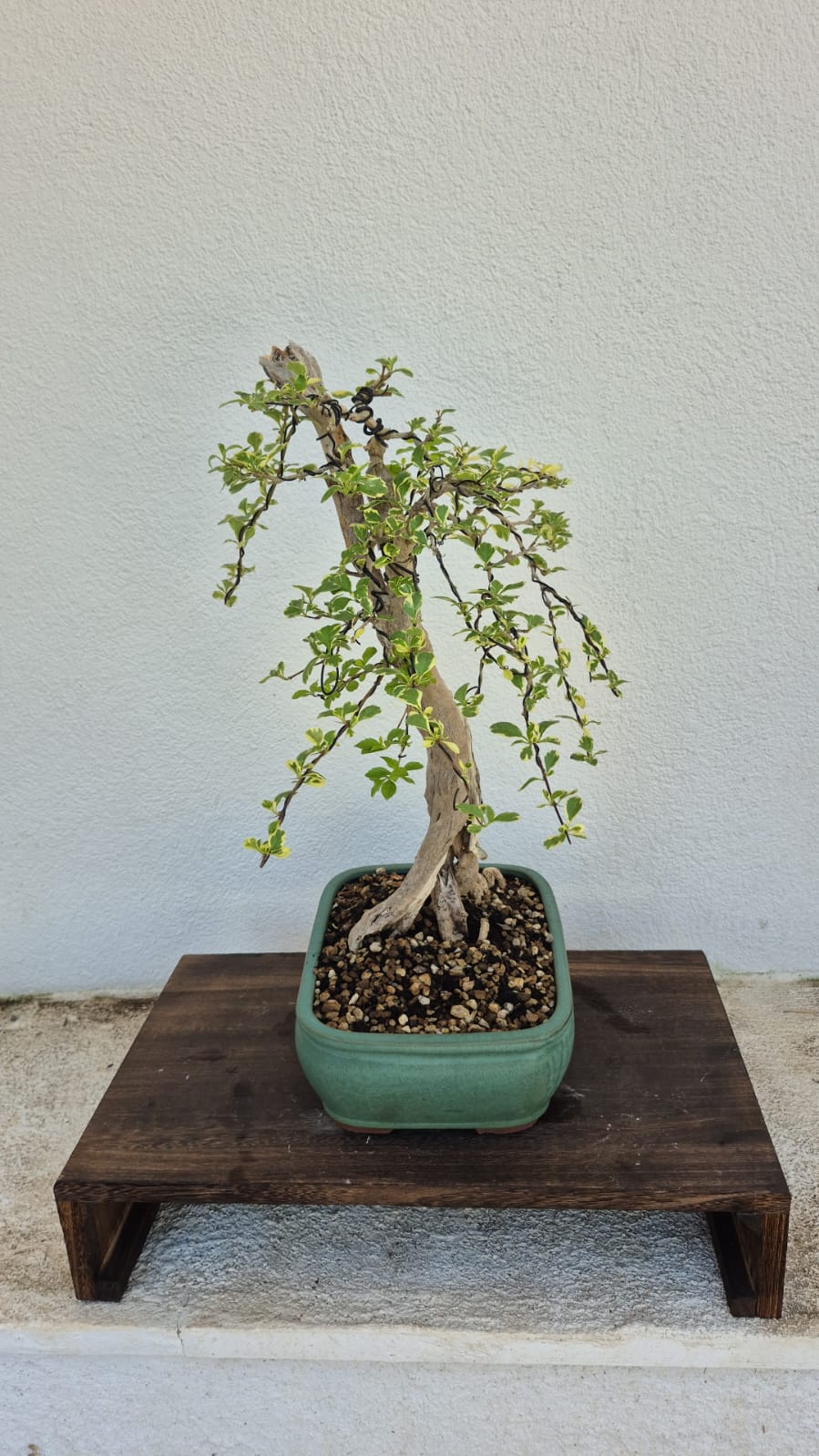
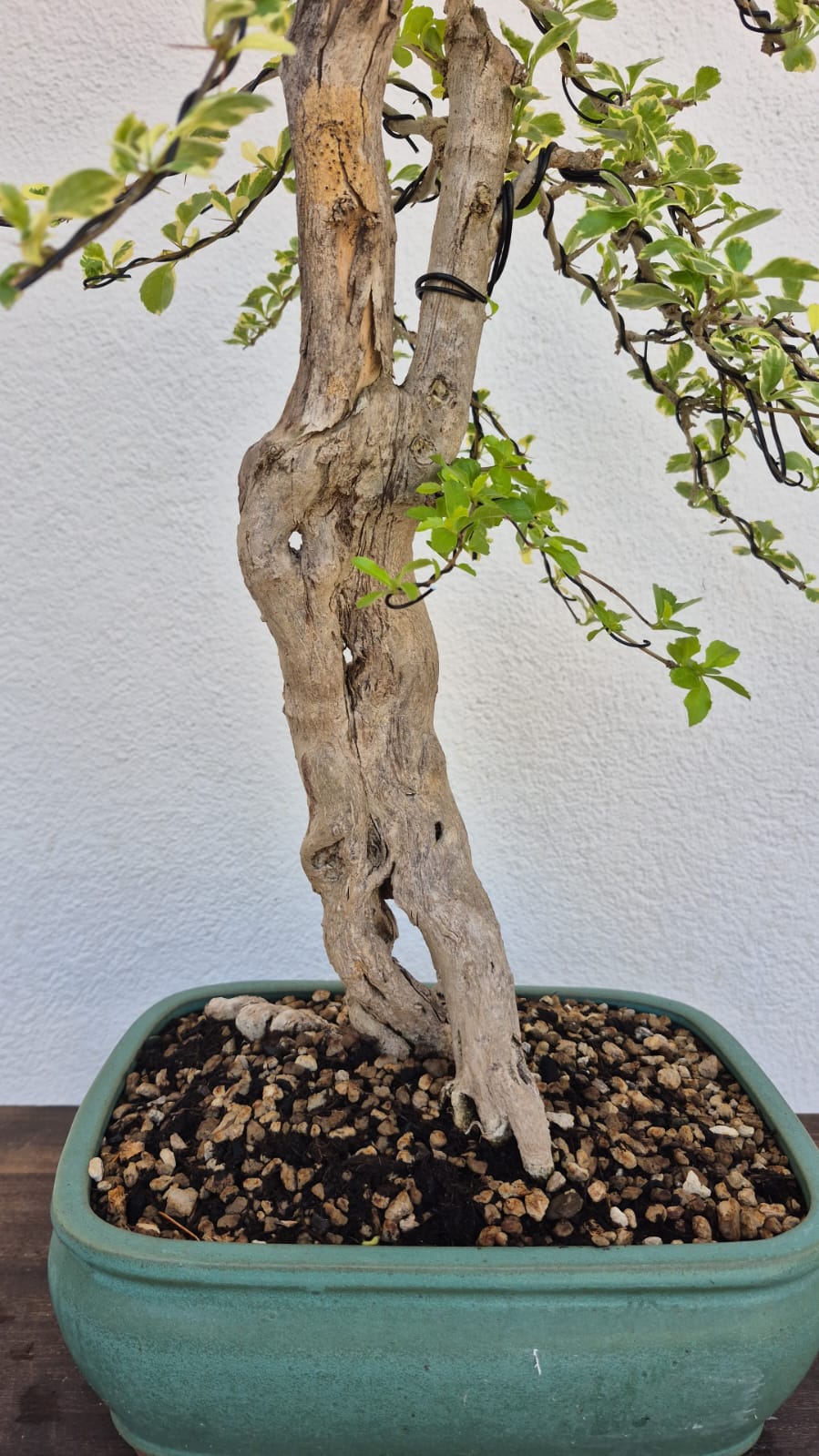
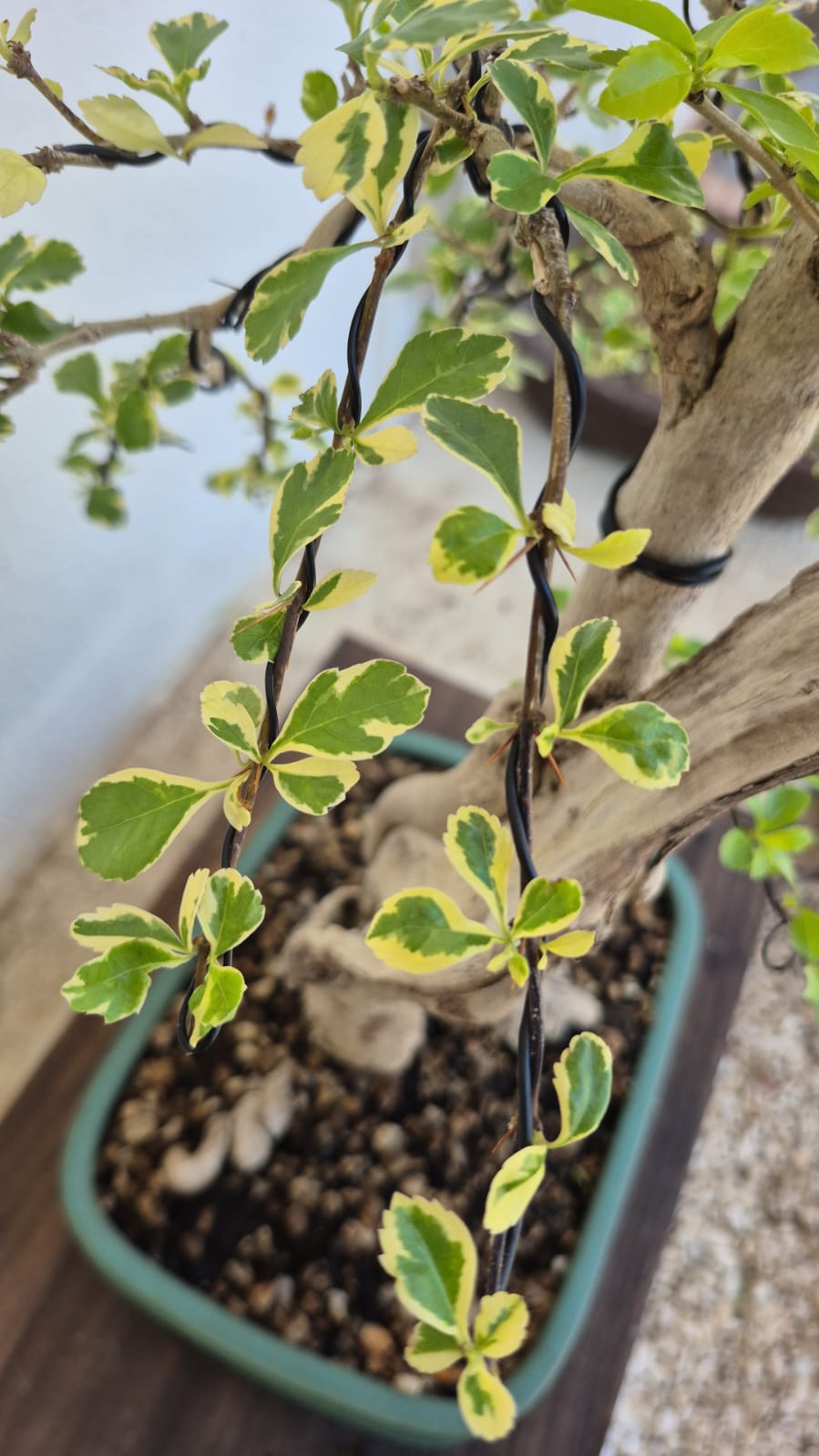
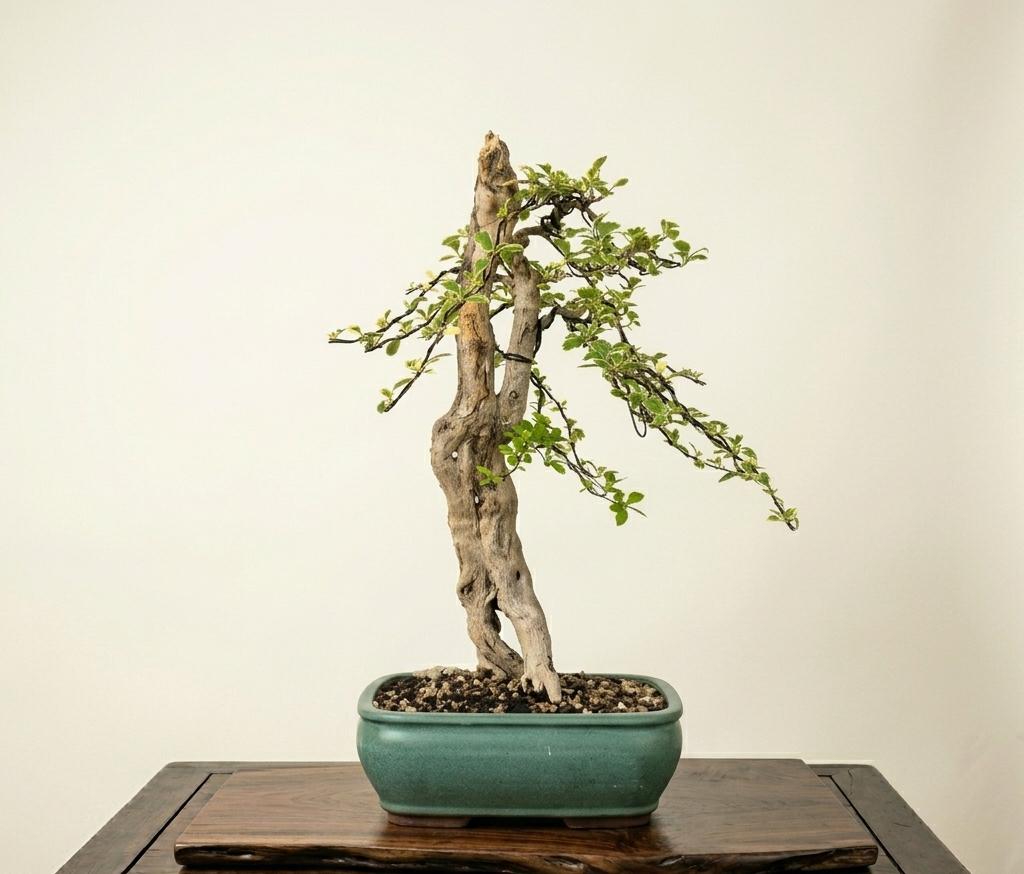
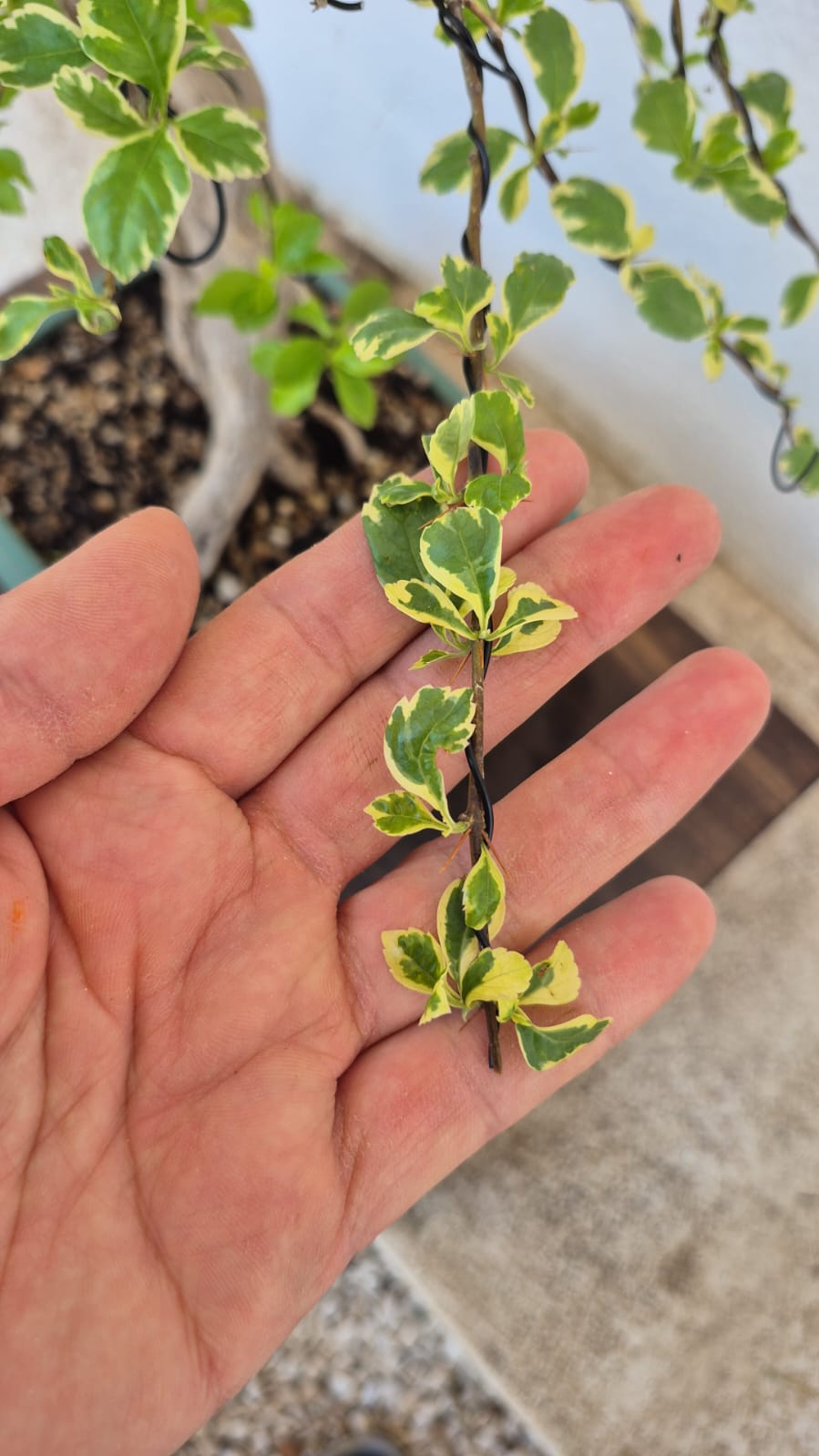
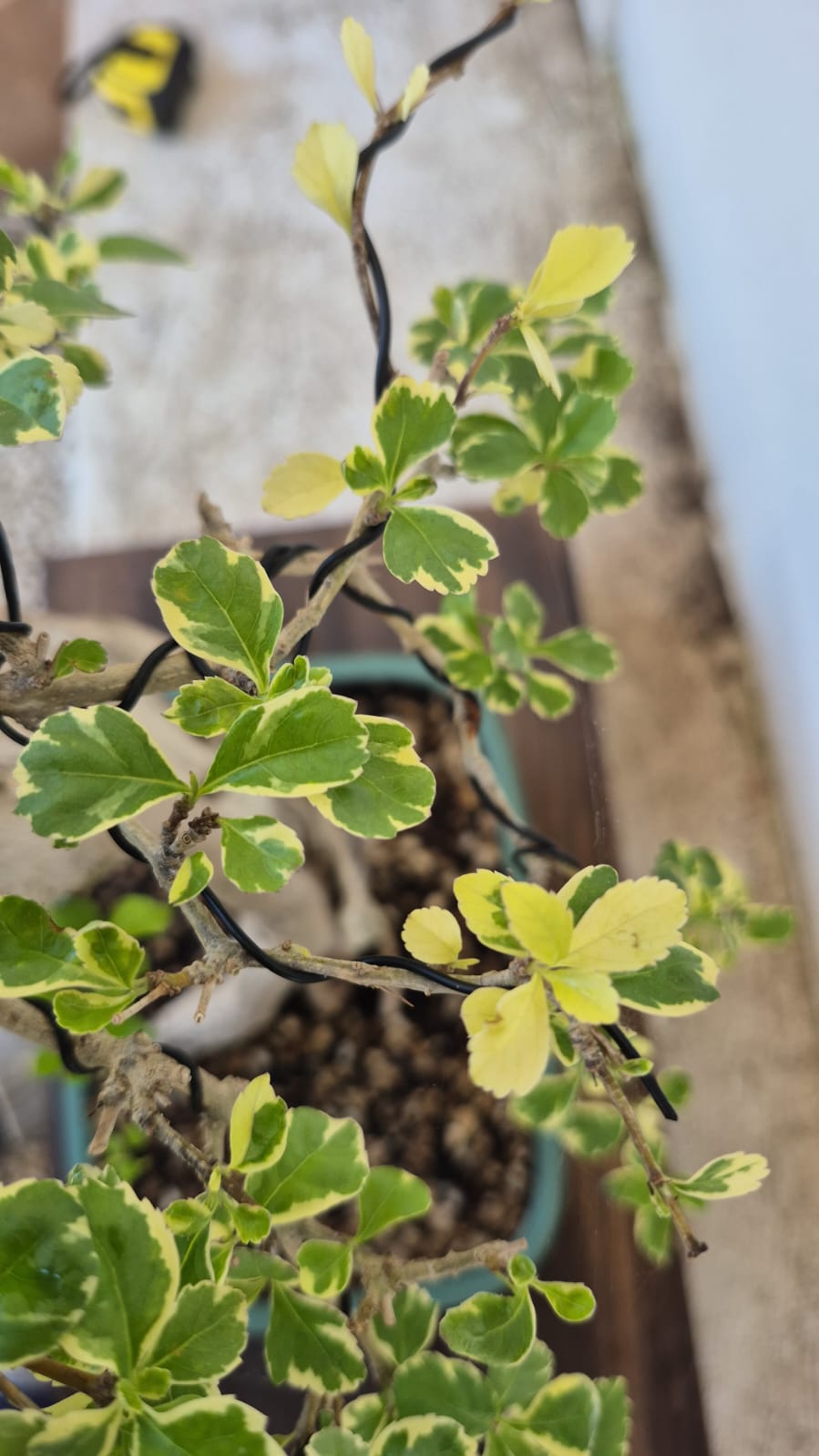
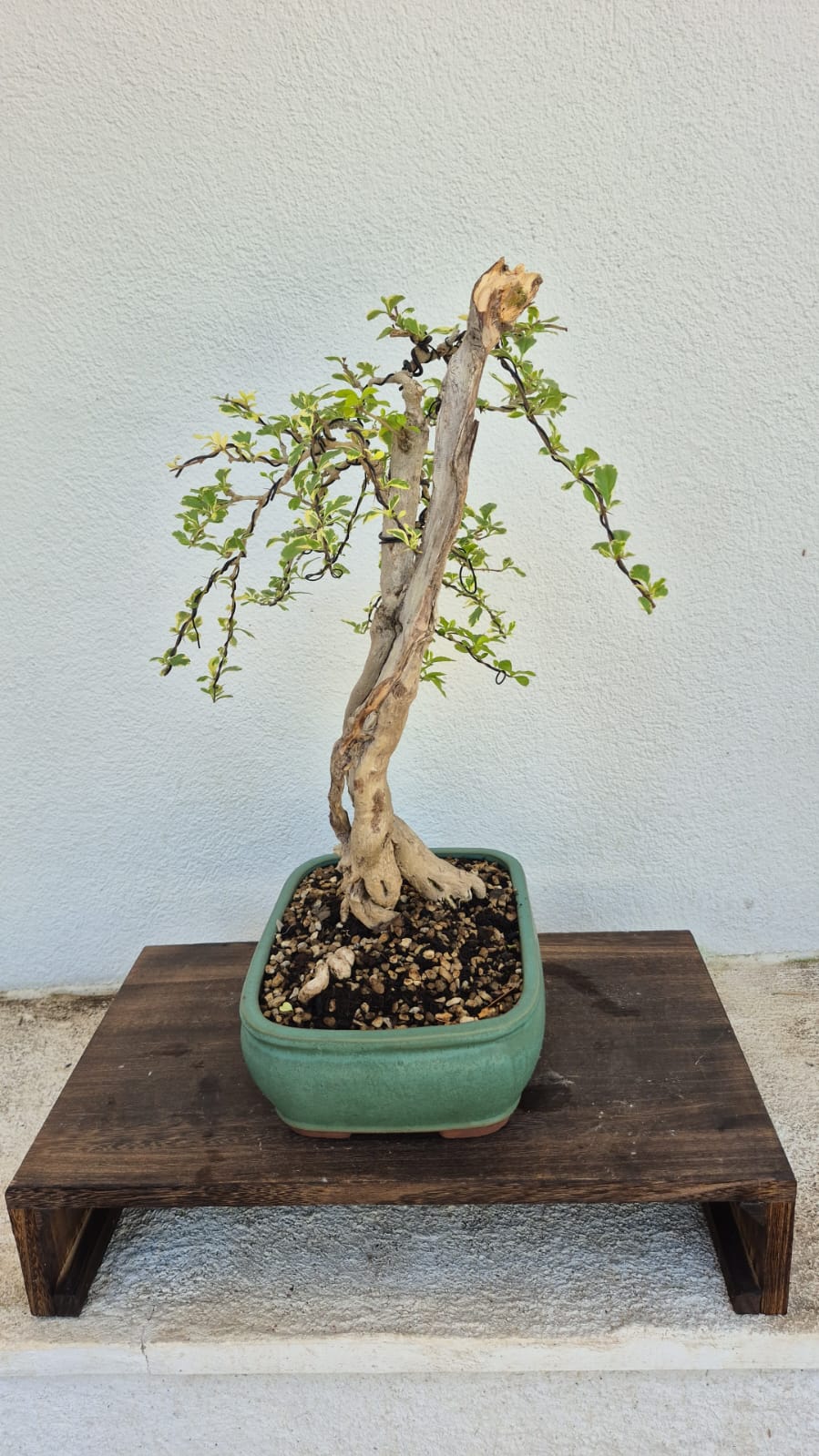
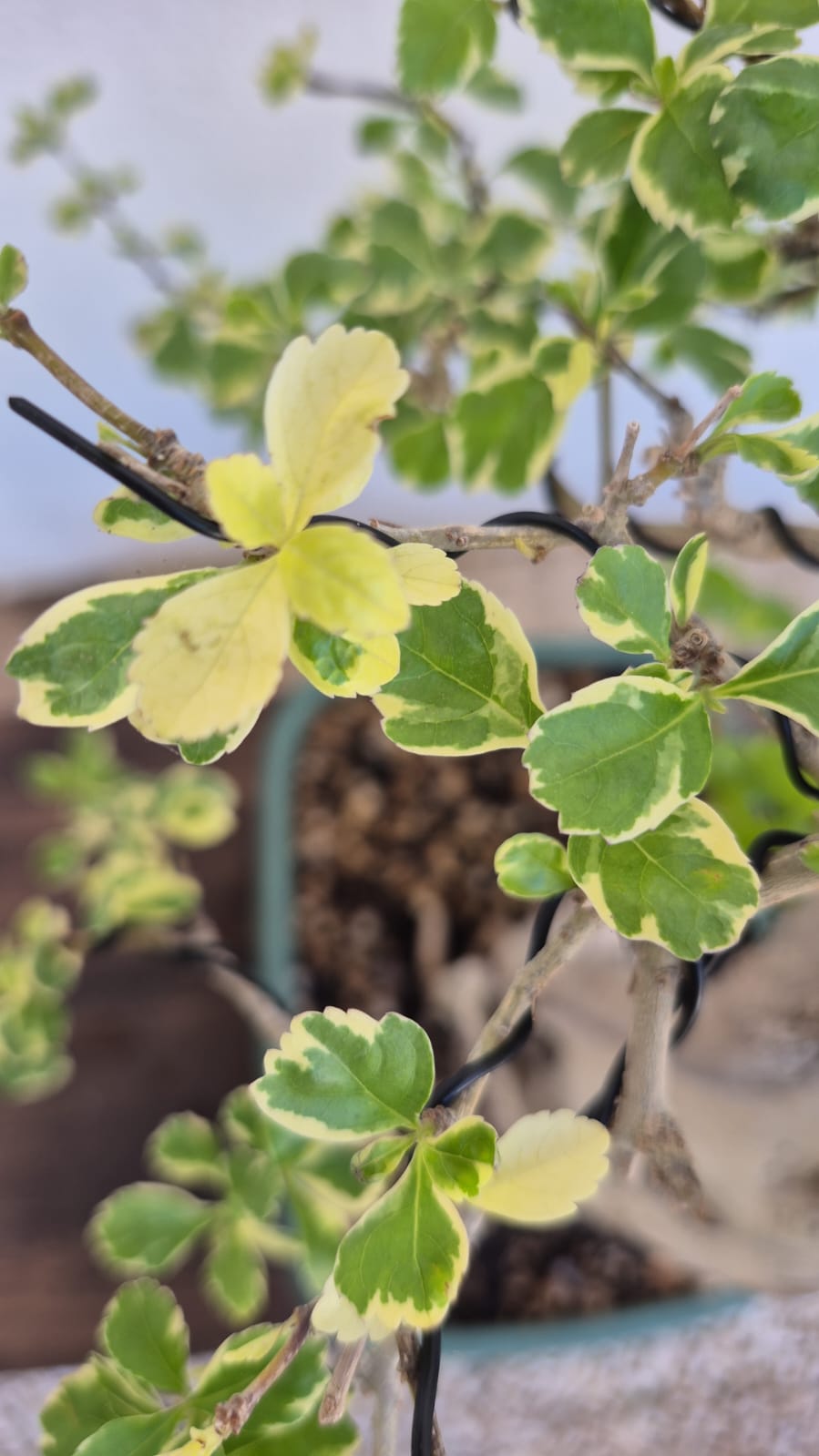
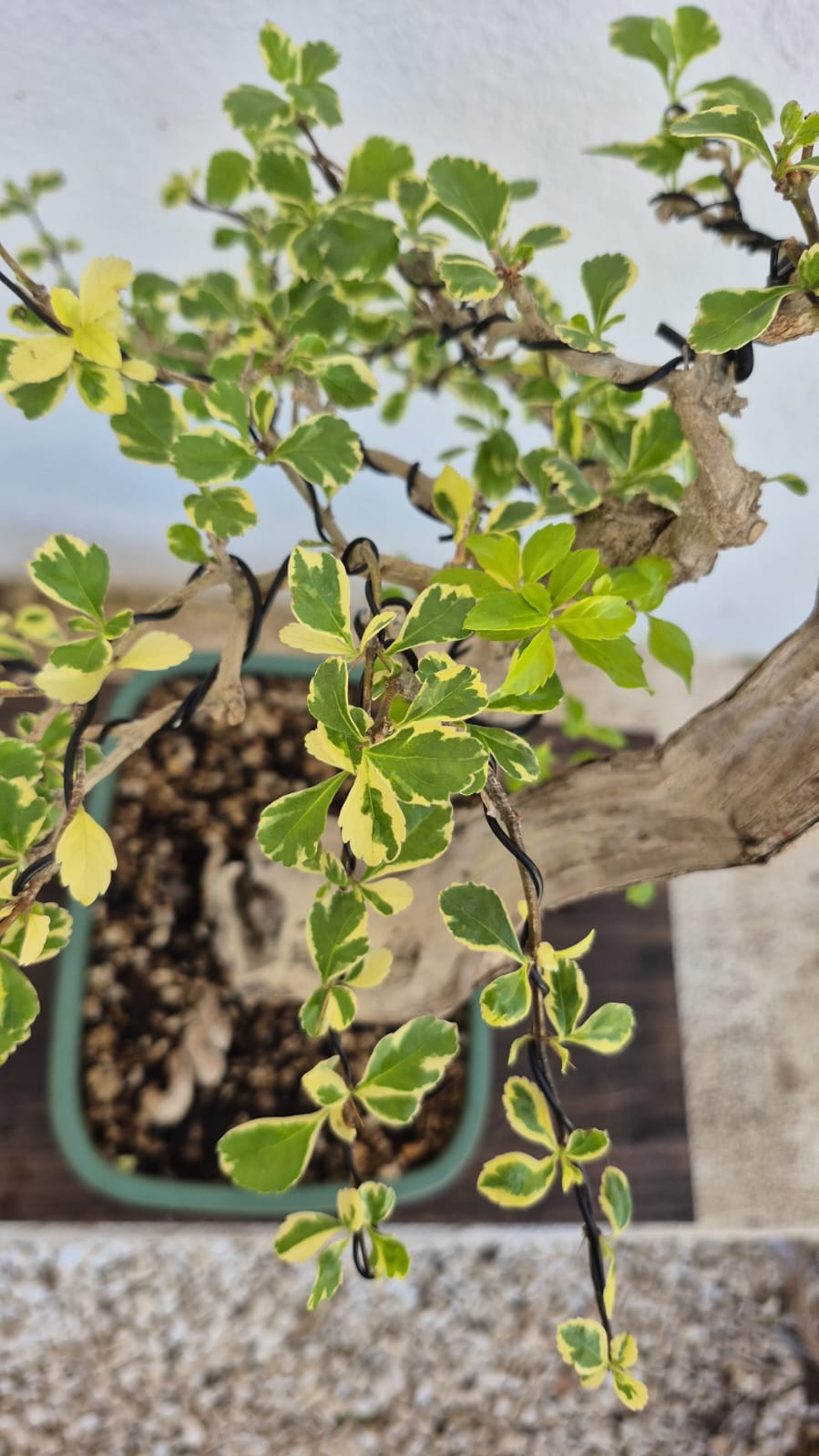
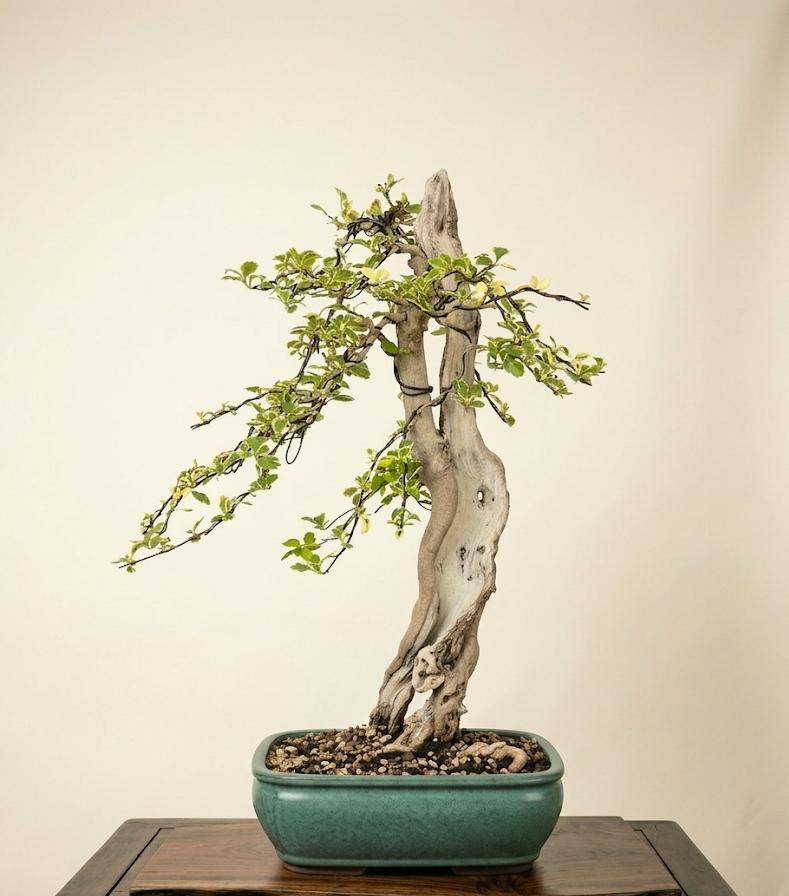
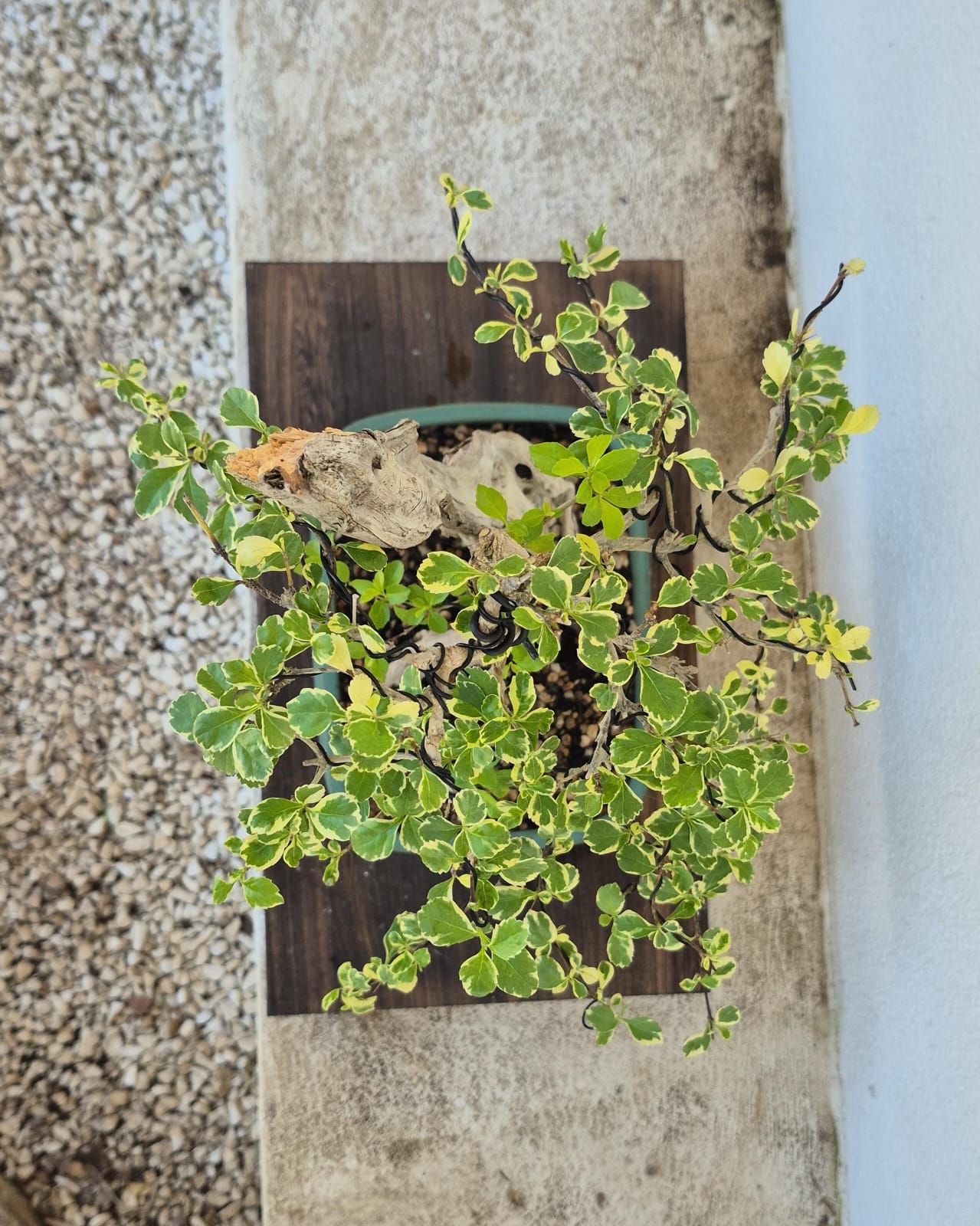
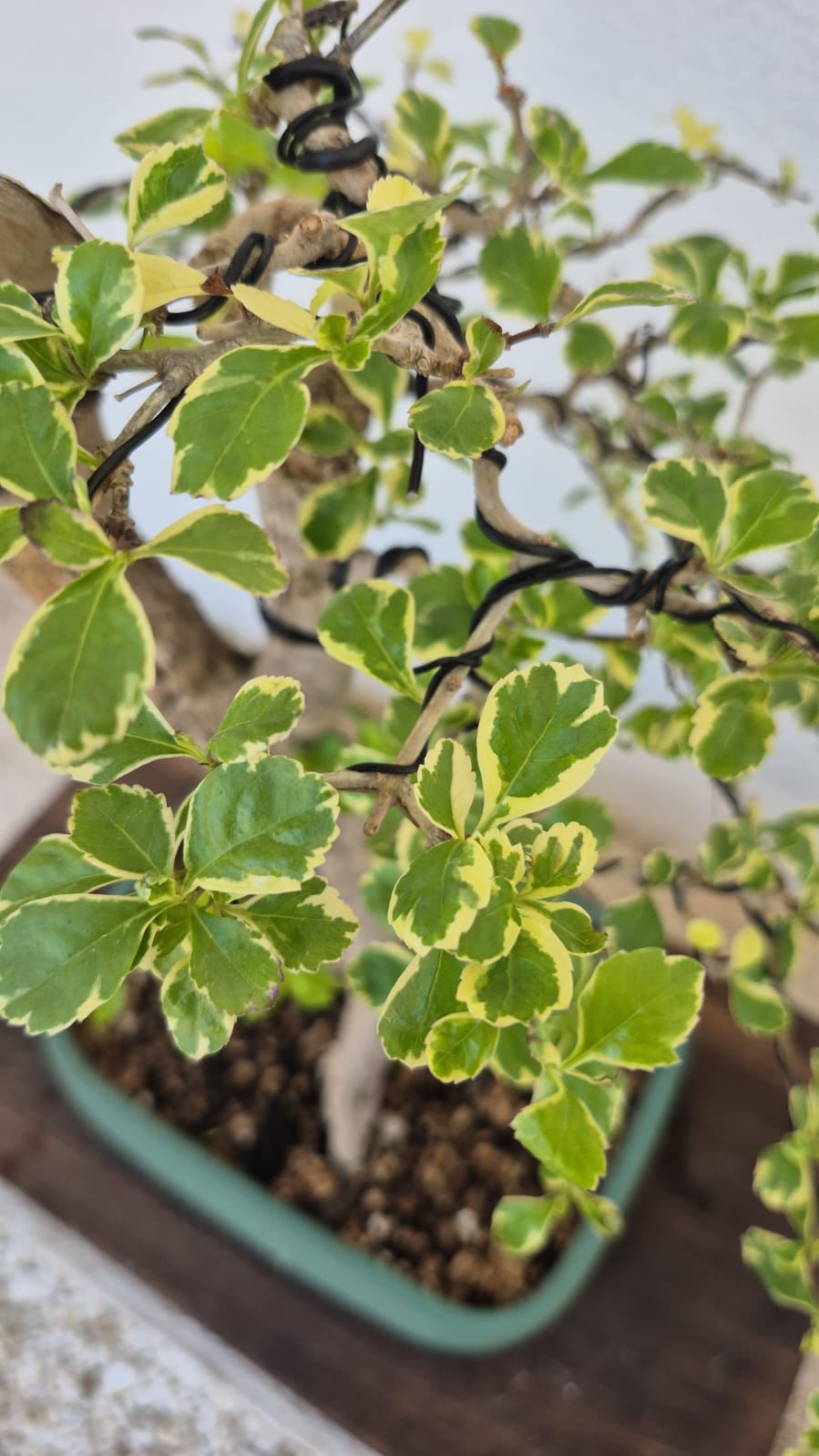
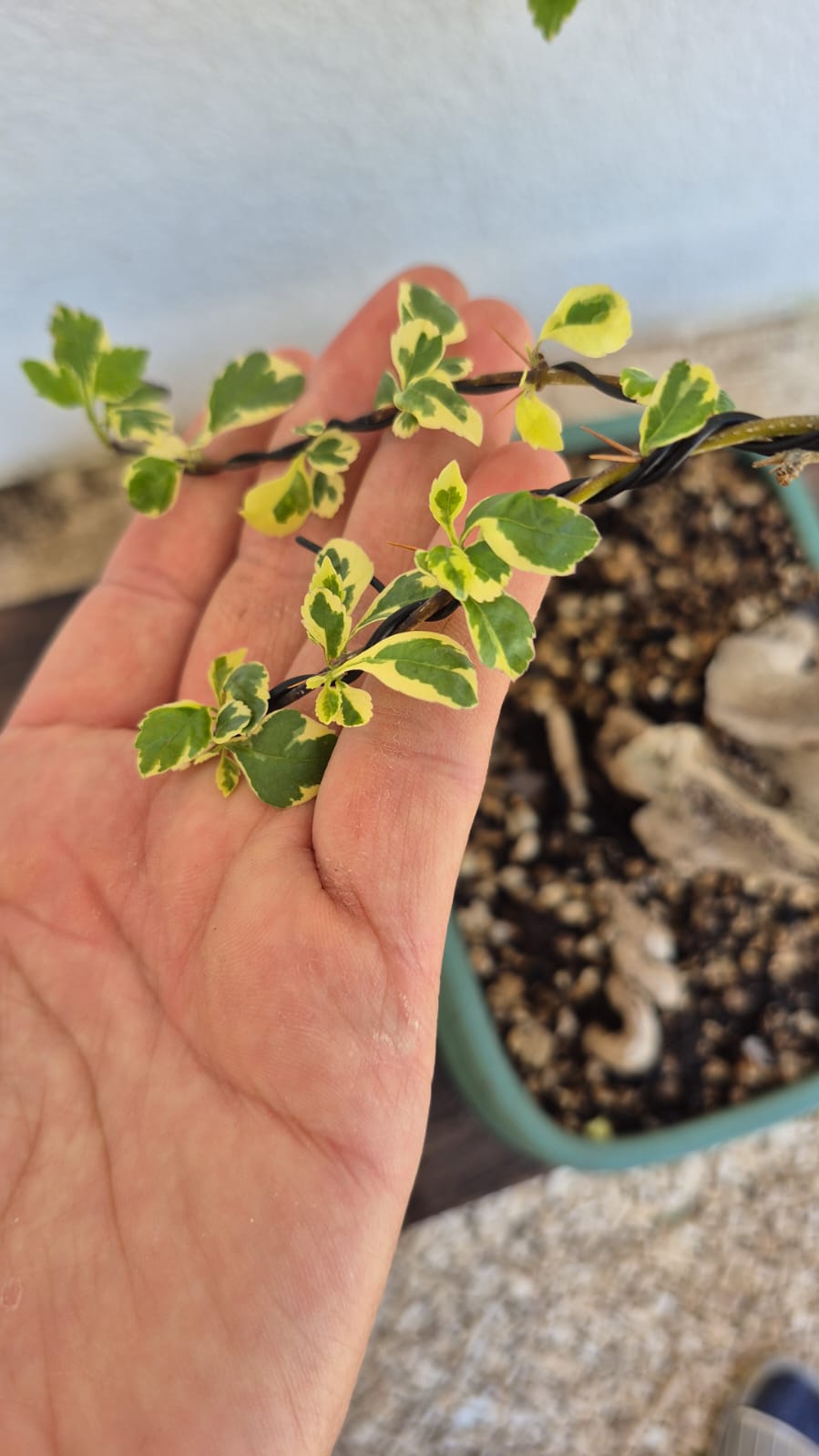
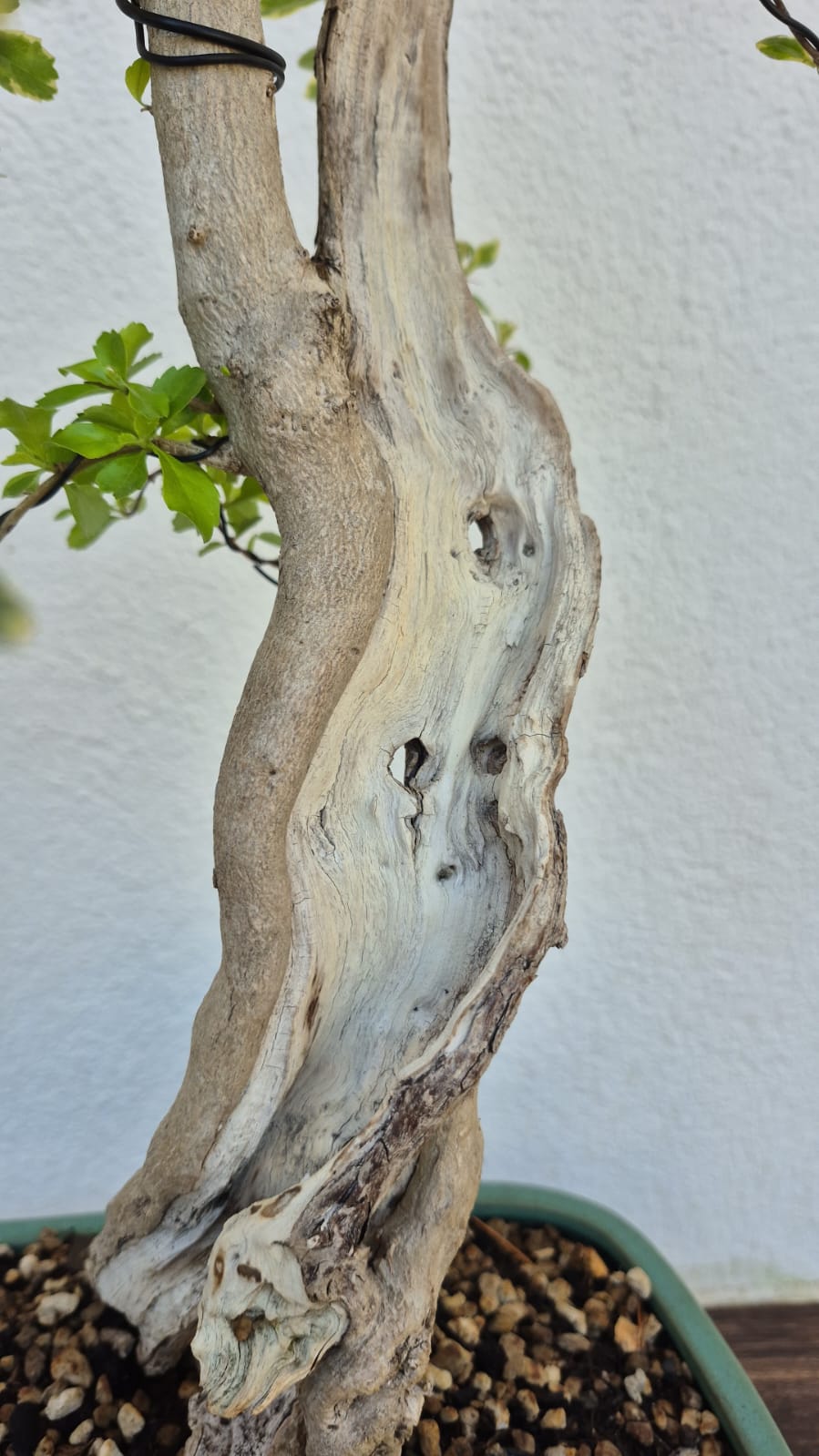
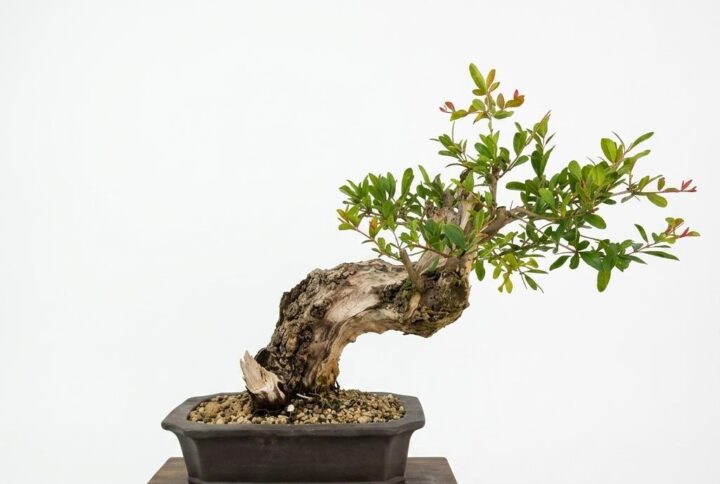
Bonsai of Bougainvillea
- Height: 46cm
- Width: 37cm
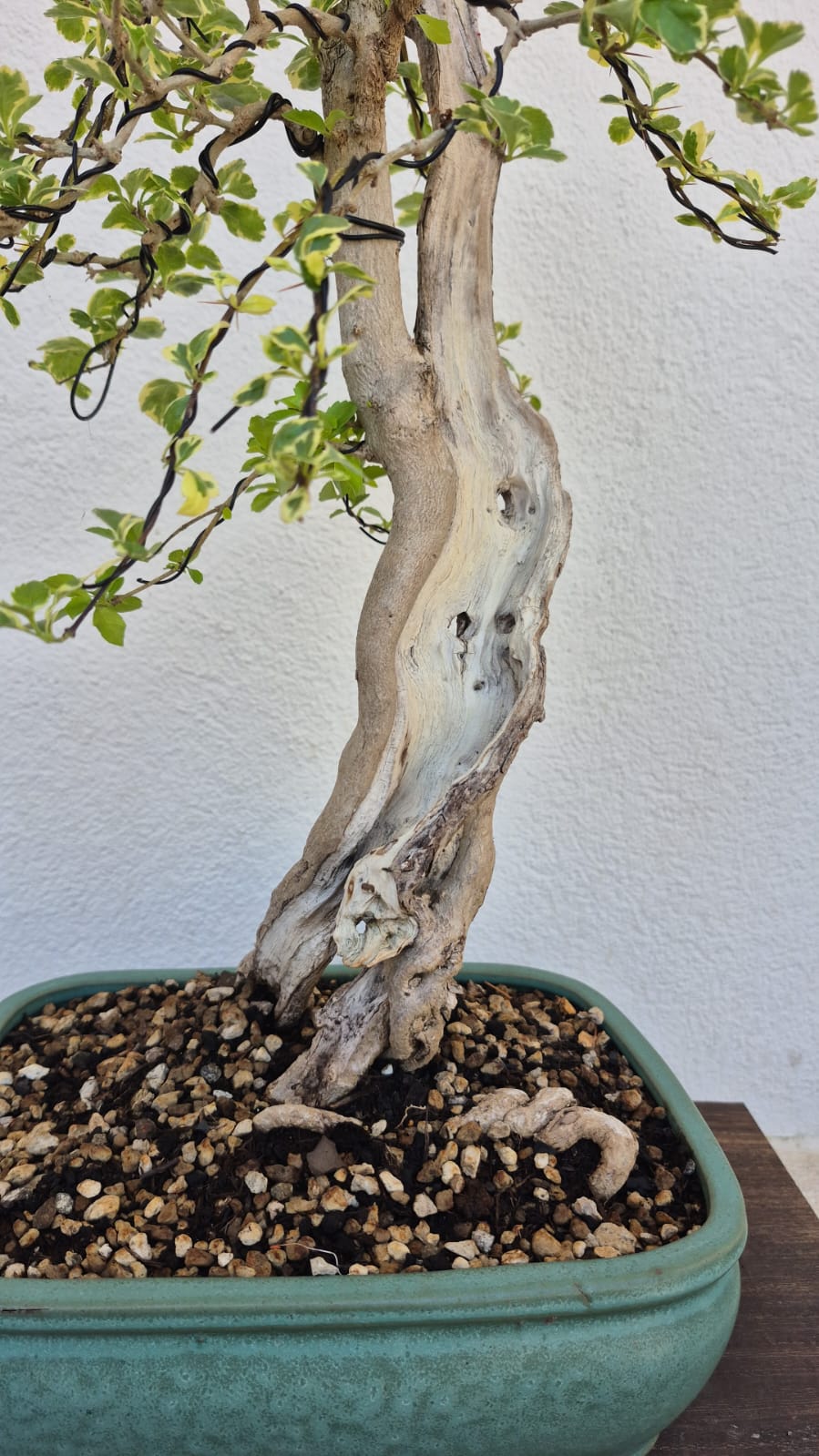
- Trunk: 19cm
- Pot: 9.5x20x27cm
About this bougainvillea bonsai
Bougainvillea was first described botanically by the French naturalist Philibert Commerson during the round-the-world voyage led by Louis-Antoine de Bougainville in the late 18th century, and the genus carries that captain’s name to this day. The plant has since become one of the defining ornamentals of warm gardens worldwide. What looks like brightly coloured flowers are in fact bracts — modified leaves — that surround the small white true flowers. As a bonsai, bougainvillea combines fast vegetative growth with a slow thickening trunk, which gives the patient grower a tree that performs visually every summer.
Why choose this specimen
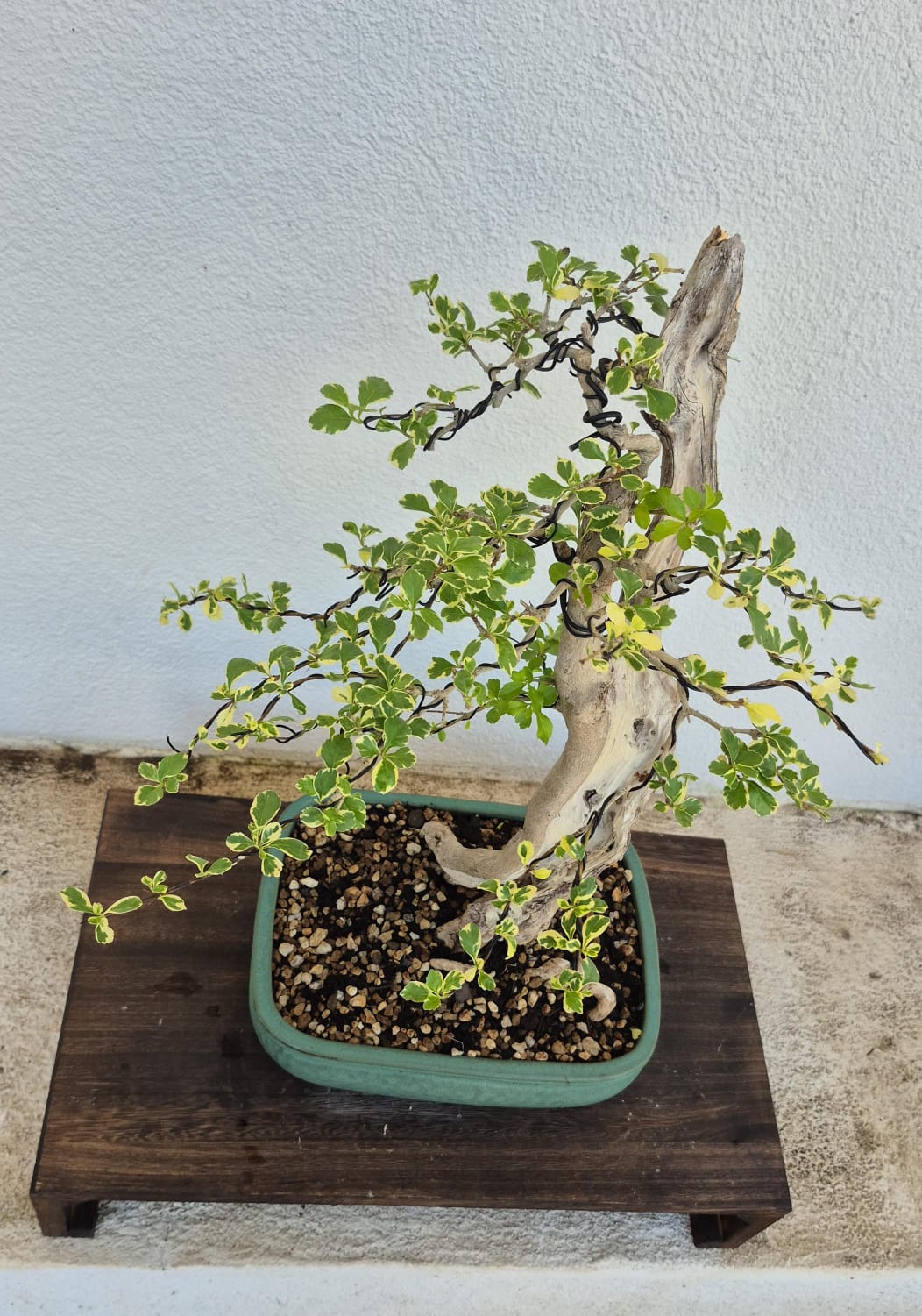
This bougainvillea bonsai stands 46cm tall, with a canopy spread of 37cm and a trunk of 19cm, in a 9.5x20x27cm pot. The trunk caliber is notable for the species — bougainvillea grows quickly in foliage but thickens slowly in wood, so a 19cm trunk represents genuine years of training. The pot proportions are deliberate: the footprint anchors the tree without competing with the bract colour during the summer display.
Who this bonsai is suitable for
Bougainvillea suits enthusiasts who can offer it strong sun and a frost-free space for winter. It is ideal for buyers in Mediterranean and warm-temperate climates who keep their trees outdoors most of the year, and for warmer-region collectors who want a strong summer display. In cooler areas the tree requires a winter shelter above 5°C — a cold greenhouse, an unheated bright room, or a closed veranda. Not the best choice for a buyer whose only outdoor space is a shaded balcony.
Light and placement
Full sun, and the more of it the better. Bougainvillea reduces its bract display drastically in shade. From late spring through early autumn the tree should be outdoors in the brightest position available. From November through March it requires a frost-free space — bright if possible, kept above 5°C.
Watering and feeding
Water when the substrate has begun to dry. A short dry cycle actually encourages bract production — bougainvillea forms its colour when mildly stressed. Feed with a balanced organic fertiliser through the growing season, then switch to a low-nitrogen, higher-potassium feed when flower buds appear. Avoid heavy nitrogen, which encourages soft growth at the expense of bract production.
Seasonal appearance
From late spring through summer the coloured bracts appear in saturated tones — the real spectacle of the species. The tiny true flowers, white or cream, sit at the centre of each bract cluster and attract pollinators continuously. In autumn the bract show fades and the tree returns to plain green foliage. In winter, in cool dormancy, bougainvillea can drop part of its leaves; in a warmer indoor space it stays evergreen.
Care difficulty
Intermediate. Full sun, a short dry cycle in growing season, and the right feed schedule produce reliable flowering. Winter is the only awkward season: the tree needs to stay above 5°C, so somewhere indoors or in shelter. Care patterns differ slightly between northern and southern parts of a country — longer outdoor seasons in the south, longer indoor seasons in the north — but both work as long as the winter minimum is respected.
Styling and pruning
Wire on semi-hardened shoots in late spring. Older wood becomes brittle, so heavy bends should be done while wood is still flexible. Bougainvillea responds well to selective pruning during the growing season to maintain shape. Repot in spring with a fast-draining substrate; the roots dislike heavy or moisture-retentive mixes.
About the species
Bougainvillea is in the four-o’clock family (Nyctaginaceae), and the genus contains roughly eighteen species native to South America, with Bougainvillea glabra and Bougainvillea spectabilis the most often used in bonsai and ornamental work. The colour range of the bracts is wide — magenta, fuchsia, salmon, orange, white, pale yellow — and a single tree can carry slight variations across its canopy. The plant is technically a thorny climbing shrub in nature, and the thorns occasionally appear on bonsai specimens too. As bonsai material, bougainvillea suits the warm-summer cultivation pattern: outdoors all summer, sheltered through winter, with that pattern repeating year after year.
Pot, substrate, and the next few years
The current 9.5x20x27cm pot is paired with the tree’s current canopy and trunk. Bougainvillea repots well in spring as warmth returns and the roots become active again. A fast-draining substrate is essential: the species dislikes heavy or moisture-retaining mixes, which encourage soft growth and reduce bract production. Akadama, pumice, and a smaller proportion of lava works well. Over the next several years the trunk will continue to thicken (slowly — the species takes time on wood), the canopy can be tightened with selective pruning, and the bract display will become more reliable as the tree settles into its routine of full sun, dry cycles, and well-timed feeding.
Shipping and what you receive
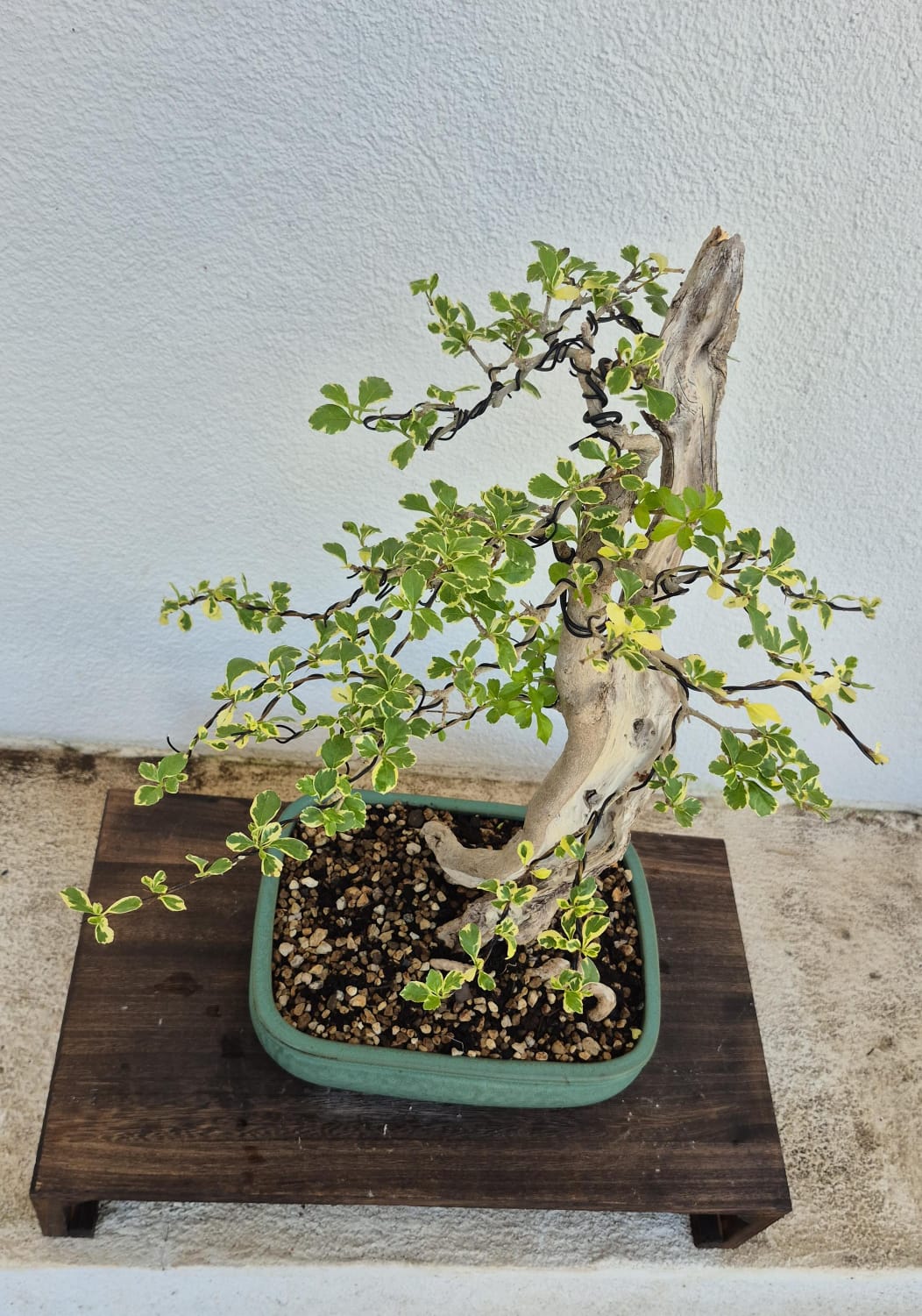
You receive the exact tree shown in the photographs — no substitution. The bougainvillea is packed individually: pot stabilised, substrate secured against transit movement, and the foliage and any bracts wrapped to protect them from damage. The product is the tree itself, in its pot, as photographed.



Reviews
There are no reviews yet.