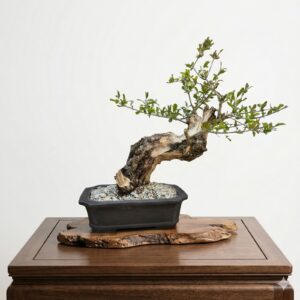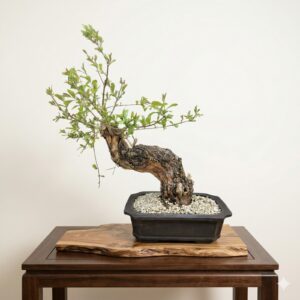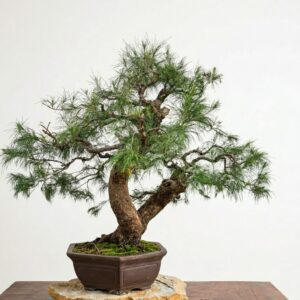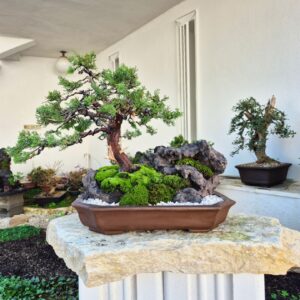
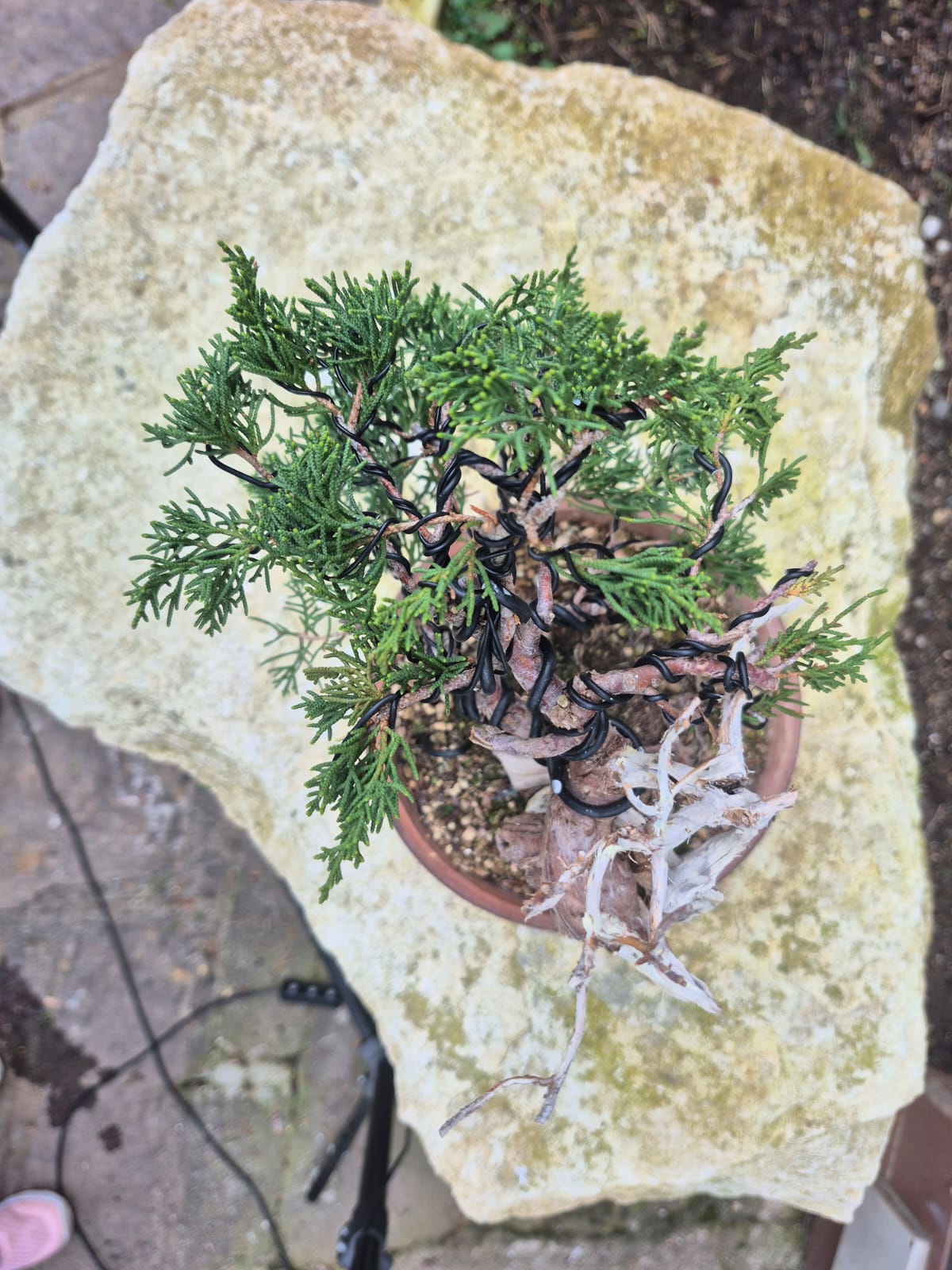
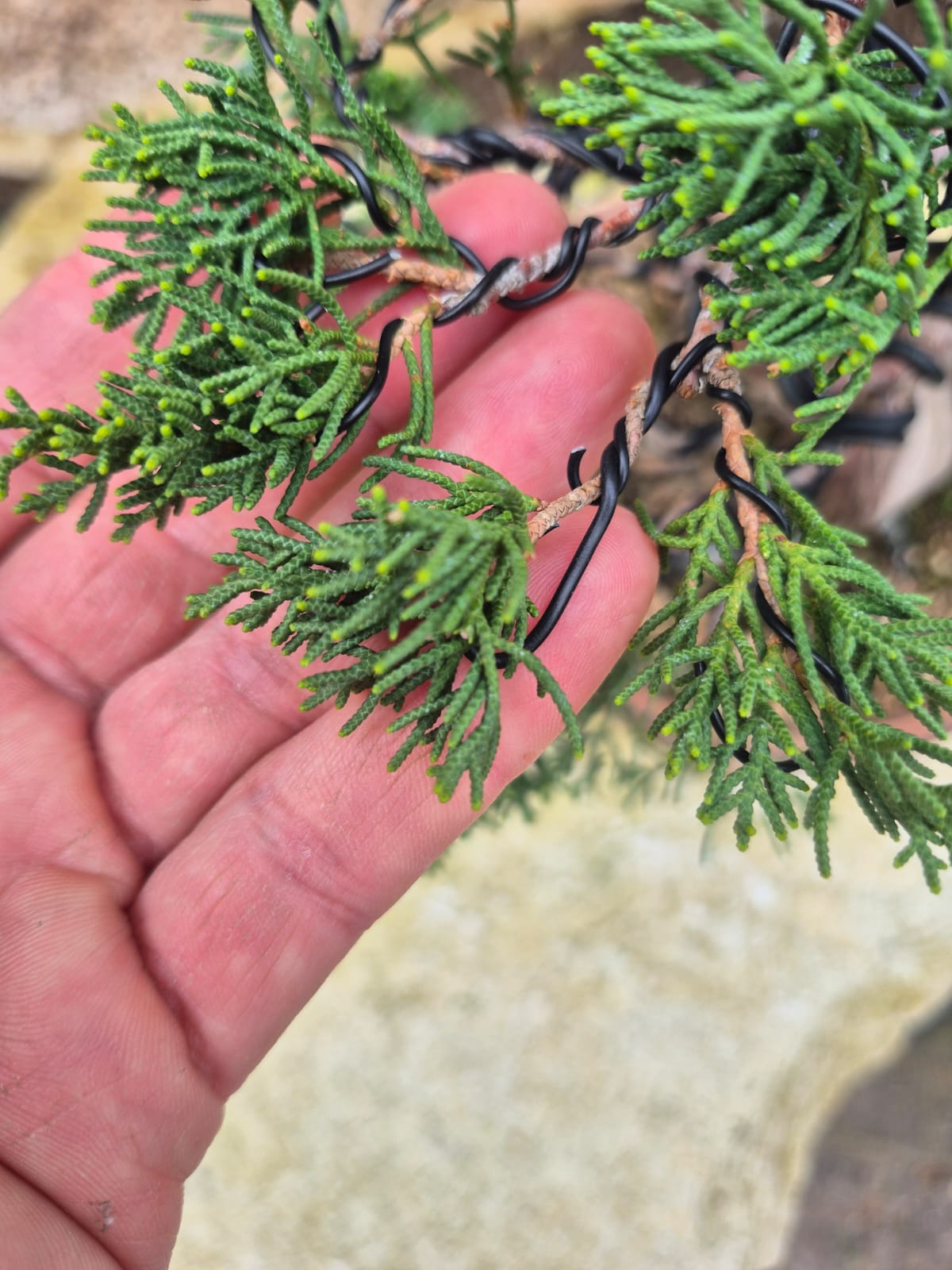
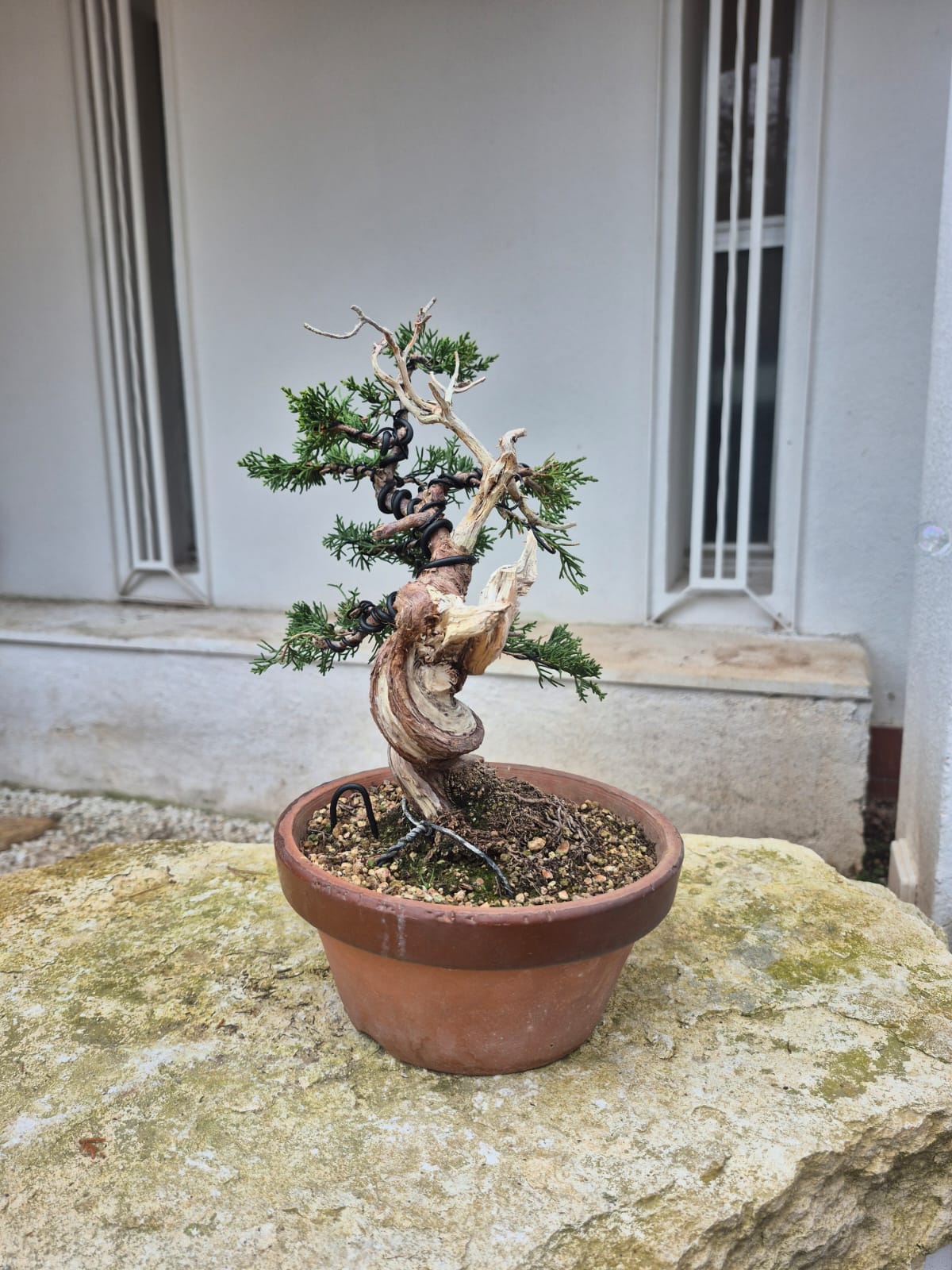
About this Itoigawa juniper deadwood bonsai
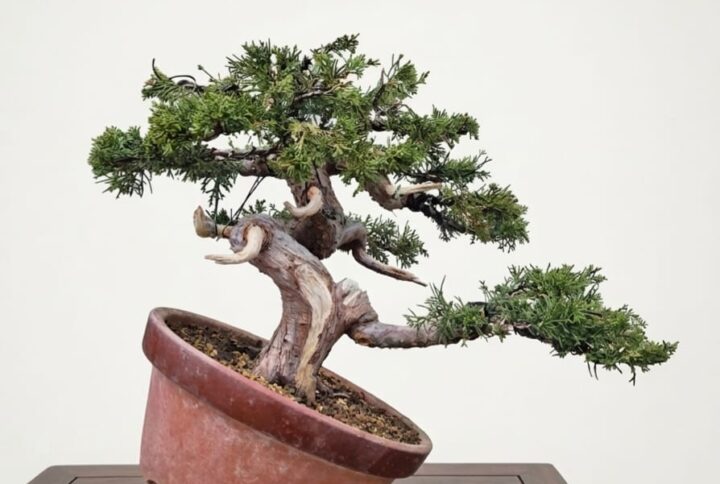
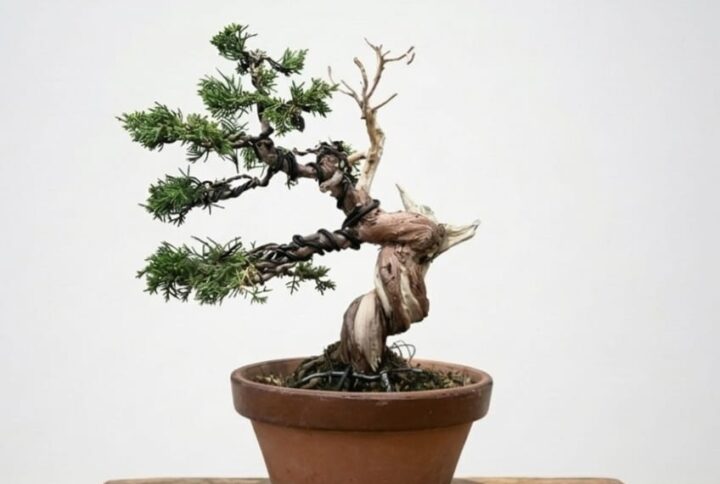
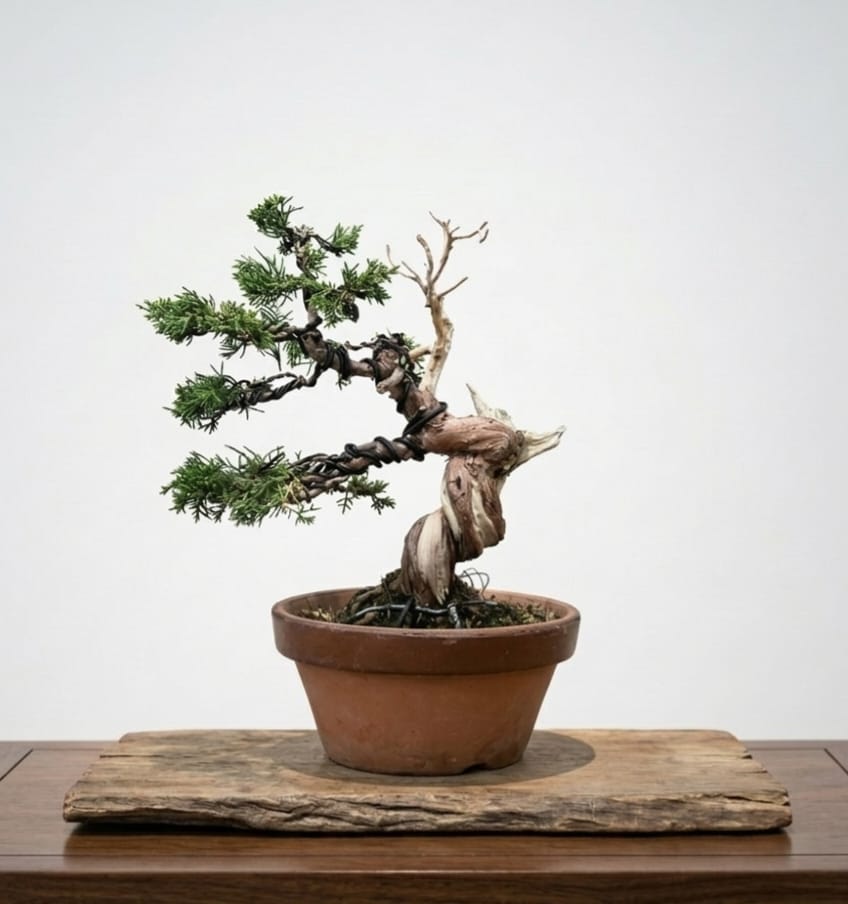
This Itoigawa juniper deadwood bonsai is a mature specimen built around a defining contrast: pale, weathered deadwood against the cool green of living Shimpaku foliage. At 25 cm of canopy height, 43 cm of canopy spread, and a 12 cm trunk seated in a 9 × 18 × 18 cm pot, the proportions are those of a small-to-medium tree where the deadwood reads as central to the composition rather than as a decorative addition.
Dimensions: Height 25 cm (excluding pot) · Width 43 cm · Trunk 12 cm · Pot 9 × 18 × 18 cm. Photographed in March 2026.
About the cultivar and the deadwood discipline
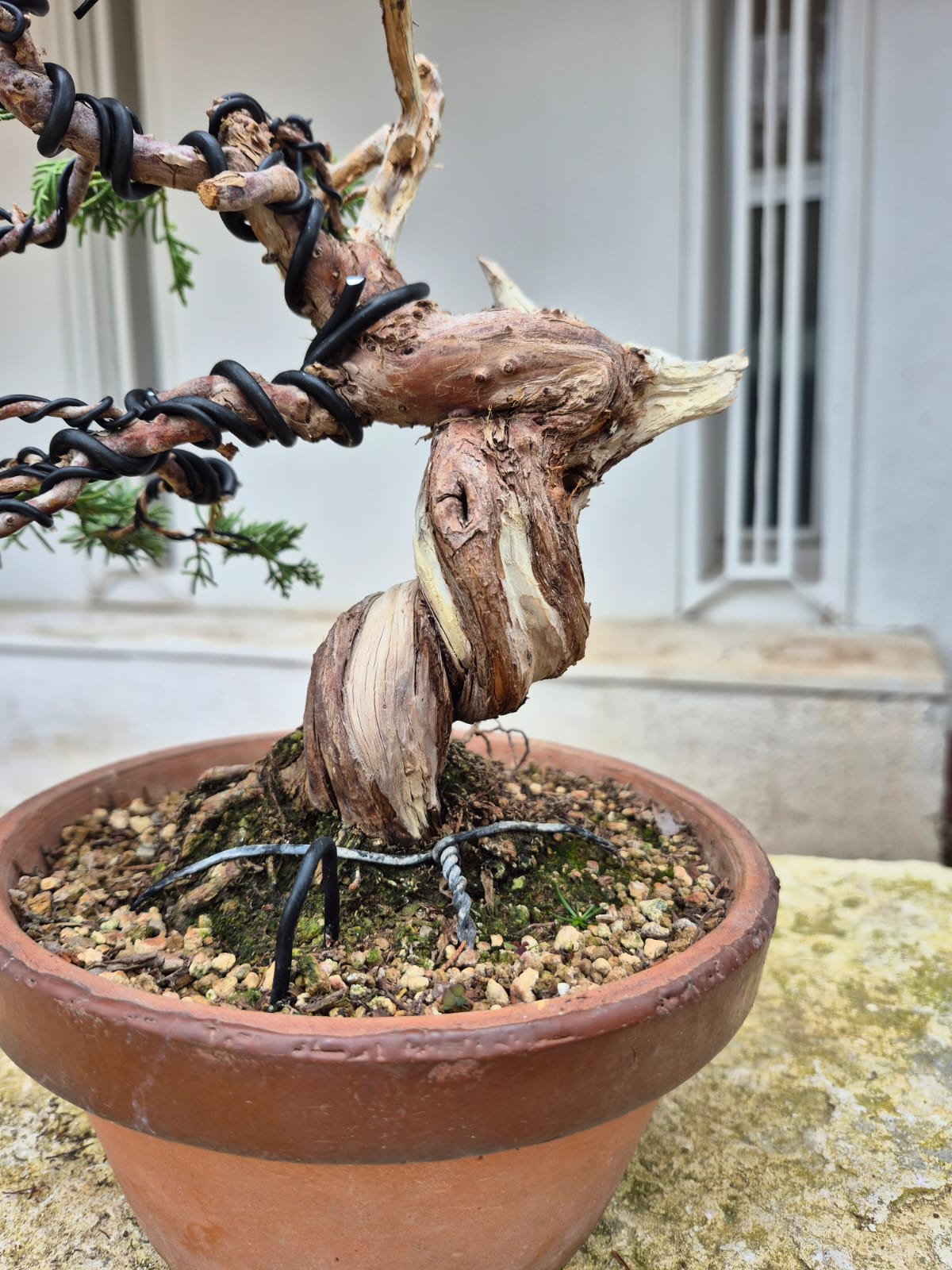
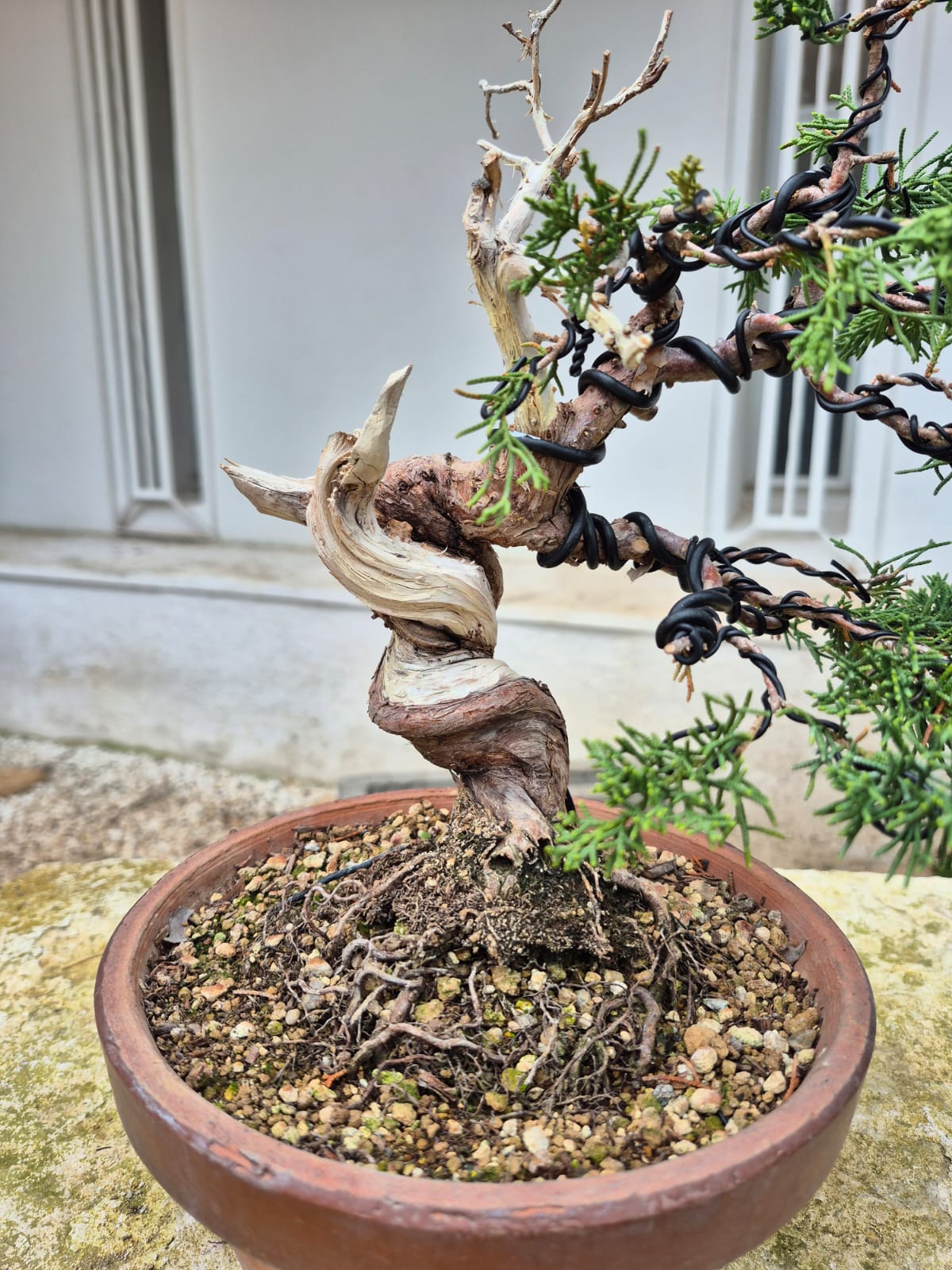
Juniperus chinensis ‘Itoigawa’ originates from the Itoigawa area of Japan and is widely considered the most refined Shimpaku cultivar for bonsai. The cultivar’s wood ages to a pale, almost silver tone when stripped — which is exactly what makes Itoigawa the species of choice for trees built around deadwood expression. Two technical terms apply: jin (a stripped branch left as bleached deadwood) and shari (a stripped line of bark on the trunk that exposes the underlying wood). Both reference, in miniature, what happens to ancient junipers in the mountains where wind, lightning and time strip parts of the tree down to bare wood while other parts continue to live.
Why choose this specimen
The 12 cm trunk is broad enough to carry visible shari without losing structural integrity. The 43 cm spread of the canopy gives the tree presence on display while the height stays moderate at 25 cm — a proportion that emphasises trunk and deadwood rather than canopy mass. The shallow 9 × 18 × 18 cm pot keeps the visual weight low and centres attention on the trunk-deadwood relationship.
Care and placement
This Itoigawa juniper deadwood bonsai is an outdoor species and stays outdoors all year. Full sun for most of the day produces the tightest foliage. The deadwood itself benefits from sun exposure — it stays pale and dry, which is what we want. In summer, check the substrate every morning and water when the surface starts to dry. The deadwood does not need treatment more than once a year with lime-sulphur, applied in late winter to keep the surface bright and to deter fungi. Feed monthly from spring through autumn with a balanced organic bonsai fertiliser, reduced in midwinter.
Through the seasons
Spring brings strong growth on the living portions. Summer pinching keeps the canopy compact and prevents new shoots from drawing energy away from the back-budding zones. Autumn slows growth and deepens the foliage colour. In winter, the tree rests; in cooler parts of the country a position protected from prolonged hard frost is advisable, while in warmer parts it winters in a sheltered outdoor spot.
The deadwood discipline in European bonsai practice
Trees built around jin and shari hold a particular place in European collections because they require a specific skill set — carving, refining, treating — that has developed in continental European bonsai schools over the past four decades. The Itoigawa cultivar became the dominant material for this kind of work because its dead wood pales beautifully and resists rot, and because its foliage tolerates the disturbance of repeated styling. A mature deadwood specimen, photographed and shipped as you see it, represents many years of accumulated work.
Styling and the years ahead
The deadwood is established. Future work will focus on canopy refinement: selective pinching to compact pads, light wiring of secondary branches to adjust silhouette, and one annual lime-sulphur treatment to maintain the pale finish on jin and shari. Repotting every three years, into a similar shallow pot, with a free-draining substrate of Akadama, pumice and lava in equal parts.
Shipping and what you receive
You receive the exact tree shown in the photographs, in the pot pictured. Nothing else is included. The bonsai is packed individually in a wooden crate that protects the deadwood elements as well as the canopy, and shipped from Italy in one business day.