

Bonsai of Mulberry
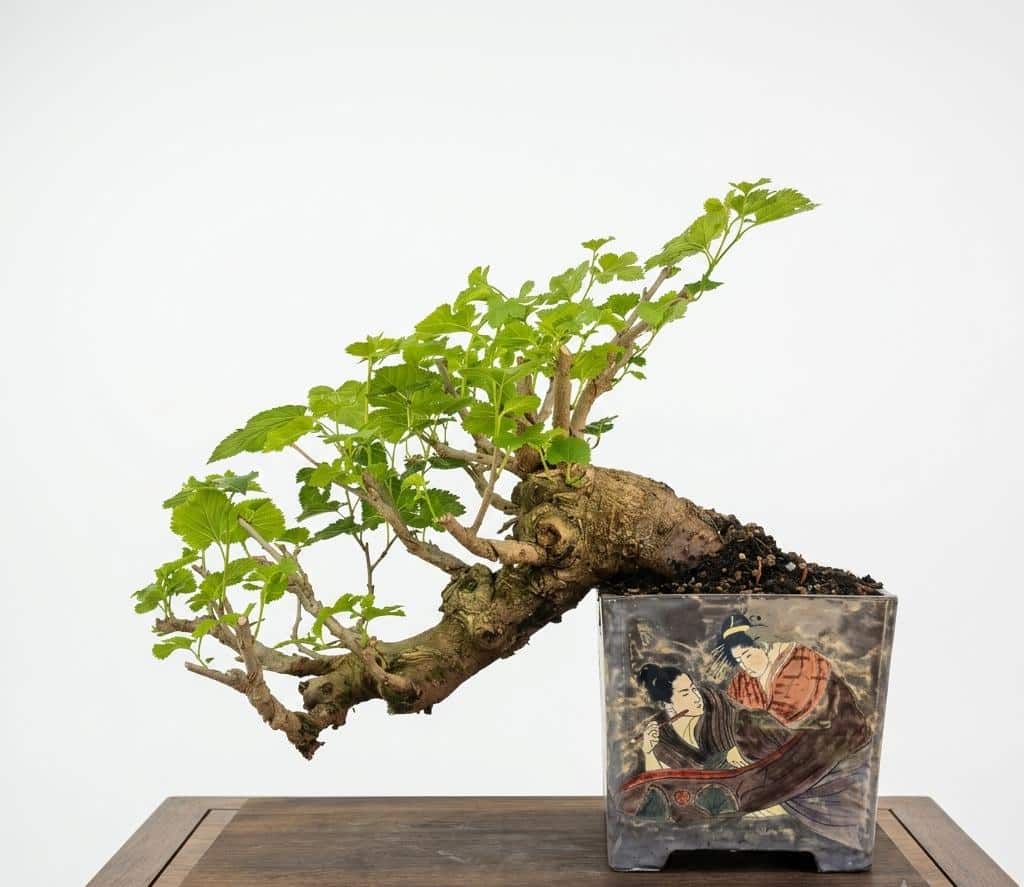
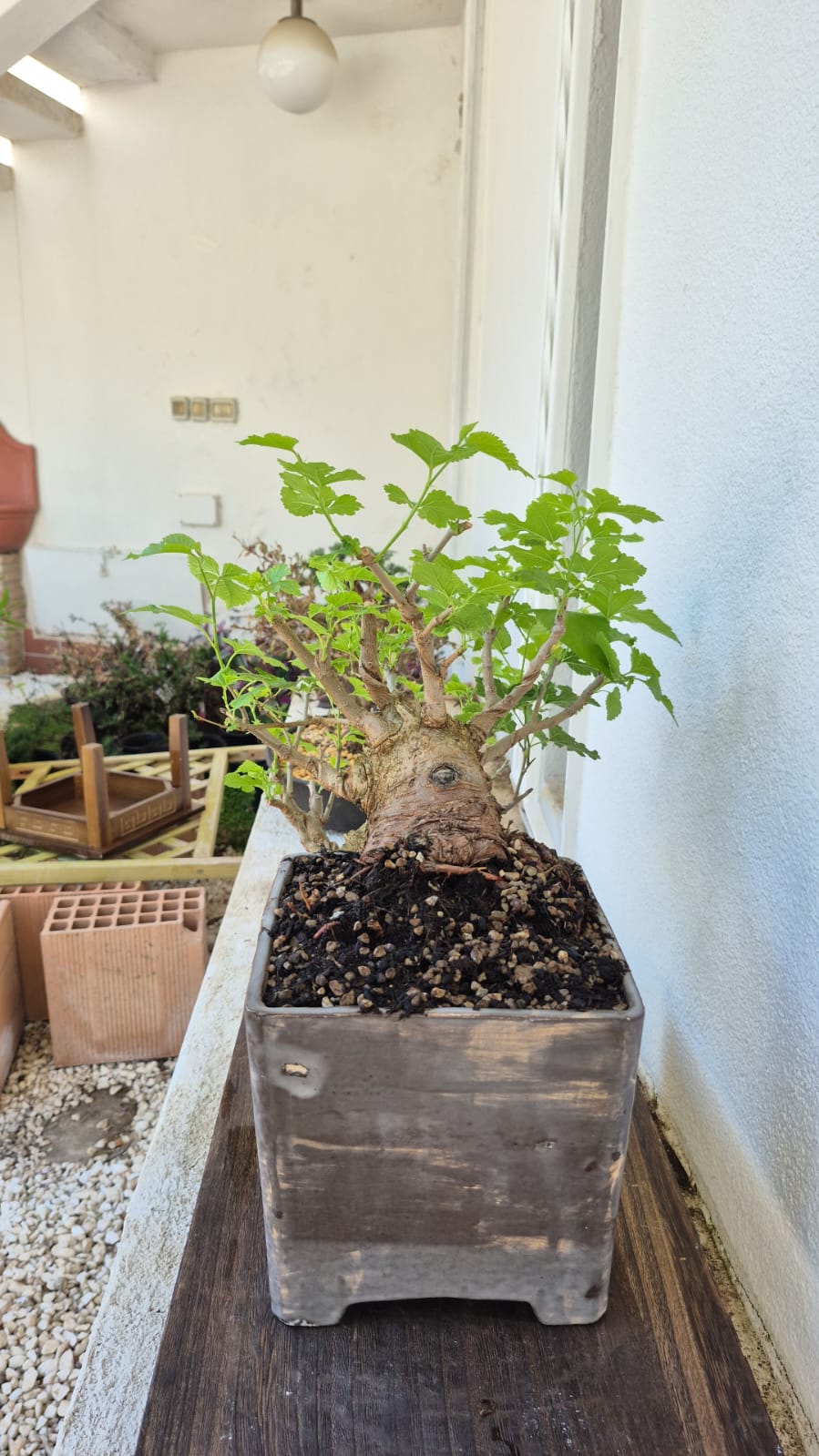
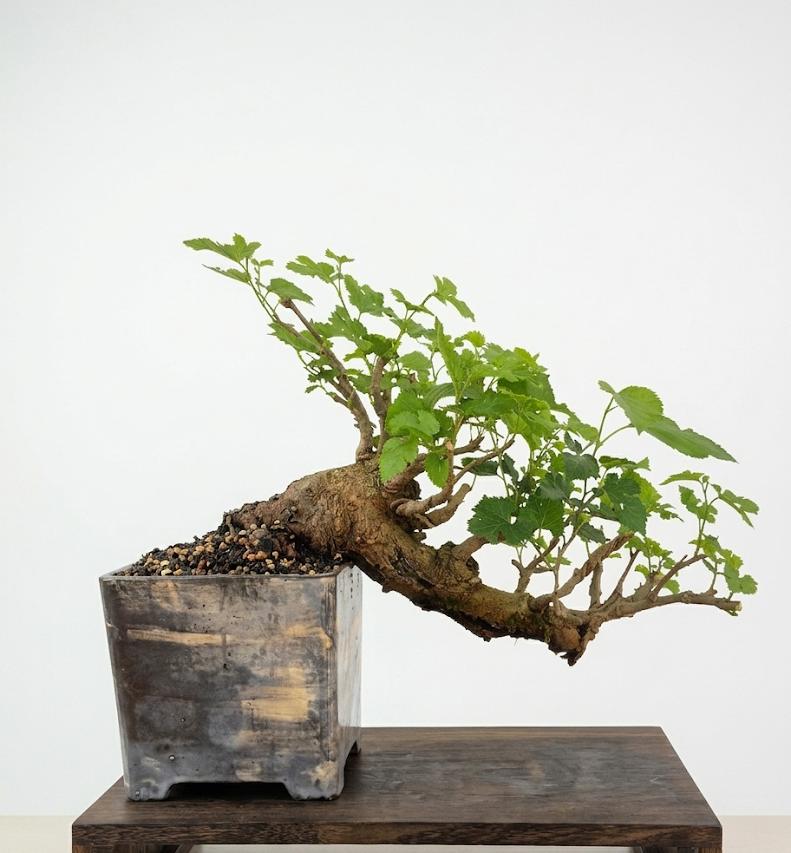
- Height: 25cm
- Width: 43cm
- Trunk: 29cm
- Pot: 19x19x19cm
About this mulberry bonsai
The mulberry (Morus) is one of those species whose history runs alongside human history. For centuries it was the only tree on which the silkworm would feed, and its cultivation defined entire regional economies from China and Japan through Persia and into Europe. As a bonsai it brings the same vigour that made it a useful crop tree: fast growth, strong back-budding, an ability to recover from heavy pruning, and bark that develops a textured, fissured surface with age.
Why choose this specimen
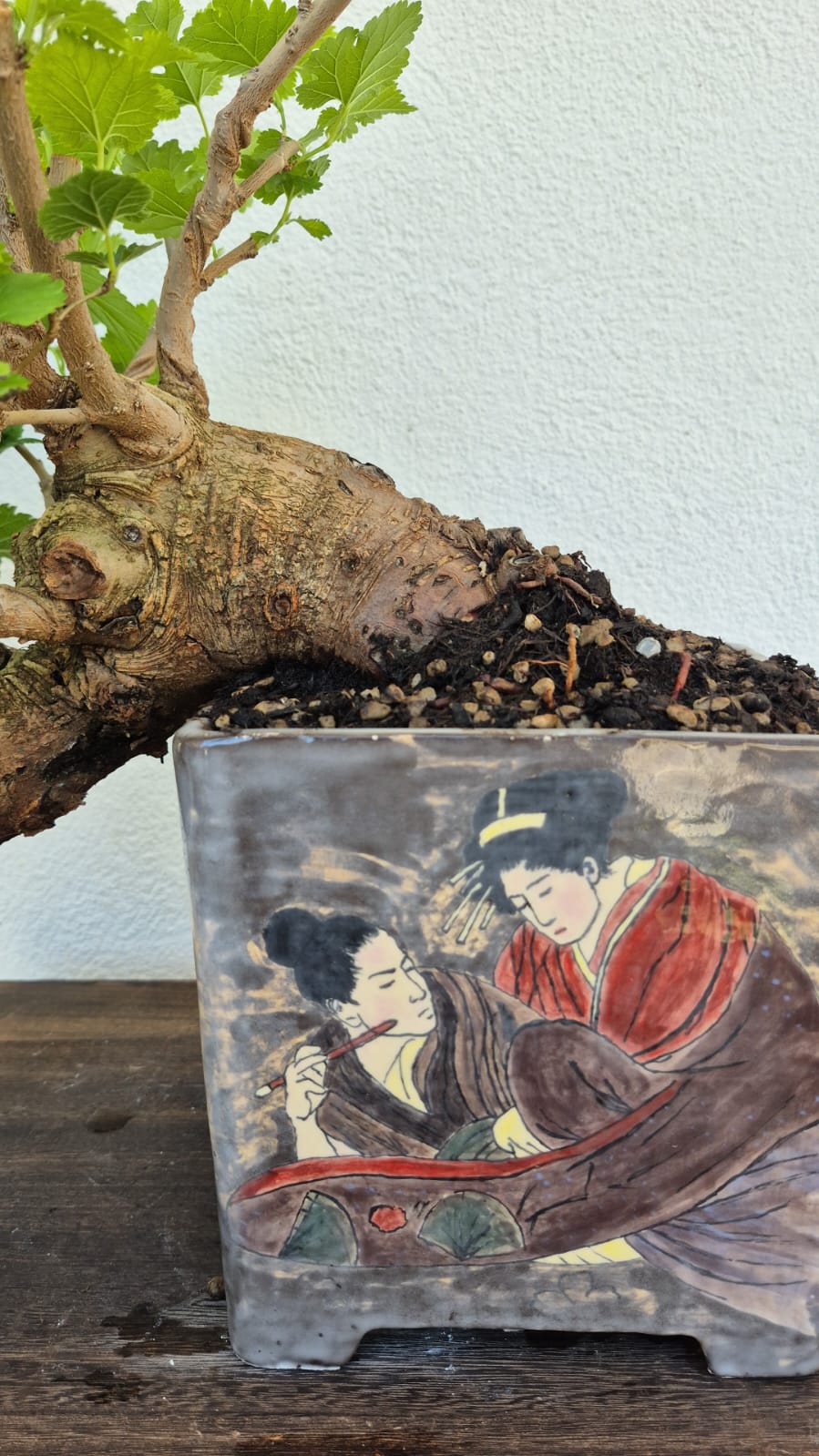
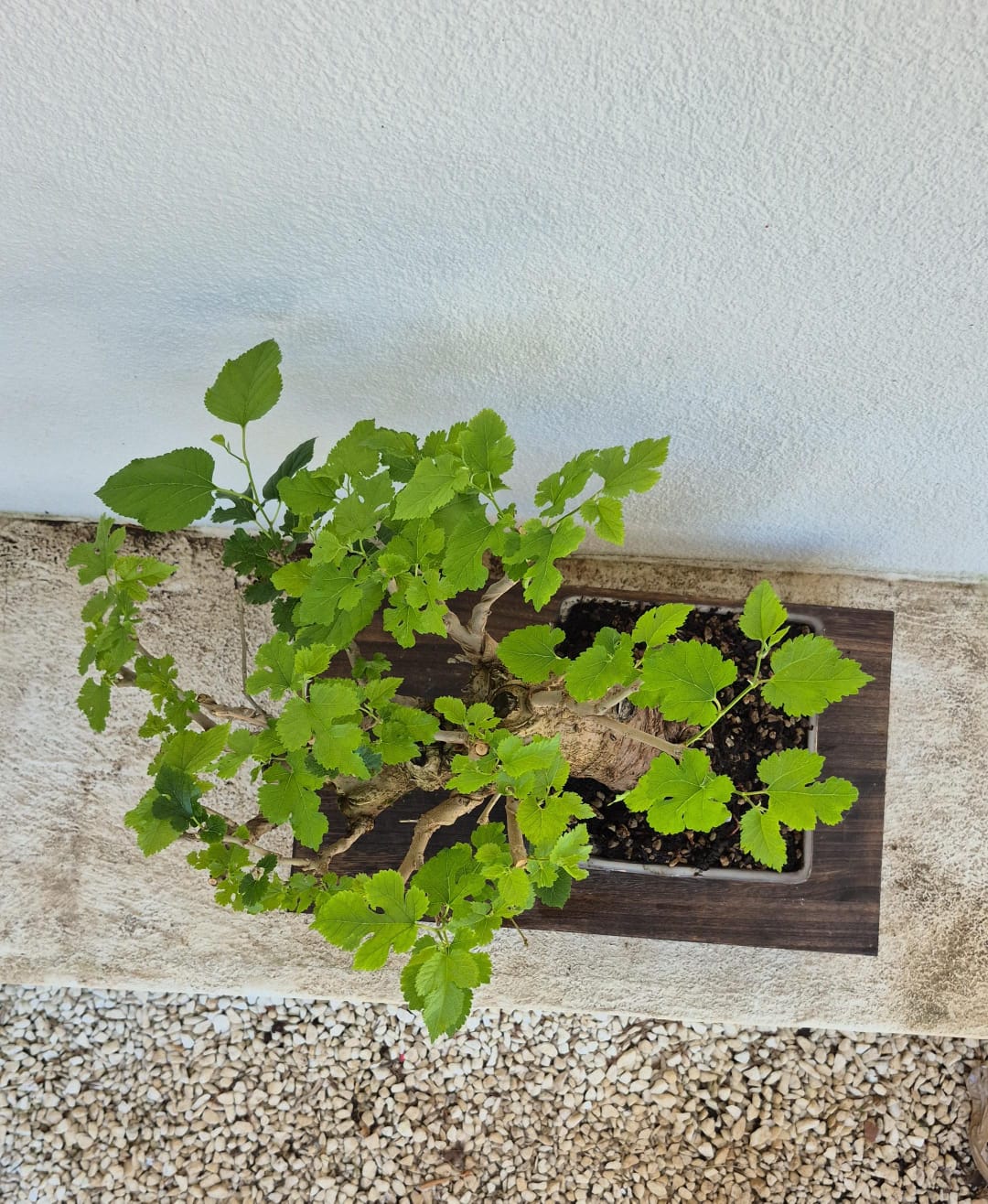
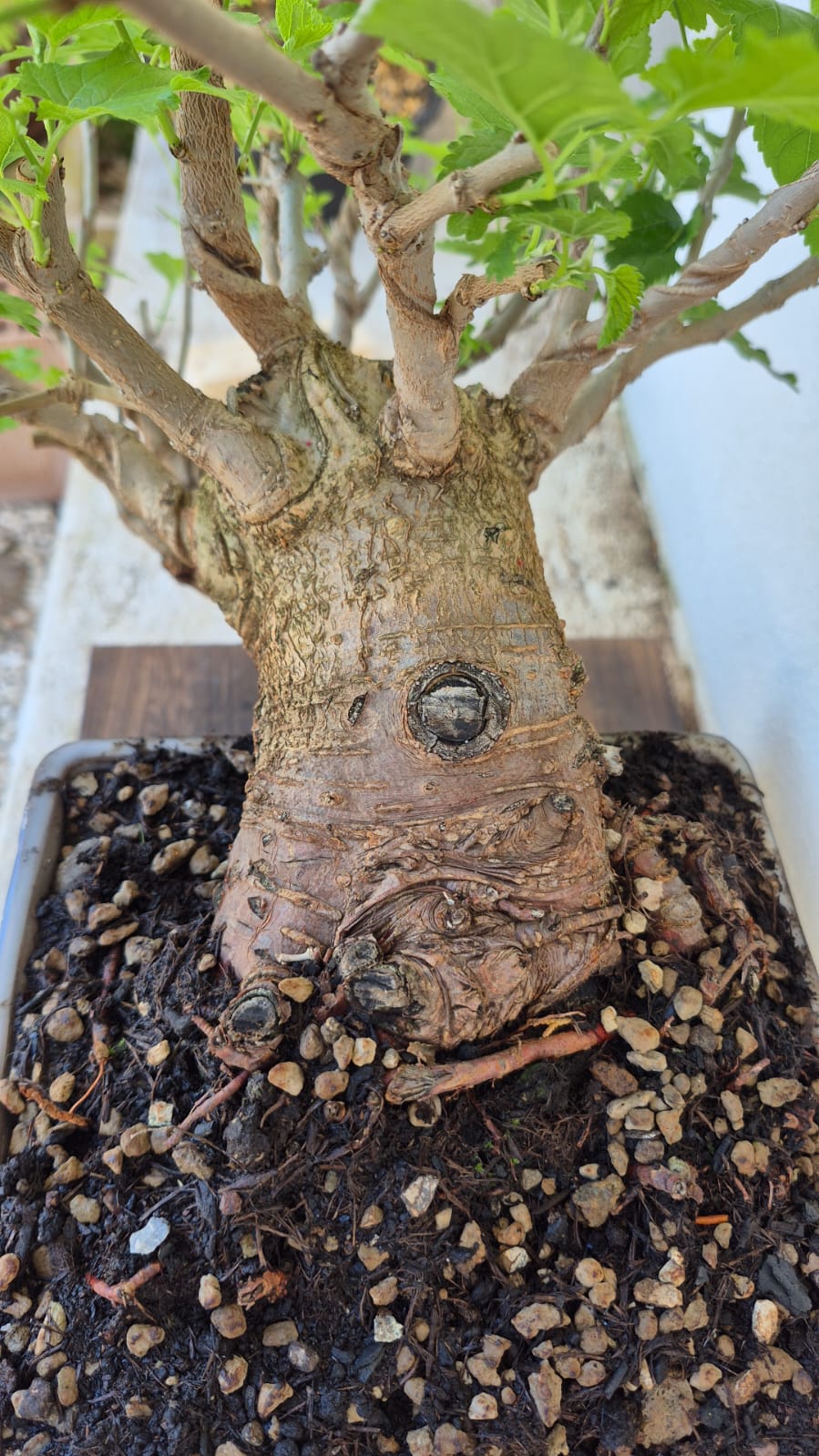
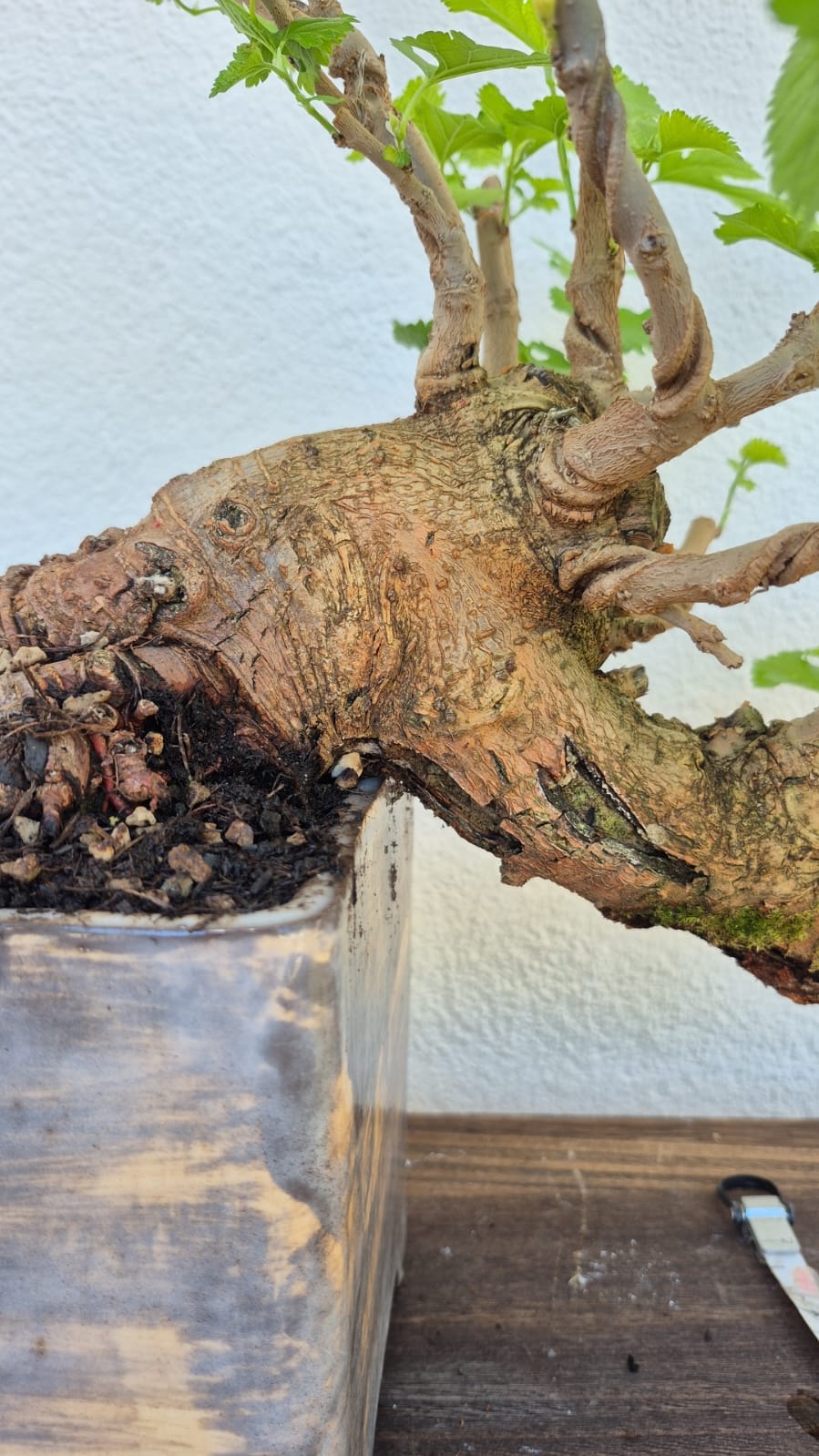
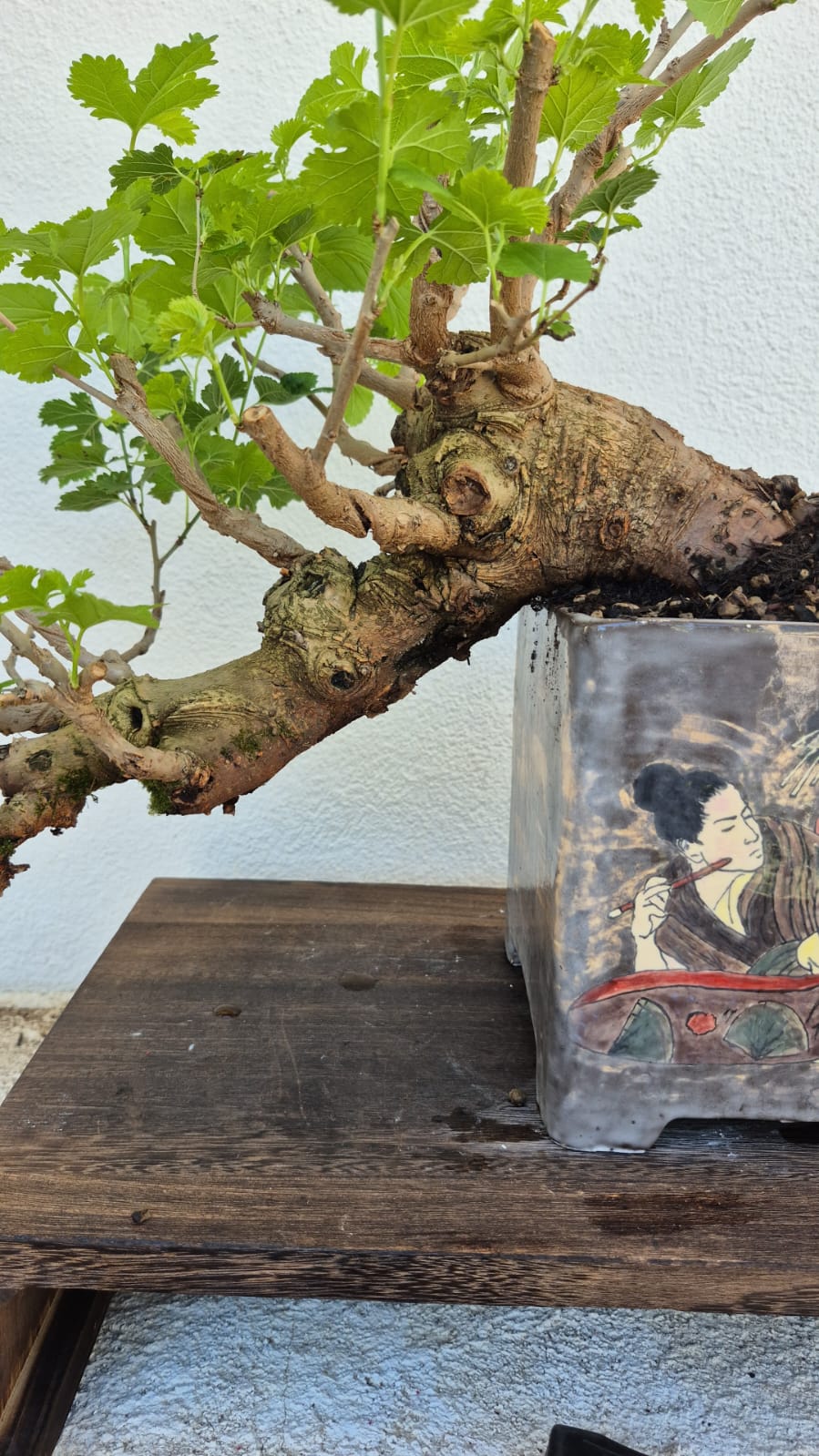
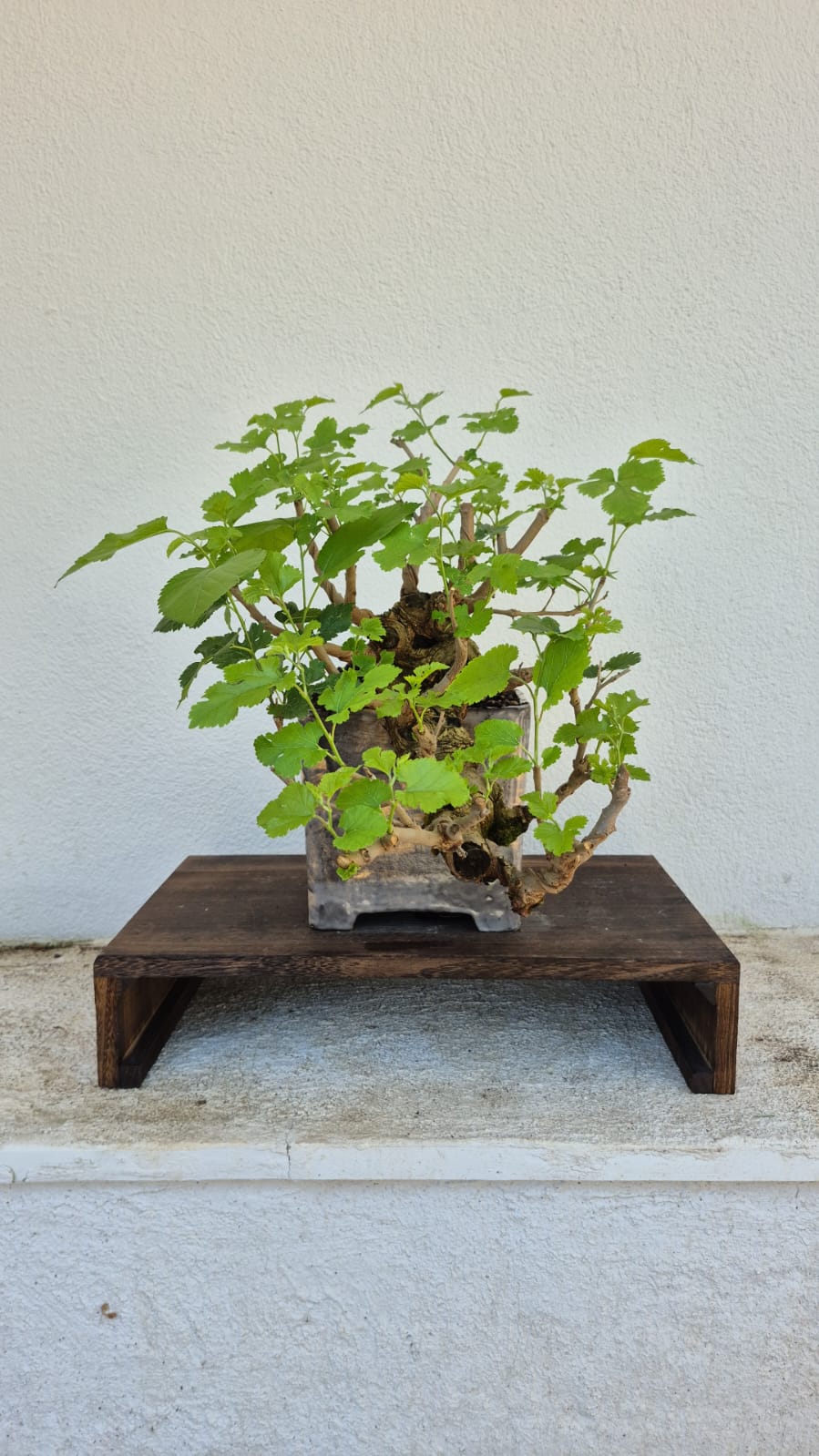
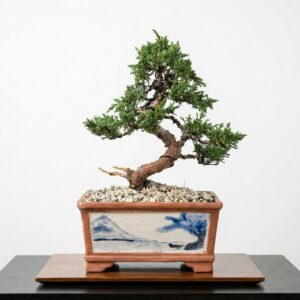
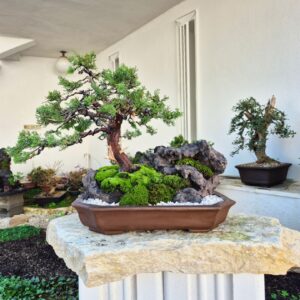
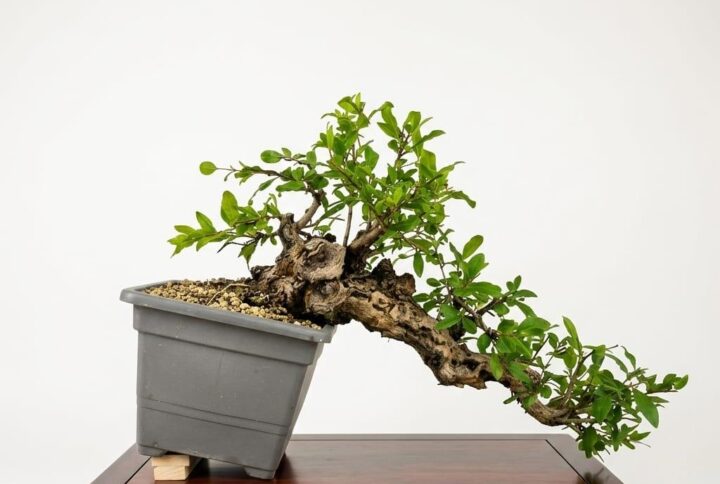
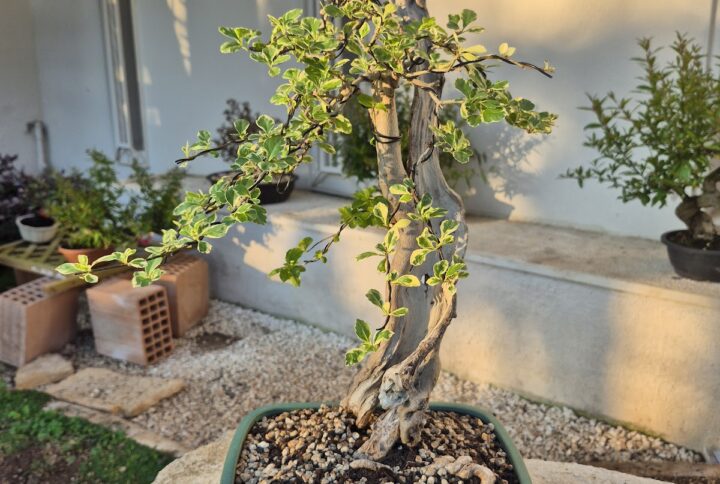
This mulberry bonsai measures 25cm in height, with a canopy spread of 43cm and a trunk of 29cm, in a 19x19x19cm pot. The trunk-to-canopy ratio is good — the tree reads as compact and mature rather than leggy. Mulberry grows quickly, so the bark texture you see here is the result of deliberate slow training, where the goal was to develop surface fissures without losing the trunk shape. That balance takes patience, not raw growth.
Who this bonsai is suitable for
Mulberry is one of the most forgiving outdoor species — vigorous, strongly back-budding, and accepting of harder work than many other broadleaf trees. It suits beginners who want a tree they can genuinely work on (pruning, defoliation, restructuring) and intermediate keepers who appreciate a tree that responds to seasonal techniques. Outdoor sun, regular watering, and a willingness to prune in spring are the main requirements.
Light and placement
Outdoors all year in full sun for most of the day. Afternoon shade in peak summer prevents leaf scorch on the larger leaves. In winter the tree is fully deciduous and tolerates light frost; very cold winters call for a sheltered position. Mulberry does not appreciate constant indoor light — it needs the rhythm of full seasons.
Watering and feeding
Mulberry is thirsty in summer. Water when the top of the substrate has begun to dry — in mid-summer that usually means at least once a day, sometimes twice in heatwaves. Feed regularly from spring through early autumn with a balanced organic fertiliser. Stop feeding in late autumn as the tree prepares for dormancy. Reduce watering through winter to keep the substrate slightly moist rather than wet.
Seasonal appearance
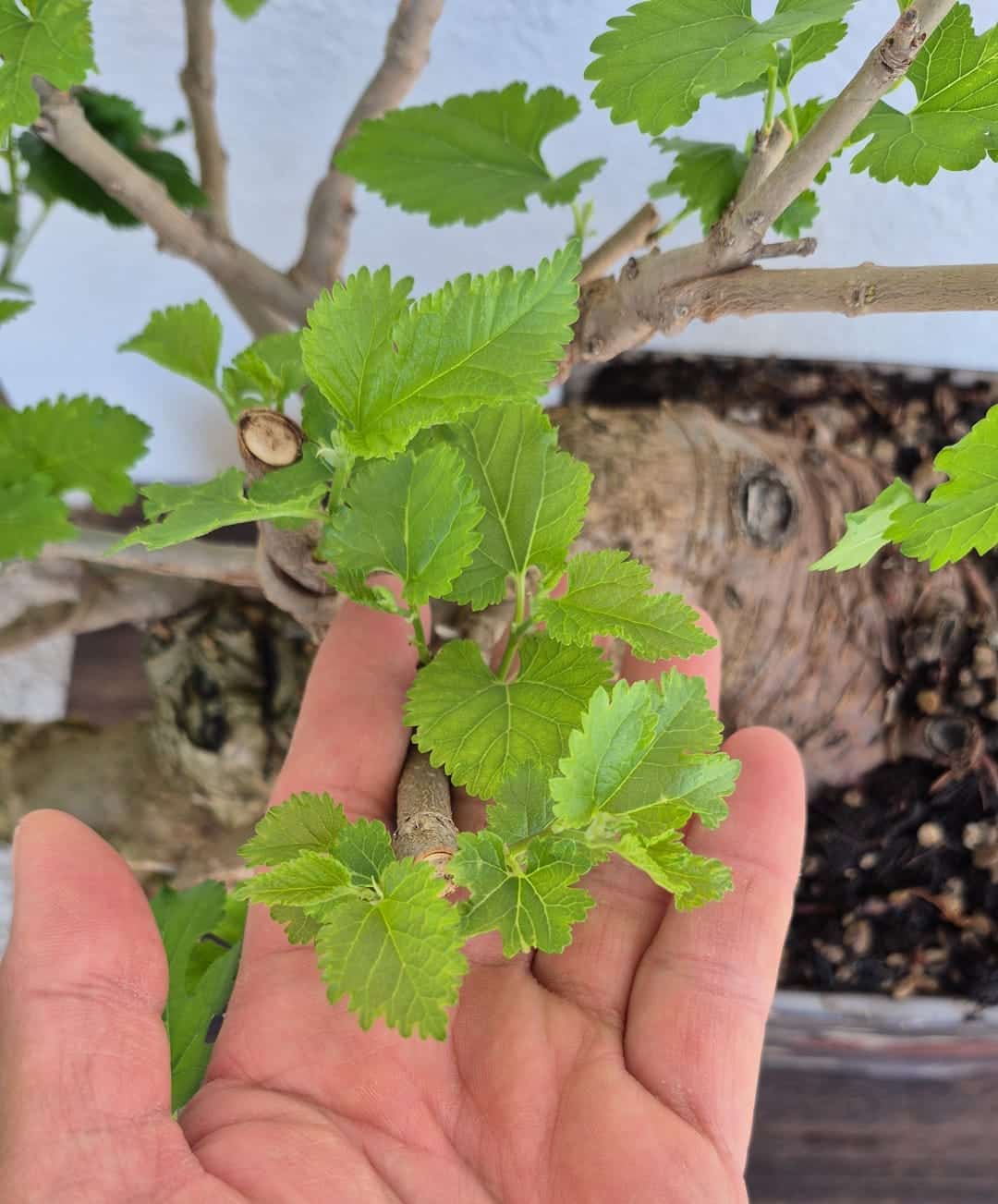
Spring brings vigorous green growth — leaves can be large at first, then reduce with defoliation work over several years. Through summer the canopy is dense and a strong green. In autumn the leaves turn warm yellow, sometimes brown-yellow, before falling. Winter shows the bark texture and the silhouette of the branches: this is often the most sculptural moment of the year for mulberry. Small fruits may appear on stronger specimens in summer.
Care difficulty
Easy to intermediate. Mulberry is robust enough that occasional watering mistakes do not kill it, but consistent care produces a noticeably better tree. Care patterns may vary slightly between northern and southern parts of any country — heavier summer watering in southern areas, more attention to frost protection in northern winters. Both work for mulberry.
Styling and pruning
Mulberry back-buds strongly, which is why it can be cut back hard in spring with confidence. The species responds well to leaf reduction work — through defoliation and selective pruning the leaves become noticeably smaller over several years. Wire goes on younger shoots; older mulberry wood can be brittle. Repot in early spring with a free-draining substrate.
About the species
Beyond its silk-economy heritage, mulberry has long been valued as a shade tree and a fruit tree in equal measure. Different species in the Morus genus produce different fruit colours — white, red, and black mulberry being the three most common — though for bonsai purposes the leaf and bark behaviour are what matter most. The species can live to a remarkable age in the ground, and as a bonsai it carries that potential longevity into a much smaller form. A mature mulberry bonsai is not a sentimental object: it is a tree with real years already in it, capable of many more.
Pot, substrate, and the next few years
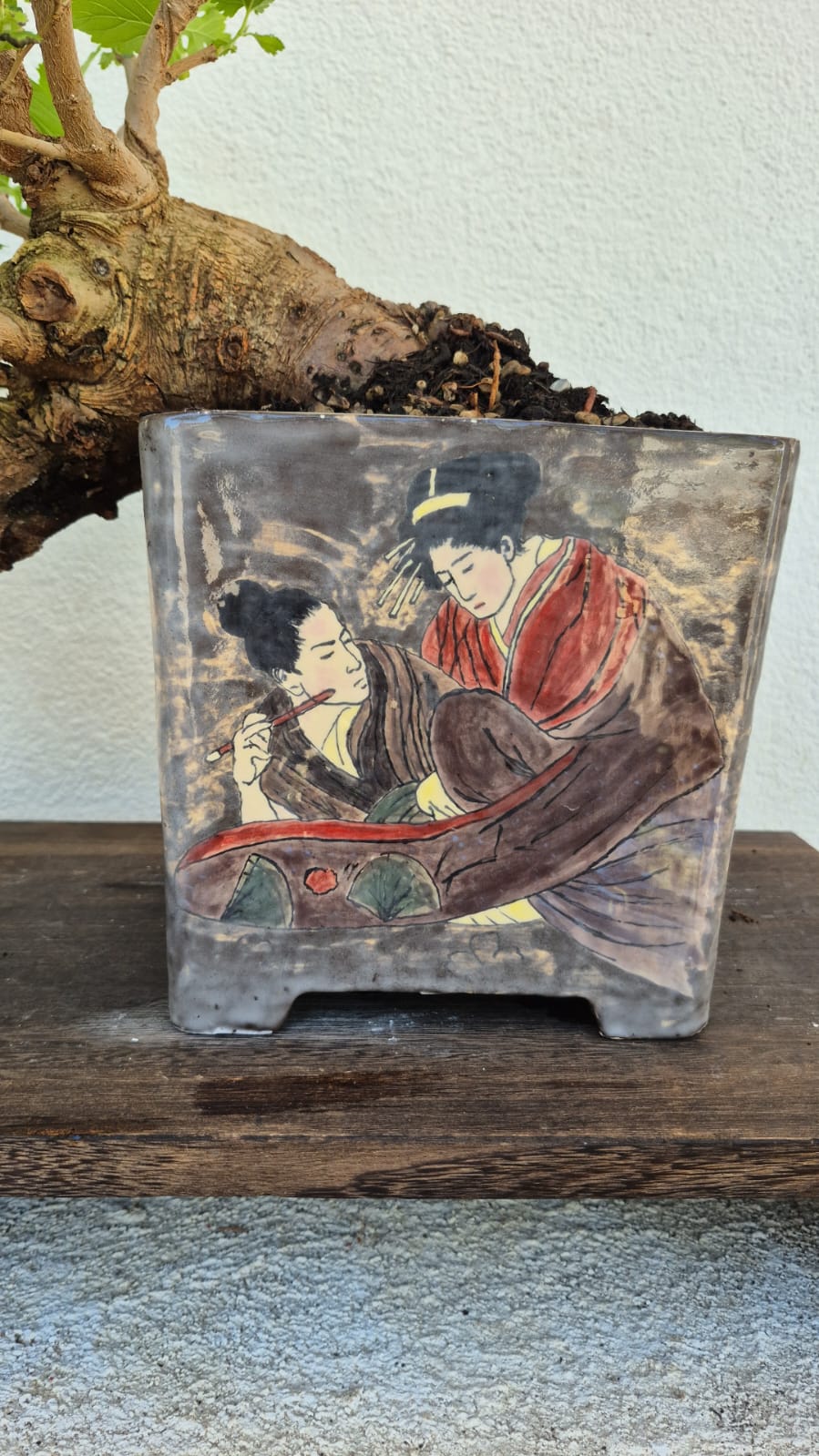
The current 19x19x19cm pot fits the tree’s current scale. Mulberry repots well on a two-to-three-year cycle, with the window in early spring just before buds break. The species accepts substantial root work, which is one of the reasons it is so workable as a bonsai. A free-draining mix of akadama, pumice, and lava handles mulberry well. Over the next several seasons leaves will reduce noticeably with defoliation work, the bark will continue to texture, and the canopy can be refined into a tighter, smaller-leaved silhouette. Mulberry rewards consistent, seasonal attention more than it rewards heroic interventions.
Shipping and what you receive
You receive the exact tree shown in the photographs — no substitution. The mulberry is packed individually: pot stabilised inside the shipping box, substrate secured against movement, and the foliage (or branches in dormant season) wrapped for transit protection. The product is the tree itself, in its pot, as photographed.



Reviews
There are no reviews yet.