
Sabina Juniper Bonsai
Juniperus sabina
Sabina is one of the classic native European junipers used for bonsai, though its natural range actually extends much further east into Asia, and many of the finest examples I've seen weren't grown in a nursery pot at all, they were pulled off a mountainside with deadwood already carved by decades of wind, snow, and rot before anyone ever touched them with a tool.
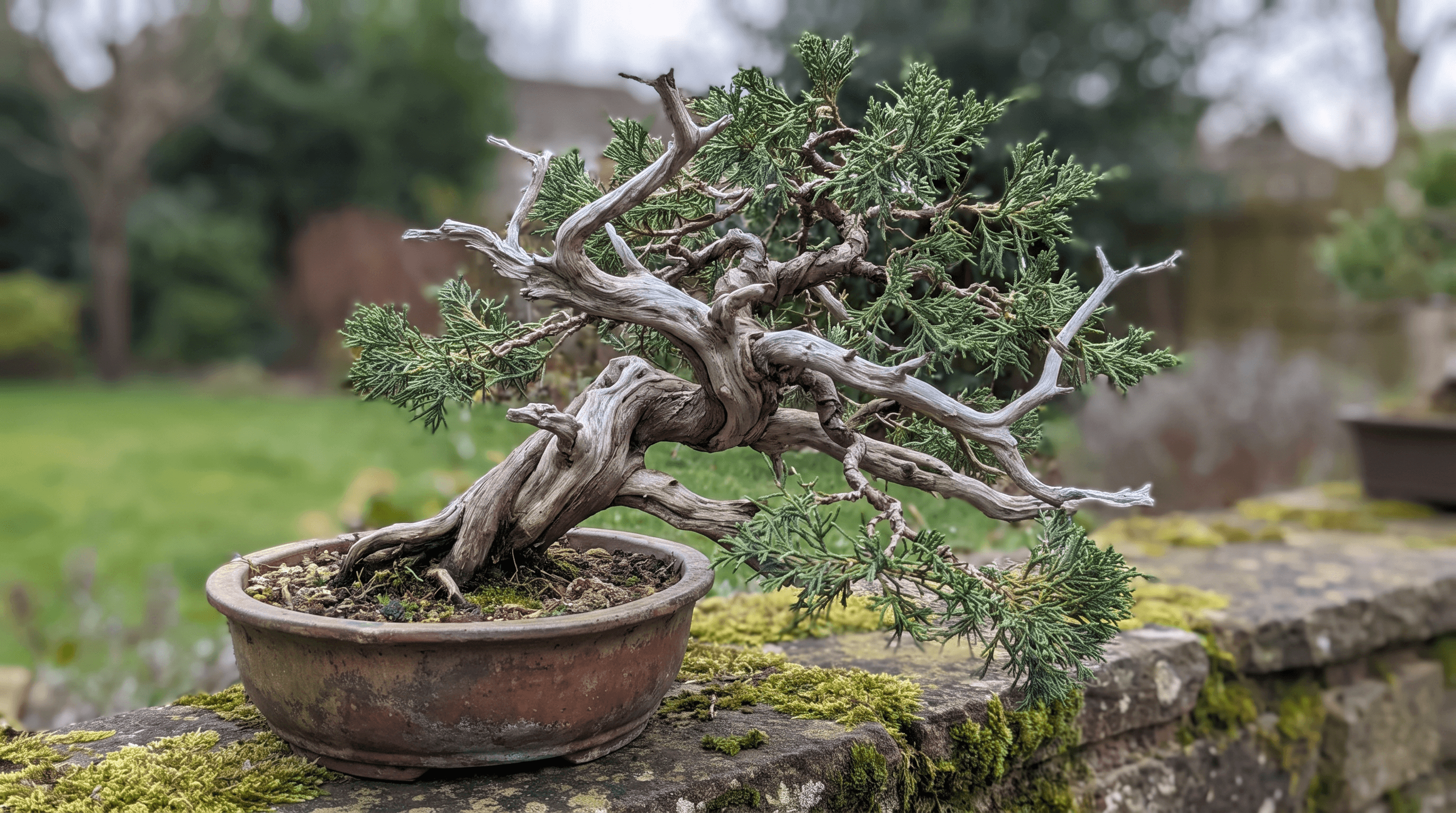
If you're working with Sabina, there's a good chance your tree is collected rather than nursery stock, and that changes almost everything about how you should approach it, at least for the first few years. Sabina grows naturally across rocky, exposed terrain from central and southern Europe east through southwestern Siberia and northern China, often clinging to cliffs and scree slopes where the harsh conditions do the styling work before a bonsai grower ever gets involved: twisted trunks, extensive natural deadwood, and foliage pushed into dense, low masses by wind exposure. That's exactly why European collectors prize it so highly. You genuinely cannot fake decades of weathered, wind-carved deadwood with a knife, and Sabina often arrives with it already built in.
The catch is that a freshly collected Sabina is not a finished bonsai, it's a tree in survival mode with a reduced root system trying to re-establish itself, and treating it like an established nursery juniper in that first year or two is one of the more common ways people lose good material. Mature Sabina foliage is mostly scale-type, while juvenile or vigorous growth can be awl-shaped and noticeably more prickly to the touch, sometimes both types appear on the same tree. Colour varies from green to bluish- or grey-green depending on the plant and growing conditions, and the foliage tends to grow in loose, informal sprays rather than the tight refined pads you'd build on something like Kishu or Itoigawa. That looser habit actually suits Sabina's typical yamadori character better than a tightly manicured style would.
Care
Light
Full sun outdoors, same baseline as every juniper, and Sabina's natural habitat of exposed rocky slopes means it's genuinely comfortable in strong, harsh light. Where I'd add a caveat is for recently collected material: a tree still rebuilding its root system benefits from slightly protected light, not deep shade, but not the full blast of midsummer sun either, for the first season while roots recover. Once it's established and growing vigorously again, treat it like any sun-loving juniper.
Watering
Established Sabina follows standard juniper watering logic: water thoroughly when the surface starts to dry, avoid prolonged waterlogging. Recently collected Sabina needs an oxygen-rich substrate and careful moisture management rather than simply less water: water thoroughly when the substrate approaches dryness, then let excess water drain away freely. Don't keep the root mass constantly saturated, but don't deliberately drought a recovering tree either just because it has fewer roots, that reduced root system still needs consistent moisture to rebuild, it just can't tolerate standing water while it does.
Temperature & hardiness
Sabina is very cold-hardy, coming from mountainous and often quite harsh European habitats, and handles genuine winter cold well once established. It needs that outdoor dormancy period like any juniper. The one adjustment for collected material in its first winter or two is a bit more shelter than you'd give an established tree, since a recovering root system is more vulnerable to hard freezes than a fully re-established one, even though the species itself tolerates cold extremely well in the wild.
Soil & potting
Fast-draining, mineral mix, as with any juniper. Recently collected material benefits from a uniform, highly aerated, free-draining substrate, since these trees are recovering from significant root loss and are especially vulnerable to a wet, airless mix. Pumice-rich mixes are commonly used for this first post-collection stage, but the exact composition should be matched to your climate, container size, and watering practice rather than treated as a fixed recipe; transition toward a more typical bonsai mix once the tree is clearly established and growing strongly.
Fertilizing
Standard juniper feeding applies to established trees, though Sabina generally does better on mild nitrogen than on heavy feeding. For a recently collected Sabina, avoid heavy feeding while the tree is clearly stressed; once active extension shows the root system is functioning again, introduce mild fertilisation and build strength gradually rather than waiting for one fixed sign before switching on full feeding. Once established, it responds well to the same light, consistent feeding schedule as other junipers.
Pruning & wiring
On established trees, Sabina takes wiring and pruning as well as most junipers, and its naturally loose, sprayed foliage habit actually looks better with less aggressive pad-flattening than you'd do on a refined Chinese juniper cultivar. Where Sabina really demands caution is deadwood: collected trees usually arrive with extensive natural jin and shari already present, and the temptation to carve and refine it further should be resisted, at least initially. That deadwood took decades to form naturally and often has a character no knife can replicate; treat existing deadwood as something to preserve and lightly clean rather than a blank canvas. Wire in the cooler months, and on recently collected trees, avoid heavy structural pruning until the tree has shown at least a full season of strong, consistent growth confirming it's stable. Sabina foliage and cones are also worth handling carefully: wear gloves during prolonged work, since it can irritate skin, and keep clippings and foliage away from pets and children, as Sabina should not be consumed.
Repotting
This is one of the biggest departures from standard juniper care. A freshly collected Sabina should generally not be repotted again for at least a year, often longer, after its initial collection into a container, since it needs time to rebuild a working root system undisturbed before facing another disruption. Once established, repotting timing for Sabina isn't universally agreed on: some experienced growers repot in early spring as growth resumes, while others prefer the active root-growth period from summer into early autumn, and reported intervals for established trees range from roughly two to four years or more depending on vigour and pot size rather than a fixed two-year default. Use a timing and interval proven in your own climate, and above all, only repot a genuinely vigorous tree. When you do repot, work gently around the root mass rather than aggressively bare-rooting it.
Common problems
The most serious problems I see with Sabina almost always trace back to the collection and establishment period. A tree that looked fine for months and then declined suddenly is usually one that was pushed too hard too early, repotted again before it was ready, or fertilised before the roots could use it. Browning foliage on a recently collected tree isn't automatically a death sentence the way it might be on an established juniper; these trees can sit for a long time drawing on stored reserves before showing decline, and equally can look rough for a season before pushing strong new growth once roots re-establish. On established trees, the usual juniper issues apply, watering inconsistency, spider mites in hot still conditions, root rot from poor drainage. Don't judge a recently collected juniper solely by foliage colour, it can stay green for some time even when the root system is failing. Look primarily for sustained new extension as the real sign of life; a tiny, inconspicuous scratch test on a small branch can confirm whether the tissue underneath remains green, but treat that as a last resort rather than a routine check on valuable yamadori.
Styling
Sabina's defining styling asset is deadwood that's often already there before you start, extensive natural jin and shari shaped by genuine weathering rather than tool work, and the best approach with collected material is usually to work with what the mountain already gave you rather than redesigning it. Informal upright, semi-cascade, and windswept styles suit the species well, echoing the exposed, wind-shaped conditions it grows in naturally. The foliage itself works better in looser, more naturalistic pads than the tightly clipped style you'd use on a refined nursery cultivar, since Sabina's character comes from ruggedness rather than precision. Lime sulphur can be used sparingly on deadwood to slow weathering and unify colour, but I'd rather under-treat inherited deadwood than over-bleach it into looking artificial.
Common questions
Is Sabina juniper usually collected or nursery-grown?
Both exist, but a large share of the serious Sabina material in European bonsai is collected from the wild (yamadori), often from rocky, mountainous terrain. This is exactly why the species is so prized, natural weathering produces deadwood character that's very difficult to replicate through carving alone.
How long does a collected Sabina juniper take to establish?
It varies with the size of the tree and how much root was preserved during collection, but expect a genuine recovery period of at least a year, sometimes considerably longer, before treating it like an established bonsai. Avoid repotting, heavy fertilising, and major structural work until you see clear, consistent new growth.
Can I carve or bleach the deadwood on a collected Sabina?
You can, but I'd be cautious about doing too much. Collected Sabina typically arrives with natural jin and shari already formed by decades of weathering, and that character is usually worth preserving rather than over-refining. Light cleaning and occasional lime sulphur to slow deterioration is reasonable; aggressive recarving of naturally weathered deadwood often does more harm than good to the tree's character.
Why does my Sabina juniper have different foliage than my Chinese juniper?
Mature Sabina typically shows scale-type foliage, while juvenile or vigorous new growth can be awl-shaped and noticeably prickly to the touch, sometimes both appear on the same tree. Colour varies from green to bluish- or grey-green, and the foliage tends to grow in looser, more informal sprays than the tightly packed pads common on Chinese juniper cultivars. This is a genuine species characteristic, not a sign of poor health.
Is Sabina juniper cold-hardy?
Very much so. It grows naturally in exposed, often mountainous European habitats and tolerates real winter cold well once established. Give a recently collected tree extra winter shelter in its first year or two while the root system is still recovering, even though the species itself handles cold extremely well.
Why hasn't my newly collected Sabina pushed new growth yet?
Collected junipers can sit for a surprisingly long time, sometimes most of a growing season, before visibly pushing new growth while the root system rebuilds underground. Resist the urge to repot again, overfeed, or overwater in the meantime. Judge primarily by sustained new extension rather than foliage colour, which can stay green even when a root system is failing; a small scratch test on a branch to check for green tissue underneath is a reasonable last resort, but avoid repeatedly wounding valuable material.
General guidance based on 20+ years of practice. Every tree and every climate is different — when in doubt, ask us.