
Eastern Red Cedar Bonsai
Juniperus virginiana
Eastern red cedar is a juniper wearing another tree's name, and if you searched for a cedar bonsai and landed here, you're in the right place, this species has nothing to do with true cedars beyond an old, misleading common name and some aromatic reddish wood.
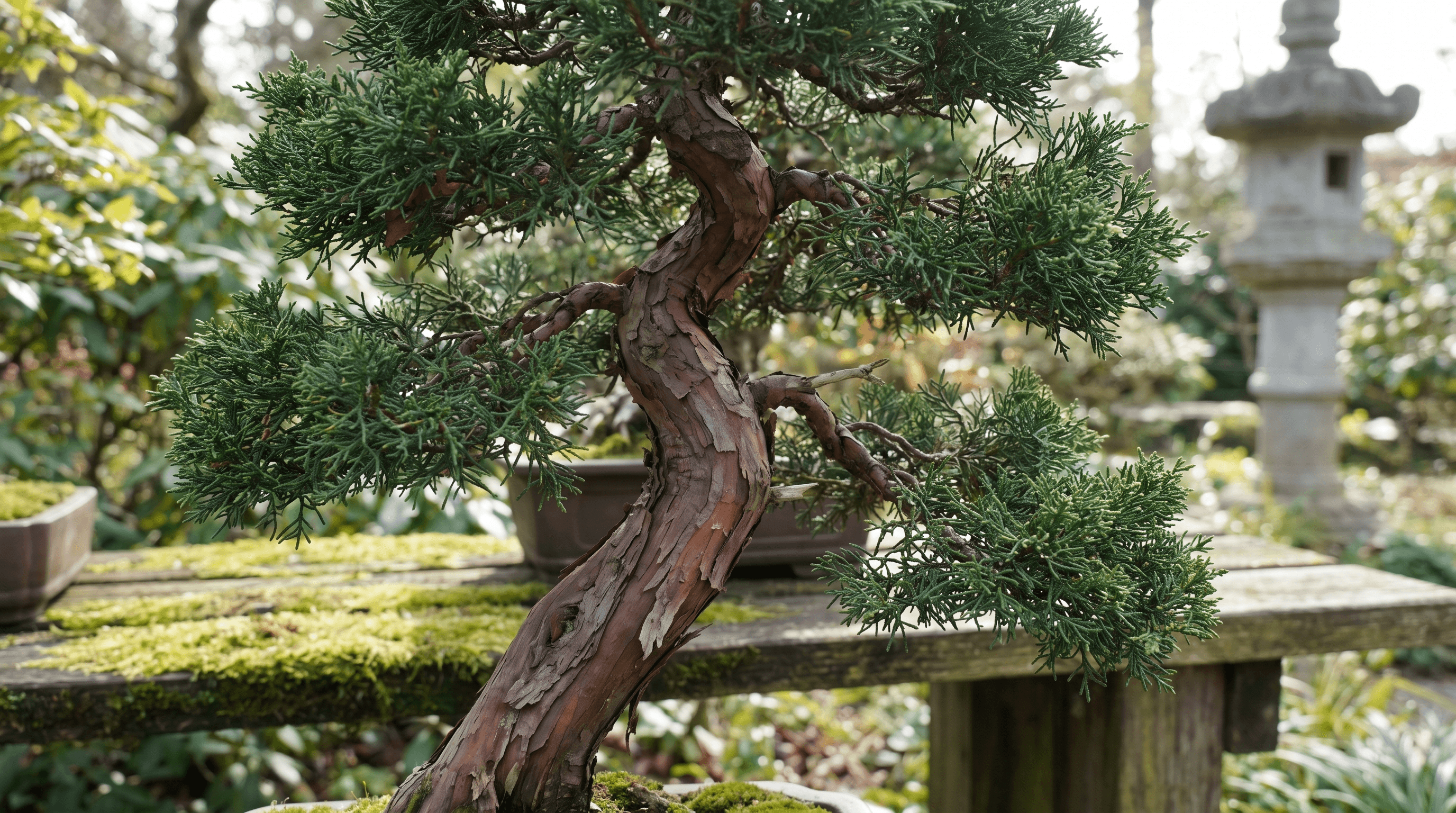
The naming confusion is worth clearing up first because it genuinely trips people up. True cedars, the genus Cedrus, are a completely different group of conifers native to the Mediterranean and the Himalayas, and they're a different subject for bonsai. Eastern red cedar's common name refers historically to its aromatic, reddish-toned heartwood, the same fragrant timber still used in cedar chests and closet linings today. Botanically, though, this tree is squarely a juniper, and everything about how it grows, roots, and responds to pruning follows juniper rules, not cedar ones.
In the wild it's one of the most widely distributed and adaptable conifers in eastern and central North America, turning up as a pioneer species on old fields, fence lines, and roadside edges. Its native range runs from southern Canada through much of the eastern and southeastern United States, so it clearly tolerates both cold winters and hot, humid summers, and a fair amount of bonsai material in North America comes from collected fence line or pasture trees rather than nursery cultivars, though it's much less commonly seen in European or Japanese bonsai collections than the Asian juniper species.
Care
Light
Full sun, as with every juniper on this site, and this species handles it without much complaint even through hot, humid eastern summers that would stress some other conifers. It's genuinely more tolerant of sticky, high-humidity heat than a lot of junipers, which is part of why it thrives across such a wide native range, but the sun requirement itself doesn't change: thin, sparse growth usually points to too little light, though it can also come from root stress, drought, disease, or pests, so it's worth ruling those out rather than assuming light is always the cause.
Watering
The usual juniper approach applies, water thoroughly when the surface starts to dry and avoid letting the pot sit soggy for extended periods. Because this species tolerates a wider range of soil conditions in the wild than most junipers, including some heavier ground than you'd expect a juniper to put up with, it's easy to assume a bonsai pot can be more forgiving too. It can't. In a shallow container, poor drainage causes the same root problems here as with any other juniper, regardless of how adaptable the species is when planted in open ground.
Temperature & hardiness
This species has one of the broadest native climate ranges of any juniper used in bonsai, comfortable with both cold northern winters and humid southern summers, so it's genuinely a flexible choice across a lot of temperate climates. Landscape hardiness is generally listed around USDA zones 2A-9B, though a bonsai in a shallow pot needs winter root protection well before a landscape tree in the same zone would. What doesn't change is the need for a real, full outdoor dormancy period every winter, the same as any juniper.
Soil & potting
Standard juniper substrate rules apply here: a fast-draining, mineral-heavy mix rather than anything resembling garden soil. Don't let the tree's natural tolerance for a wide range of ground conditions in the wild lead you to a heavier bonsai mix than you'd use for another juniper, a container concentrates drainage problems that open ground simply doesn't have, and root rot from a wet mix is just as much of a risk here as with any other species on this site.
Fertilizing
A regular, balanced feeding programme through the growing season, tapering off in autumn and stopping through winter dormancy, works well and doesn't need any real adjustment from the general juniper approach. A healthy, established tree responds well to normal juniper fertilization, and there's no need to treat this species as needing anything unusual on the feeding front.
Pruning & wiring
General juniper pruning rules apply: let healthy shoots extend, then selectively prune overly long runners with sharp scissors, cutting back to a lateral shoot or deeper into the foliage, and always leave live foliage on any branch you're reducing. Avoid repeatedly pinching every tip or shearing the tree like a hedge, both weaken it and brown the foliage. This species naturally carries both sharp, needle-like juvenile foliage and softer scale-like mature foliage at the same time, so don't expect it to refine into an entirely soft, Shimpaku-like canopy. Heavy or repeated foliage removal can actually provoke more juvenile foliage rather than less, so restrained, selective pruning suits this species better than frequent tip work. On collected fence line or pasture material, you'll often find old dead branch stubs already present, and the wood itself is naturally decay resistant, the same property that makes it useful for cedar chests and fence posts, so preserved deadwood on this species tends to hold up well over the long term.
Repotting
Follow the general juniper timing, early spring before the growing season starts, working gently around the outer root mass rather than aggressively bare-rooting the tree. Collected material benefits from the same patient, staged approach as any yamadori juniper, minimal disturbance and a longer settling-in period before major work begins. Nursery-grown young trees tend to be more forgiving and can often be repotted on a fairly typical two-year cycle while they're establishing.
Common problems
Most of the usual juniper problems apply here, watering issues and spider mites in hot, still conditions being the most common. One thing that's more specific to this species is its role as an alternate host for cedar-apple rust, a fungal disease that cycles between junipers and apple or crabapple trees, showing up as odd gelatinous orange growths on the juniper in wet spring weather. It's rarely fatal to the juniper itself, but it's worth knowing about even without an apple tree in the immediate area, since spores can travel a considerable distance, occasionally several miles, though most infections happen between trees growing much closer together. Beyond that, browning foliage that doesn't recover usually traces back to the same causes as any other juniper: an overly wet or overly dry root zone, or in rare cases a tree kept indoors far too long.
Styling
Because a lot of this species' bonsai material comes from old fence lines and pasture edges rather than dramatic mountain or desert terrain, the natural growth habit leans toward informal upright and multi-trunk forms rather than the extreme twisted literati look associated with some western American junipers. That's not a limitation, it just points toward a different kind of character, sturdy, weathered trees with real presence rather than wind-carved drama. Deadwood work is still very much worth doing given how well the wood itself resists rot, and older collected specimens often already carry dead stubs and branch scars that respond well to careful jin work.
Common questions
Is eastern red cedar actually a juniper?
Yes, entirely. Its botanical name is Juniperus virginiana, and it behaves like a juniper in every way that matters for bonsai care, watering, foliage habit, and pruning response. True cedars belong to a different genus, Cedrus, and are a different subject altogether.
Why is it called cedar if it's really a juniper?
The name refers historically to the tree's aromatic, reddish heartwood, the same fragrant wood still used in cedar chests and closet linings, rather than to any real botanical relationship. The common name stuck long before anyone was worried about matching it to the correct genus.
Is eastern red cedar a good species for bonsai?
It's a solid, adaptable choice, particularly in North America where collected fence line and pasture material is reasonably available. It tolerates a wider range of heat, humidity, and soil conditions than a lot of other junipers, though it's less commonly seen in European or Japanese collections.
What is cedar-apple rust and should I worry about it?
It's a fungal disease that alternates between junipers and apple or crabapple trees, showing up as unusual orange, gelatinous growths on the juniper in wet spring weather. It's rarely serious for the juniper itself, but it's worth being aware of even without apple trees close by, since spores can travel a considerable distance, occasionally several miles, though nearby apple or crabapple trees raise the risk.
Should I search for a true cedar bonsai instead of eastern red cedar?
That depends on what you actually want. If you're after a tree that behaves like the junipers described across this site, tough, sun-loving, tolerant of structural work, eastern red cedar fits that. True cedars, genus Cedrus, are a different and generally more demanding subject with different care needs entirely.
General guidance based on 20+ years of practice. Every tree and every climate is different — when in doubt, ask us.