
Blue Star Juniper Bonsai
Juniperus squamata 'Blue Star'
Blue Star juniper is the one people pick up at a garden centre for the colour alone, and honestly that's a fair reason: the blue-grey foliage is unlike almost anything else on the bonsai bench, though the plant underneath it behaves quite differently from the junipers most bonsai guides assume you're working with.
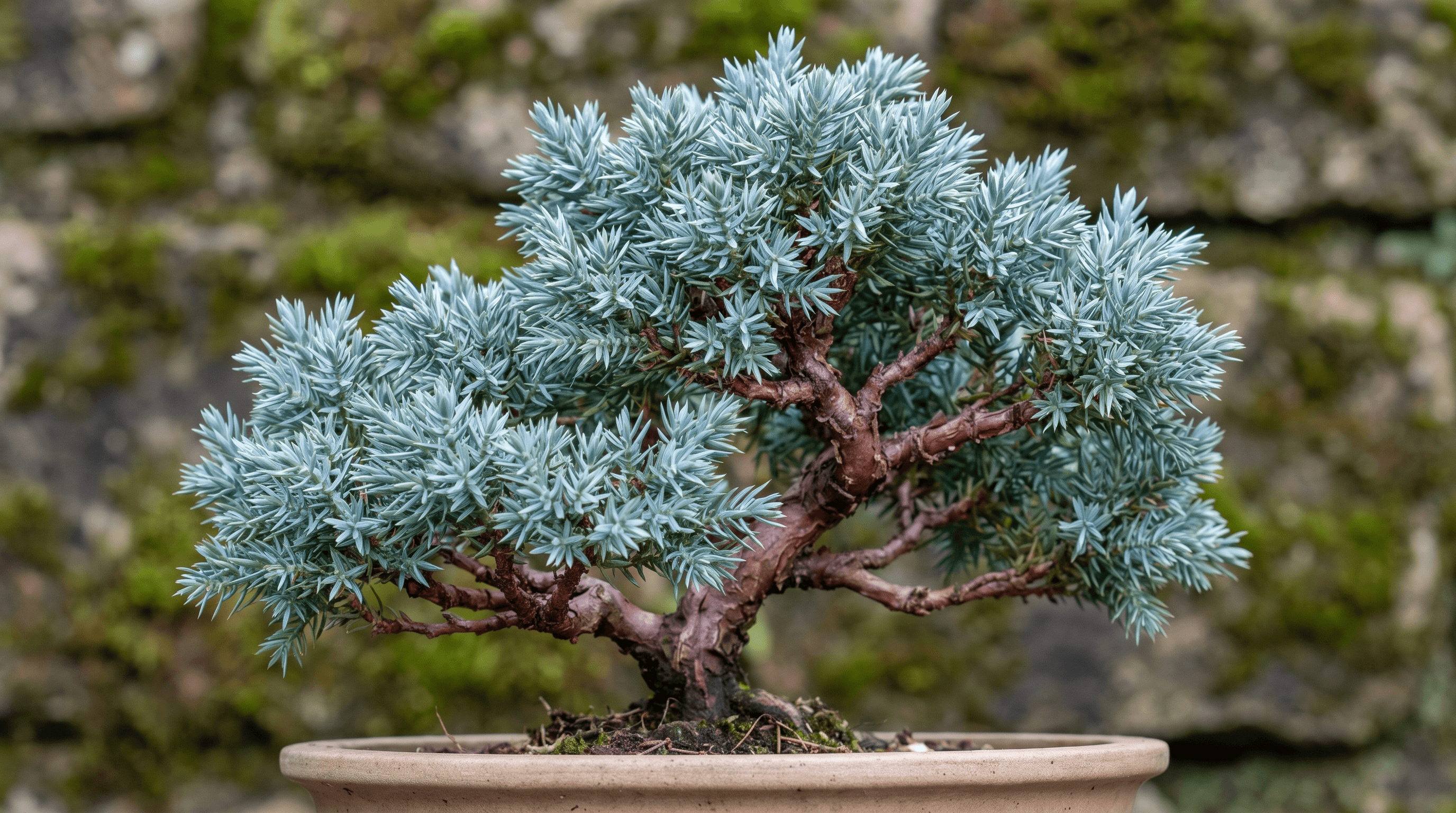
I keep a few of these around mostly because clients ask for them by sight rather than by name. Someone sees the silvery-blue needles against the darker green of everything else on the bench and wants one, and that's understandable, the colour really does stand out. What surprises people is how different Blue Star is from the junipers they've read about elsewhere. This isn't Juniperus chinensis with its scale-like adult foliage, and it isn't the kind of tree you find half-dead on a mountainside and dig up. Squamata 'Blue Star' is a cultivar, propagated from cuttings for the nursery trade, and almost every specimen you'll ever work on started life as ordinary garden centre stock rather than collected material. That's not a knock against it. It just changes how you should think about the tree from the start.
The foliage itself is the other big difference. Where chinensis carries that familiar soft, scale-like adult growth, squamata keeps sharp, awl-shaped needles its whole life, arranged in whorls along the stem, closer in character to procumbens' persistently prickly needle foliage than to chinensis' soft scale growth. They're properly prickly to handle, more like a small pine or spruce to the touch than the juniper foliage most people picture, and I've got the scratched forearms most seasons to prove it. The plant's natural habit is low and spreading rather than upright too, a mounding shrub that wants to grow wide before it grows tall. Left untrained it forms a dense, sprawling cushion, not a trunk with a crown. That habit is why it reads so well as a smaller, informal bonsai once you've found the structure hiding inside it, but it also means the classic tall juniper silhouette isn't really what this tree is built for.
Care
Light
Give it full sun for the best results. Strong light generally gives the densest growth and the best silvery blue-grey colour, which is a big part of why people grow this cultivar, though it does also tolerate partial shade reasonably well. Reduced light can produce looser, greener growth, but foliage colour can also change with season, growth stage, nutrition, and root health, so light isn't the only variable worth checking. If the blue tone is fading on a tree you thought was getting decent light, check whether something nearby, a wall, a taller plant, a roofline, has started shading it during part of the day, but don't assume light is the cause without ruling out anything else.
Watering
Water thoroughly when the top of the soil starts to dry, then let it approach that point again before the next watering rather than keeping the mix constantly damp. The needle foliage on this cultivar is dense enough that it can hide early drought stress for a little while, the outer growth still looks blue and fine even as the interior starts to dry out, so I'd rather check the soil directly with a finger than judge purely by how the foliage looks from a distance. As with other junipers, sitting in a waterlogged, poorly draining mix causes more long-term damage than the occasional dry spell, so err toward good drainage over holding extra moisture.
Temperature & hardiness
This is a properly cold-hardy conifer, rated hardy below -20°C under UK landscape conditions, and like other junipers it does best with a genuine outdoor dormancy period rather than being kept warm and static year-round. Keep it outside year-round in most temperate climates, protecting the pot itself during hard, prolonged freezes since a shallow bonsai container exposes roots to cold far more than open ground does. Grouping pots together, mulching around them, or using an unheated shelter with light all work for most winters. What doesn't work is moving it indoors to escape the cold. This is an outdoor conifer, and prolonged indoor conditions are a real way for a healthy-looking Blue Star to decline over the following year, even though the exact cause isn't always a single obvious thing.
Soil & potting
A fast-draining, mostly inorganic mix suits this tree well, something along the lines of akadama, pumice, and lava rock in roughly even parts, or whatever coarse, free-draining local equivalent you have access to. Dense or poorly drained nursery mixes can stay too wet for this species in a bonsai container, since it wants to dry between waterings. Nursery-grown Blue Star often arrives in a dense, peat-heavy mix from the grower, and moving it into proper bonsai substrate is worth doing for long-term root health, though don't expect a visible jump in vigour right away, repotting itself is a setback the tree needs to recover from first.
Fertilizing
Feed through the growing season, roughly spring into early autumn, with a balanced fertiliser, then stop as growth slows and skip feeding through winter dormancy entirely. As with most junipers, heavy nitrogen can push soft, coarse growth, so I keep feeding moderate rather than pushing hard. A diluted liquid feed every one to two weeks during active growth works well, or a monthly solid organic feed if you prefer less frequent handling.
Pruning & wiring
Let healthy shoots extend, then selectively prune overly long runners with sharp scissors, cutting back to a lateral shoot or deeper into the foliage. Avoid repeatedly pinching every tip or shearing the plant like a hedge, both weaken it and brown the foliage. Wear gloves for anything beyond light trimming, since the needle foliage is sharp enough that working through a dense specimen bare-handed gets uncomfortable fast. For structural cuts, use sharp scissors at a junction rather than snipping through individual needle tips, which browns and looks ragged. I'd be more conservative here than with chinensis when it comes to hard cutback. Squamata doesn't back-bud from bare old wood especially reliably, so plan reductions around branches that already carry live foliage rather than assuming new growth will appear from a stub. Wiring works well for introducing movement, which matters more on this species than on upright junipers, since nursery stock usually arrives as a fairly straight, multi-stemmed or bushy mound with little natural trunk line. Finding and wiring in that movement, rather than relying on the plant's natural shape, is most of the styling work. Detail wiring can be done across much of the year, while substantial bending is often better saved for autumn; avoid the hottest and coldest stretches of the year for invasive work, and check wires regularly so they don't bite into the bark as the wood thickens.
Repotting
Repot in early spring, just before the growing season starts. Every couple of years is a reasonable starting rule for a younger tree, less often as it matures and slows down, but let root density in the pot guide the actual timing rather than following the calendar alone. Work around the outer portion of the root mass rather than bare-rooting the whole thing, since junipers generally dislike aggressive root disturbance. Blue Star specimens bought as garden centre stock often come with roots that have circled tightly in a plastic nursery pot for years, so the first repot is a good moment to correct that gently rather than leaving the root structure as it was sold. Keep the tree in a sheltered, slightly shaded spot with reduced watering stress for a couple of weeks afterward before returning it to full sun.
Common problems
Blue Star can naturally take on purplish or heather-blue tones through winter, which is a normal seasonal shift rather than a sign of trouble and greens back toward blue-grey with warmer weather. Browning or bronzing foliage that stays dull through the growing season rather than greening back up usually traces to either a watering issue or a period of reduced light, and on this cultivar a fading blue colour during that time often just means the tree has been shaded more than it should be, rather than something being seriously wrong. Fine webbing or a stippled, dusty look on the needles points to spider mites, which needle-foliage junipers like this one are prone to, particularly in hot, still, dry conditions with poor airflow around the foliage. A soft or discoloured patch at the trunk base near the soil is a different problem, usually root rot from a mix that's held too much water for too long. Because so much Blue Star material comes straight from nursery pots, it's also worth checking for circled or girdling roots if a tree that otherwise looks fine just stops putting on new growth. The cause is sometimes sitting in the root ball rather than anything visible above the soil.
Styling
The tree's natural low, spreading habit is worth working with rather than against. Semi-cascade and cascade styles suit this cultivar well, since the branches already want to grow outward and downward rather than straight up, and an informal broom or low, windswept shape can also work nicely on a wider specimen. What doesn't come naturally is a tall, dramatic upright trunk line of the kind junipers are famous for, because most Blue Star material simply doesn't grow that way on its own. Nursery stock frequently arrives as a bushy, multi-stemmed mound, and part of the early styling work is deciding whether to select one dominant leader and remove competing growth, or lean into a clump or multi-trunk composition using the stems that are already there. Deadwood techniques like jin and shari are less of a defining feature here than they are on collected junipers, since this isn't typically old, weathered material, though light deadwood work can still be used on a removed branch stub for texture. The main appeal stays the foliage colour and the compact, dense silhouette a well-trained specimen can hold.
Common questions
What makes Blue Star juniper different from other juniper bonsai?
Two things mainly. The foliage is sharp, needle-like, and blue-grey rather than the soft green scale foliage typical of Juniperus chinensis, and the plant naturally grows low and spreading rather than upright. Most specimens also come from ordinary nursery propagation rather than being collected material, so the styling approach tends to be about finding structure in bushy stock rather than refining an already characterful trunk.
Why is my Blue Star juniper turning green instead of blue?
Light is the most common cause, but not the only one. Strong sun generally gives the densest growth and the best blue-grey colour, while foliage grown in shade or part shade tends toward looser, greener growth, though colour can also shift with season, growth stage, nutrition, and root health. Check whether shade from a wall, fence, or nearby plant has crept over the tree during part of the day, and rule out other causes if light genuinely looks fine.
Can I keep a Blue Star juniper indoors?
No, not long-term. Like other junipers it's an outdoor, cold-hardy conifer that needs strong light and a genuine winter dormancy period to stay healthy. Indoor conditions are far dimmer than outdoor sun even on a bright windowsill, and trees kept inside for extended periods decline slowly and usually don't recover.
Is Blue Star juniper good bonsai material for a beginner?
It's a reasonable choice if you can give it full sun and a real outdoor winter, and it's easy to find as affordable garden centre stock. The trade-off is that its low, spreading natural habit takes more work to shape into a convincing bonsai than upright junipers do, and it doesn't back-bud from bare old wood as reliably, so hard structural mistakes are less forgiving to fix.
Why won't my Blue Star juniper grow new shoots after I cut it back hard?
This species doesn't reliably push new growth from wood that's been stripped of all foliage. Reductions need to leave some existing live growth on the branch. If you've cut back to bare wood and nothing's come back after a full growing season, that branch may simply be finished rather than dormant.
Does Blue Star juniper need winter cold like other junipers?
It's an outdoor conifer that needs natural seasonal conditions and a genuine dormancy period rather than being kept warm indoors year-round. It's also a genuinely hardy cultivar, rated hardy well below -20°C in UK landscape conditions, so cold itself isn't something to worry about. Protect the pot from extreme hard freezes if needed, but don't bring the tree indoors to skip winter, since prolonged indoor conditions are a real way for this cultivar to decline over time.
General guidance based on 20+ years of practice. Every tree and every climate is different — when in doubt, ask us.