
Common Juniper Bonsai
Juniperus communis
Common juniper has the widest natural range of almost any conifer in the northern hemisphere, and that gives collected material a genuine character that's hard to buy, but I'll say this plainly up front: it's also one of the more difficult junipers to get established in a pot after collection, and I've seen good, promising trees lost in the first year or two by growers who treated it like an easy nursery cultivar.
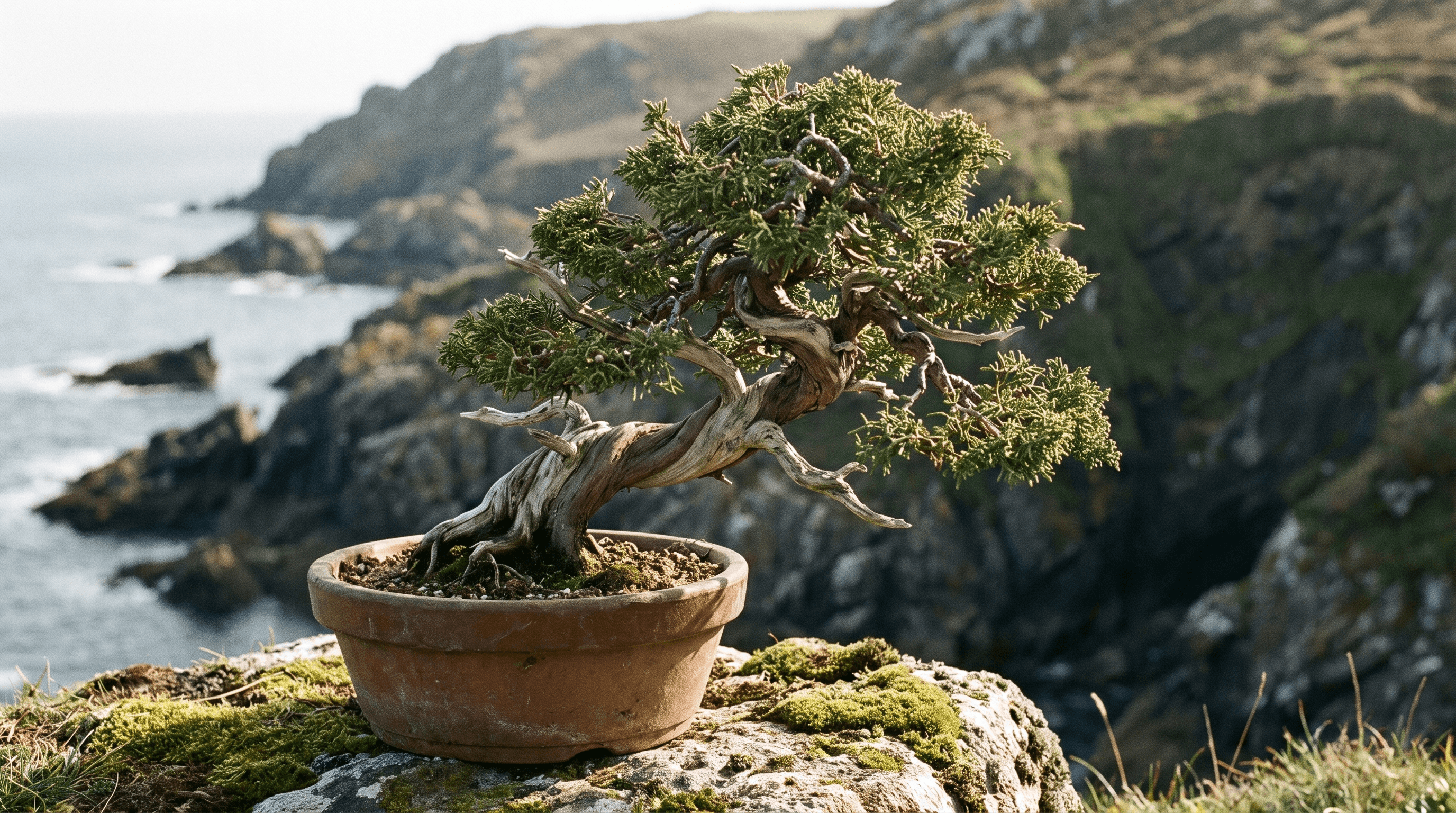
Juniperus communis grows across an enormous stretch of Europe, Asia, and North America, from lowland heath to exposed mountainside, and that range shows in how variable the species looks. Unlike Shimpaku-type Chinese junipers, common juniper is a true needle juniper and keeps sharp needle foliage throughout its life, usually arranged in whorls of three with a conspicuous white stomatal band on the upper surface. Some populations grow low and prostrate, hugging rock and scree, others form small upright trees, and the exact habit depends heavily on where a particular tree grew and under what pressure. That variability is part of the appeal for collected material specifically: a common juniper pulled from a genuinely harsh site often carries a compact, wind-shaped, weathered form that took decades to develop naturally, the kind of character that's extremely hard to build artificially on nursery stock.
The honest complication is establishment. Common juniper has a reputation among experienced collectors for being slower and less reliable to re-establish after collection than species like Chinese juniper or even Sabina, and losses are not unusual even with careful technique. Its root system and its response to the disturbance of collection just seem to be less forgiving. If you're buying a collected common juniper, ask whether it's already been established in a container for at least a season or two with confirmed strong growth, rather than taking on a fresh collection yourself unless you're prepared for real losses and a long, cautious recovery period. Nursery-propagated common juniper exists too and behaves more predictably, but it's less common in bonsai circles precisely because most of the appeal of this species lies in wild-collected character.
Care
Light
Full sun, consistent with junipers generally, and common juniper's origins on open, exposed sites mean it's well suited to strong light once established. For a tree still recovering from collection, I'd give protected but still bright light rather than full exposure for the first season, easing it into full sun gradually as new growth confirms the roots are functioning again.
Watering
Established trees follow standard juniper watering: thorough watering when the surface starts to dry, no prolonged waterlogging. The priority for a newly collected or recently potted common juniper is a root environment that combines moisture with high oxygen availability, not simply less water. Use a free-draining substrate and water thoroughly when needed, then let it drain freely; avoid persistent saturation, but don't deliberately drought a recovering tree either, since this species seems particularly prone to rot from a wet, airless mix rather than from watering itself. Watch closely for the first real flush of new growth as the signal that the roots have taken hold.
Temperature & hardiness
Common juniper is exceptionally cold-hardy, it grows further north and at higher elevations than most other juniper species used in bonsai, and it needs a genuine winter dormancy outdoors to stay healthy. That part of its care is actually easier than most junipers, given how tough the species is in the wild. The vulnerability is specifically in the establishment period after collection, when a compromised root system is more sensitive to hard freezes than it would be once fully re-established, so extra winter protection in that first year or two is worth the effort even though the species itself shrugs off cold extremely well long-term. The bigger everyday challenge in a Mediterranean or continental climate is often heat rather than cold: protect the pot from extreme root-zone heat in hot summers and consider afternoon shade while still keeping strong overall light and airflow.
Soil & potting
Fast-draining, mineral bonsai mix as with any juniper, and for a tree in the establishment phase after collection, I'd err toward a coarser, even more free-draining mix than usual, prioritising oxygen at the roots over moisture retention while the root system rebuilds. Once the tree is clearly established and growing with confidence, transition toward a more typical bonsai substrate. This species seems to punish a wet, airless mix more readily than some other junipers, so when in doubt, drain more rather than less. At the first major repot after collection, avoid completely bare-rooting the tree: some experienced European-juniper specialists deliberately retain a core of the original soil beneath the trunk while gradually transitioning the surrounding root system into bonsai substrate over successive repots, rather than stripping it all at once.
Fertilizing
Standard juniper feeding, balanced or slightly nitrogen-forward through the growing season, tapering off in autumn, applies to established trees, and established common juniper responds well to mild-to-moderate nitrogen feeding when you want vigorous growth ahead of summer pruning. Avoid pushing an obviously weak, recently collected tree with heavy fertiliser, but once it demonstrates active root and shoot growth, feeding becomes part of rebuilding vigour rather than something to withhold indefinitely.
Pruning & wiring
On established material, common juniper takes wiring and structural pruning about as well as other junipers, and its often compact, naturally weathered habit from collection can mean less major restyling is needed compared to reshaping vigorous nursery stock. As always, leave live foliage on any branch you reduce, since it won't reliably regrow from bare old wood. For recently collected trees, hold off on significant structural work, wiring included, until the tree has shown at least a full season of confident growth. Given the establishment risk with this species, I'd rather wait an extra season than push styling work on a tree that hasn't proven it's stable yet.
Repotting
This is the area to be most careful with. Many growers leave a freshly collected common juniper undisturbed in its post-collection container for two to three seasons or longer, given how sensitive this species can be to repeated root disturbance during establishment. Vigorous, repeated extension and a genuinely well-established root mass, not the calendar alone, should decide when it's ready for the next repot. Once it's clearly established with strong, consistent growth, it moves to a more typical schedule, roughly every two years for younger training-stage trees, less often as it matures. Always repot in early spring, work gently rather than aggressively around the root mass, and give the tree a sheltered recovery period afterward.
Common problems
The biggest single risk with common juniper is losing a recently collected tree during establishment, and it's worth being honest that this happens even to careful, experienced growers with this particular species more than with easier junipers. Signs to watch for are more about absence than presence: no new growth at all through a full growing season is a serious warning sign, worth checking against green, pliable cambium under the bark rather than assuming from foliage colour, since these trees can hold stored reserves and look deceptively stable for a long time before declining. On established trees, the usual juniper issues apply: browning from watering inconsistency, spider mites in hot dry conditions, root rot from poor drainage. Because of the establishment risk specific to this species, I'd resist the urge to intervene, repot, or heavily prune a recently collected tree out of impatience; more common junipers are lost to well-meaning overwork during the recovery period than to neglect.
Styling
Much of common juniper's fame in European bonsai comes from old collected material, whose natural movement and weathering are impossible to reproduce quickly, compact, weathered, wind-shaped forms from harsh growing sites that would take a lifetime to replicate on nursery stock. Nursery-grown common juniper can still make excellent bonsai and is a far more appropriate starting point for growers who want to learn the species without the risk, and the ethical and legal considerations, of collecting yamadori themselves. Informal upright, windswept, and semi-cascade forms suit the naturally irregular, exposure-shaped habit well, and I'd generally work with the tree's existing lines rather than imposing a different structure on it. Deadwood is often present naturally on collected specimens and, as with other collected junipers, is usually worth preserving rather than heavily recarving. Given how variable this species is across its huge natural range, from prostrate mat-forming growth to small upright trees, the right style really depends on what the individual tree's natural growth pattern was doing before collection, more than on a single template that fits the species as a whole.
Common questions
Why is common juniper harder to establish after collection than other junipers?
It's a known pattern among collectors rather than something unique to any one grower's technique, common juniper seems to be genuinely less forgiving of root disturbance during collection than species like Chinese juniper. The safest approach is patience: minimal disturbance at collection, a coarse free-draining mix, watering that keeps the root zone moist and well-oxygenated rather than deliberately dry, avoiding heavy fertiliser until the tree shows active growth, and no repotting again until vigorous, sustained growth over two to three seasons or longer shows the root system is genuinely established.
Is common juniper usually collected or nursery-grown for bonsai?
Most of the material valued in bonsai is wild-collected, since that's where the compact, weathered character that makes the species desirable comes from. Nursery-propagated common juniper exists and is more predictable to grow, but it's less commonly used in bonsai because it lacks the naturally aged appearance collectors are usually after.
How long should I wait before repotting a collected common juniper?
Longer than you might with other species, often two to three seasons or more after initial collection, given how sensitive common juniper can be to repeated root disturbance while it's still establishing. Let vigorous, sustained growth rather than the calendar be the real signal, and don't repot again until the tree has shown that strong, consistent growth over at least a full season.
Is common juniper cold-hardy?
Extremely, it has one of the widest natural ranges of any juniper and grows in some genuinely harsh, cold environments in the wild. Established trees handle real winter cold very well. The caution is specifically for trees still recovering from collection, where extra winter shelter in the first year or two protects a compromised root system, not the tree's general cold tolerance. In practice, summer heat is often the bigger everyday challenge for this species in a hot Mediterranean or continental climate: protect the root zone from extreme heat and give it afternoon shade if summers run hot and dry, while keeping strong overall light.
My newly collected common juniper hasn't grown in months, is it dead?
Not necessarily, but this is a genuine risk area for this species specifically, so don't ignore it either. Check for green, pliable cambium under the bark on smaller branches rather than judging by foliage colour alone. If the tree shows no growth at all through a full growing season, the odds are less favourable than with an easier juniper species, but wait for a complete season before concluding it's lost.
Why do common juniper bonsai look so different from each other?
The species has an unusually wide natural range and grows in very different forms depending on local conditions, from low, prostrate, mat-forming growth on exposed sites to small upright trees elsewhere. Collected material reflects whatever form the individual tree took in the wild, which is part of why no two common juniper bonsai tend to look alike.
General guidance based on 20+ years of practice. Every tree and every climate is different — when in doubt, ask us.