
Winter Watering: How Much Is Too Little
Cutting back on winter watering is the right instinct, but there's a point where less becomes a slow way to lose a tree that would otherwise have sailed through the cold.
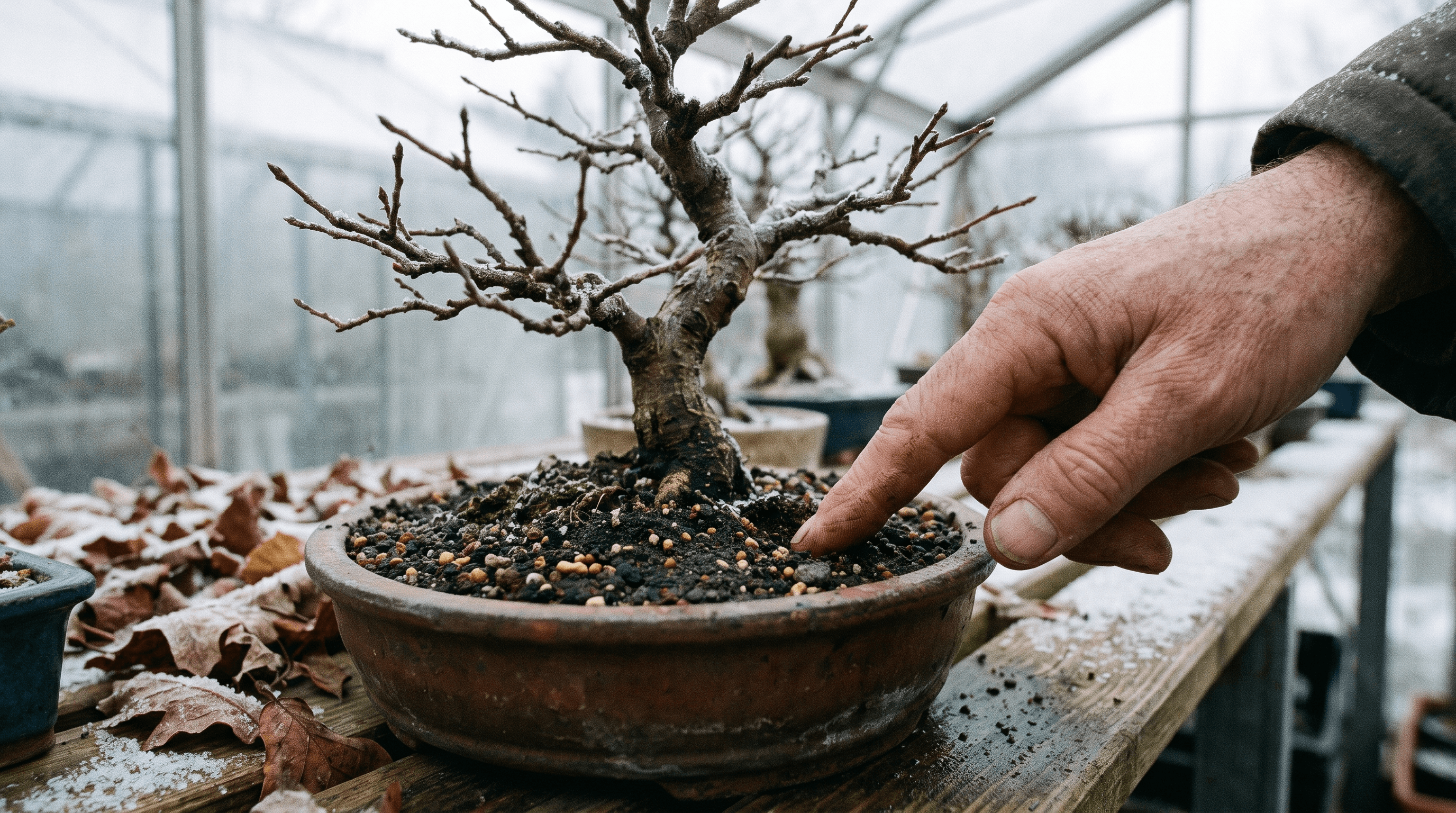
Every autumn I watch the same pattern play out in my own nursery. People spend the growing season checking their trees daily, sometimes twice a day in a hot July, and then the first cold snap hits and the watering can gets put away almost entirely. I understand the logic. A dormant tree isn't pushing new leaves, it isn't losing water through active transpiration the way it was in June, so it makes sense that it needs less. The problem is when 'less' turns into 'barely at all', and a rootball goes bone dry for two or three weeks without anyone noticing.
Dormancy slows a tree down, it doesn't switch it off. Roots are still living tissue sitting in a pot, and living tissue needs some moisture around it even when nothing visible is happening above the soil line. I've pulled trees out of storage in February with a rootball so dry it had pulled away from the sides of the pot, and by then the fine roots that would have kept that tree alive through spring were already gone.
This one isn't about a fixed schedule, because there isn't one that works for every species, pot, and location. It's about understanding what changes in winter, how to check without disturbing a resting tree too much, and where the real danger point sits.
What changes when a tree goes dormant
A deciduous tree drops its leaves and stops the bulk of its water loss through them, which is the biggest single change. But roots keep respiring, at a much slower rate, and they still draw a small amount of moisture from the substrate to stay hydrated. Evergreens are a different story again. A juniper or pine still has foliage sitting in the wind all winter, and needles do lose some moisture even in cold weather, especially on a sunny, dry day with wind. That's part of why conifers left completely dry in winter can suffer worse than people expect, the foliage is still asking for something the roots can't supply.
Checking without fussing
I don't water on a fixed interval in winter, I check on one. Once a week is a reasonable rhythm for most trees in most sheltered winter storage, more often if the tree is exposed to wind or sits in a small pot. A wooden chopstick pushed a couple of centimeters into the substrate tells you more than looking at the surface, which can look dry while everything underneath is still damp. Lifting the pot is another old trick that works better than people expect, a genuinely dry rootball in a terracotta or plastic pot is noticeably lighter than a moist one once you've handled enough of them to know the difference.
Why bone dry is worse than people assume in dormancy
The real danger isn't that the tree needs a lot of water in winter, it's that fine roots die back quickly once a rootball goes completely dry for an extended stretch, and those are exactly the roots the tree relies on to restart growth in spring. Substrate with a fair amount of organic matter in it, bark, peat, compost, can turn hydrophobic once it's been allowed to dry out fully, meaning water starts running straight through instead of soaking in properly. The mineral aggregate mixes common in bonsai substrate, akadama, pumice, lava, tend to rewet more evenly than that, though aged or broken-down akadama can show a milder version of the same problem. Either way, a badly dried rootball rarely rehydrates properly from watering generously over the top alone. I've seen trees look fine into March and then fail to push growth at all, and the cause traced back to a dry spell in January that nobody caught in time.
Pot, substrate, and shelter change the timeline
A small pot dries faster than a large one no matter the season, and that gap doesn't disappear in winter, it just gets stretched out over a longer period. Free draining substrate that's ideal for preventing root rot in summer also dries faster in winter storage, so a tree in a fast draining mix under cover might need checking more often than one sitting in denser soil outdoors catching occasional rain. Position matters just as much. A pot tucked against a wall out of the wind holds moisture far longer than one standing exposed on an open bench, and I adjust my checking frequency tree by tree based on where each one sits, not on a blanket rule for the whole collection.
Signs you've gone too far the other way
Bark that's started to shrivel or pull slightly at the base of the trunk is an early warning on many species. On evergreens, foliage that's gone matte or slightly grey rather than holding its usual color is worth investigating with a chopstick check straight away. If you do find a rootball that's dried out badly, resist the urge to flood it. A slow, thorough soak, ideally by standing the pot in a shallow tray of water for twenty minutes or so, rehydrates a dry substrate far more evenly than pouring water over the top, which tends to just channel through the same dry cracks it created on the way down.
Common questions
How often should I water bonsai in winter?
There's no single number that fits every tree, but checking weekly is a reasonable starting rhythm for most sheltered winter storage. Trees exposed to wind, sitting in small pots, or in fast draining substrate often need checking more often than that, so treat it as a baseline you adjust per tree rather than a fixed rule.
Do evergreens need more winter water than deciduous trees?
Often yes, since they still carry foliage that loses some moisture through the winter, unlike a bare deciduous tree that has shut down the bulk of its water loss by dropping leaves. I keep a slightly closer eye on my junipers and pines through winter than on trees that are fully bare.
What if my bonsai is stored in an unheated garage or shed?
Enclosed storage tends to hold moisture longer than open air because there's less wind pulling it out of the substrate, so watering needs usually drop further. Still check regularly though, since some unheated spaces run surprisingly dry, especially if there's any airflow through vents or gaps.
Does rain or snow falling on outdoor bonsai count as watering?
It can help, but don't assume it's enough on its own. A pot sheltered under an overhang or against a wall might get very little of that rain or snow directly, and even trees fully exposed can end up with a frozen soil surface that sheds water rather than absorbing it. Check the actual rootball rather than trusting the weather.
How do I tell if I've underwatered versus overwatered in winter?
A dry rootball feels light when you lift the pot and a chopstick pushed into the substrate comes out clean and dry. Overwatered soil in cold weather tends to stay soggy for a long time and can smell sour or stale if root rot has started. When in doubt, check with a chopstick before adding more water either way.
Should I avoid watering when a hard frost is expected?
I try not to water heavily right before a deep freeze, since saturated substrate that then freezes solid can be harder on roots than moderately moist soil. That said, a tree that's genuinely dry shouldn't be left that way just because frost is coming, a light watering earlier in the day, giving it time to drain before temperatures drop, is usually the better compromise.
My deciduous bonsai has no leaves at all, does it still need water?
Yes. A bare tree has stopped the majority of its water loss but the roots are still alive and still need some moisture around them. Bare branches can be deceiving, plenty of trees that look completely shut down are still very much alive underneath and depending on that rootball staying usably moist.
Can a bonsai recover in spring after going too dry in winter?
Sometimes, if the damage was caught early and the dry period was short. But extended dryness that kills off a significant amount of fine root mass often shows up as delayed or weak growth in spring, and in worse cases the tree fails to push at all. It's much easier to prevent this with regular checks than to fix it after the fact.
También te puede gustar
General guidance based on 20+ years of practice. Every tree, climate, and year is different — when in doubt, ask us.