
Checking on Dormant Bonsai Through Winter
A dormant bonsai doesn't need daily attention, but it does need someone to actually look at it every week or so, and there's a real difference between those two things.
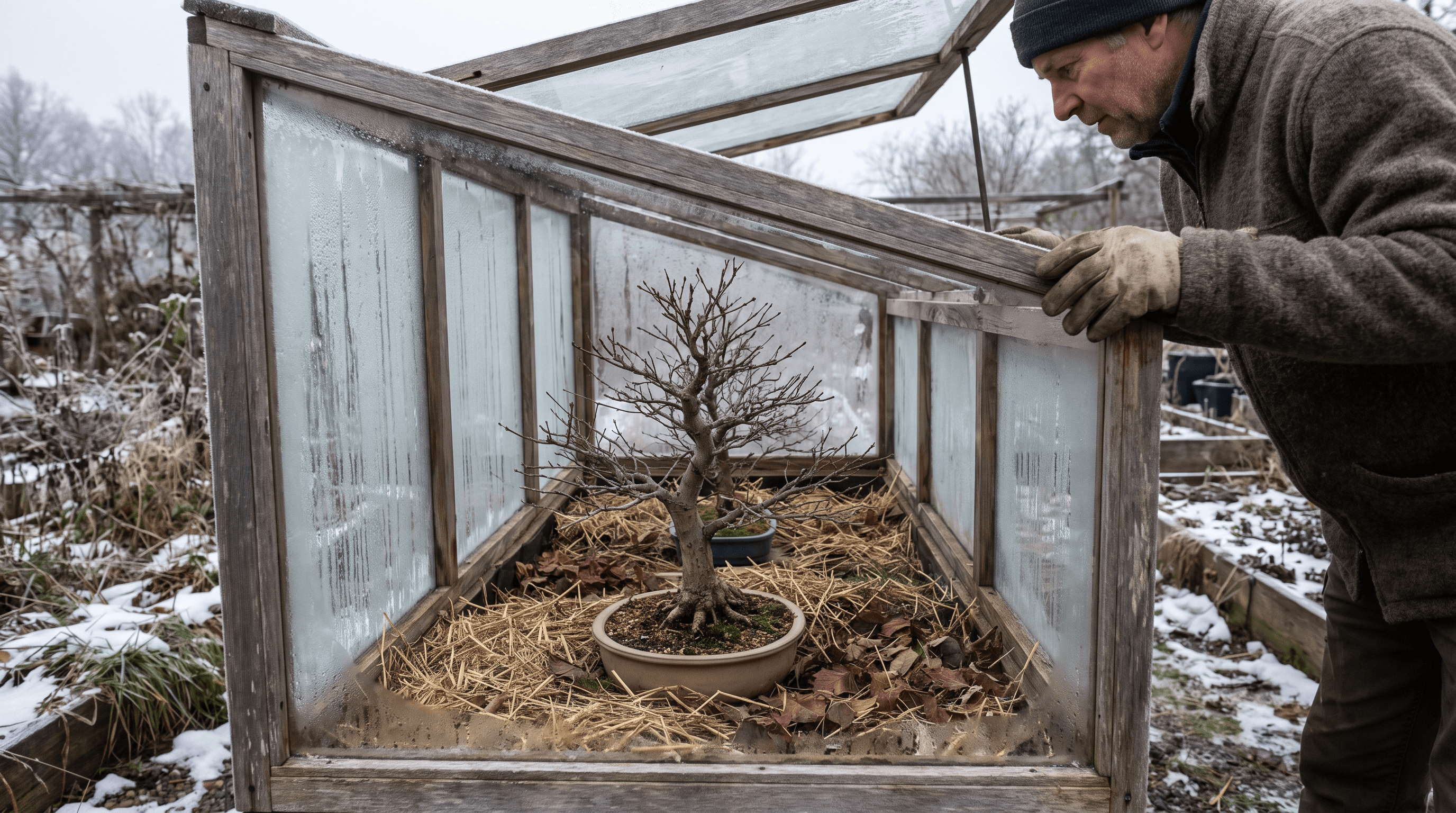
I see growers swing to two extremes with winter checks. Some fuss over their trees constantly, moving them, poking at the soil, worrying over every small change, which does more harm than good on a tree that's supposed to be resting quietly. Others go the opposite direction and more or less forget about the collection until spring, treating dormancy as a season where nothing needs doing at all.
Neither is right. In my own practice, a weekly check, sometimes closer to every ten days if conditions have been stable and nothing looked off the last time through, gives me enough information to catch a real problem early without disturbing a tree that's trying to sit still through the cold months. The trick isn't frequency for its own sake, it's knowing what you're actually looking for when you do check, because a quick glance that doesn't examine the right things isn't much better than not checking at all.
In my experience this matters more for trees in enclosed winter storage, a cold frame, garage, or shed, than for ones sitting outside in the open, since problems can develop unnoticed in a closed space in a way they generally don't when a tree's out in plain view every time you walk past it. Exact routines vary by species, climate, and storage type, so treat this as a starting framework to adapt rather than a fixed schedule for every collection.
Soil moisture is the first thing to check
This is the one people actually remember to do, but it's worth doing properly rather than glancing at the surface. A chopstick pushed a short way into the substrate, or simply lifting the pot to gauge its weight, tells you far more than looking at how dark or light the top layer appears, which can be misleading in either direction. I'm checking for a rootball that's gone completely dry, not aiming for constantly moist soil, dormant trees genuinely need less water than active ones, but bone dry for an extended stretch is still a real risk worth catching early.
Look for early signs of rot
In my experience, rot in winter tends to start quietly, at the base of the trunk, in a low crotch where water can collect, or anywhere foliage or moss is staying constantly damp against bark or wood, so that's where I look first. A slightly soft patch of bark, a discoloration that wasn't there before, or a persistent damp smell are all worth investigating rather than dismissing. Rot generally spreads more slowly in cold conditions than it can in summer heat, which is an advantage, it gives you a real window to catch and address a small problem before it becomes a branch or trunk you can't save.
Ventilation in enclosed storage needs attention too
A garage, shed, or cold frame that's sealed too tightly traps humidity, and stagnant damp air sitting around dormant trees is one of the more common causes of the mold and rot problems that show up in enclosed winter storage. I crack a vent or door on milder days specifically to let air move through, even briefly, rather than leaving the space closed up for the entire season, though how far I open it and for how long still depends on how cold it actually is outside and which species are in there. It's a small habit but it changes the whole environment inside that space more than people expect from something so simple.
Pest activity doesn't fully stop in cool storage
Some pests, scale being an example I keep an eye out for, can occasionally persist at low levels even in cool, sheltered conditions, and an enclosed space without the natural predators or weather events that would normally keep populations in check outdoors can let a small pest problem build quietly over the winter months. I look along branches and in bark crevices during these checks, not expecting to find much most weeks, but catching an early infestation in January is a far easier fix than discovering a heavily infested tree in March when everything else is waking up and competing for attention at the same time.
Keep the checks brief and consistent
The goal of a winter check isn't a thorough inspection every single time, it's a quick, consistent look that catches problems while they're still small. I go through my collection roughly once a week, sometimes stretching to ten days if the weather's been stable and nothing seemed off the last time through, spending maybe a minute or two per tree unless something catches my attention. That rhythm has caught more small problems early than any more elaborate system I've tried, mostly because it's simple enough that I actually stick with it through the least exciting stretch of the bonsai calendar.
Common questions
How often should I check on dormant bonsai in winter?
Roughly once a week is a good default in my own practice, stretching to around ten days if conditions have been stable and nothing looked off at the last check, though the right interval varies by species, climate, and storage setup. Daily fussing isn't necessary and can actually disturb a tree that's trying to sit still through its rest period.
What exactly should I look for during a winter check?
Soil moisture, checked with a chopstick or by the weight of the pot rather than just the look of the surface, any early signs of rot at the base or in low crotches, general ventilation if the tree is in enclosed storage, and a quick look along branches for pest activity.
How do I check soil moisture without disturbing a dormant tree too much?
A wooden chopstick pushed a short way into the substrate and pulled back out gives a good read without any real disturbance. Lifting the pot to feel its weight is another quick, non-invasive way to judge moisture, since a genuinely dry rootball is noticeably lighter than a moist one.
What are the early signs of rot to watch for in winter?
A softening patch of bark, unusual discoloration, or a persistent damp smell, often starting at the base of the trunk or in a low crotch where moisture tends to collect and sit against the wood. Cold weather slows the spread compared to summer, which gives you a real window to catch it early.
Do I need to ventilate a shed or garage where I store bonsai in winter?
Yes, sealed enclosed storage traps humidity, and stagnant damp air is a common contributor to mold and rot problems over winter. Cracking a vent or door on milder days lets air move through and noticeably improves the storage environment, though how much and how often depends on how cold it actually gets and which species you're storing.
Can pests still be active on bonsai during winter storage?
Yes, some pests, scale being one example, can occasionally persist at low levels even in cool conditions, and an enclosed space without normal outdoor predators or weather can let a small infestation build unnoticed. Checking branches and bark crevices during regular winter checks catches this while it's still manageable.
Is it bad to disturb a dormant bonsai too often during winter checks?
Frequent handling and moving isn't ideal, since the tree is trying to rest, but a brief, gentle check once a week doesn't meaningfully disturb dormancy. The problems come from excessive fussing, repositioning, or poking at the tree far more than the amount needed to actually assess its condition.
También te puede gustar
General guidance based on 20+ years of practice. Every tree, climate, and year is different — when in doubt, ask us.