
Insulating Bonsai Pots for Winter
Roots in a pot experience cold very differently than roots in open ground, and a bit of insulation around that pot does more for a borderline hardy tree than most people expect from something so simple.
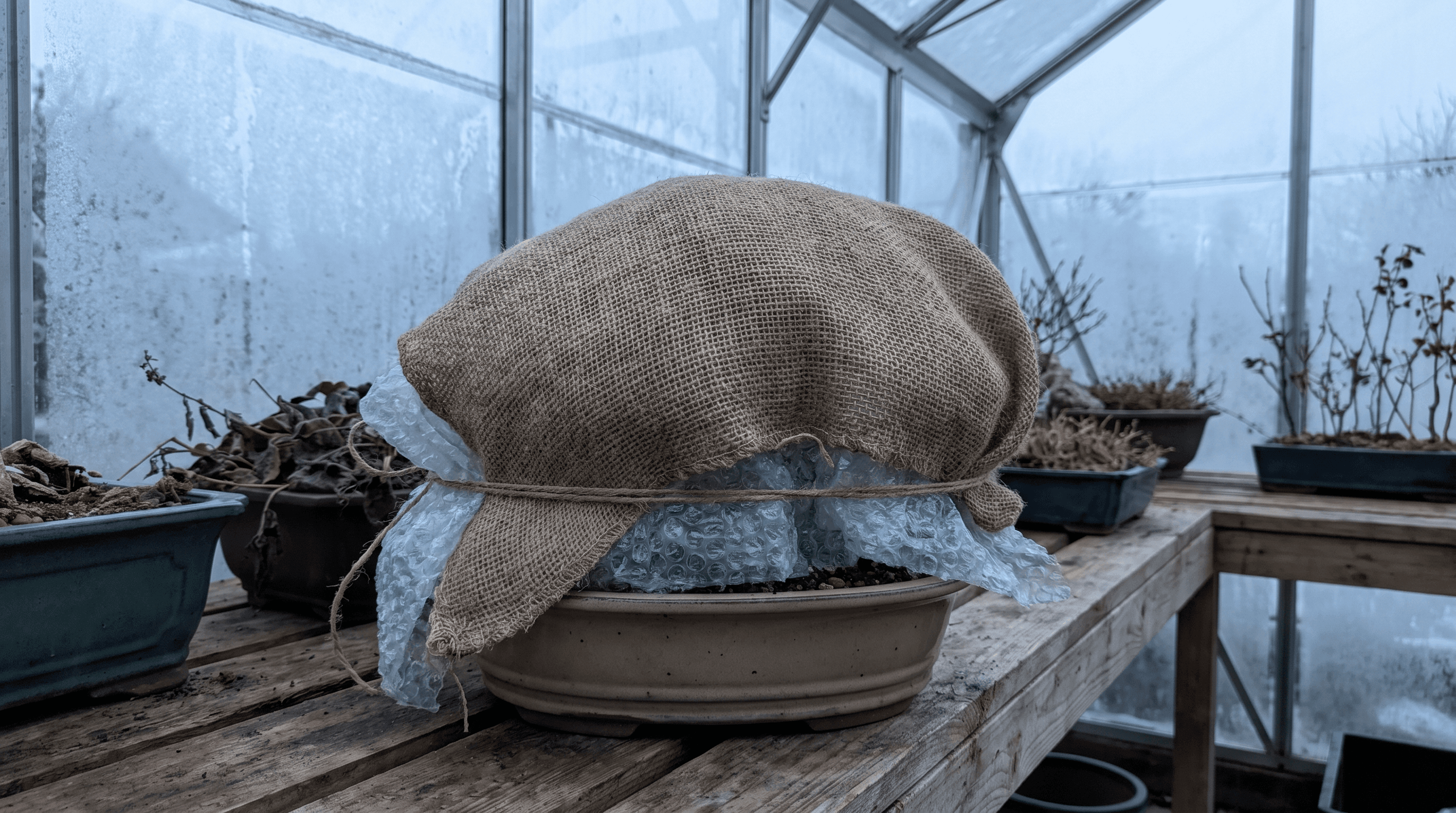
A tree growing in the ground has soil all around its roots acting as a natural buffer, holding heat and moderating how fast temperature actually swings down at root level even during a hard freeze. A bonsai in a pot has none of that. The rootball is exposed on every side, often in a container, thin glazed ceramic in particular, that does little to buffer outside conditions, and the temperature at the roots can track closer to the outside air temperature than most growers assume.
This matters most for species that are borderline hardy for your climate, ones that would probably survive fine in open ground but sit right at the edge of what their roots can handle in an exposed pot. For genuinely hardy species well matched to your winters, this is less critical, though it rarely hurts. For anything marginal, insulation can be the difference between a tree that comes through winter clean and one that takes real root damage from a cold snap that wouldn't have touched it in the ground.
None of the methods I actually use are complicated or expensive. I start applying them once trees have gone properly dormant, generally after the first real frost, rather than insulating too early and blunting the cold exposure hardy species still need. They're mostly about reducing how much temperature swing the rootball experiences, and a few simple approaches cover most situations well.
Why pot insulation matters more than people think
Roots are generally less cold hardy than the above ground parts of the same tree, since in nature they're rarely exposed to air temperature the way branches and bark are. A pot removes that natural buffer entirely, and a thin walled or dark colored pot can track outside temperature swings quite closely, heating up fast in winter sun and dropping fast again after dark. For a borderline hardy species, that swing at the roots can matter more than the coldest single number on a weather forecast, since in my experience it's often the repeated freeze and partial thaw cycling, not one cold night, that does the most damage over a winter.
Wrapping pots is the simplest starting point
Wrapping the sides of a pot in bubble wrap, burlap, or a similar insulating material traps a layer of still air against the container walls, cutting down how quickly cold penetrates to the rootball inside. I leave the top of the substrate uncovered so I can still check moisture easily, and I make sure whatever I'm using doesn't hold water against the pot itself, since a permanently damp wrap defeats some of the purpose and can encourage its own problems. This is quick to apply and just as quick to remove once the real cold has passed, which makes it my default for trees that only need this kind of protection for a few of the coldest weeks.
Burying pots partially in mulch or soil
For trees that will sit in one spot for the whole winter, partially burying the pot in mulch, bark chips, or even garden soil gets you closer to the buffering effect roots would get in open ground. I dig a shallow trench or use a low mulch bed and set pots into it up to somewhere around the rim, packing material around the sides. This is more effective than wrapping alone for genuinely borderline hardy species, since it insulates from below and around rather than just around the sides, but it does mean the tree needs to stay put for the duration rather than being moved around through the season.
Grouping pots together compounds the effect
Pots clustered close together lose heat more slowly as a group than the same pots spread out individually, since neighboring pots shield each other from direct exposure and cutting wind on multiple sides. I combine this with wrapping or mulching rather than relying on it alone, but even by itself, grouping is a genuinely useful and completely free way to reduce the temperature swing a collection experiences, and it's often the first thing I do before deciding whether any individual tree needs more targeted protection on top of that.
Matching the method to how borderline the tree actually is
I don't insulate everything the same amount, since a genuinely hardy species suited to my climate doesn't need the same treatment as something sitting right at the edge of what it can tolerate here. For hardy trees, grouping pots together is often enough on its own. For borderline species, I'll wrap or partially bury the pot, sometimes both together during the coldest stretch of the season. Matching the effort to the actual risk keeps the work manageable across a full collection instead of treating every single pot like it needs maximum protection, which usually isn't necessary and can occasionally cause its own problems if it traps too much moisture against a tree that didn't need the extra insulation in the first place. Genuinely tender or frost-sensitive species are a separate case: pot insulation alone usually isn't enough for them, and they're better off in a cold frame, unheated shed, or similarly sheltered space for the winter rather than relying on wrapping or burying to get them through.
Common questions
Why do bonsai pots need extra insulation in winter?
Roots in a pot lack the natural buffering effect that open ground provides, so the rootball can track outside air temperature more closely than most growers expect. Roots are also generally less cold tolerant than the above ground parts of the same tree, which makes this exposure more significant than it might seem.
What's the easiest way to insulate a bonsai pot?
Wrapping the sides in bubble wrap or burlap is the simplest option, trapping a layer of still air against the pot walls. Leave the substrate surface uncovered so you can still check moisture, and make sure the material doesn't stay permanently damp against the pot.
Should I bury my bonsai pot for winter?
Partially burying the pot in mulch or soil, up to around the rim, gets closer to the insulation roots would naturally have in open ground and works well for borderline hardy species that will stay in one spot for the winter. It's more effective than wrapping alone but requires the tree to stay put rather than being moved during the season.
Does grouping bonsai pots together help with cold protection?
Yes, pots clustered together lose heat more slowly as a group than spread out individually, since neighboring pots shield each other from direct exposure. It's a free, simple step worth doing regardless of what other insulation methods you're also using.
Do all bonsai species need pot insulation in winter?
No, genuinely hardy species well suited to your climate often do fine with minimal extra protection, sometimes just grouping pots together. It's borderline hardy species, sitting right at the edge of what their roots can tolerate in an exposed pot, that benefit most from wrapping or burying.
Can insulating a bonsai pot too much cause problems?
It can, mainly if the insulating material traps too much moisture against the pot or substrate for a tree that didn't need that much protection in the first place. Matching the method to how borderline the species actually is for your climate avoids over-insulating trees that would have been fine with much less.
What material is best for wrapping bonsai pots?
Bubble wrap, burlap, and similar breathable insulating materials all work reasonably well, the main goal is trapping a layer of still air against the container walls. Avoid anything that holds water against the pot for extended periods, since that can create its own dampness related problems.
También te puede gustar
General guidance based on 20+ years of practice. Every tree, climate, and year is different — when in doubt, ask us.