
Bonsai Frost Damage: Prevention and Recovery
Most frost damage I see traces back to one of two mistakes, protecting a tree that never needed it and exposing one that did, so the fix starts with knowing which is which.
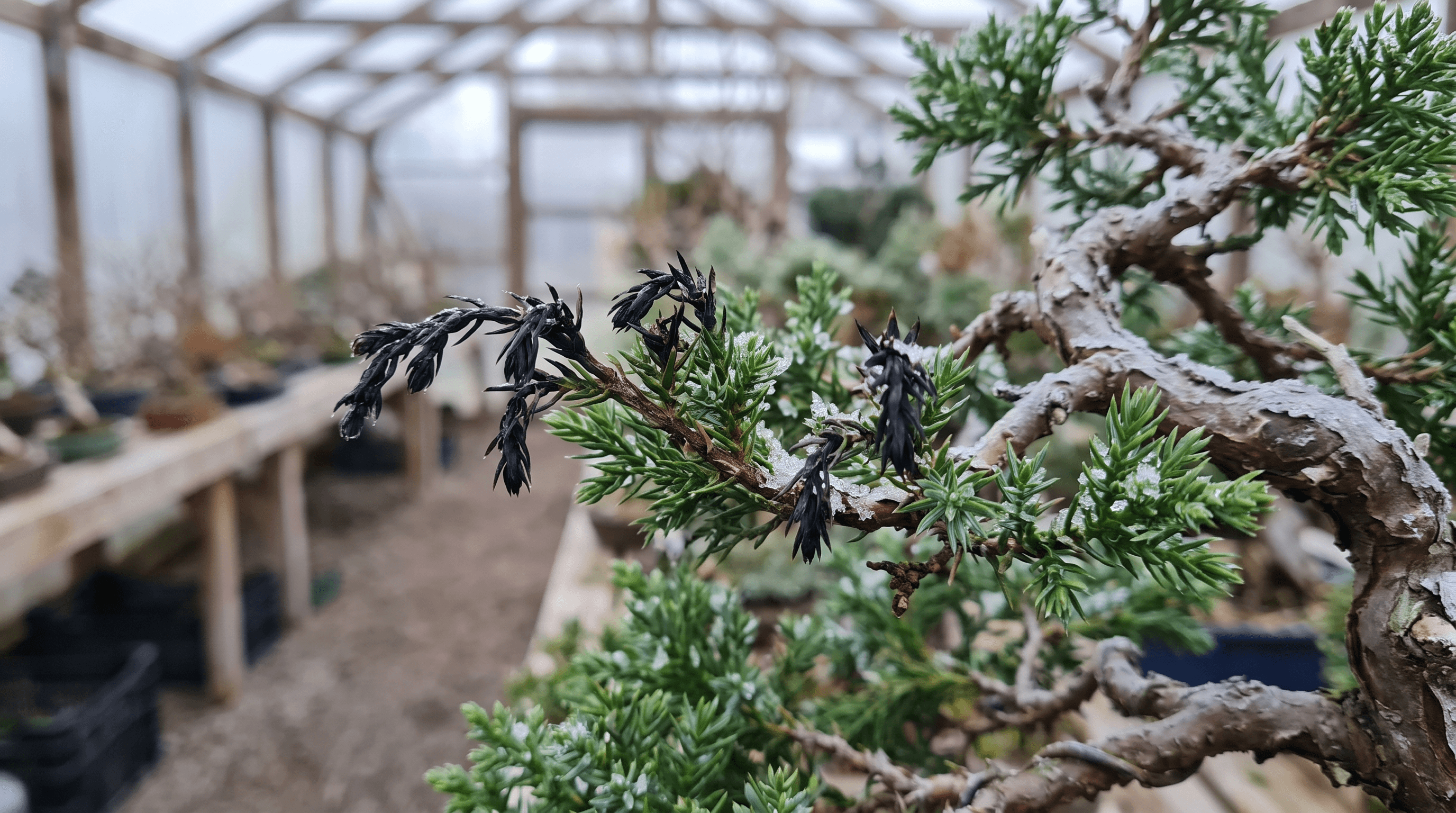
Frost gets talked about like it's uniformly dangerous to every bonsai, and it isn't. A hardy field maple or a mountain pine has evolved to handle a proper freeze, and wrapping it up like it's tender is often more about the grower's nerves than the tree's actual needs. On the other end, a tree that's genuinely borderline for your climate, or one that's been growing somewhere sheltered and hasn't hardened off properly, can take real damage from a frost that a tougher species next to it shrugs off completely.
The other thing I've learned over the years is that frost damage rarely looks as bad in December as it turns out to be by April, and it rarely looks as good either. What you see right after a hard freeze, blackened tips, drooping foliage, is often only part of the story, and cutting back on that first impression is one of the most common ways people remove wood that would have recovered on its own.
So this is really two separate skills. Matching your protection to what each species actually needs before the cold arrives, and then having the patience to let a damaged tree show you the real extent of the harm before you reach for the pruning shears.
Match protection to the species, not to how cold it feels
The instinct to protect everything the moment temperatures drop is understandable, but it's not always helpful. Hardy, temperate species need a real winter dormancy to stay healthy, and that generally means cool outdoor conditions rather than a heated room, since excessive warmth or indoor shelter can break dormancy and push out tender new growth that's then vulnerable to the next freeze. The species that genuinely need direct protection are the borderline hardy ones for your climate, or trees whose roots are more exposed to cold than they'd be in the ground, since a pot offers far less insulation around the root system than open soil does. Practical protection for those trees is usually simple: keep the pot off bare ground on a bench or against a wall, mulch or sink the pot to buffer the roots, or move it into a cold frame or unheated shelter rather than a warm room. I sort my collection each autumn by actual cold tolerance, not by instinct, and it changes which trees get moved under cover.
Sudden exposure does more harm than steady cold
A tree that's spent weeks gradually acclimating to dropping autumn temperatures handles a hard frost very differently than one that's been kept artificially warm and then suddenly exposed. This is where I see avoidable damage happen most often, someone brings a tree indoors on a whim during a warm stretch, then puts it back outside right as a cold front rolls in, and the abrupt swing catches the tree without any chance to adjust. Gradual exposure through autumn does more to prepare a tree for winter frost than any amount of protective wrapping applied after the fact.
What frost actually damages
Ice forming inside plant cells is generally what causes the real harm, rupturing cell walls as water expands, and this tends to hit the most exposed, least hardened tissue hardest, new growth, thin bark, and root tips in a pot that isn't insulated. Established, hardened wood on a species suited to your climate can tolerate genuine freezing temperatures with little of this kind of cellular damage, which is part of why the same frost that kills tender new shoots on one tree leaves an older, tougher branch on the same tree largely unaffected.
Don't rush to cut back what looks dead
This is the part I have to talk people down from every single winter. Foliage that's gone brown or black after a frost, or bark that looks shriveled, feels like it needs to be removed immediately, but plenty of that tissue is still viable underneath, and the tree simply hasn't shown its hand yet. For anything short of obviously broken or clearly dead wood, I wait until real spring growth starts before making cuts related to suspected frost damage, because that's when you can actually see which branches are pushing new buds and which genuinely aren't. Cutting in midwinter based on how things look in the moment has cost me wood I later realized was still alive, and I've made that mistake enough times to trust patience over instinct now, though I'll still remove anything that's obviously split, snapped, or rotting straight away.
How recovery actually plays out
Once spring growth starts, the picture becomes much clearer within a few weeks. Branches that were genuinely killed by frost stay bare while everything around them buds out, and at that point removing the dead wood is straightforward and low risk. Branches that looked bad in January but were only superficially affected often push growth right along with the rest of the tree, sometimes from points on the branch that looked completely lifeless during winter. Trees can also surprise you by resprouting from lower down the trunk or from the base even when the upper structure genuinely didn't make it, which is why I hold off on any drastic decisions, including replacing the tree entirely, until well into the growing season.
Common questions
Do all bonsai need frost protection in winter?
No. Hardy species suited to your climate often do better with real cold exposure as part of their natural dormancy cycle, and protecting them excessively can leave them less prepared for future cold rather than more. Protection is really for borderline hardy species and for root systems, which are more exposed to cold in a pot than they would be in open ground.
How can I tell if my bonsai has frost damage?
Blackened or shriveled foliage and shrunken, discolored bark are the visible signs right after a hard frost, but the full extent often isn't clear until spring growth starts. Waiting for that growth to appear, or not appear, on specific branches is the most reliable way to know what was actually affected.
Should I cut off frost damaged branches right away?
I'd hold off on anything ambiguous. Tissue that looks dead in midwinter is often still viable, and cutting based on appearance alone risks removing wood that would have recovered. Wait for spring growth to show you which branches are genuinely not responding before making structural cuts, though obviously broken, split, or rotting wood can be removed right away.
Why did one branch get frost damage while the rest of the tree looks fine?
Exposure varies even across a single tree. A branch facing into prevailing wind, sitting lower where cold air settles, or carrying younger, less hardened growth can take damage while more sheltered or more mature parts of the same tree come through unaffected.
Is it normal for a bonsai to look worse after a frost than it actually is?
Very much so. The immediate aftermath of a hard freeze often looks alarming, with foliage drooping or discoloring within a day or two, but a meaningful amount of that tissue can still be alive. This is exactly why patience through to spring matters more than an immediate reaction.
Can a bonsai recover if it looks completely dead after frost?
Sometimes, yes. Trees can resprout from points that looked lifeless, including low on the trunk or near the base, even when the upper structure genuinely didn't survive. I don't write off a tree until well into the growing season, since giving up too early is one of the more common regrets I hear about.
What's the difference between frost damage and normal winter dieback?
Normal dieback tends to affect the same weak, thin, or shaded twigs a tree would likely have shed anyway, while frost damage from an unusual cold event can hit otherwise healthy, well positioned growth that had no other reason to fail. Both need the same patience though, waiting for spring to confirm what's actually gone.
Does mulching or wrapping the pot help prevent frost damage?
It can help meaningfully, particularly for borderline hardy species, because it reduces the temperature swing the root system experiences compared to a bare pot sitting in open cold air. Roots are generally less cold tolerant than the above ground parts of the same tree, so this kind of protection is often worth more than wrapping the foliage itself.
También te puede gustar
General guidance based on 20+ years of practice. Every tree, climate, and year is different — when in doubt, ask us.