
Winter Pest and Mold Checks
Winter storage feels like a pause from pest and disease pressure, but scale and mold don't read the calendar the way we do, and both can build quietly in an enclosed space nobody's watching closely.
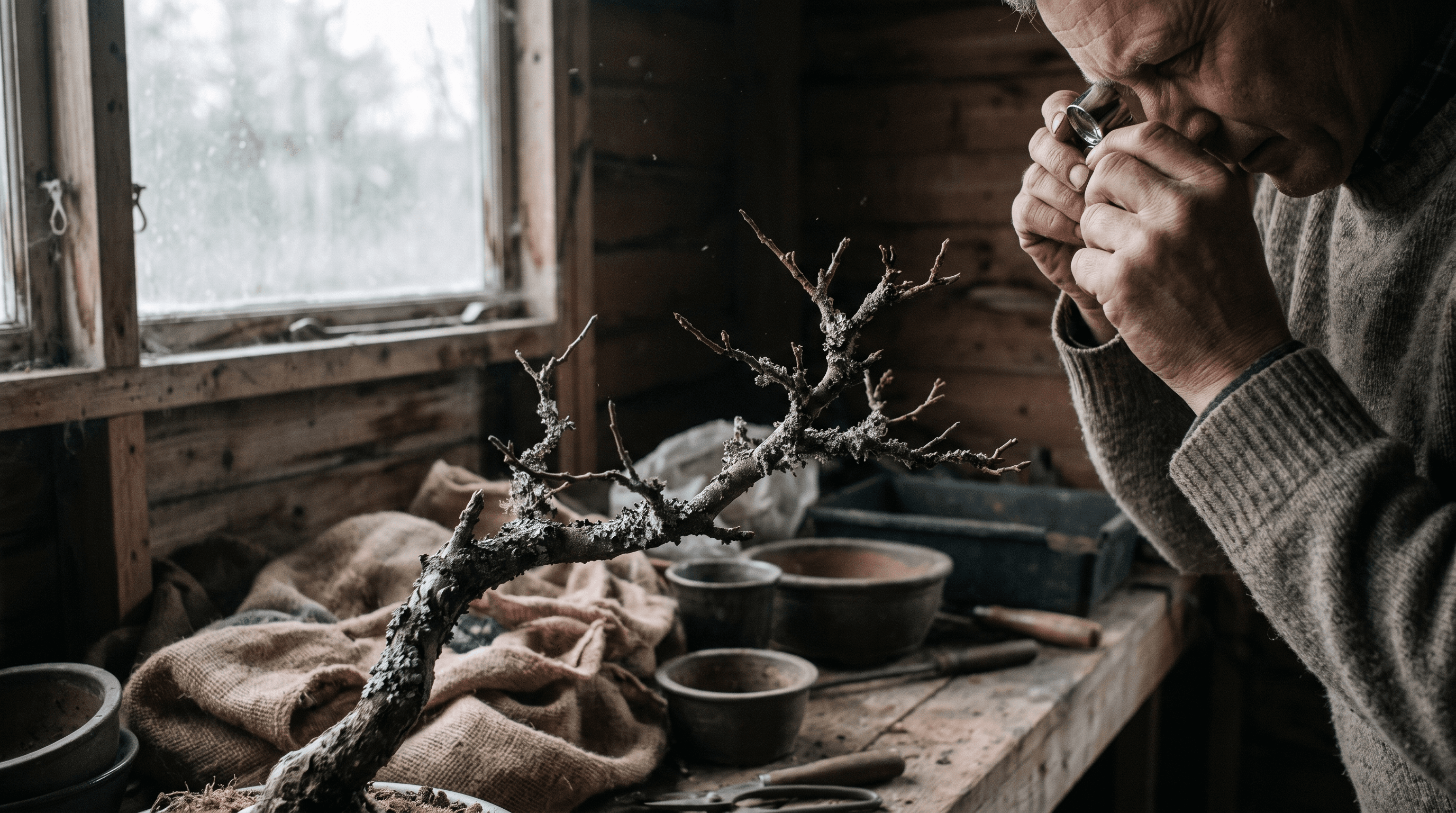
There's a comfortable assumption that winter is the season off, no active growth to manage, no pests to spray for, nothing much happening at all. For a lot of the collection that's roughly true. But move a group of trees into an enclosed shed, garage, or cold frame for the winter and you've created a very different environment than open air outdoors, one with less airflow, more stable humidity, and none of the natural weather events or predators that keep pest populations in check the rest of the year.
Mold is the other half of this. A closed, damp space with limited ventilation is close to ideal growing conditions for it, whether on the substrate surface, on old leaf litter left sitting in a pot, or on bark that's staying damp longer than it should because air isn't moving through the space. I've opened up storage in February to find a problem that had clearly been building for weeks, and every time it traces back to the same root cause, not enough air movement and not enough eyes on the trees during the quiet months.
Neither of these problems needs elaborate management. A short, regular inspection routine catches almost everything while it's still small and easy to deal with.
Why scale insects don't fully stop in cool storage
Scale insects slow down in cold conditions but a genuine, hard freeze that can knock back an outdoor population doesn't always reach trees sitting in sheltered or enclosed winter storage. That protection cuts both ways, the tree is safer from cold damage, but a small existing scale population can persist at low, quiet levels through the whole winter instead of being checked by the weather the way it might be outdoors. I look specifically along branch undersides and in bark crevices, the spots scale tends to colonize first, during every winter check, because catching a handful of insects in December is a five minute fix and catching a spreading colony in March is a much bigger job right when the tree needs its energy for spring growth instead.
How mold gets started in winter storage
Mold needs damp, still air more than it needs warmth, which is exactly what an overly sealed shed or garage provides through the coldest months. Old leaf litter sitting on the substrate surface, moss that's staying constantly wet against bark, or pots crowded together with no airflow between them all create the same kind of microclimate mold favors. I clear obvious leaf litter off the soil surface before trees go into storage for the winter and again periodically through the season if I notice it building up, since that alone removes a good part of what mold needs to establish itself in the first place.
Ventilation is the single biggest lever you have
Cracking a vent, window, or door on milder days lets humid, stagnant air escape and pulls in drier air from outside, and it does more to prevent mold than anything you could spray or treat after the fact. I don't leave enclosed storage sealed for the entire winter even during genuinely cold stretches, a brief period of airflow on a mild afternoon makes a real difference over the course of the season. Trees positioned with a little space between pots, rather than crammed together, also benefit from better air circulation around each one, which reduces the pockets of trapped humid air that mold tends to exploit.
What a proper inspection involves
I go over each tree during a winter check looking at branch undersides, bark crevices, the substrate surface, and any spot where moss or old foliage is sitting against wood. It takes a minute or two per tree if nothing's wrong, longer if something catches my eye and needs a closer look. Scale shows up as small, waxy bumps that don't brush off easily, often along stems or the underside of branches. Mold or mildew usually shows as a grey or white fuzzy patch, sometimes with a musty smell if you get close enough, most often on the soil surface or on damp organic debris rather than on healthy bark itself.
Dealing with what you find, without overreacting
A small, isolated patch of scale can often be dealt with by hand, scraping it off or treating just the affected area, without needing to treat the whole collection. A patch of mold on the substrate surface is usually solved by removing the affected material, improving airflow around that specific pot, and letting the surface dry out a bit more than it has been. I try not to jump straight to heavy treatments for a small problem caught early, since most of what shows up during a winter check is minor and manageable if you're already looking regularly, which is really the whole point of doing these checks in the first place.
Common questions
Can scale insects survive winter on bonsai in storage?
Yes, scale insects slow down in cold weather but often persist at low levels in sheltered or enclosed storage, where a proper hard freeze that can knock back an outdoor population doesn't always reach the tree. That's part of why regular winter checks matter even though it feels like a quiet season for pests.
What causes mold in winter bonsai storage?
Damp, still air is the main driver, often made worse by leaf litter or wet moss sitting on the substrate and pots crowded together without much airflow between them. Enclosed spaces like sheds and garages that stay sealed all winter create close to ideal conditions for mold to establish.
How can I prevent mold in enclosed bonsai storage?
Ventilation is the biggest factor. Cracking a vent, window, or door on milder days lets humid air escape and drier air in, and it does more to prevent mold than any treatment applied after the fact. Clearing old leaf litter and giving pots a little breathing room between them also helps.
What does scale insect damage look like on bonsai?
Small, waxy bumps along stems or the underside of branches that don't brush off easily are the classic sign. They're often concentrated in bark crevices and along branch undersides, the spots worth checking specifically during a winter inspection.
How often should I check for pests and mold during winter storage?
About once a week is a reasonable rhythm, spending a minute or two per tree looking at branch undersides, bark crevices, and the substrate surface. Catching either problem early, while it's small and isolated, makes it far easier to deal with than discovering it well established in spring.
Can I treat scale or mold on bonsai during winter, or should I wait for spring?
Small, isolated problems can usually be dealt with right away, scraping off scale by hand or removing moldy material and improving airflow around that pot. There's no real benefit to waiting for spring on a problem you've already spotted, since both scale and mold tend to spread further if left untreated over the following weeks.
Is it normal to find some mold on the soil surface during winter?
A small amount on old leaf litter or organic debris isn't unusual and isn't necessarily a serious problem on its own. It's worth removing when you see it and improving airflow around that pot though, since left unchecked it can spread further across the substrate surface or onto nearby damp material.
También te puede gustar
General guidance based on 20+ years of practice. Every tree, climate, and year is different — when in doubt, ask us.