
Field Maple Bonsai
Acer campestre
Field maple bonsai care is mostly a matter of temperament rather than fuss: this is a hedgerow tree from across Europe that shrugs off wind, poor soil, and a proper hard winter, and the trade-off for that toughness is a quieter, more golden autumn colour and a slightly slower path to fine ramification.
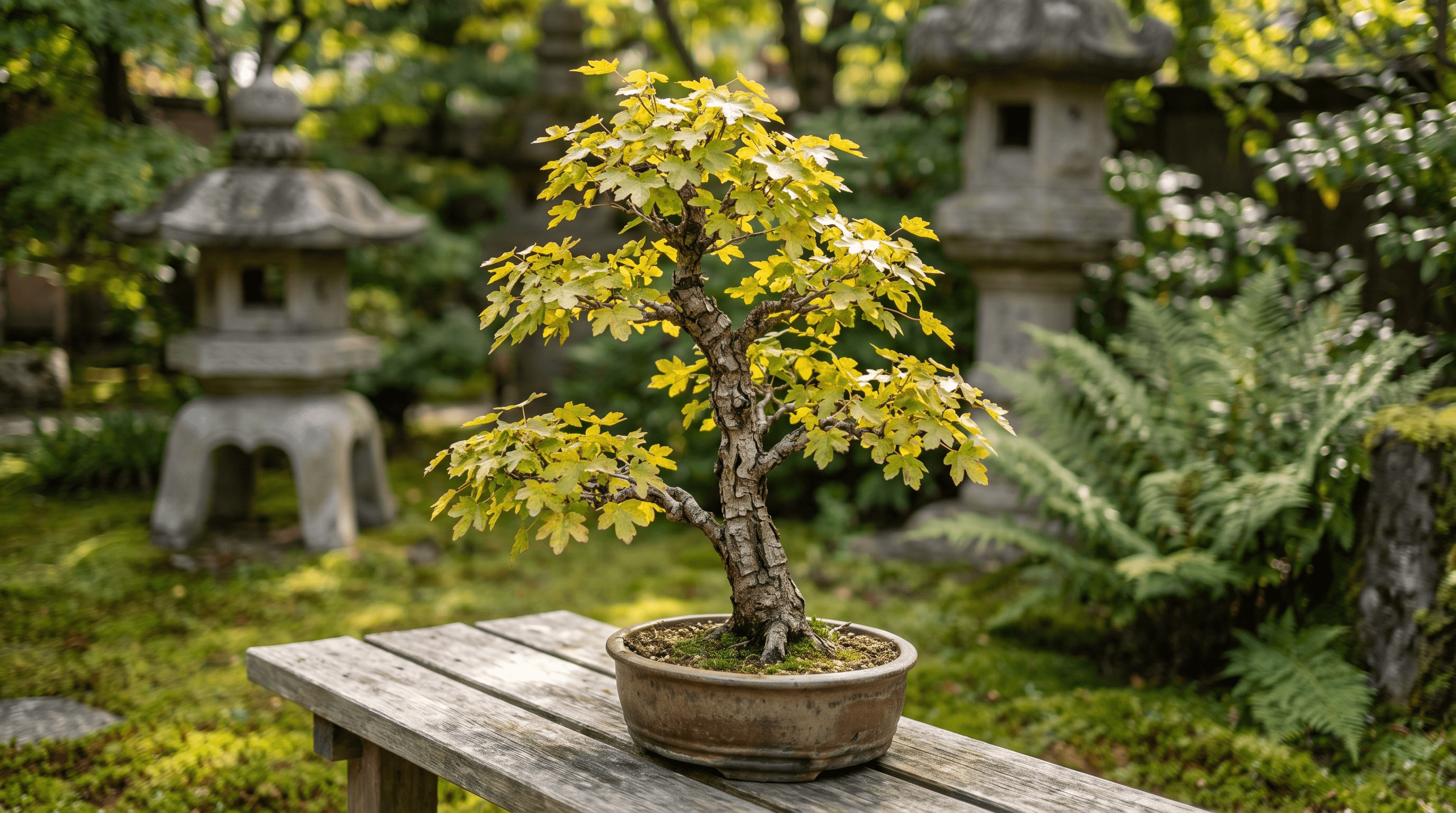
Acer campestre grows wild across most of Europe, often as a hedgerow or field-boundary tree, and that background shows in how it behaves as bonsai. The leaves are small, five-lobed, and a touch leathery compared to Japanese maple, and older bark and branches develop a distinctive corky, ridged texture that a lot of growers come to prize once a tree has some age on it. It ramifies well with patient pinching over a few seasons, though I'd call the process a bit more gradual than with palmatum, where fine twigginess seems to arrive faster once the tree is established.
What sets field maple apart, and what I'd lead with if someone in a colder or more exposed part of Europe asked me which maple to start with, is how little it complains. It still needs a real outdoor winter to go dormant properly, same as any deciduous maple, and it's very winter-hardy and generally robust in exposed European conditions, though bonsai pots should still be protected from prolonged severe freezing. It also isn't nearly as touchy about direct sun or a missed watering as Japanese maple can be. It's not a tree I'd call maintenance-free, nothing worth growing as bonsai really is, but if your climate runs cold and unpredictable, or you've had a Japanese maple struggle on an exposed balcony, field maple is usually the more forgiving choice.
Care
Light
Field maple takes considerably more sun than Japanese maple without complaint. Full sun through most of the day is fine for an established tree in the majority of European climates, and I only pull mine back to a spot with some midday shade during a genuine heatwave or in a hotter, more southern garden. Young grafts and freshly repotted trees appreciate a bit more protection while they settle in, but once a tree has a season or two of solid root growth behind it, it tolerates full sun without the careful shading Japanese maple often needs.
Watering
Keep the soil evenly moist through the growing season, but field maple is noticeably more tolerant of the odd dry day than Japanese maple in my experience. That said, don't take this as license to be careless in a shallow bonsai pot; a small pot dries out fast regardless of species, and repeated drought stress will still set a young tree back. I water on the same rhythm I'd use for most deciduous species, checking daily in summer, and I don't find myself running back to check on field maple mid-afternoon the way I do with maple proper.
Temperature & hardiness
Field maple is very winter-hardy and generally robust in exposed European conditions, native across a huge swathe of the continent including regions with harsh winters. That above-ground toughness doesn't tell you exactly how cold a bonsai rootball can safely get, though, so I still wrap or bury the pots of my more exposed trees during the coldest stretches, since any root system in a shallow container is more vulnerable than one in open ground. It's a sound choice if you garden somewhere with real continental winters, but bonsai pots should still be protected from prolonged severe freezing regardless of species.
Soil & potting
A free-draining mineral mix works well, and field maple is tolerant of chalk and a broader range of garden soils than many maples. For bonsai I still use a mix with reasonable moisture retention, similar in spirit to what suits Japanese maple, since a shallow container behaves differently from open ground regardless of how tough the species is in the wild. Good drainage matters more than getting the exact ratio right; this tree is forgiving of the soil recipe as long as water isn't sitting stagnant around the roots.
Fertilizing
Feed through the growing season with a balanced fertiliser, tapering off as the leaves begin turning in autumn. Field maple responds well to regular, moderate feeding and doesn't seem prone to the soft, overextended growth that heavy nitrogen can push on some deciduous species, though I still favour lighter, more frequent applications over infrequent heavy doses, mostly out of habit than because the tree demands it. It's a reasonably vigorous grower once established, so under-feeding is more likely to show as weak ramification than over-feeding is to cause problems.
Pruning & wiring
Build ramification the same way you would on any twiggy deciduous maple. On refined trees, pinch selected strong shoots as they extend; on trees still building branches or trunk thickness, allow extension before cutting back, since repeated pinching on a tree that isn't yet ramified tends to weaken it over time rather than help it. It takes field maple a bit longer to develop the same density of fine branching that Japanese maple achieves, in my experience, so patience over several seasons matters more here. The corky bark that develops on older branches is worth preserving rather than working around, since it's one of the features that makes a mature field maple genuinely distinctive. Avoid late-winter cuts when sap is rising strongly; late autumn through midwinter, or late summer once the season's growth has hardened off, are both lower-bleed windows. Wiring works well on younger growth, and the bark is a touch tougher than Japanese maple's, but it still marks if wire is left on too long, so check it regularly.
Repotting
Repot every one to two years while young, extending the interval as the tree matures and root growth slows, ideally in early spring before buds break. The root system is coarser and a little more vigorous than Japanese maple's, but root work should still be matched to each tree's vigor and root condition rather than assumed safe across the board, especially on trees that aren't yet fully established. Keep a freshly repotted tree out of harsh, drying wind for a couple of weeks afterward, though it doesn't need the same careful shading Japanese maple wants at this stage.
Common problems
Black tar spot, caused by a fungus that produces raised black blotches on the leaf surface, is a fairly common sight on field maple by late summer (it's especially associated with sycamore, but field maple is susceptible too), and while it looks alarming it's almost entirely cosmetic and rarely affects the tree's health from year to year. Aphids show up on new growth in spring much as they do on other maples and are usually easy to manage if you catch them early. Powdery mildew can appear in humid conditions with poor airflow, showing as a pale dusty coating on leaves, and improving air circulation around the foliage helps more than any spray. Leaf scorch from direct sun is far less common than with Japanese maple, but it can still happen during an extended heatwave, particularly on a tree that hasn't fully hardened off after repotting. Verticillium wilt, a soil-borne fungal disease that affects maples as a genus, remains a possibility here too, usually showing as sudden dieback on one side of the tree rather than an even decline, and it's worth ruling out if a tree stops looking right without an obvious cause like sun or water.
Styling
Field maple's naturally twiggy, somewhat irregular hedgerow growth habit suits informal upright and broom styles particularly well, and I find it takes group and forest plantings very naturally given how commonly it grows in dense stands in the wild. The corky bark that develops on older specimens is a real asset in styling terms and worth composing the tree to show off, in the same way you'd want to expose an interesting trunk line rather than hide it behind foliage. Because the autumn colour usually runs yellow to gold, sometimes shifting toward orange or red depending on the tree and the season, rather than matching the vivid reds Japanese maple can produce, field maple tends to work better as a tree valued for structure and bark character across the whole year rather than one grown primarily for a big seasonal colour display, though a well-grown specimen still turns a very respectable amber in a good autumn.
Common questions
Is field maple easier to grow as bonsai than Japanese maple?
In most respects, yes. It tolerates more direct sun and the odd missed watering with less drama than Japanese maple, and it's very winter-hardy and generally robust in exposed conditions, though bonsai pots of any maple should still be protected from prolonged severe freezing. It's not effort-free, but it's noticeably more forgiving of the placement mistakes that tend to injure Japanese maple.
Why does my field maple have black spots on the leaves?
That's likely tar spot, a fairly common fungal condition on this species (it's especially associated with sycamore, though field maple is susceptible too). It produces raised black blotches on the leaf surface late in the season and looks worse than it actually is; it's largely cosmetic and doesn't tend to cause lasting harm to a healthy tree.
Does field maple need winter protection?
Field maple is very winter-hardy and generally robust in exposed European conditions, but that doesn't mean the bonsai pot can go unprotected. I still shelter the pots of my more exposed trees during the coldest stretches, since a container is always more vulnerable to freezing than open ground, regardless of species.
Why is my field maple's autumn colour more yellow than red?
That's typical for the species, though not universal. Field maple usually turns yellow to gold in autumn, sometimes shifting toward orange or red depending on the individual tree and the season, and it's grown as much for its bark texture and twiggy structure as for a big autumn colour display.
How much sun can field maple bonsai actually take?
Considerably more than Japanese maple. An established tree handles full sun through most of the day in the majority of climates without scorching, and I only give mine extra shade during an unusually severe heatwave or in a particularly hot, southern garden.
How long does it take to develop good ramification on field maple?
Longer than Japanese maple in my experience, generally a few extra seasons of consistent pinching and trimming to reach the same density of fine branching. It's a gradual process rather than a quick one, but the corky bark that develops in the meantime is its own reward.
General guidance based on 20+ years of practice. Every tree and every climate is different — when in doubt, ask us.