
Beni Chidori Maple Bonsai
Acer palmatum 'Beni Chidori'
Beni Chidori is another of the red-spring Japanese maple cultivars, opening in a shrimp-pink flush each spring that settles toward green as summer arrives. It's similar in character to Deshojo and Seigen, and the three do get confused in the trade from time to time, but they're distinct cultivars with their own spring colour, vigour and leaf character rather than names you can swap for each other.
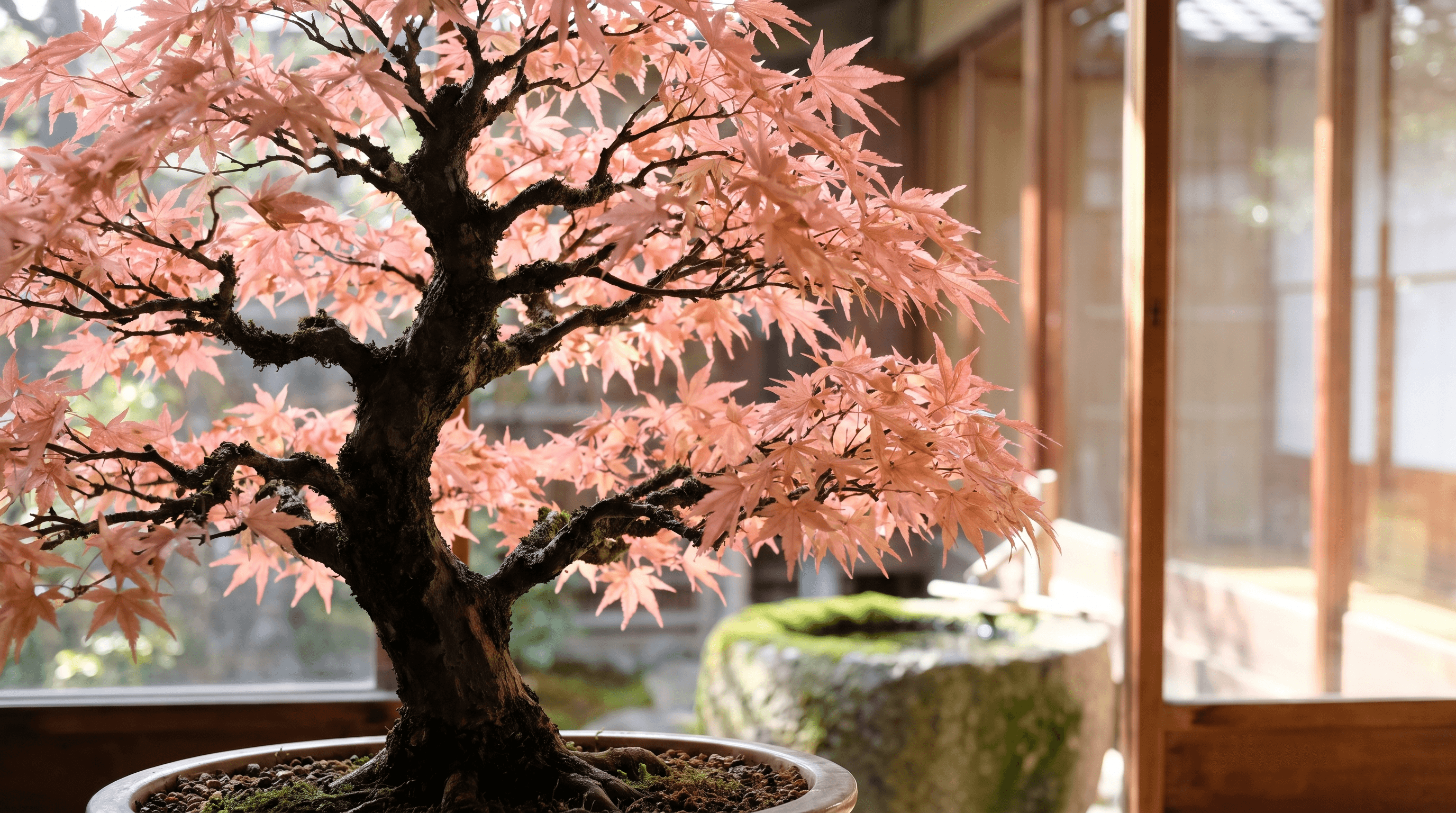
'Beni Chidori' is a Japanese maple cultivar grown for its spring foliage colour, the new leaves opening in a shrimp-pink to pink-orange flush before settling toward light green through summer and colouring again toward crimson in autumn. It belongs to the same general group of red-spring cultivars as 'Deshojo' and 'Seigen', but the three are distinct selections rather than variations on one theme. Deshojo is generally the more vigorous of the group, with a deeper, scarlet-red spring colour, while Seigen is a more compact cultivar with its own foliage character; Beni Chidori sits in between on vigour, with medium-size leaves and that characteristic shrimp-pink opening colour. Mislabelling does happen in the trade, especially with less common Acer cultivars, so if a tree sold as one of these three doesn't quite match what you'd expect, it's worth comparing leaf shape, serration and colour against reference photos rather than assuming the names are interchangeable.
Underneath the spring colour, this is still Acer palmatum, and the day-to-day care is essentially identical to Japanese maple in general, and to the other red-spring cultivars specifically. The same outdoor deciduous habit, the same need for real winter dormancy, and the same thin bark and fine roots that make maple less forgiving than pine or olive of mistakes in watering or placement all apply here without meaningful change. The one place this cultivar, like its close relatives, genuinely departs from a plain green Japanese maple is in how you think about light during the spring flush, since that's the window when the colour is actually on display and worth protecting.
Care
Light
Give Beni Chidori good light through the spring flush, since colour intensity in red-spring cultivars generally depends on how much light the new growth gets, and a tree kept too shaded tends to leaf out duller and greener rather than showing the cultivar's proper colour. At the same time, that fresh new growth is thinner and more tender than hardened foliage, so avoid throwing it straight into harsh, unfiltered midday or afternoon sun, especially early in spring when a cold snap could be adding stress at the same time. Morning sun with some protection through the hottest part of the day is a sound default, moving toward the standard Japanese maple pattern of afternoon shade once the leaves harden off and summer heat builds.
Watering
Water on the same schedule as Japanese maple generally, keeping the soil evenly moist through the growing season without letting it sit waterlogged. There's nothing about this cultivar that changes moisture needs; the fine root system is exactly as sensitive to drying out as on any maple, so treat inconsistent watering as something to fix immediately rather than something the tree will shrug off.
Temperature & hardiness
Beni Chidori needs the same genuine outdoor winter dormancy as any Japanese maple, and shouldn't be brought indoors through winter. It's reasonably cold-hardy overall, with the usual caveat that a shallow bonsai pot leaves roots more exposed to hard freezes than open ground would, so protect the container in severe weather. The bigger practical risk, as with the other red-spring cultivars, is a late frost hitting the tree just as the flush is colouring up; the new growth is more frost-tender than dormant buds were, and losing a colour flush to a cold snap is a particular disappointment when that flush was the reason you chose this cultivar in the first place.
Soil & potting
A free-draining but moisture-retentive mix works well, the same balance Japanese maple wants generally, since the tree needs consistent moisture without sitting soggy. Akadama-based mixes with some added pumice for drainage are a reliable, common choice for this cultivar for the same reasons they suit maple broadly. Nothing about Beni Chidori's growth habit calls for a different approach to soil than you'd use on a plain Japanese maple or on Deshojo or Seigen.
Fertilizing
Feed through the growing season once the spring leaves have hardened off, tapering toward autumn, following the same general pattern as Japanese maple. As with the other red-spring cultivars, some growers prefer to hold off on feeding until after the flush has hardened and settled toward its summer colour, on the idea that pushing growth too early dilutes colour intensity, though I'd treat that as grower experience rather than something proven. Light, regular feeding through the rest of the season suits the fine roots better than infrequent heavy doses.
Pruning & wiring
Building ramification follows the standard Japanese maple approach, though the technique depends on the tree's stage: on a refined tree, spring shoots can be pinched back as the first leaf pair opens, while a tree still in development is usually better allowed to extend before being cut back, since repeated pinching before there's enough structure can weaken growth. Because the spring display is a big part of why people grow this cultivar, timing heavier structural pruning for after the flush has passed rather than right before it makes sense, so you're not stripping away the colour show for that year. Avoid heavy cuts in late winter when sap bleeding is at its worst; summer or early autumn, once the season's leaves have hardened, is the safer window, same as with maple generally. Wiring suits young, flexible branches well, but check it often since maple bark marks easily, and this cultivar doesn't have any special resistance to scarring.
Repotting
Repot roughly every one to two years while young and vigorous, extending to every two or three years as the tree matures, in early spring just before buds break, matching the standard Japanese maple schedule. Handle the fine, fibrous roots gently, comb rather than aggressively rake unless you know the tree well, and keep it sheltered from strong wind and harsh sun for a couple of weeks afterward while new roots establish, being a bit more cautious than usual if the repot falls close to when the spring flush would otherwise be colouring.
Common problems
Dull or weak spring colour is a common complaint, and insufficient light during the flush can cause or intensify it, sometimes made worse by heavy early feeding pushing soft green growth instead of a strong colour show. But colour also varies with temperature, the tree's developmental stage and general growing conditions, so treat weak light as a strong suspect rather than the only possible explanation. Scorch on the new leaves, showing as browned or crispy patches, points the other way, to too much harsh direct sun hitting tender growth before it's had a chance to harden. Beni Chidori shares a lot of general care ground with Deshojo and Seigen, so broad advice for those cultivars is often a reasonable starting point if you're troubleshooting and can't find anything specific, but they remain distinct cultivars rather than the same tree under different names. If blackened new growth follows a frost event, late-frost injury is the likely cause, with the tree typically pushing a second flush later in the season, usually less intense than the first, though drought stress, root problems and disease can also blacken young tissue, so it's worth ruling those out if there's been no recent cold snap. Aphids target soft new spring growth on this cultivar readily, so it's worth a close look while the flush is out. General wilting or dieback should be checked against soil moisture and airflow before assuming anything more serious.
Styling
Beni Chidori suits the same refined, twiggy deciduous styling that Japanese maple is generally known for, informal upright and broom styles especially, and this overlaps closely with how I'd style Deshojo or Seigen too, since all three share a broadly similar growth habit beneath their differences in spring colour and vigour. I keep the canopy open enough during development that light reaches into the structure and the spring flush colours evenly rather than being shaded out in the interior, which matters more on these colour cultivars than on a plain green maple where foliage density is the main goal. A group planting mixing a couple of these red-spring cultivars together can actually work nicely precisely because they're similar enough in habit to read as a coherent planting while still varying in spring colour and vigour.
Common questions
What's the difference between Beni Chidori and Deshojo maple?
They're related but distinct cultivars. Beni Chidori opens a shrimp-pink to pink-orange spring colour on medium-size leaves, while Deshojo is generally more vigorous with a deeper, scarlet-red spring flush. Both are red-spring Japanese maples with broadly similar day-to-day care, and mislabelling does happen in the trade, but the names aren't interchangeable.
Is Beni Chidori the same as Seigen maple?
No, they're distinct cultivars. Seigen is a more compact plant with its own foliage character, while Beni Chidori has a shrimp-pink spring flush and medium-size leaves. Both are red-spring Acer palmatum selections with similar day-to-day care, but they aren't the same cultivar under two names.
Why is my Beni Chidori's spring colour weak this year?
Insufficient light during the flush is a common cause, since colour intensity in red-spring cultivars is influenced by how much light the new growth gets. But temperature, the tree's developmental stage and general growing conditions all play a part too, so if a shadier spot doesn't fully explain it, those are worth considering as well.
Does Beni Chidori need special care compared to a regular Japanese maple?
Not really. Day-to-day care, watering, soil, and hardiness are all the same as Japanese maple generally. The one place it differs is light management during the spring flush, where a bit more care helps the colour develop without scorching the tender new growth.
Can I grow Beni Chidori and Seigen in the same collection without confusing them?
Yes, and labelling trees when you acquire them is still the most reliable practice, since the two can look similar at a glance, especially once the spring colour fades toward summer green. But they're distinct cultivars, Seigen more compact with its own foliage character, Beni Chidori with a shrimp-pink flush and medium-size leaves, so it's worth learning to tell them apart rather than treating the names as interchangeable.
Is Beni Chidori a good beginner bonsai?
About the same moderate difficulty as Japanese maple generally. It's not particularly more demanding than the species type; the main added skill is managing light during the spring flush so the colour comes in well without scorching.
General guidance based on 20+ years of practice. Every tree and every climate is different — when in doubt, ask us.