
Amur Maple Bonsai
Acer tataricum subsp. ginnala (syn. Acer ginnala)
Amur maple bonsai care is what I recommend when someone wants strong red autumn colour but gardens somewhere with a proper harsh winter, since this is a species from the cold river valleys of northeast Asia with a genuinely stronger cold-hardiness rating than Japanese maple, and in my experience it also responds quickly to pruning.
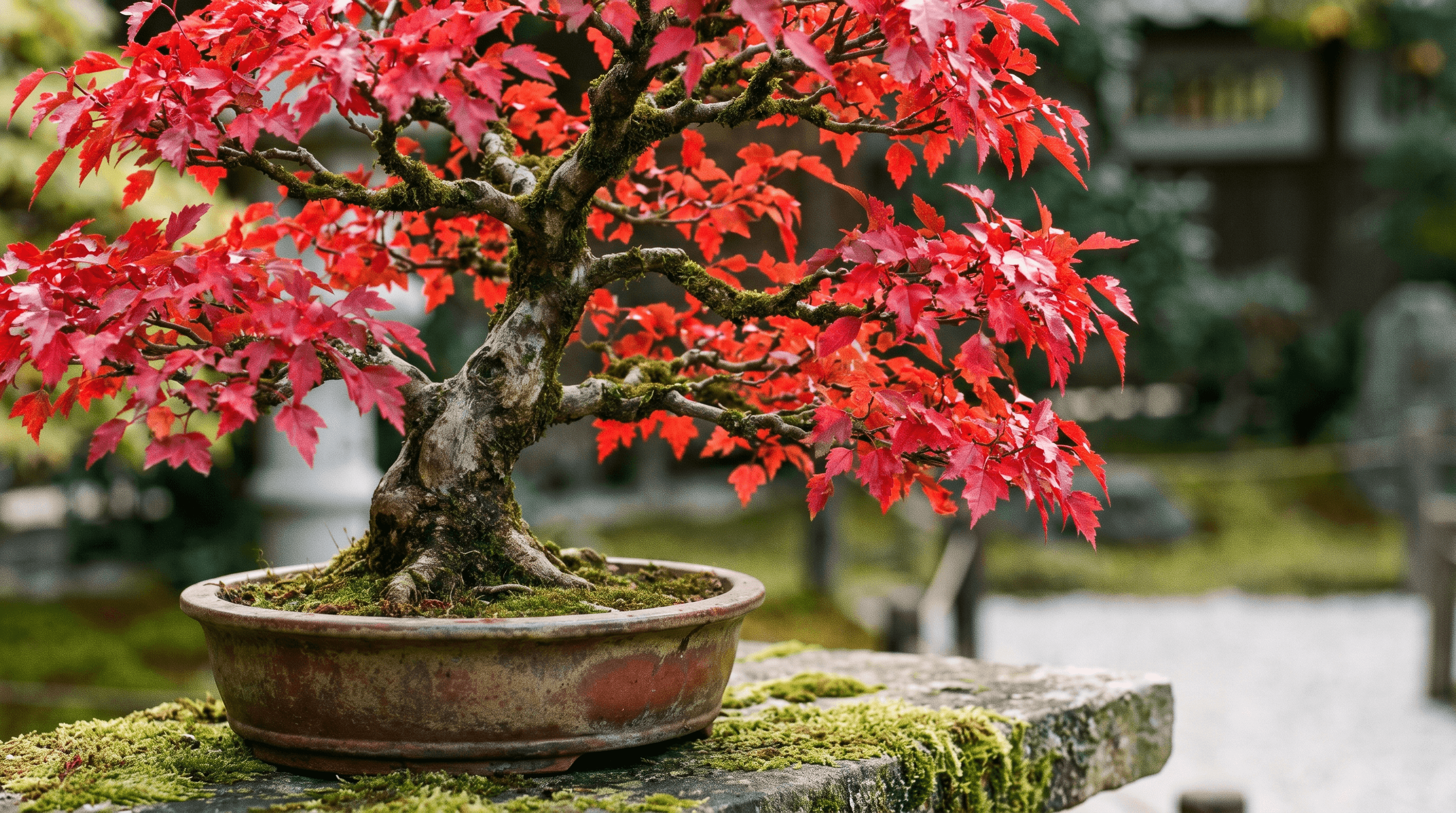
Acer ginnala, now classified by Kew as Acer tataricum subsp. ginnala though the older name remains in wide horticultural use, is native to the Amur River region straddling northeast China, Korea, and eastern Russia, a part of the world with brutal winters, and it's built accordingly. The leaves are small and three-lobed, with a longer, more pointed central lobe than you see on Japanese maple's more evenly divided foliage, giving the tree a slightly different silhouette even before you look at bark or branching. Small, fragrant flowers appear in spring, followed by winged seed pairs that often blush red before the leaves do, and by autumn the foliage often turns excellent red to orange-red, though intensity varies with genetics, weather, and growing conditions; named selections like 'Flame' are specifically chosen for stronger colour, which tells you the species itself is variable.
What draws me to this species for certain gardens is how much punishment it takes without complaint. RHS rates Amur maple H7 versus H6 for Japanese maple, a real, documented cold-hardiness advantage, though that above-ground rating doesn't tell you exactly how cold a bonsai rootball can safely get, so pot protection in severe cold is still worth doing. In my experience it's also a vigorous grower that responds quickly to pruning, which has meant ramification coming together over fewer seasons than it does with palmatum on my own benches. It still needs a proper outdoor dormancy and isn't a tree for indoors, same as every deciduous maple, but if your winters are the kind that make Japanese maple risky without serious protection, Amur maple gives you a genuinely hardier alternative with a similar autumn payoff.
Care
Light
Amur maple tolerates full sun better than Japanese maple, and strong light through the growing season generally helps it colour up in autumn, though genetics and overall growing conditions matter too, and even a well-sited tree can vary in intensity year to year. A tree kept too shaded tends to hold onto duller yellows and greens rather than developing red tones. Some afternoon shade during the hottest part of summer is still sensible in a warm climate, since the leaves aren't completely immune to scorch, but this is a considerably more sun-tolerant tree than Japanese maple overall, and I give mine noticeably more direct light through the season than I would palmatum.
Watering
Keep the soil evenly moist through the growing season, similar to other maples, though the sturdier root system on Amur maple seems a little more forgiving of an occasional dry spell than Japanese maple's finer roots are. I wouldn't lean on that tolerance too heavily in a small bonsai pot, where any species dries out fast in summer heat, but this isn't a tree that punishes a missed watering the way Japanese maple can. Good drainage still matters; it doesn't want to sit permanently wet any more than the rest of the genus does.
Temperature & hardiness
This is the species' standout trait, and the one claim in this article with the most solid documentation behind it. RHS rates Amur maple H7 versus H6 for Japanese maple, a genuine, meaningful difference in above-ground cold hardiness. That rating doesn't translate directly into a precise safe root temperature for a bonsai pot, though, so I still protect the pots of my more exposed trees during the coldest snaps, since roots confined to a shallow container are always more vulnerable than roots in open ground regardless of species. Even so, the margin for error here is real. If you garden somewhere with a proper harsh winter and have lost or worried about a Japanese maple in the cold, Amur maple is a sound, considerably hardier alternative.
Soil & potting
A free-draining mix with reasonable moisture retention works well, in the same broad range that suits Japanese maple, and Amur maple seems tolerant of a wider range of soil pH than the fussier end of the genus. Akadama-based mixes with some added pumice for drainage are a reasonable default. Avoid anything that stays waterlogged for days, since root problems here look much the same as in any other maple even if the tree is generally more forgiving elsewhere.
Fertilizing
Feed through the growing season with a balanced fertiliser; a grower this strong responds well to it, often putting on more visible new growth per season than Japanese maple does on the same feeding schedule. That extra push is useful for building structure quickly but means it's worth watching for overly long, leggy shoots if you feed heavily without keeping up with pinching. Taper feeding off toward late summer as the tree heads into its autumn colour change, the same as with other maples.
Pruning & wiring
In my experience Amur maple is vigorous and responds quickly to pruning, and the combination of small leaves and eager branching has meant a reasonably dense structure coming together in fewer seasons than Japanese maple typically takes on my benches. On refined trees, pinch selected strong shoots as they extend; on trees still building branches or trunk thickness, allow extension before cutting back, since repeated pinching on an undeveloped tree tends to weaken it over time rather than help it. As with the rest of the genus, avoid hard structural cuts in late winter, when sap runs heaviest and cuts bleed most; late autumn through midwinter, or late summer once the season's growth has hardened off, tend to be safer windows. Wiring works well on young, flexible growth, and because the tree pushes new shoots readily, check wire more often than you might on a slower species, since it's easy for a branch to thicken past the wire faster than expected.
Repotting
Repot every one to two years while young given how fast the roots tend to fill a pot, extending the interval somewhat as the tree matures, always in early spring just before buds break. The root system outpaces Japanese maple's in my experience, so keep an eye on root-bound trees rather than assuming the usual interval always applies. As with any tree, match how hard you prune the roots to that individual tree's vigor and root condition rather than a fixed rule.
Common problems
Aphids show up on the new spring flush much as they do on other maples and are usually straightforward to manage if caught early. Tar spot and other leaf-surface fungal marks can appear but rarely cause serious harm to an otherwise healthy tree. Given its naturally shrubby, multi-stemmed habit in the wild, basal shoots and suckers can appear low on the trunk and should be removed if they aren't part of the design, and keeping on top of it with regular pinching prevents the structure from getting away from you. Leaf scorch from direct sun is less common than with Japanese maple but can still happen during an extended heatwave, particularly on a tree still hardening off after repotting. Verticillium wilt, a soil-borne fungal disease that affects the maple genus broadly, remains a possibility here too, usually presenting as sudden dieback on one side of the tree rather than an even decline across the whole canopy.
Styling
The fast ramification and small, neatly lobed leaves suit Amur maple well to broom and informal upright styles, where a dense, twiggy silhouette reads clearly once the leaves drop for winter. Group and forest plantings work particularly well with this species, and a stand of several trees turning red to orange-red together, even with some variation between individuals, makes a strong seasonal display that a single specimen can't quite match on its own. Because it's a faster, stronger grower than Japanese maple, Amur maple is also a reasonable choice if you want to develop a bonsai's basic structure more quickly before slowing down and refining it in later years, though the underlying discipline of patient pinching and seasonal pruning is the same as with any twiggy deciduous maple.
Common questions
Is Amur maple more cold-hardy than Japanese maple?
Yes, by a real, documented margin: RHS rates it H7 versus H6 for Japanese maple. That rating describes above-ground hardiness rather than an exact safe root temperature, so I still protect pots during the coldest snaps, but it's a sound choice if you garden somewhere with severe winters and want a genuinely hardier maple.
Does Amur maple have good autumn colour like Japanese maple?
Often, yes, though intensity varies with genetics, weather, and growing conditions rather than being fully consistent tree to tree. Amur maple frequently turns excellent red to orange-red in autumn, and named selections such as 'Flame' are specifically bred for stronger colour, which is a useful reminder that seed-grown trees can vary noticeably.
How fast does Amur maple ramify compared to Japanese maple?
Faster, in my experience. It's a stronger grower overall, and the combination of small leaves and eager branching means a reasonably dense twig structure can come together in fewer seasons than Japanese maple typically needs.
Can Amur maple bonsai handle full sun?
Better than Japanese maple can. It tolerates strong light through the growing season, and good sun exposure generally helps it colour up in autumn, though genetics and conditions play a role too. Some afternoon shade during an extreme heatwave is still sensible.
Why does my Amur maple keep sending up long shoots low on the trunk?
That's the species' naturally shrubby, multi-stemmed habit showing through. Basal shoots and suckers can appear low on the trunk and are worth removing if they aren't part of the design. Regular pinching through the season keeps it under control.
Is Amur maple a good beginner bonsai?
More forgiving than Japanese maple, certainly, thanks to its cold hardiness and more tolerant nature around sun and watering. I'd still call it moderate difficulty overall rather than truly beginner-friendly, since the pruning discipline needed to build good ramification is the same as with any twiggy deciduous maple.
General guidance based on 20+ years of practice. Every tree and every climate is different — when in doubt, ask us.