
Indoor Overwintering for Tropical Bonsai
A genuinely tropical bonsai doesn't want a rest period at all, it wants winter to feel as little like winter as you can manage indoors.
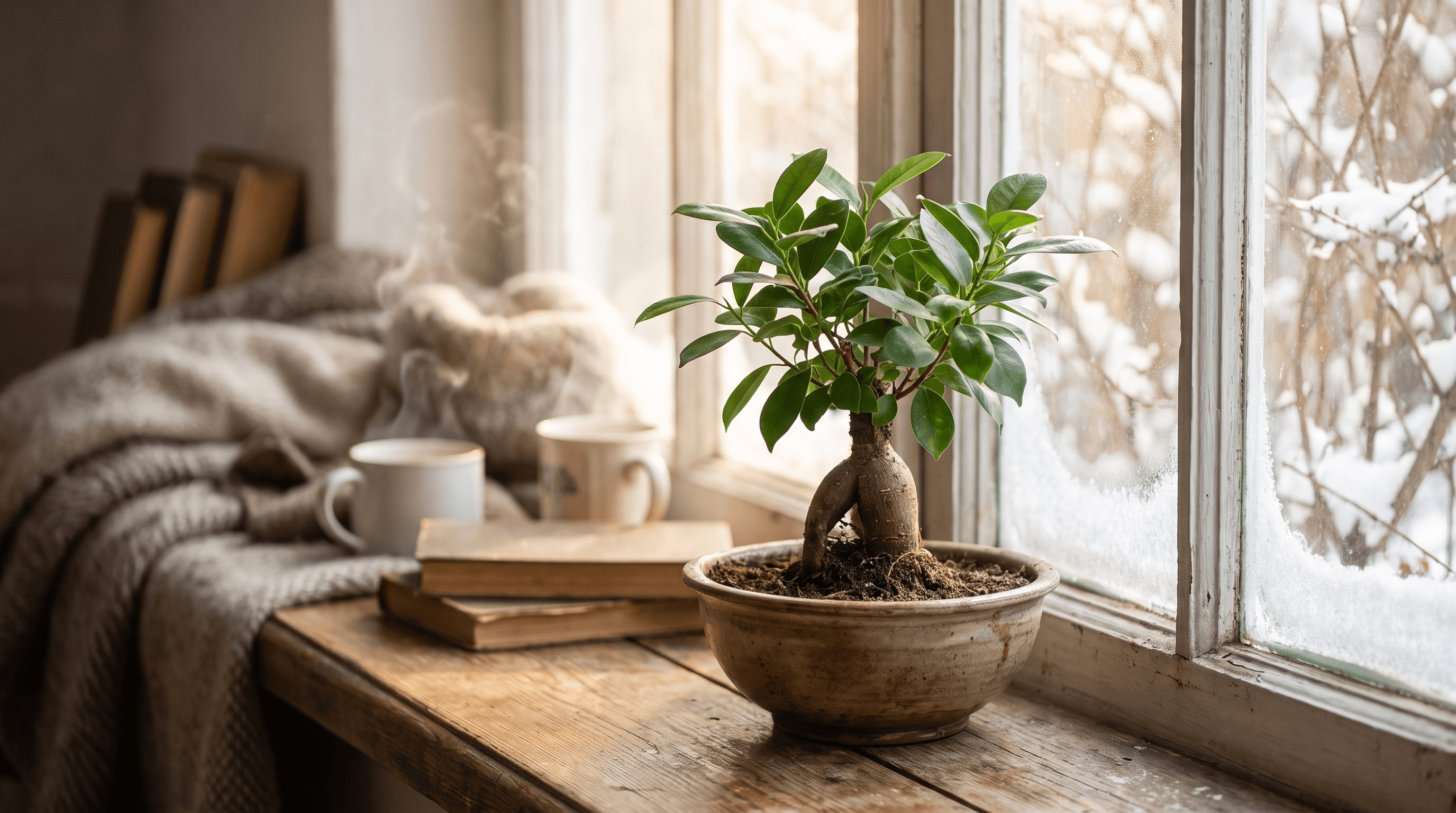
I get asked constantly whether a ficus or a jade needs to go through the same kind of winter dormancy as a maple or a juniper, and the answer is no, not even close. Tropical and subtropical species evolved somewhere that doesn't really have a cold season, and bringing them indoors for winter isn't about giving them a rest, it's about protecting them from a climate they were never built to handle in the first place.
The mistake I see most often isn't people forgetting to bring these trees in, it's what happens after they're inside. A tree gets placed on a windowsill because that's where the light is, and that same windowsill turns into one of the coldest, most drafty spots in the house the moment the sun goes down. Or the tree gets carried outside for a few hours on a mild afternoon and back in that evening, and the temperature swing does more damage than a steady, slightly less ideal indoor spot would have.
Real tropical species, ficus, dwarf jade (Portulacaria afra), fukien tea, and other warm climate trees with no true winter dormancy, need consistency more than anything else through the cold months. Bright light, stable warmth, and no sudden shocks. Get those three right and most of them come through winter looking barely different from how they went in.
Know which trees actually need this treatment
Not every bonsai brought indoors for winter is truly tropical. Plenty of species people bring inside out of caution are actually temperate trees that would be better off cold, sheltered, and dormant outside or in an unheated space, and forcing them into a warm living room without a proper rest period can cause more problems than it solves. Genuinely tropical and subtropical trees, the ones that grow year round in their native range with no real seasonal dormancy, are the ones this indoor approach is built for. If you're not sure which category your tree falls into, it's worth checking before assuming warmth and light indoors is automatically the right call.
Bright and stable beats warm and dim
Indoor light in winter is almost always weaker than growers expect, even next to a south facing window, and it drops further the moment you move a tree even a meter back from the glass. I'd rather have a tropical bonsai in a cooler room with strong, consistent light for most of the day than in a warm room where it's fighting for light for a couple of hours. If natural light in your space genuinely isn't enough, a grow light on a timer set for something like ten to twelve hours makes a bigger difference to how the tree looks in March than almost any other single change you could make.
The window itself can be the problem
Glass loses heat quickly at night even when the room around it feels comfortable, and in my experience a pot sitting right against the pane often sits in noticeably colder air than the rest of the room, occasionally enough to stress a genuinely tropical species that has no cold tolerance built in. I keep tropical trees a short distance back from the glass rather than pressed against it, and I'm especially careful about drafts from older window frames or from a door that gets opened and closed often nearby. A tree that looks perfectly placed for light can still be sitting in a pocket of cold air you wouldn't notice without actually feeling around it with your hand on a cold evening.
Avoid the back and forth trips outside
It's tempting on a mild, sunny winter afternoon to carry a tropical tree outside for a few hours of real sunlight and then bring it back in before evening. I'd avoid this unless the outdoor temperature is solidly within a range the species tolerates for the whole stretch it's out there, not just at the warmest point of the day. In my experience, the swing from a stable indoor environment to outdoor cold and back again in the same day tends to stress a tropical tree more than simply leaving it indoors under consistent, if less ideal, conditions for the whole winter. If you want to give it a taste of real outdoor light, wait for a genuinely settled stretch of mild weather rather than a single warm afternoon sandwiched between cold days.
Watering and humidity indoors run differently than outdoors
Heated indoor air is usually drier than outdoor winter air, which can surprise people who assume watering needs drop the moment a tree comes inside. Growth on a tropical species often continues at a slower pace indoors rather than stopping outright, so the substrate can dry faster than expected near a radiator or heating vent, even in the depths of winter. I check these trees more like I would in a mild growing season than the way I'd check a dormant temperate tree, and I keep them away from direct heat sources that dry the air aggressively in one small area of the room.
Common questions
Which bonsai species actually need indoor overwintering?
Genuinely tropical and subtropical trees that have no real dormancy period in their native climate, ficus, dwarf jade (Portulacaria afra), and fukien tea among the most common examples. A true jade, Crassula ovata, behaves a little differently and tolerates cooler conditions than these, so it's worth confirming exactly which species you have. As a rough guide, bring genuinely tropical bonsai indoors before nights are regularly falling below about 10 to 15 degrees Celsius. Temperate species that naturally go dormant in winter usually do better cold and sheltered rather than warm indoors, so it's worth confirming which category your tree belongs to before deciding.
How much light does a tropical bonsai need indoors in winter?
As much bright, consistent light as you can give it, ideally close to a south facing window for most of the day. If natural light is limited where you live, a grow light on a timer for around twelve hours makes a real difference and is often more reliable than relying on window light alone through a grey winter.
Is it safe to place a tropical bonsai directly against a cold window?
I'd avoid it. Glass loses heat quickly at night and a pot pressed right against it can sit in noticeably colder air than the rest of the room, even when the room itself feels warm. A short distance back from the pane, still in good light, is a safer compromise.
Can I bring my tropical bonsai outside on warm winter days?
Only if the temperature stays solidly within what the species tolerates for the entire time it's outside, not just during the warmest part of the day. A quick trip out and back in the same day creates a temperature swing that's often harder on the tree than simply staying indoors consistently through the season.
Does a tropical bonsai need less water indoors in winter?
Not necessarily. Heated indoor air is often drier than outdoor winter air, and growth may continue at a slower pace rather than stopping, so the substrate can still dry out at a meaningful rate. Check regularly rather than assuming winter automatically means less frequent watering for these species.
What temperature should the room be for overwintering tropical bonsai?
Consistency matters more than hitting an exact number, though most tropical species do best somewhere in a normal comfortable indoor range without big daily swings. Avoid spots near drafty doors, cold windowsills at night, or right next to heating vents, all of which create local temperature swings even in a room that reads fine on a thermostat.
My tropical bonsai is dropping leaves indoors, is that normal?
Some leaf drop after the move indoors is common as the tree adjusts to lower light and different humidity, and it often stops once conditions stabilize. Heavy or continuing leaf drop, though, is usually a sign of a draft, insufficient light, or a swing in temperature somewhere nearby that's worth tracking down.
Should I fertilize a tropical bonsai overwintering indoors?
Light feeding can continue if the tree is still showing active growth, since these species don't have a true dormancy the way temperate trees do. I scale it back from full growing season strength though, since indoor light and overall growth rate are usually reduced compared to a tree outdoors in summer.
También te puede gustar
General guidance based on 20+ years of practice. Every tree, climate, and year is different — when in doubt, ask us.