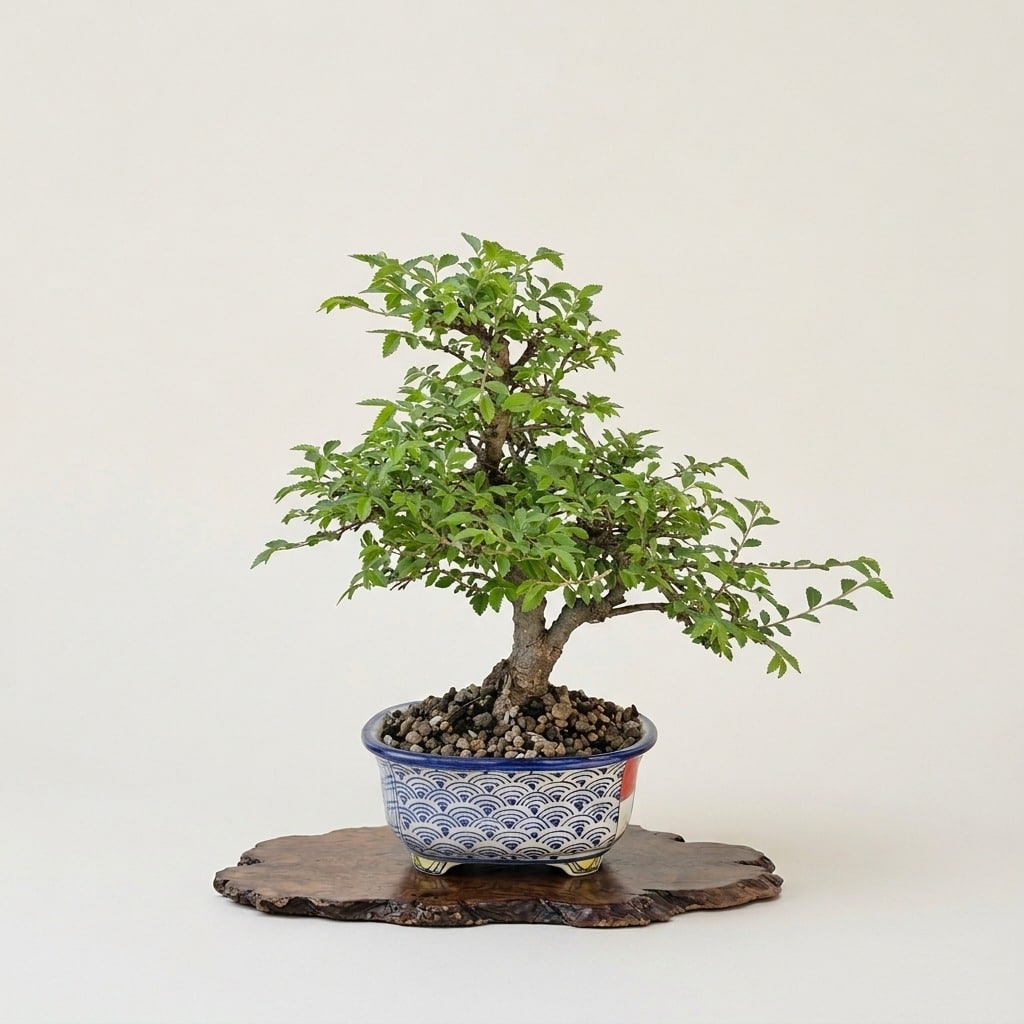
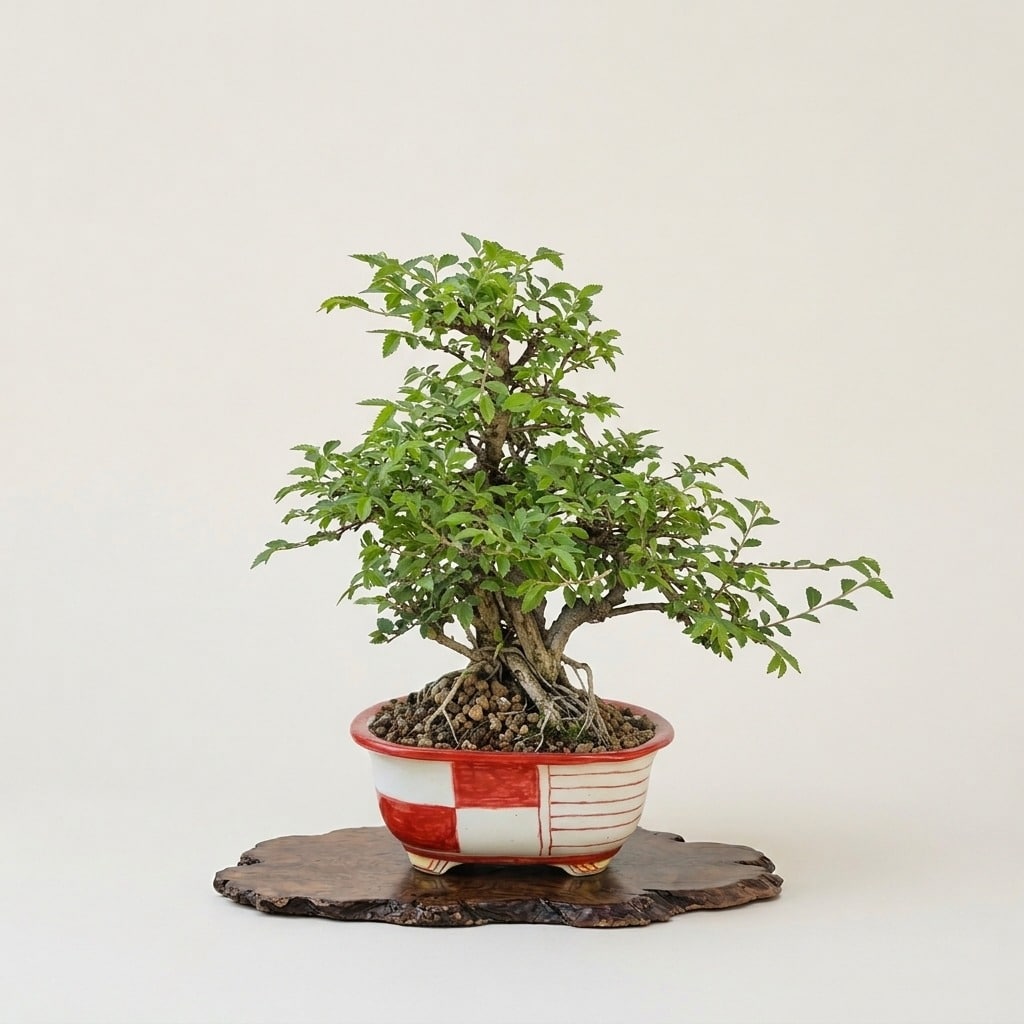
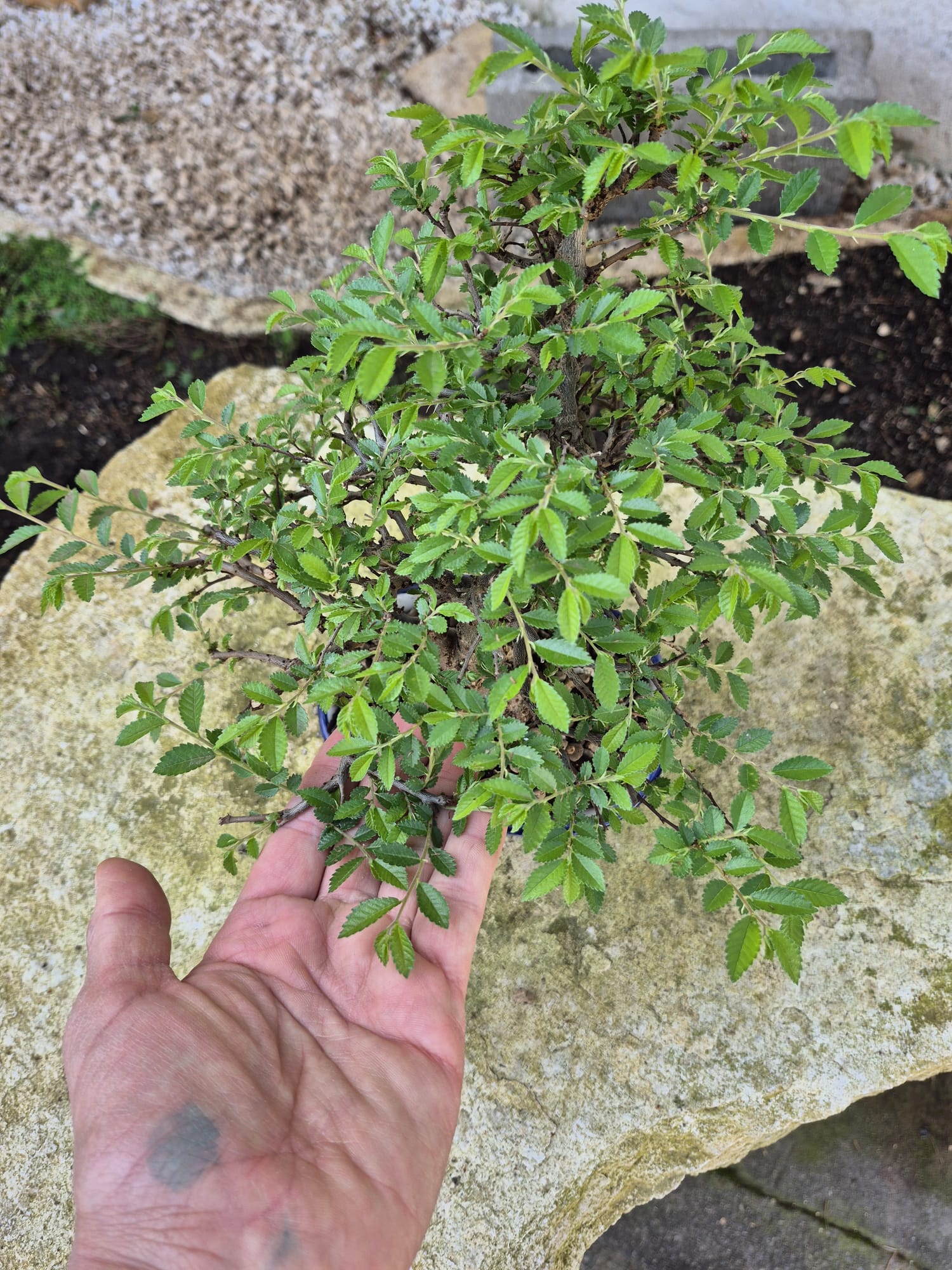
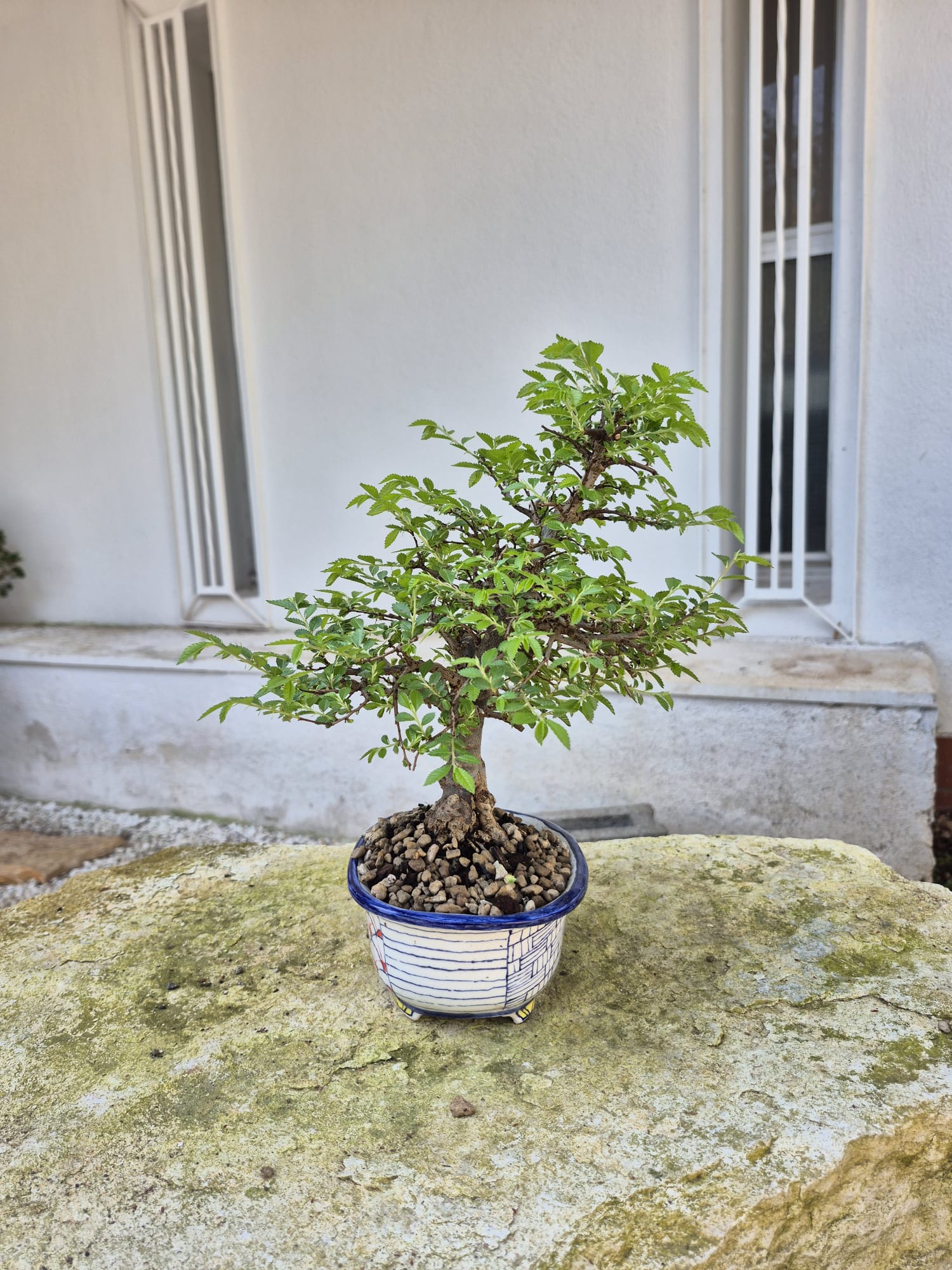
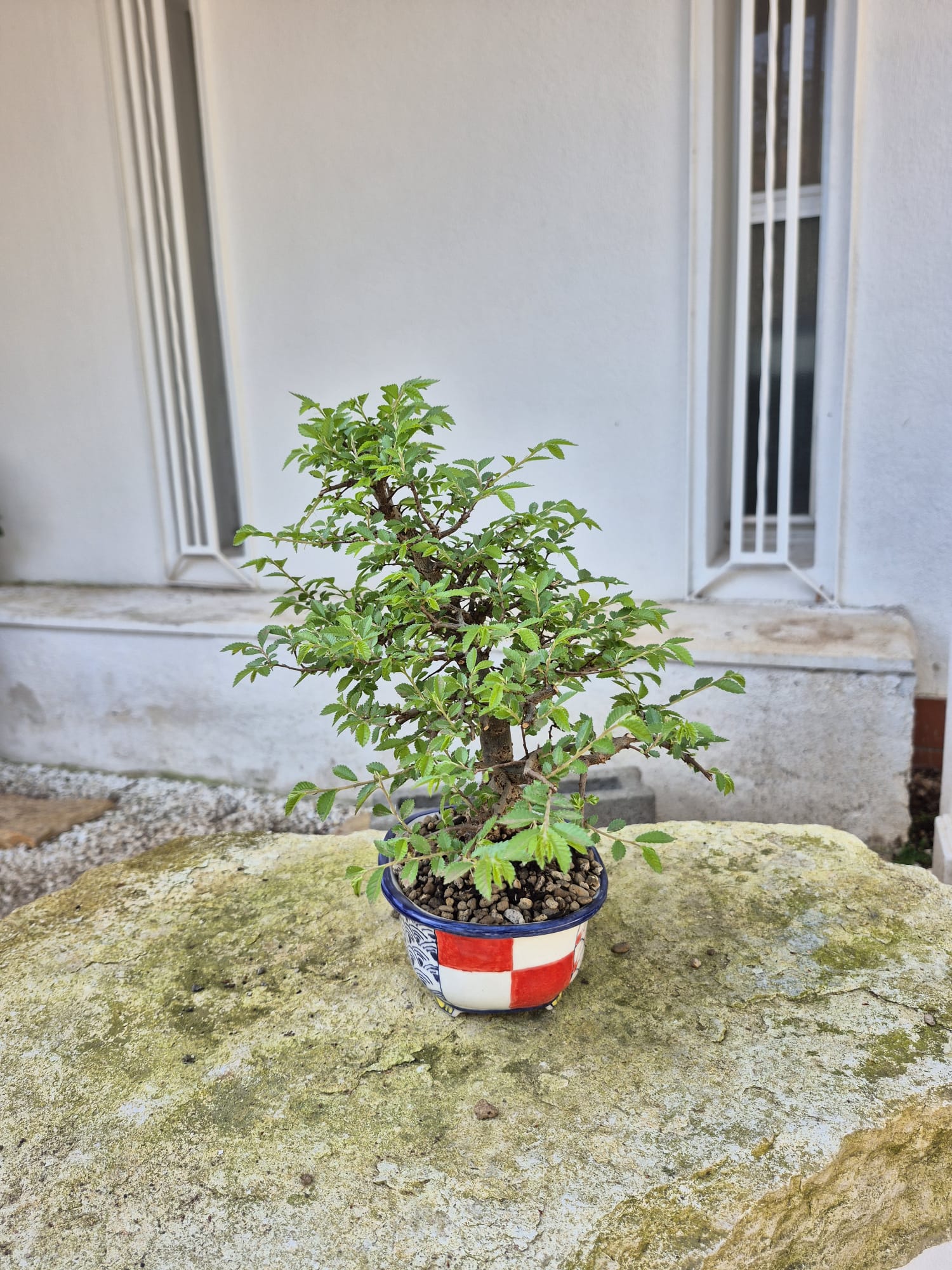
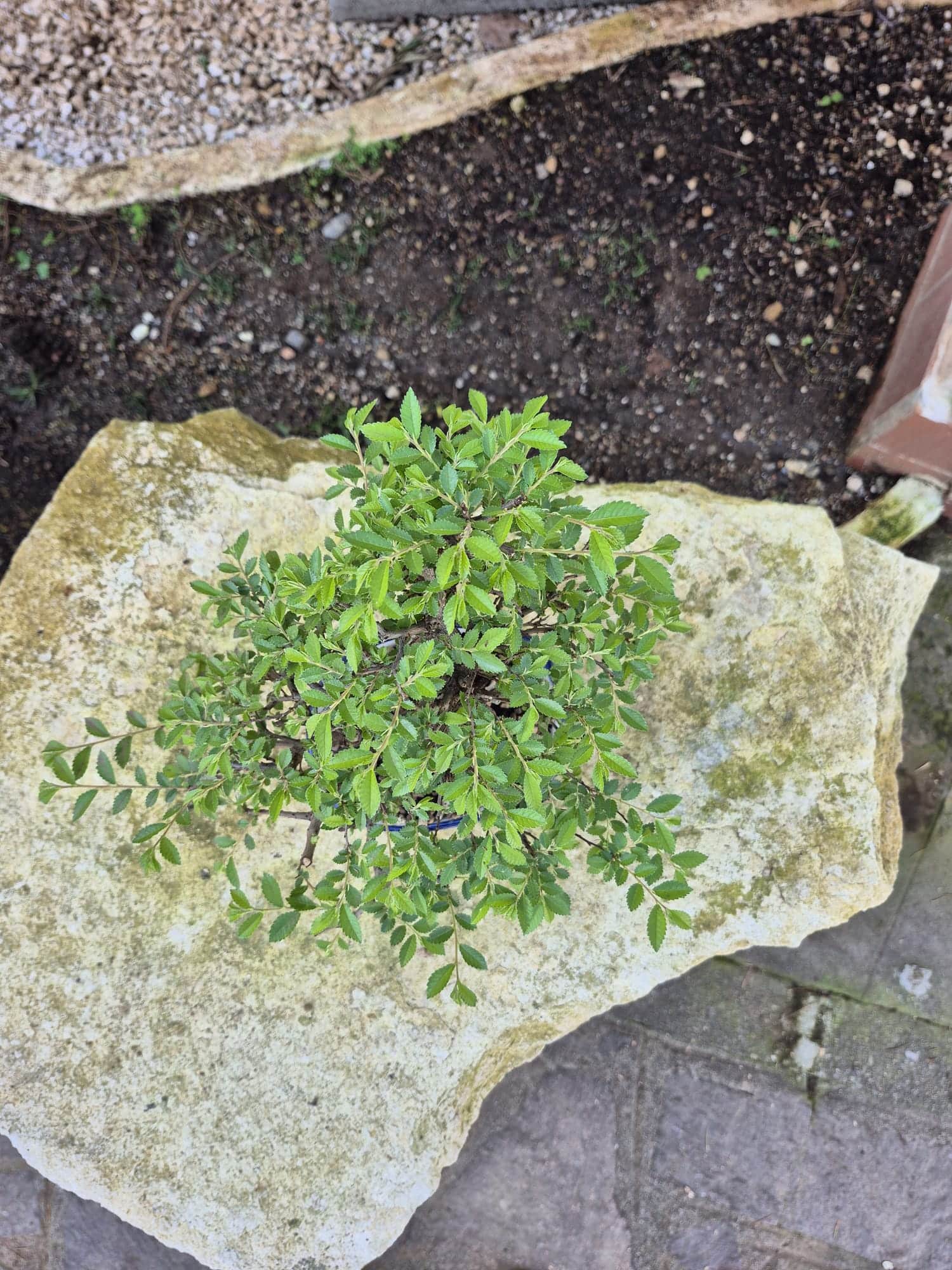
Zelkova-Bonsai in handbeschrifteter Schale.
Sichere Lieferung in einer Holzkiste.
-
Höhe: 25 cm (ohne Schale)
-
Breite: 30 cm
-
Stamm: 9,5 cm
-
Schale: 6 x 15 x 10 cm
Fotos aufgenommen im März 2026
Zelkova bonsai with a hand-lettered pot
This Zelkova bonsai captures the quiet elegance that has made Zelkova serrata, the Japanese grey-bark elm or keyaki, one of the most respected deciduous subjects in the art. The fine ramification and the upright, broom-like silhouette speak of patience, while the calligraphed pot adds a personal, almost intimate dimension to the piece. It is a tree meant to be lived with and read slowly, season after season.
Zelkova has long been prized for the way its slender twigs divide again and again, building a crown that turns to a haze of green in spring and a warm amber in autumn before the leaves fall to reveal the bare architecture of the branches. In winter the tree shows its true craftsmanship, the silhouette standing clean against the light. The hand-lettered glaze on the pot ties the whole composition to the workshop tradition from which it came, where a maker’s brushwork is part of the gift.
Heritage of the Japanese keyaki
The broom style, or hokidachi, was refined in Japan precisely with Zelkova in mind, the species lending itself to the symmetrical fan of branches that radiate from a single straight trunk. Few trees express the deciduous ideal so completely, and a well-grown keyaki has always been seen as a measure of a grower’s discipline. This specimen carries that lineage with an international clarity, equally at home echoing a temple garden or a quiet modern interior.
About this specimen
This particular Zelkova stands roughly 25 cm tall without its pot, with a 9.5 cm trunk and a broad 30 cm spread, and it is presented in the hand-lettered ceramic pot shown in the photographs, which is included. The trunk has earned a believable taper and the surface roots spread with conviction, giving the tree a settled, mature presence. The calligraphy on the pot makes it a one-of-a-kind pairing rather than a simple repotting. Photographed in March 2026, it is offered exactly as pictured.