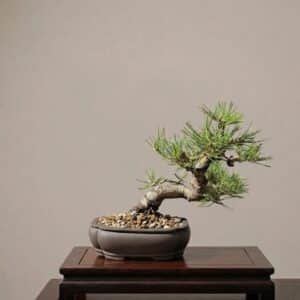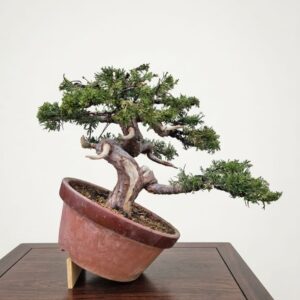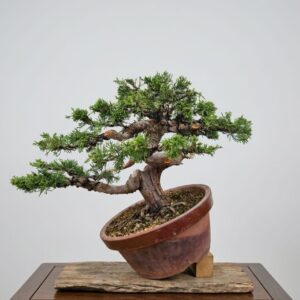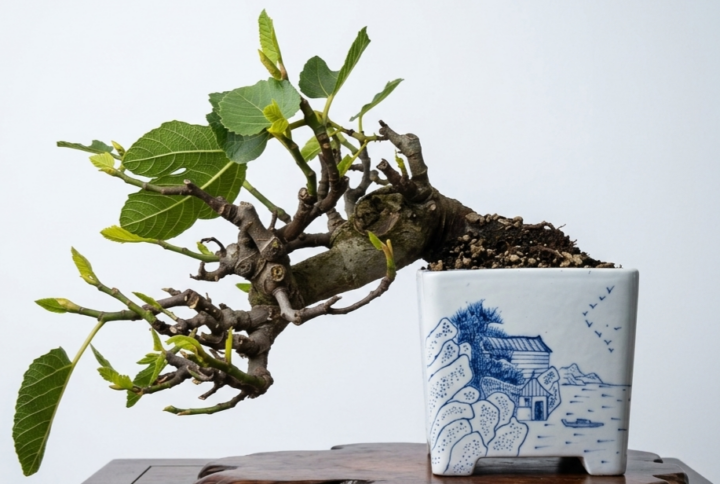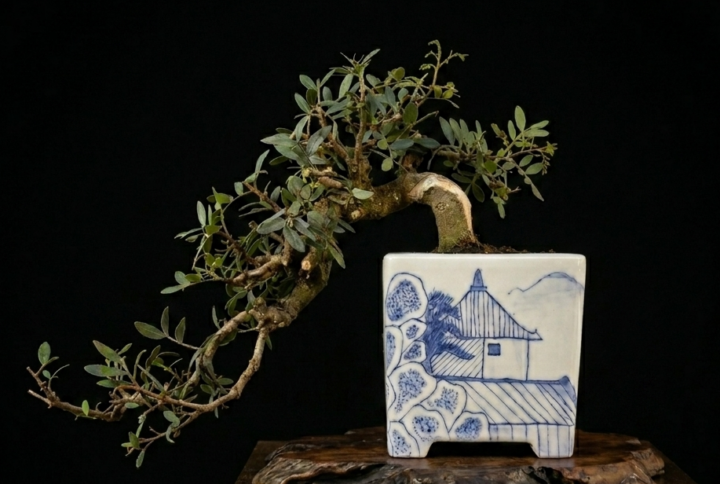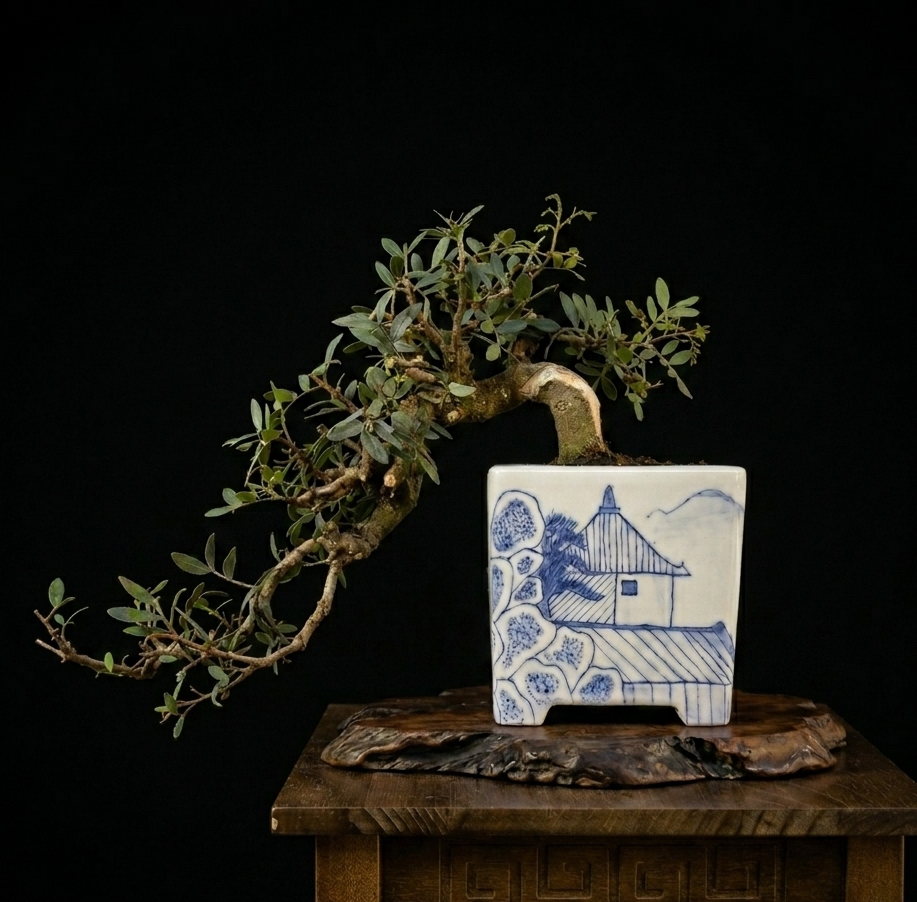
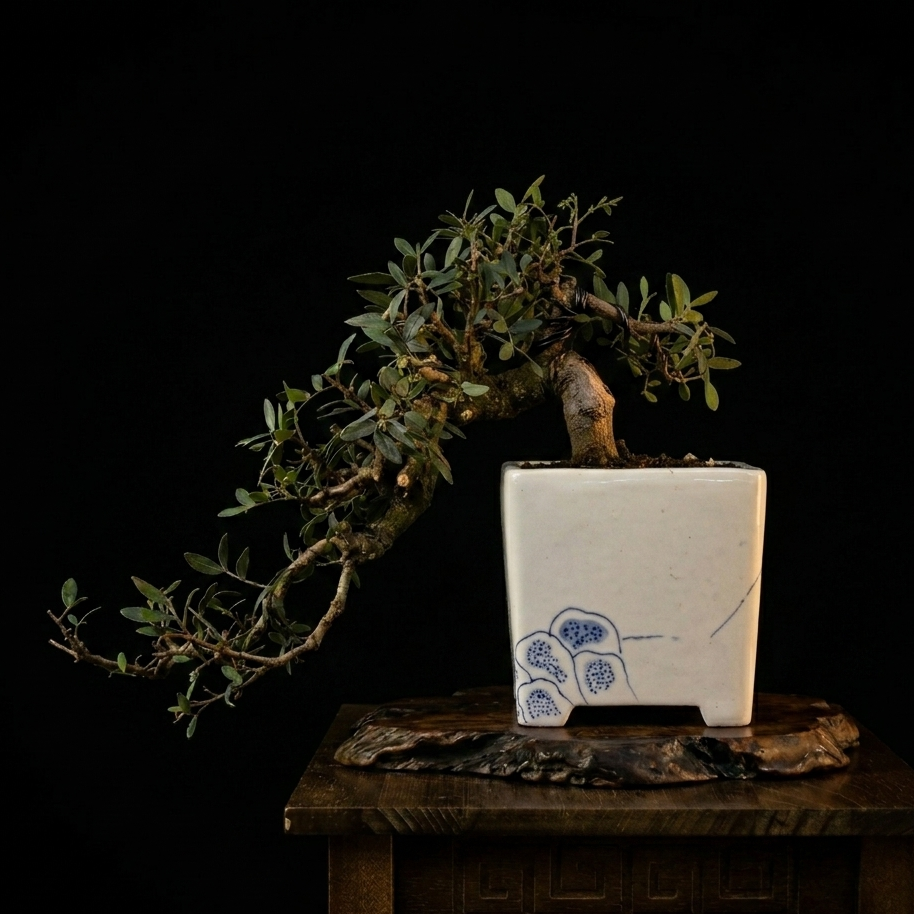
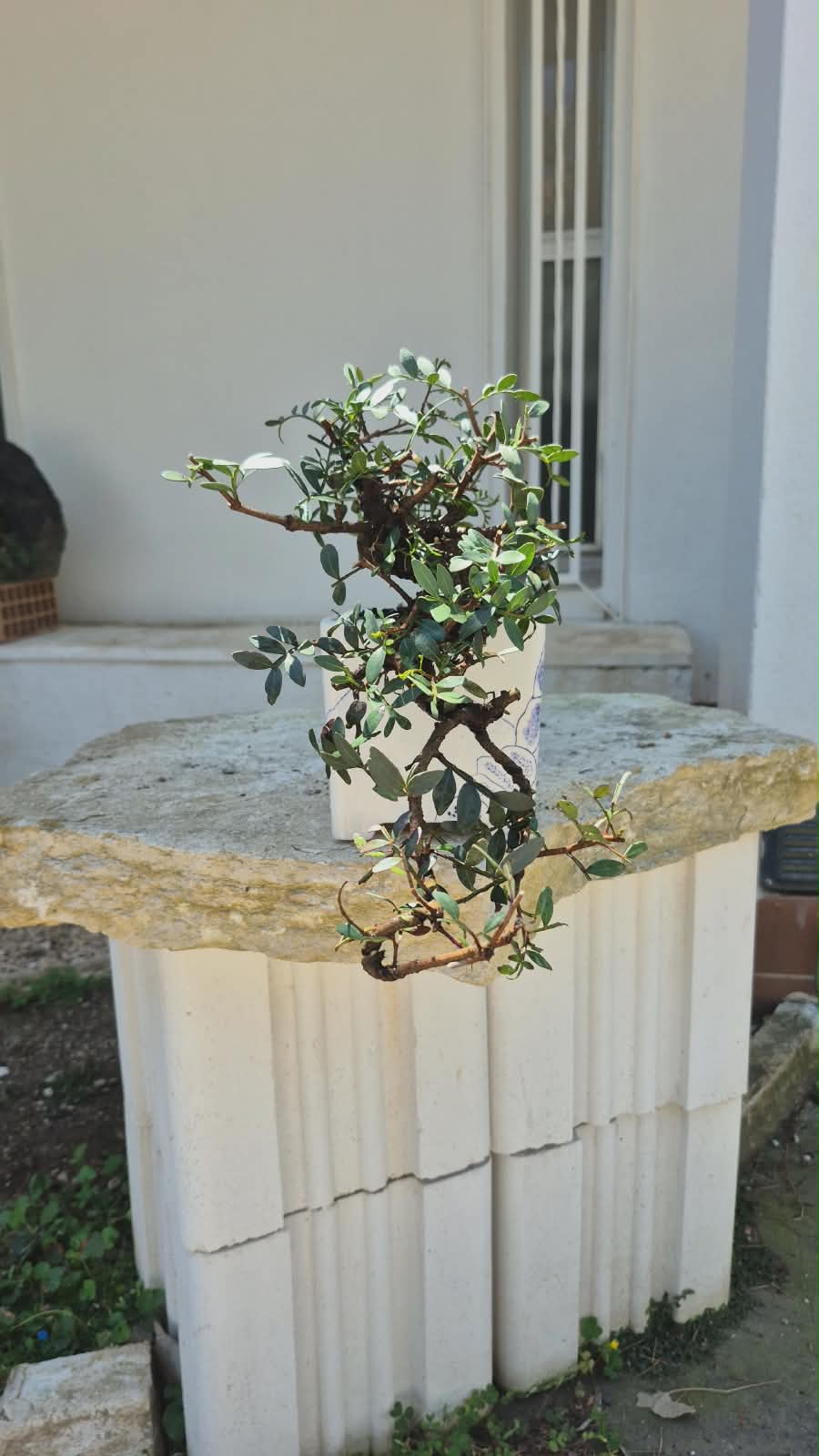
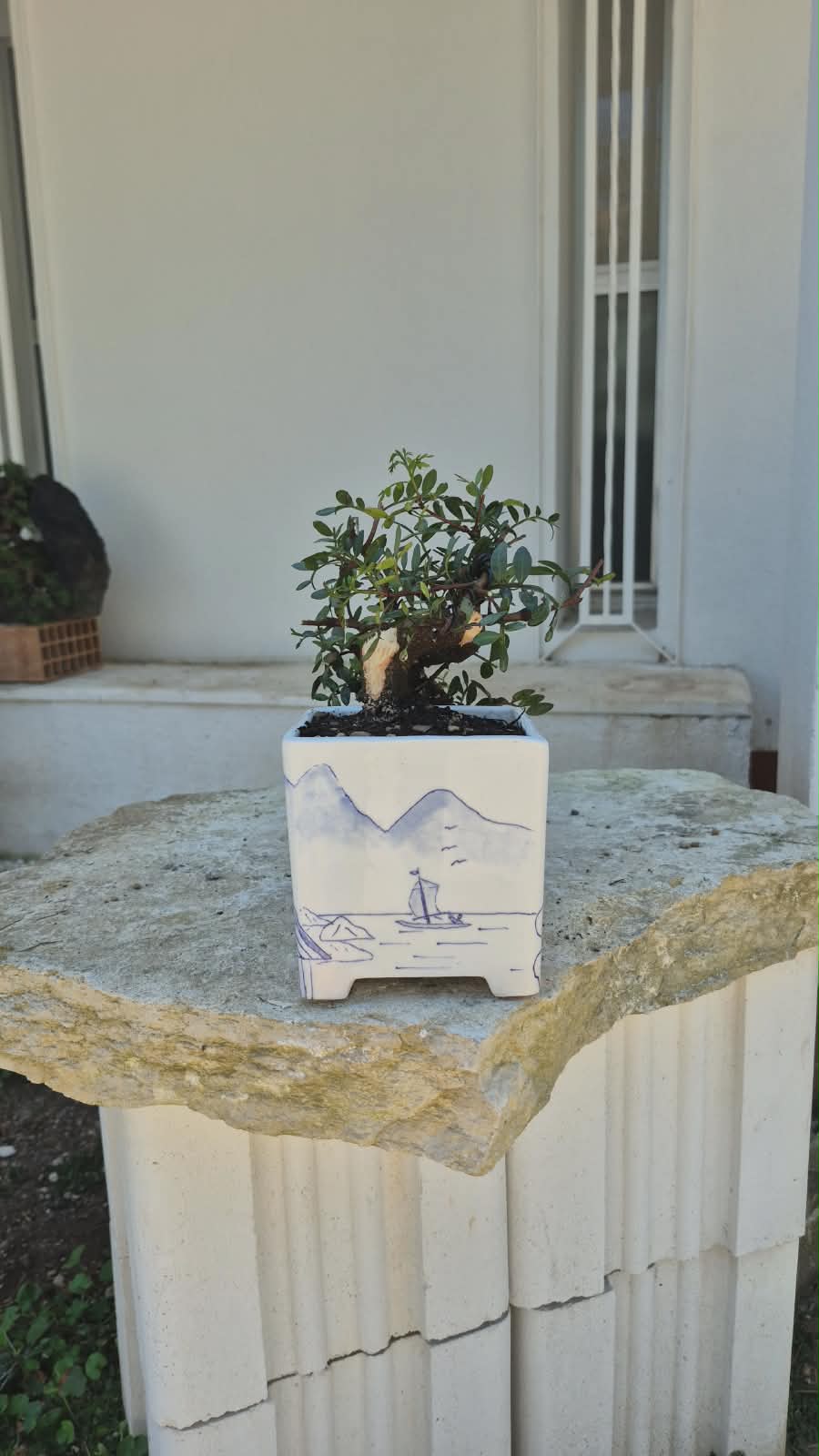
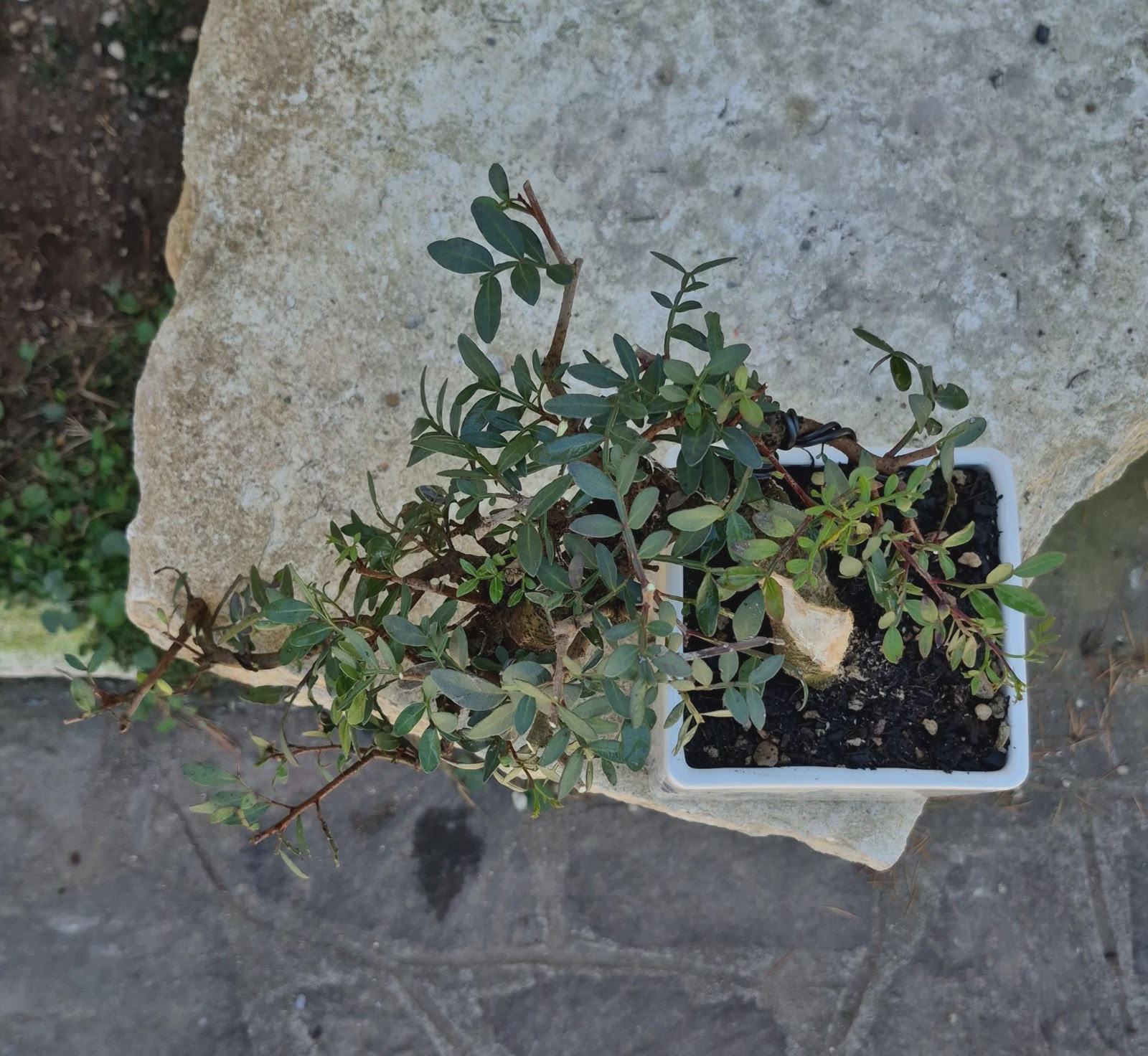
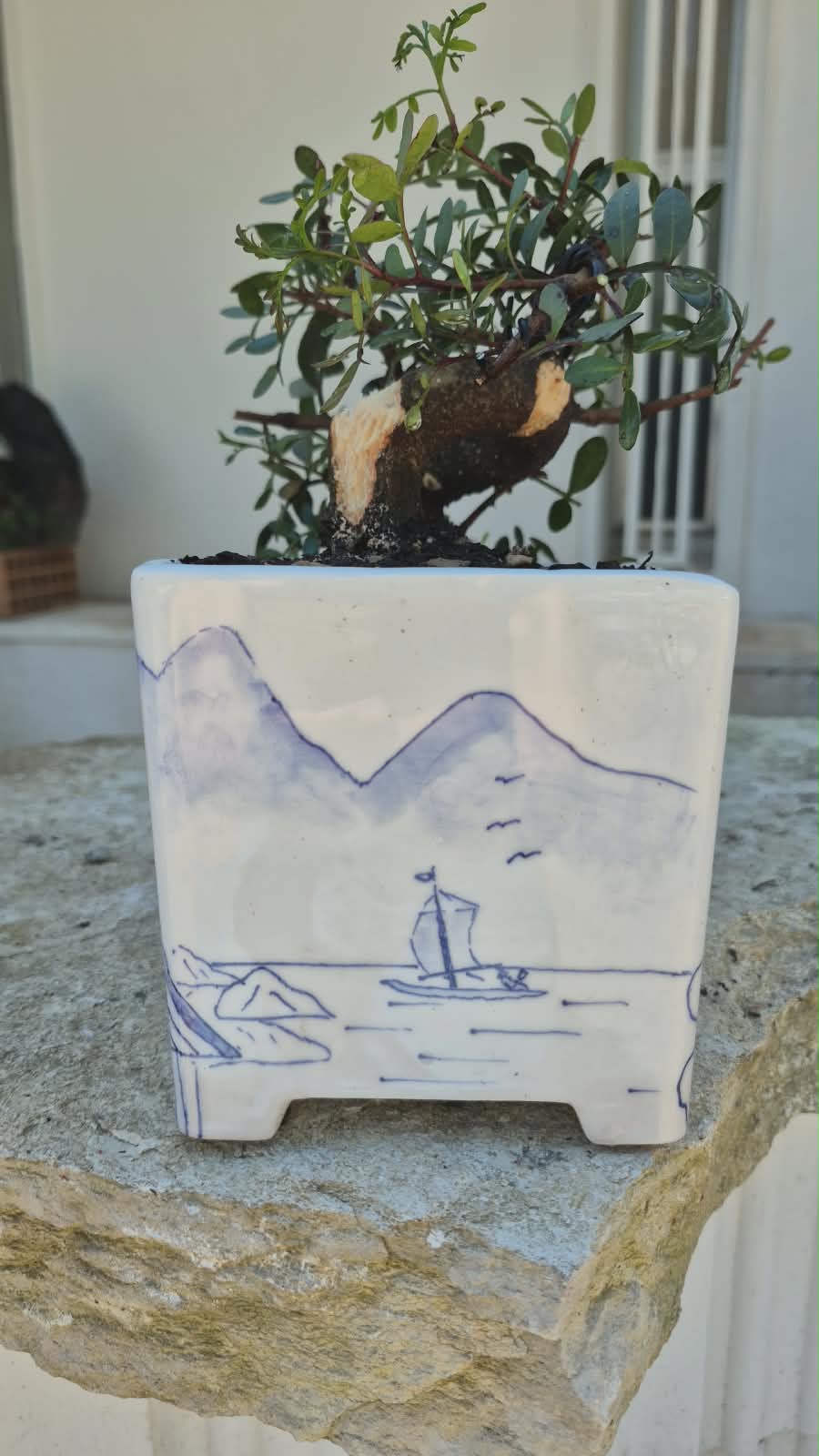
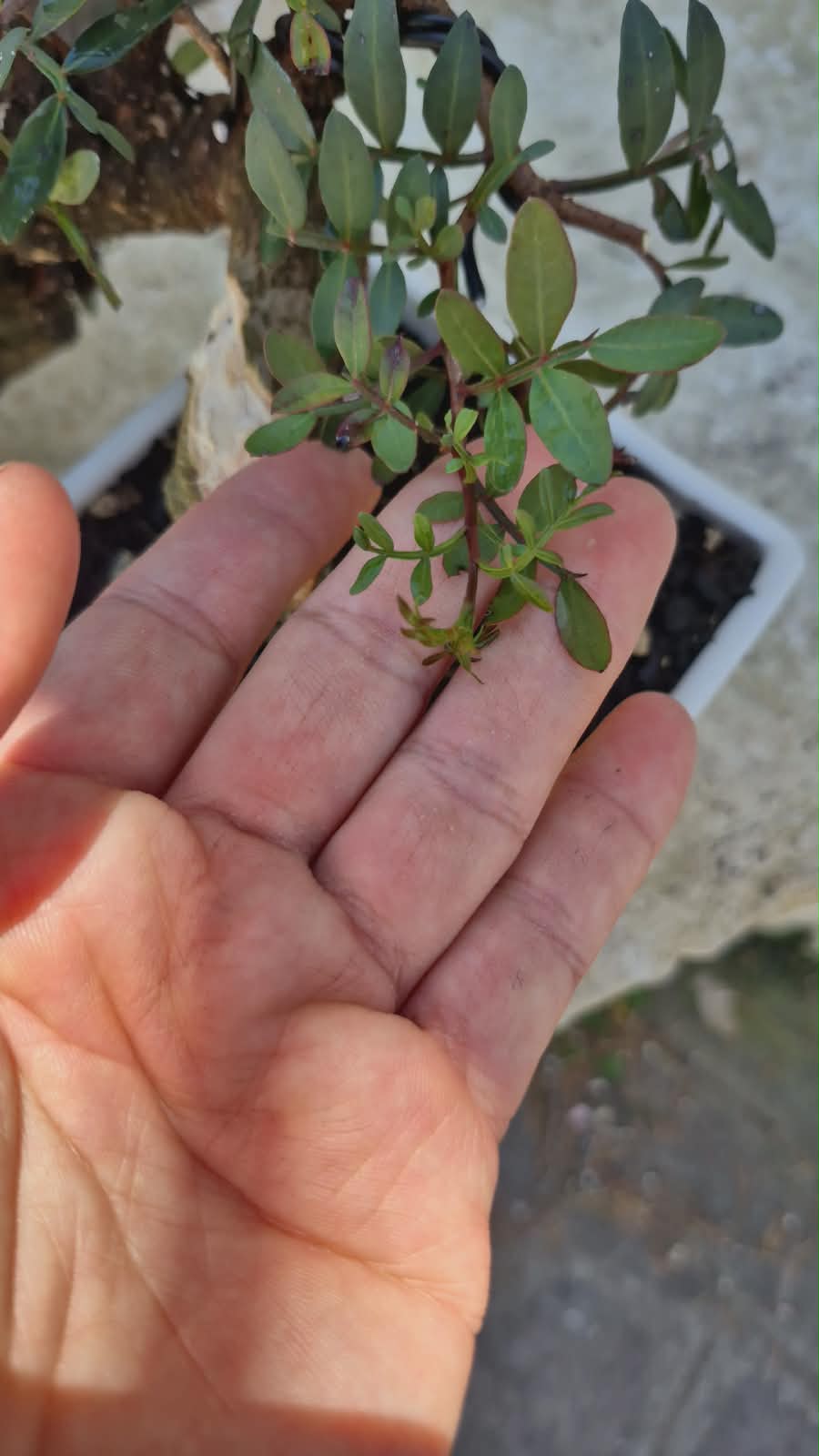
Bonsai of Pistacia Lentiscus .
Safe delivery in a wooden crate.
-
Height: 15 cm (excluding pot)
-
Width: 36 cm
-
Trunk: 9 cm
-
Pot: 12 x 12 x 12 cm
Photos taken in May 2026
About this Pistacia Lentiscus bonsai
The Pistacia Lentiscus bonsai brings a true child of the Mediterranean scrub onto the bench. In the wild the lentisk grows as a dense evergreen shrub along dry, sun-baked coasts, and if you crush a leaf you catch the warm, resinous scent that earned it the old name of mastic tree. This specimen carries that character in miniature: small leathery leaflets, a pale knotted trunk, and the wiry, twiggy growth that years of sun and wind produce.
What makes the lentisk such a rewarding subject is its toughness. It accepts hard light, holds its leaves through the whole year and ramifies into the fine, busy pads that suit a small tree. The bark roughens and greys with age, so even a modest trunk reads as something that has already stood through a few dry summers.
A tree from the maquis
Pistacia Lentiscus is a cousin of the pistachio, and around the Mediterranean it has been part of daily life for centuries, from the mastic resin once chewed and distilled to the brushwood that scents a hillside after rain. As bonsai it is still uncommon outside the warmer countries, which is part of its appeal for collectors who want something beyond the usual junipers and maples.
About this specimen
The photographs show the exact plant you receive, pot included. Each lentisk is shaped by its own history, so the line of the trunk and the spread of the canopy here belong to this tree alone.
On a shelf or a low table, a Mediterranean species like this reads differently from the Japanese classics. It carries the dry light and the scrubland scent of the south rather than the cool greens of a mountain forest, and that sense of place is a large part of why growers seek the lentisk out.