

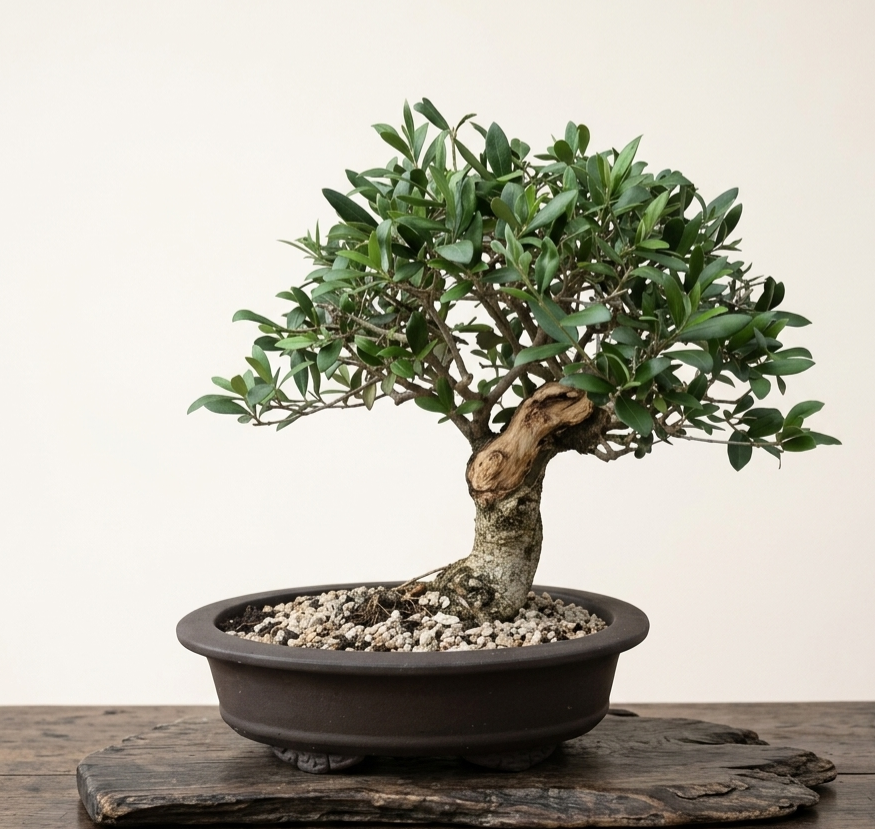
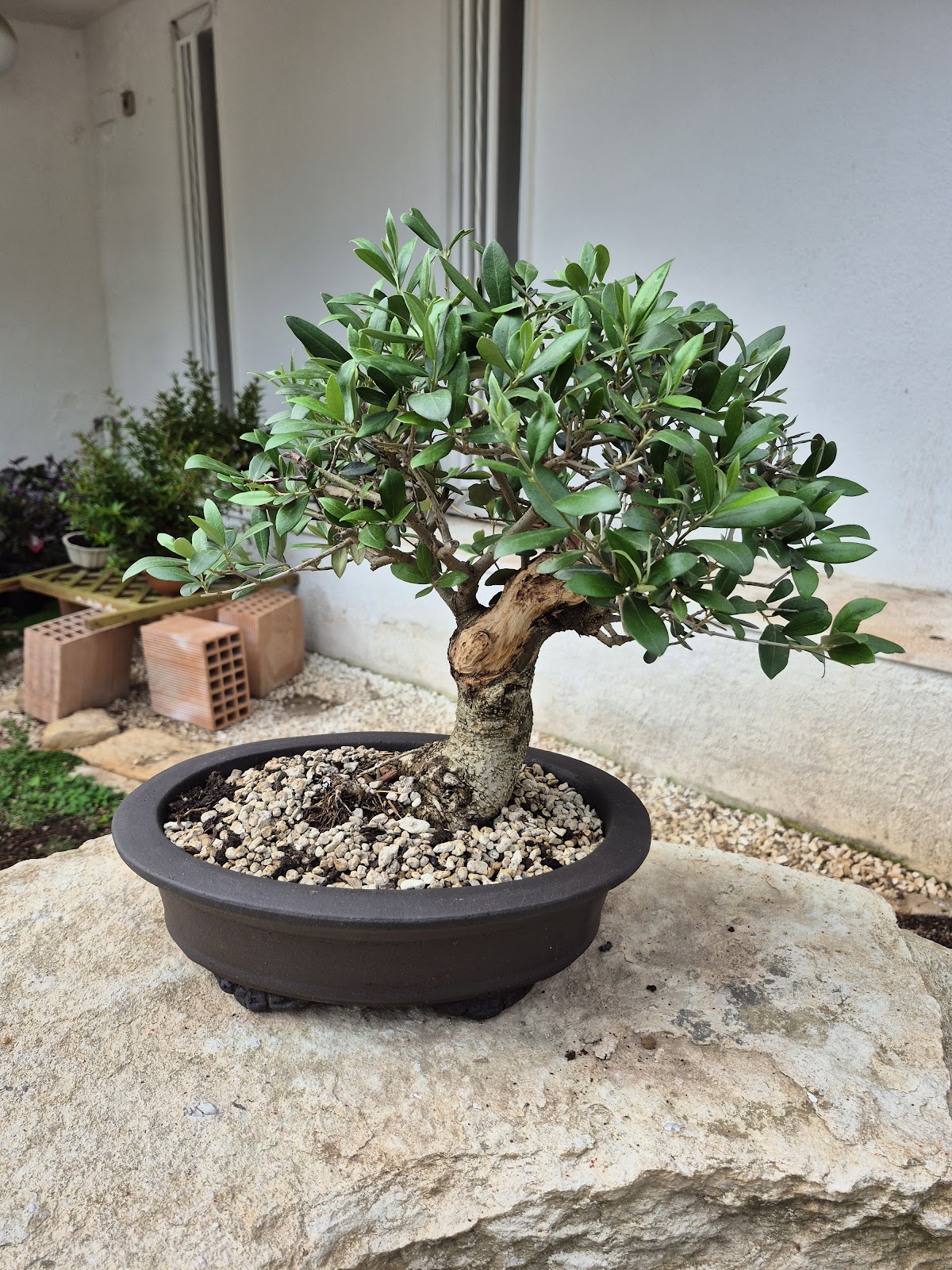
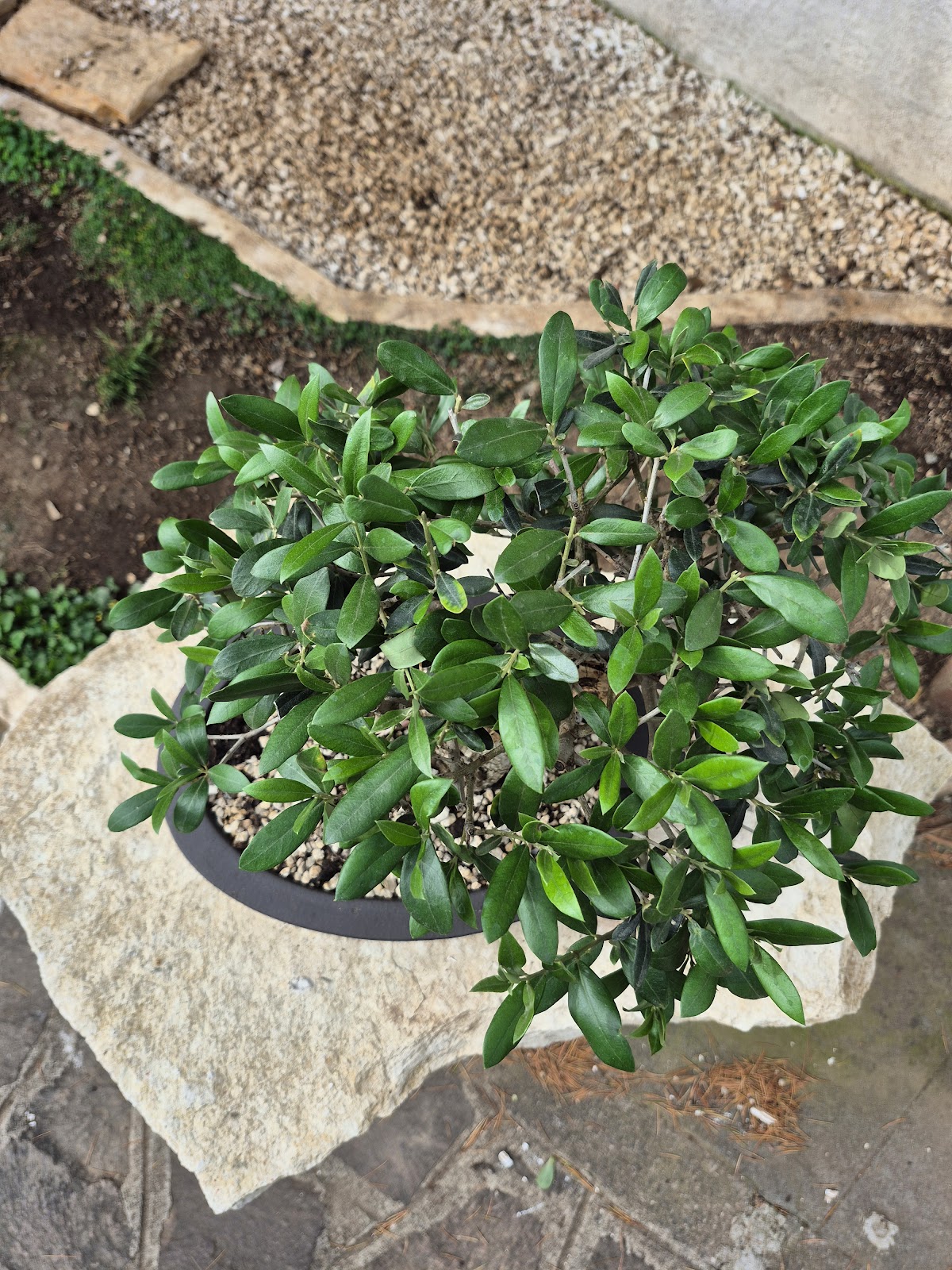
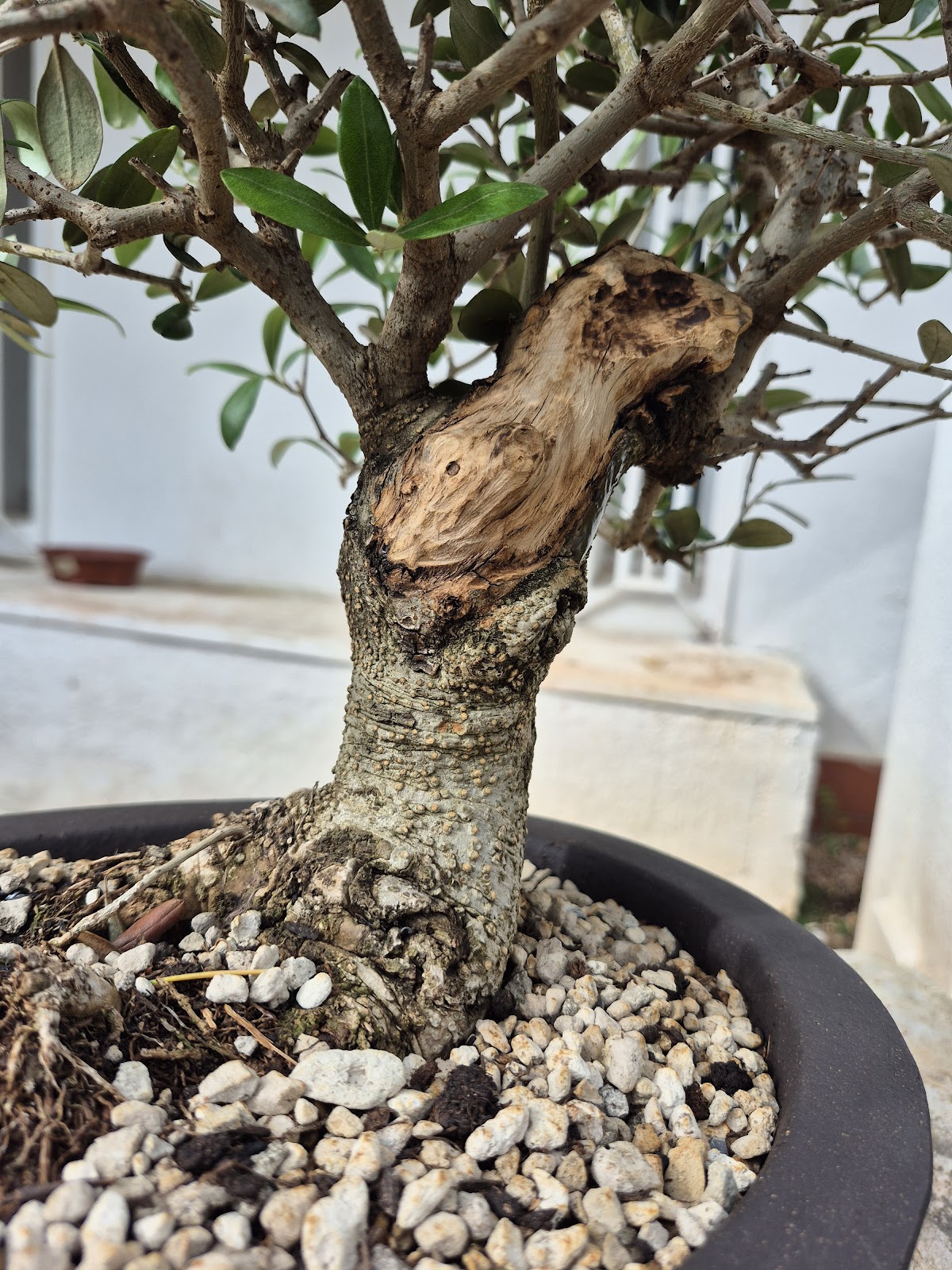
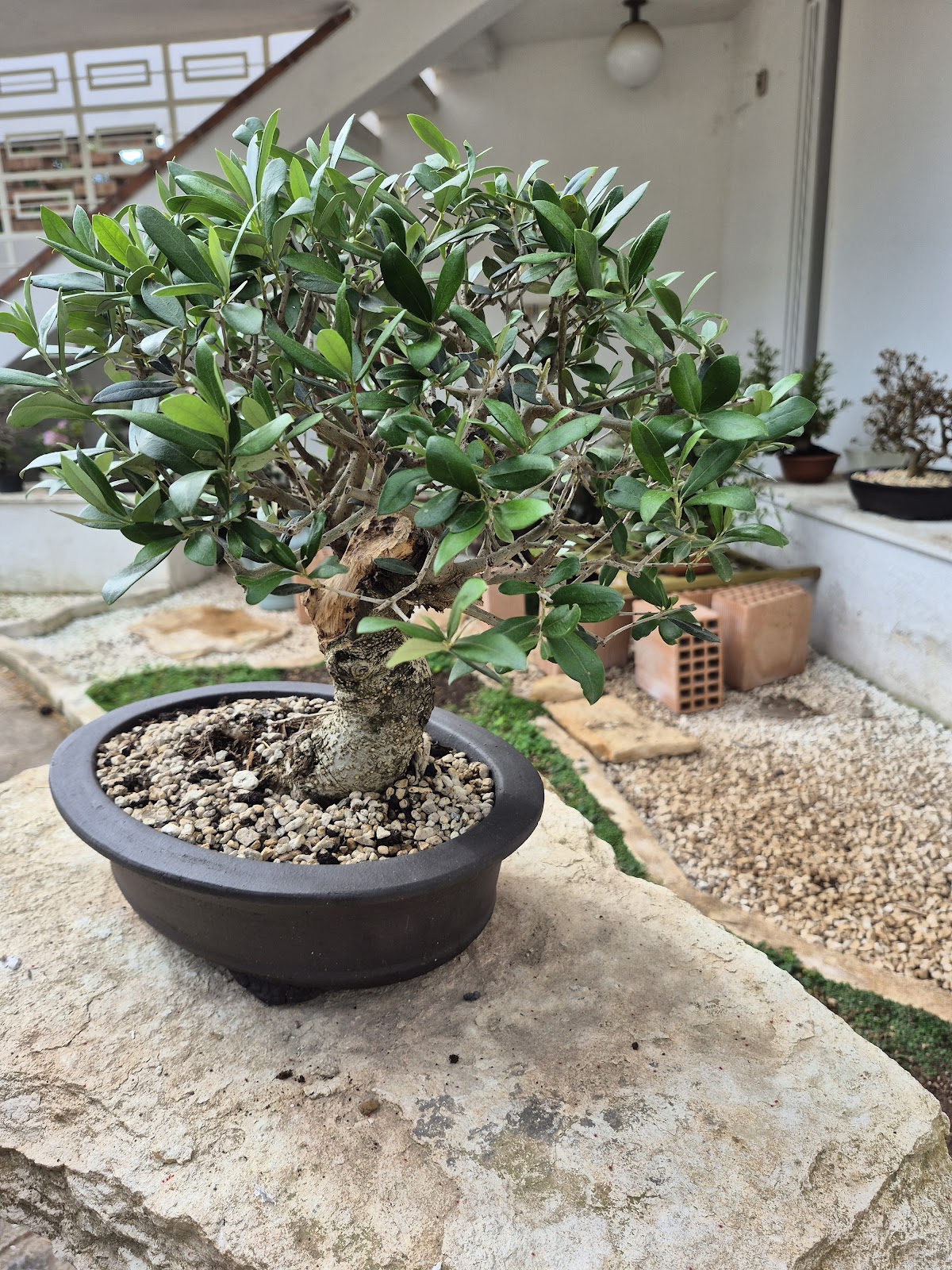
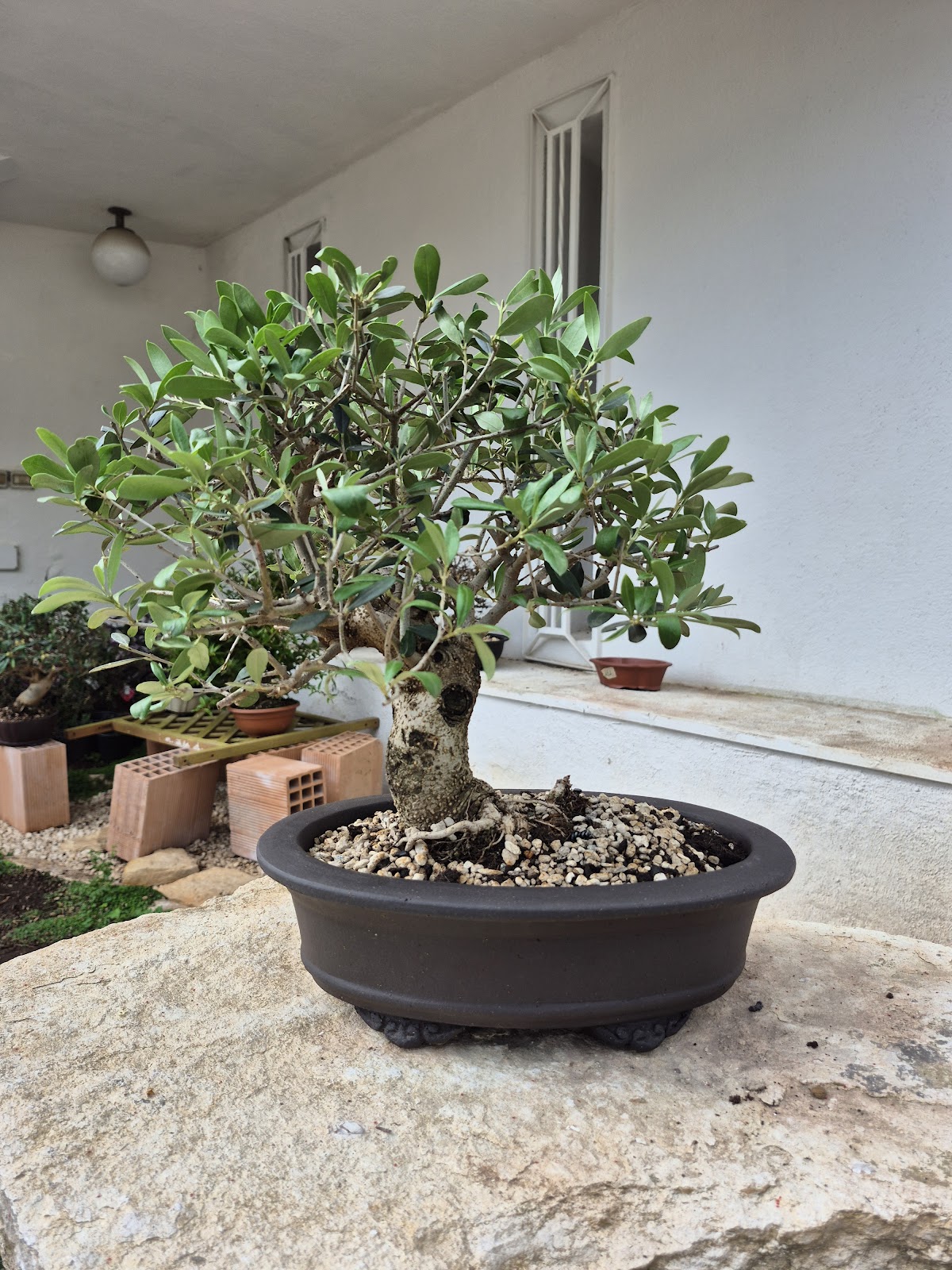
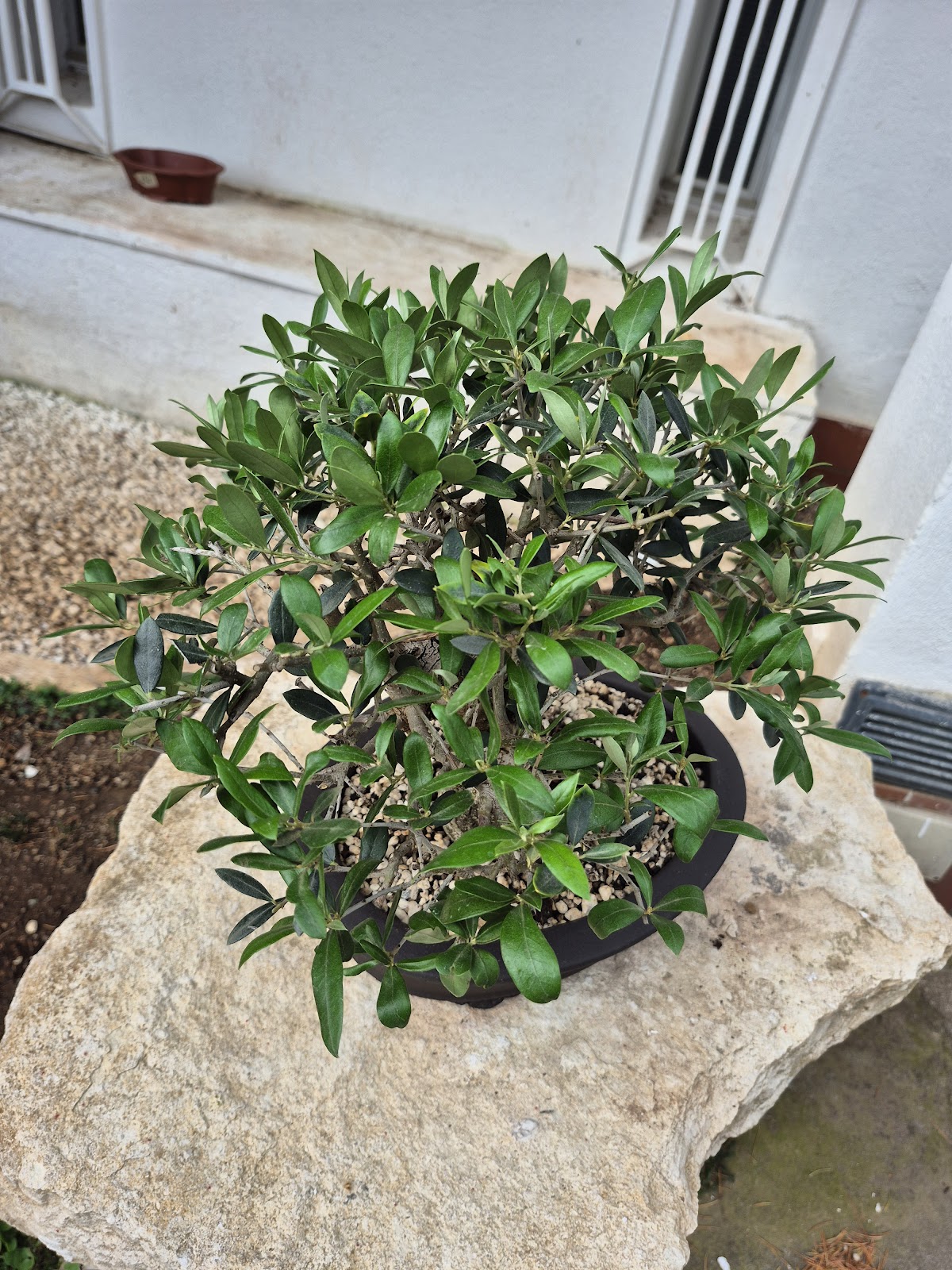
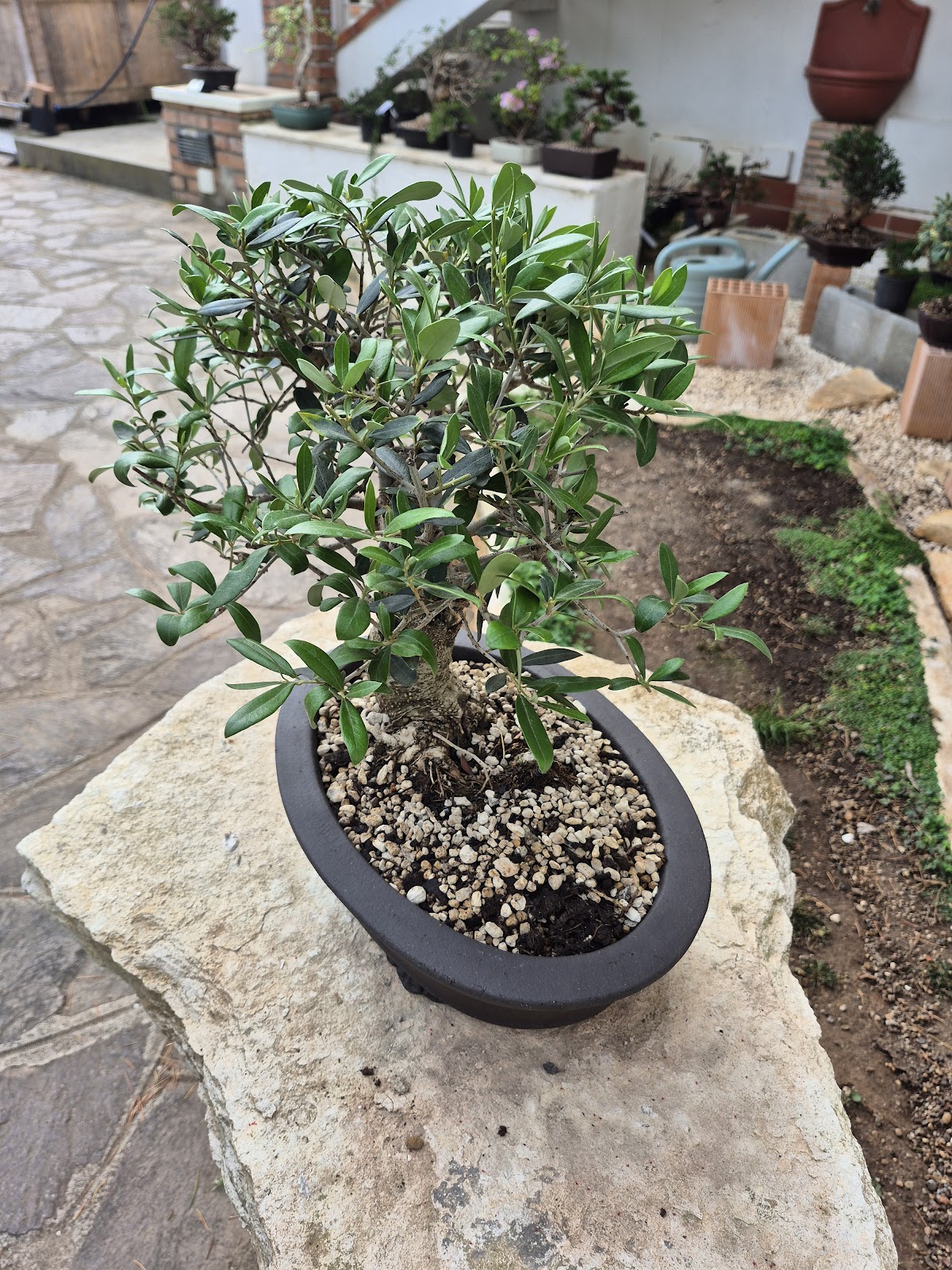
Bonsai of Olive 2
- Height: 30cm
- Width: 40cm
- Trunk: 10cm
- Pot: 30x20x10cm
About this olive bonsai
The olive (Olea europaea) is, alongside the vine and the fig, one of the founding cultivated trees of the Mediterranean — a species so embedded in the cultures around that sea that it appears in ancient art, religious texts, and modern landscape painting alike. As a bonsai it offers something rare: a tree that is genuinely easy outdoors, accepts heat and wind, and develops a slow, irregular bark surface that gives it visible character within a few seasons.
Why choose this specimen
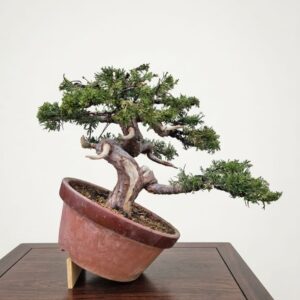
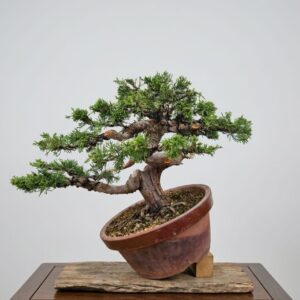
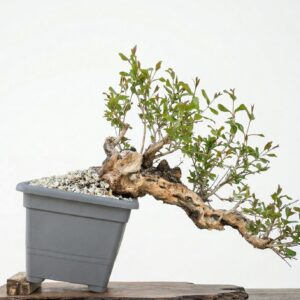
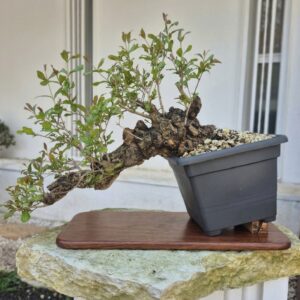
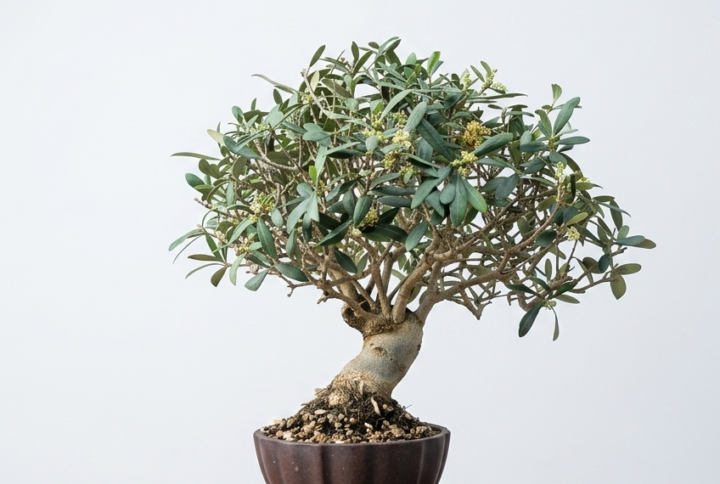
This olive bonsai stands 30cm tall with a canopy spread of 40cm, on a trunk of 10cm, in a 30x20x10cm pot. The proportions read well: the canopy balances the trunk, and the shallow rectangular pot keeps the focus on the tree rather than on the container. The bark already shows the irregular, slow-grown surface that gives olive its identity — a texture a young plant simply cannot have.
Who this bonsai is suitable for
Olive is the species I recommend most often to enthusiasts moving from an indoor ficus to true outdoor bonsai. Hardy, forgiving of irregular watering, and accepting of heat and wind that would damage more delicate species, it gives an honest first step into outdoor cultivation. It suits buyers in warm and temperate climates, and adapts well in cooler areas if a winter shelter from prolonged frost is available. Equally appropriate for a beginner with a sunny terrace and for a collector seeking trunk character.
Light and placement
Outdoors year-round, in full sun. The olive resents shade — in low light, leaves stretch and the tree weakens. It tolerates wind and dry heat that would damage more delicate species. In winter, protect from prolonged frost: a few light frosts are not a problem, but several days below freezing call for a sheltered position against a wall or under cold-house cover.
Watering and feeding
Water when the substrate is clearly drying on top. Olive prefers a slightly dry cycle to a constantly wet one — its roots dislike sitting in water. Feed with a balanced organic fertiliser from spring through autumn, reducing in the hottest part of summer if the tree is under heat stress. Avoid heavy nitrogen feeding, which produces oversized, soft leaves out of character with the species.
Seasonal appearance
Olive is evergreen. The silver-green underside and matte green upper surface of the leaves remain through the year, with new growth flushing bright green in spring and again in late summer. Small white-cream flowers may appear in spring on mature wood, sometimes followed by tiny olives on stronger trees. In winter the foliage stays put but growth pauses; this is the moment when trunk line and branch structure read most clearly.
Care difficulty
Easy to intermediate. Full sun outdoors all year, water on a slightly dry cycle, feed from spring through autumn. Care patterns may vary slightly between northern and southern parts of any country — in northern areas more attention to winter frost protection; in southern areas more frequent watering in summer heat. Both settings suit olive well. The only consistent rule across regions is to avoid a constantly soggy substrate.
Styling and pruning
Olive back-buds reliably on old wood, which makes it ideal for restyling later in its life. Prune in late spring after the first flush has hardened. Wire goes on semi-hardened shoots; older wood becomes brittle. Repotting is best done in spring with a very free-draining substrate — coarse akadama with generous pumice and lava is a good baseline.
About the species
The olive is one of the longest-lived trees humans cultivate — wild and ancient olives in the Mediterranean have been carbon-dated to a thousand years and more. As a horticultural plant it is older than recorded history in the region; as a cultural symbol it appears in everything from Homer to the modern Italian, Spanish, and Greek landscape. For bonsai, what matters is the species’ temperament: stoic, slow, drought-tolerant, generous in its response to good cultivation. An olive bonsai is not a fast project, but it is a steady one. The tree pays back patience with character that synthetic shortcuts cannot produce — every fissure of bark on a mature olive is a season the tree has lived through.
Pot, substrate, and the next few years
The current 30x20x10cm pot suits the tree’s stage of training. Olive repotting is typically done every three to four years — the species does not like frequent root disturbance. The window is mid-to-late spring, when the tree is actively growing and recovery is fast. Substrate should be very free-draining: olive roots dislike sitting in water more than they dislike anything else. A coarse akadama mix with generous pumice and lava is a good baseline. Over the coming years the trunk will continue its slow surface texturing, leaves will reduce in size with consistent care, and the silhouette can be refined through patient pruning rather than aggressive cuts.
Shipping and what you receive
You receive the exact tree shown in the photographs — no substitution. The olive is packed individually: pot stabilised inside the shipping box, substrate secured so it does not move in transit, and the foliage wrapped to protect leaves and shoots. The product is the tree itself, in its pot, as photographed.





Reviews
There are no reviews yet.