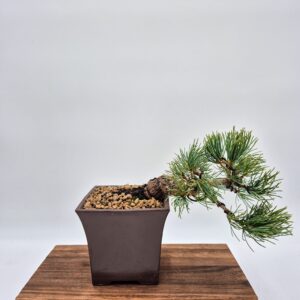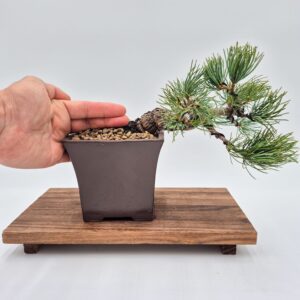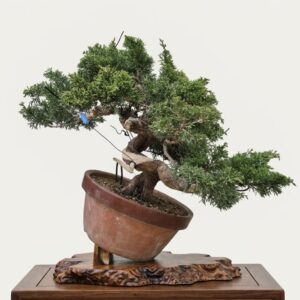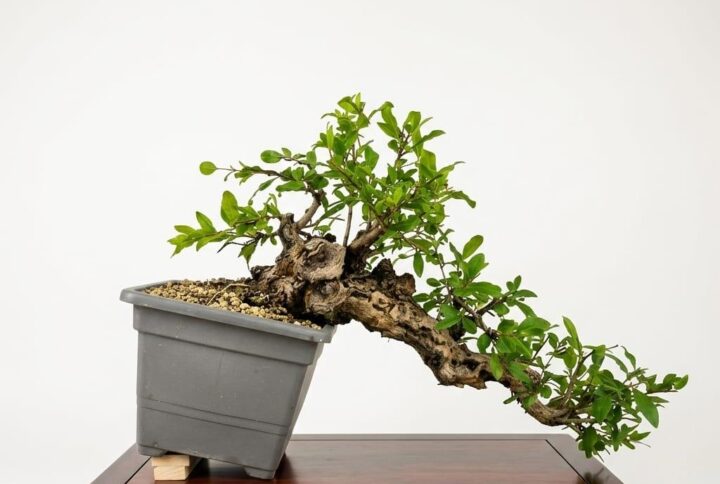
About this Itoigawa juniper mame bonsai
This Itoigawa juniper mame bonsai is a true miniature: at 15 cm tall and 22 cm wide, with a 7 cm trunk seated in an 8 × 12 × 12 cm pot, it is small enough to sit on a desk yet carries the same character and refinement that defines the cultivar at any scale.
Dimensions: Height 15 cm (excluding pot) · Width 22 cm · Trunk 7 cm · Pot 8 × 12 × 12 cm. Photographed in May 2026.
About the cultivar
Juniperus chinensis ‘Itoigawa’ originates from the Itoigawa area of Japan and is widely considered one of the most refined Shimpaku cultivars for bonsai use. Its foliage is dense, soft, and a steady cool green; the wood ages to a pale silver that contrasts against the living bark. Bonsai artists prize the cultivar for its compactness, its readiness to back-bud after pruning, and the way deadwood develops on it over decades. In mame form, the cultivar’s strengths concentrate into a tabletop scale where every needle counts.
Why choose this specimen
The 7 cm trunk is broad for a tree this height. That ratio — substantial trunk, low canopy — is what separates a true mame from a young juniper trimmed small. The proportions read as a mature tree seen at a distance, which is the whole point of the mame discipline. The 8 × 12 × 12 cm pot is sized correctly: deep enough for the root system, shallow enough to keep the visual weight on the trunk.
Care and placement
This Itoigawa juniper mame bonsai is an outdoor species and stays outdoors year-round. Full sun for most of the day produces the tightest foliage. In hot summers, light afternoon shade helps, since a mame pot heats up quickly. Check the substrate every morning in summer and water when the surface starts to dry; mame pots may need water twice a day in heat. Feed monthly from spring through autumn with a balanced organic bonsai fertiliser, reduced in midwinter.
Through the seasons
Spring brings the most active growth and brighter foliage. In summer, pinch new tips by hand rather than scissor-cut, preserving the soft texture. Autumn growth slows and the colour deepens slightly. In winter the tree rests; a position protected from prolonged hard frost is advisable in cooler parts of the country, while in warmer parts it generally winters in a simple sheltered spot.
The cultivar in European appreciation
Itoigawa juniper arrived in European bonsai practice through specialised nurseries during the late twentieth century and quickly became the preferred Shimpaku for serious collectors. A mame-sized Itoigawa belongs to a different lineage of practice than its larger cousins: the discipline of working at this scale, where every millimetre of trunk counts, is one of the most demanding strands of contemporary bonsai work.
Styling and the years ahead
The tree is ready for further refinement. Pinching through spring and summer tightens the canopy; light wire applied in autumn adjusts secondary branches. Repotting is needed every two to three years; mame pots demand a free-draining substrate, with Akadama, pumice and lava in equal parts a reliable mix.
Shipping and what you receive
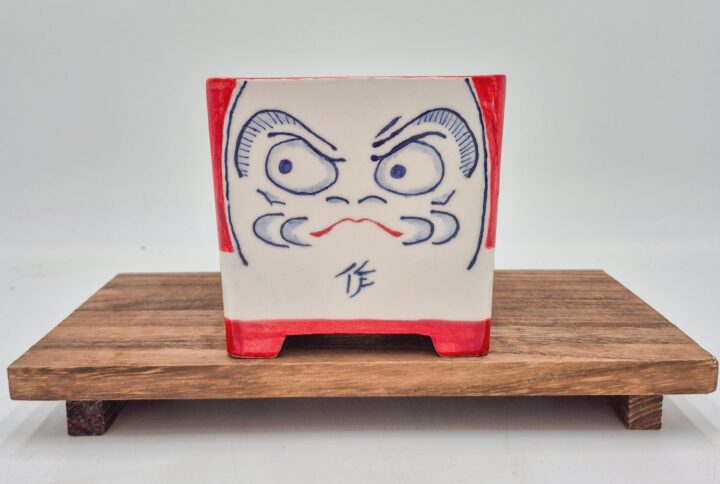
You receive the exact tree shown in the photographs, in the pot pictured. Nothing else is included. The bonsai is packed individually in a wooden crate to protect the canopy and pot, and shipped from Italy in one business day.